

Biofeedback is defined as a therapeutic technique that trains you to control involuntary physiological functions, such as heart rate, muscle tension, and breathing, by showing you real-time data from your own body. Understanding how biofeedback helps anxiety starts with one key fact: anxiety is not just a mental state. It is a full-body event driven by the autonomic nervous system. The Association for Applied Psychophysiology and Biofeedback recognizes heart rate variability (HRV) biofeedback as the most clinically validated non-pharmacological approach for anxiety disorders, including generalized anxiety disorder, PTSD, and panic disorder. Unlike medication, biofeedback builds a skill. You learn to read your body’s stress signals and change them before anxiety takes hold.
How does biofeedback help anxiety? The core signals explained
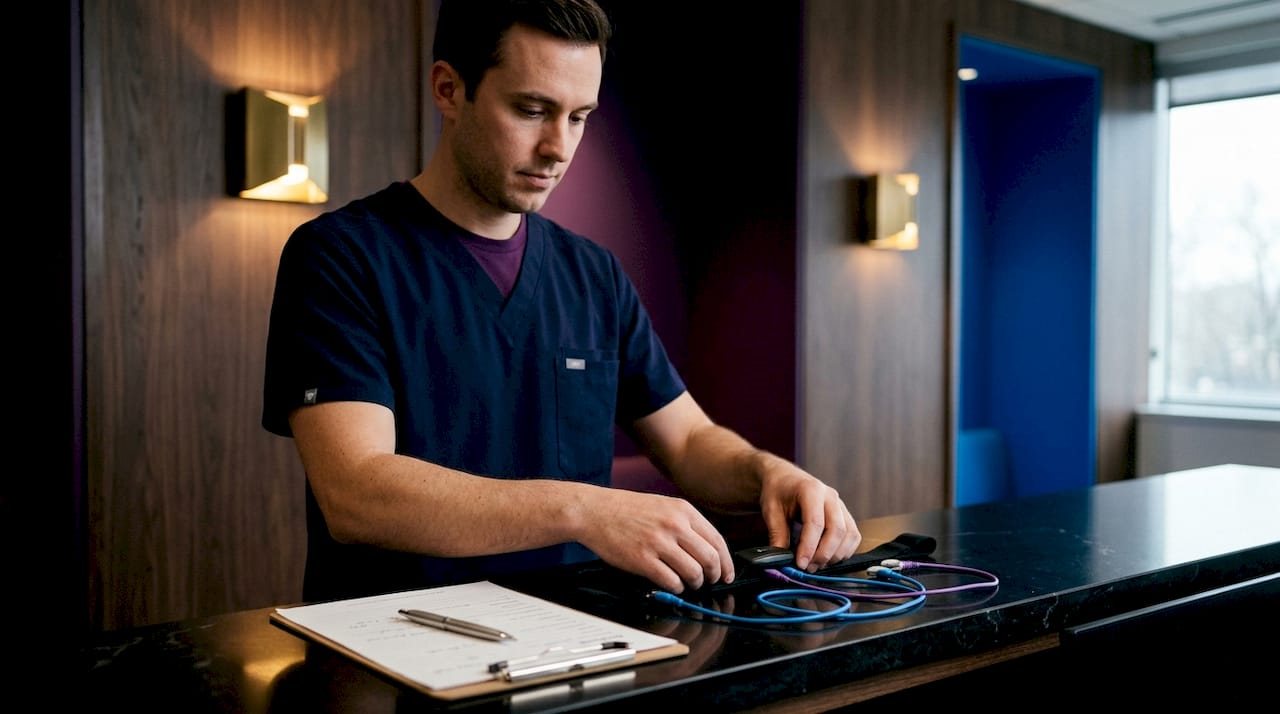
Biofeedback works by making the invisible visible. Sensors attached to your body measure physiological signals in real time, and a screen or audio tone reflects those signals back to you instantly. That feedback loop is what gives you control.
The five main signals tracked in anxiety-focused biofeedback are:
- Heart rate variability (HRV): The variation in time between heartbeats. Low HRV is a reliable marker of sympathetic nervous system dominance, the “fight or flight” state that drives anxiety. HRV biofeedback is the most studied and clinically supported measure for anxiety reduction.
- Skin conductance (EDA): Electrodermal activity measures sweat gland activity on the fingertips or palm. It rises within seconds of a stress trigger, making it one of the most sensitive early-warning signals for sympathetic arousal.
- Muscle tension (EMG): Electromyography sensors placed on the forehead, jaw, or shoulders detect muscle tension. Chronic anxiety often lives in the body as tight muscles you have stopped noticing.
- Breathing rate: Anxious breathing is fast and shallow. Biofeedback-guided breathing, typically slowed to around 6 breaths per minute, directly activates the parasympathetic nervous system and is the fastest route to HRV improvement.
- Brainwave activity (EEG neurofeedback): Electroencephalography tracks electrical patterns in the brain. Alpha wave enhancement protocols, in particular, show durable anxiety reductions across multiple studies, often combined with cognitive behavioral therapy (CBT) or mindfulness.
Each signal gives you a different window into your stress response. Most clinical protocols use two or three together for a fuller picture.
How does biofeedback physiologically reduce anxiety symptoms?
Biofeedback’s primary mechanism is what researchers call “nervous system transparency.” Your brain gains real-time awareness of stress markers it normally processes unconsciously. That awareness alone allows earlier intervention, before anxiety escalates into a full panic response.
“Biofeedback provides a nervous system mirror, enabling earlier detection and intervention before conscious anxiety even arises. The ‘aha’ moment for most people is recognizing their pre-anxiety physiological signs for the first time.”
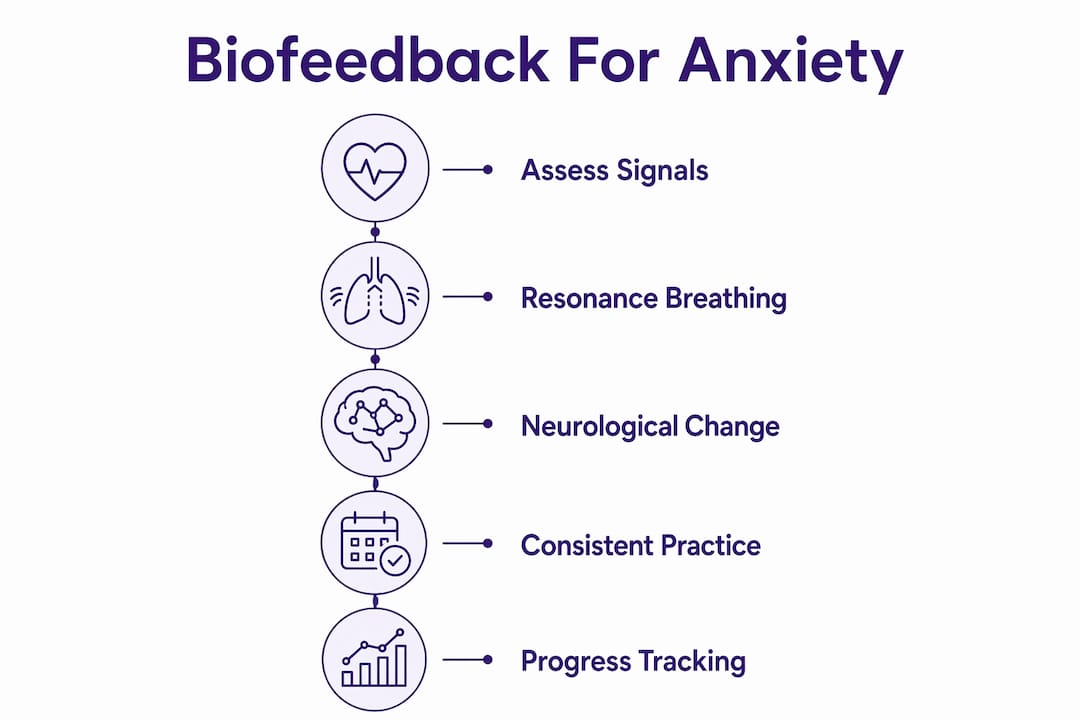
The most powerful technique within HRV biofeedback is resonance frequency breathing, calibrated individually but typically near 6 breaths per minute. At that rate, your breathing synchronizes with your cardiovascular rhythm, which maximizes HRV and strengthens vagal tone. Vagal tone is the activity level of the vagus nerve, the main highway of the parasympathetic nervous system. Higher vagal tone means your body can shift out of stress mode faster and more completely.
Over repeated sessions, this practice produces neurological changes. Biofeedback reduces amygdala reactivity, the brain region that fires the anxiety alarm, while increasing parasympathetic tone throughout the day, not just during sessions. That is the difference between a calming tool and a lasting skill.
Pro Tip: Do not try to force your heart rate down or your HRV up. Passive, relaxed attention to the feedback signal works better than effortful control. Trying too hard activates the sympathetic nervous system and slows your progress.
The skill-building nature of biofeedback is what separates it from passive relaxation techniques. Clinicians compare it to physical therapy: you are actively retraining the brain’s threat-processing circuits, session by session. That retraining produces effects that persist long after you put the sensors away. People who practice anxiety self-regulation through biofeedback report that they begin catching stress earlier in daily life, without any equipment at all.
What does the research say about biofeedback’s effectiveness?
The clinical evidence for biofeedback is strong and growing. A meta-analysis across 18 randomized controlled trials involving 1,352 participants found that HRV biofeedback produces a Hedges’ g effect size of approximately 0.83 for anxiety reduction. That is a moderate-to-large effect. For context, that figure is comparable to, and in some analyses larger than, the effect sizes reported for CBT and antidepressant medications.
| Biofeedback type | Primary target | Evidence strength | Typical effect size |
|---|---|---|---|
| HRV biofeedback | Autonomic regulation, GAD, PTSD | Strongest (18+ RCTs) | Hedges’ g ~0.83 |
| EEG neurofeedback | Brainwave patterns, generalized anxiety | Strong (19 studies) | Moderate-to-large |
| EMG biofeedback | Muscle tension, somatic anxiety | Moderate | Moderate |
| Skin conductance | Sympathetic arousal awareness | Supportive/adjunct | Variable |
Gains from biofeedback are not short-lived. Improvements hold at 6 to 12 month follow-ups across multiple meta-analyses, which is a critical advantage over interventions that require continuous use to maintain benefits. Remote and app-based biofeedback using consumer-grade wearable sensors has also been validated in the same participant pools, confirming that you do not need a clinical lab to get real results.
EEG neurofeedback complements HRV biofeedback by targeting the brain directly. Alpha enhancement protocols show significant anxiety reductions across 19 studies, and outcomes improve further when neurofeedback is combined with CBT or mindfulness. Biofeedback is most effective as an adjunct to psychotherapy, helping lower physiological arousal so that talk therapy produces better cognitive results. You can read more about the brain-based mechanisms behind these changes and how neuroplasticity supports lasting calm.
How can you use biofeedback techniques to manage anxiety daily?
A practical biofeedback routine does not require a clinical setting. Consumer-grade HRV sensors and validated apps make it possible to practice at home with the same core protocols used in research trials.
A standard session follows these steps:
- Attach the sensor. A fingertip pulse oximeter, chest strap, or ear clip sensor connects to your phone or tablet via Bluetooth. Placement takes under two minutes.
- Establish a baseline. Sit quietly for two to three minutes while the app records your resting HRV, breathing rate, and skin conductance. This gives you a starting point for the session.
- Begin guided breathing. Follow the app’s breathing pacer, typically set near 6 breaths per minute. Watch the HRV display rise as your breathing synchronizes with your heart rhythm.
- Refine your technique. Adjust your inhale-to-exhale ratio based on the feedback. Many people find a 4-second inhale and 6-second exhale works well, but your resonant frequency is individual.
- Close with reflection. Spend two minutes noting what worked. Most people see meaningful changes within 4 to 6 sessions and report noticing stress earlier in daily life within two weeks.
Standard biofeedback protocols recommend sessions of 15 to 20 minutes, practiced 3 to 5 times per week. Consistency matters more than session length. Skipping a week resets some of the autonomic conditioning you have built.
Pro Tip: Stack your biofeedback session with an existing habit, such as morning coffee or the ten minutes before bed. Habit stacking removes the decision to practice and dramatically improves consistency over weeks.
Common mistakes include checking the HRV number obsessively, breathing too fast, and expecting results after one or two sessions. Forced attempts to control the metrics increase stress signaling and slow progress. Treat the feedback as information, not a score to beat. Pairing biofeedback with mindfulness for anxiety and consistent sleep hygiene accelerates results, since both lower baseline sympathetic tone.
Key Takeaways
Biofeedback reduces anxiety by training the autonomic nervous system through real-time physiological feedback, producing durable, skill-based improvements that hold at 6 to 12 month follow-ups.
| Point | Details |
|---|---|
| HRV biofeedback leads the evidence | Effect sizes of Hedges’ g ~0.83 across 18 RCTs make it the strongest non-drug anxiety intervention. |
| Resonance frequency breathing is the core tool | Breathing near 6 breaths per minute maximizes HRV and activates the parasympathetic nervous system. |
| Passive attention beats forced control | Trying to force metrics down activates stress signals; relaxed observation produces better results. |
| Consistency drives lasting change | Sessions of 15 to 20 minutes, 3 to 5 times per week, produce neurological changes that persist long-term. |
| Biofeedback works best alongside therapy | Combining biofeedback with CBT or mindfulness produces larger and more durable anxiety reductions. |
What I have learned from watching people practice biofeedback
Most people come to biofeedback expecting a gadget that fixes their anxiety. What they find instead is a mirror. That shift in expectation is the hardest part of the process, and also the most important.
The people who get the most out of biofeedback are not the ones with the highest HRV scores after week one. They are the ones who get genuinely curious about their own nervous system. They start noticing that their HRV drops before a difficult conversation, or that their skin conductance spikes when they check their email. That awareness, not the technology, is the real intervention.
I have also seen the flip side. People who treat biofeedback as a performance test, obsessing over their numbers, often plateau early. The data is feedback, not a grade. The moment you stop trying to win and start trying to understand, the nervous system responds.
The other thing worth saying plainly: biofeedback is not a replacement for psychological support. It lowers the physiological noise so that therapy can work better. Think of it as preparing the soil. The cognitive and emotional work still needs to happen, but it goes deeper when your body is not constantly in alarm mode.
Realistic expectations matter. Most people notice meaningful shifts in 4 to 6 sessions. Lasting nervous system change takes weeks to months of consistent practice. That timeline is not a flaw in the method. It reflects how the brain actually rewires itself.
— dushyantha
AI-powered tools that support your anxiety management
Biofeedback gives you real-time data about your body. AI-powered mental health tools take that a step further by personalizing your support based on patterns over time.
Cognicareai curates a directory of AI-driven resources, including mindfulness apps, therapy chatbots, and self-care programs, that complement biofeedback practice by addressing the cognitive and emotional dimensions of anxiety. Whether you are looking for a guided breathing app, a personalized mental health tool, or a therapy chatbot to work through anxious thoughts between sessions, Cognicareai connects you to vetted options matched to your needs. Explore the full directory at Cognicareai to find tools that fit where you are right now.
FAQ
What is biofeedback therapy used for?
Biofeedback therapy is used to treat anxiety disorders, PTSD, panic disorder, chronic stress, and related conditions by training people to consciously regulate involuntary physiological functions like heart rate and muscle tension.
Can biofeedback reduce anxiety without medication?
Yes. HRV biofeedback produces effect sizes comparable to CBT and antidepressants, and improvements persist at 6 to 12 month follow-ups without ongoing medication.
How long does biofeedback take to work for anxiety?
Most people notice meaningful changes within 4 to 6 sessions. Lasting autonomic and neurological changes typically develop over several weeks of consistent practice at 3 to 5 sessions per week.
Is home biofeedback as effective as clinical biofeedback?
Remote biofeedback using consumer-grade sensors has been validated in the same research trials as clinical equipment, with 1,352 participants showing significant anxiety reduction using app-based HRV biofeedback.
What is the best biofeedback technique for anxiety?
HRV biofeedback using resonance frequency breathing near 6 breaths per minute is the most clinically supported technique, with the strongest evidence base across randomized controlled trials for generalized anxiety, PTSD, and panic disorder.