
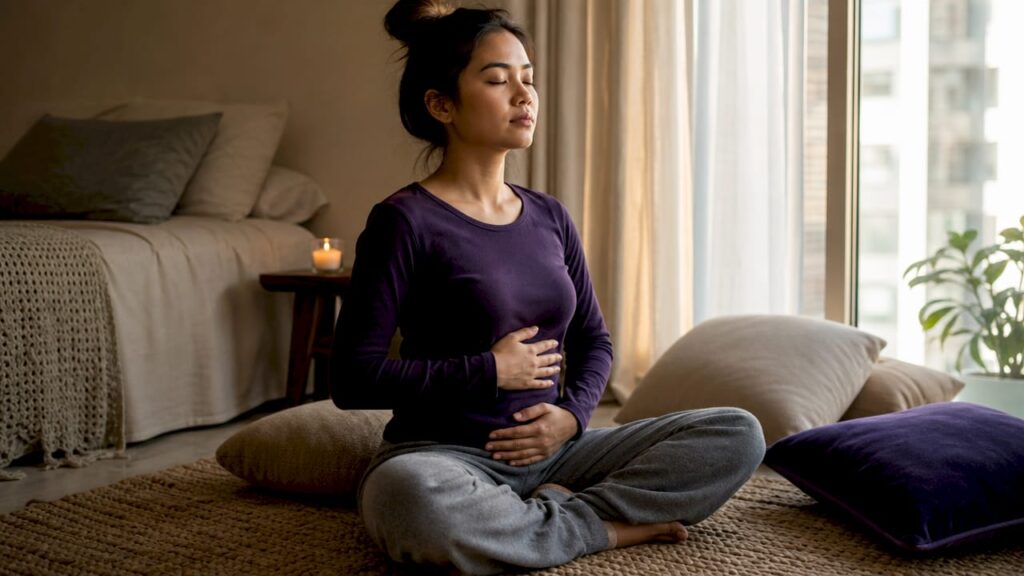
Breathing exercises calm anxiety by activating the parasympathetic nervous system, the body’s built-in relaxation system, which slows heart rate and signals to the brain that danger has passed. This is not folk wisdom. Research from Frontiers in Psychology and the Karolinska Institutet confirms that controlled breathing produces measurable changes in autonomic nervous system activity, heart rate, and attention. The clinical term for this process is autonomic regulation through respiratory control, and understanding it gives you a real tool against anxiety, not just a coping suggestion.
Why breathing exercises calm anxiety at the physiological level
Your nervous system runs two competing programs. The sympathetic nervous system triggers the fight-or-flight response: heart rate climbs, breathing quickens, muscles tense. The parasympathetic nervous system does the opposite. It slows your heart, relaxes your muscles, and tells your brain the threat is over. Anxiety locks you into sympathetic overdrive, and the fastest manual override available is your breath.
Slowing your breathing breaks the physiological stress response by lowering heart rate and signaling to the brain that danger is reduced. This works because breathing is the only autonomic function you can consciously control. When you deliberately slow your exhale, you stimulate the vagus nerve, which carries the parasympathetic signal directly to your heart and gut. The result is a measurable drop in heart rate within seconds.
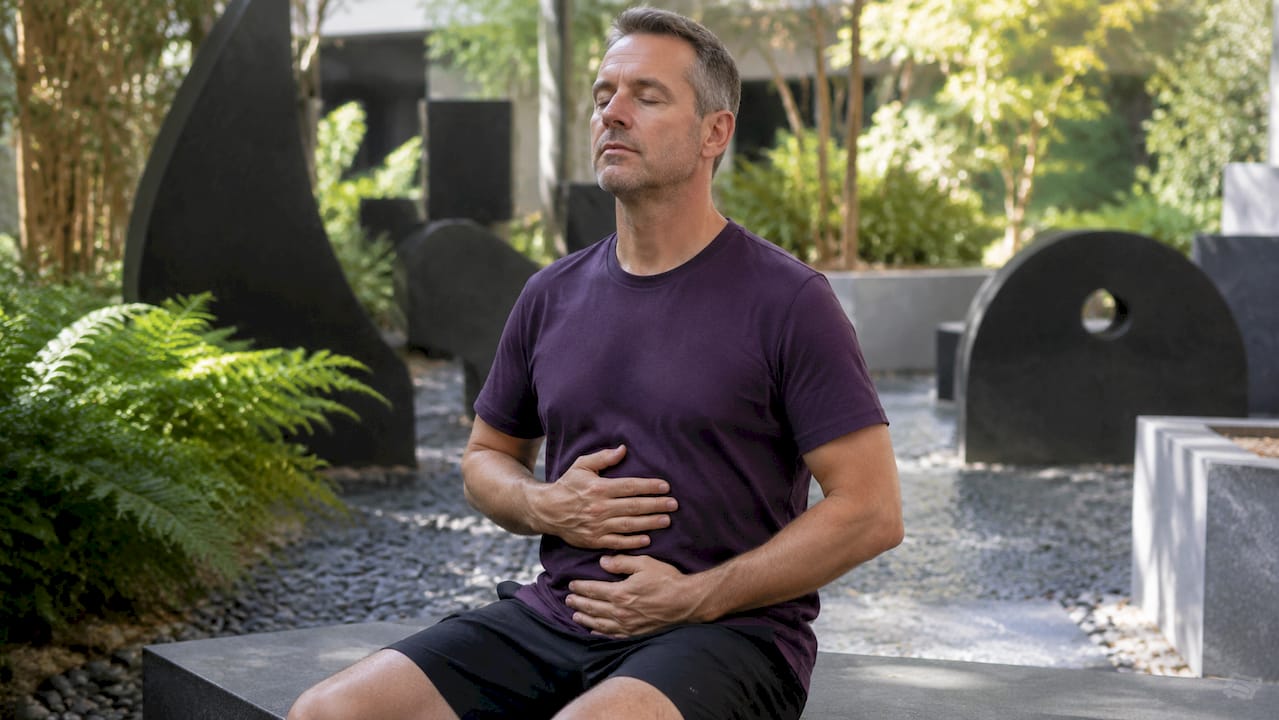
The benefits of breathing exercises also operate through a second pathway: attention. When you count seconds, track your breath, or focus on the rise and fall of your belly, your brain cannot simultaneously run anxious thought loops. Breathing exercises work through this dual pathway, redirecting attention while producing physiological changes that lower heart rate. Both effects reinforce each other.
Here is what happens in your body during a slow breathing cycle:
- Heart rate drops as the vagus nerve receives a parasympathetic signal
- Blood pressure decreases as blood vessels relax
- Cortisol production slows as the hypothalamic-pituitary-adrenal axis receives a “safe” signal
- Cognitive load shifts from threat-monitoring to breath-tracking, interrupting rumination
Pro Tip: The exhale is more powerful than the inhale for activating the parasympathetic response. Making your exhale longer than your inhale, such as inhaling for 4 seconds and exhaling for 6, produces a stronger calming effect than equal-ratio breathing.
What are the most effective breathing exercises for anxiety?
Three techniques have the strongest evidence base and the clearest step-by-step structure. Each one targets anxiety through slightly different timing and attention focus.
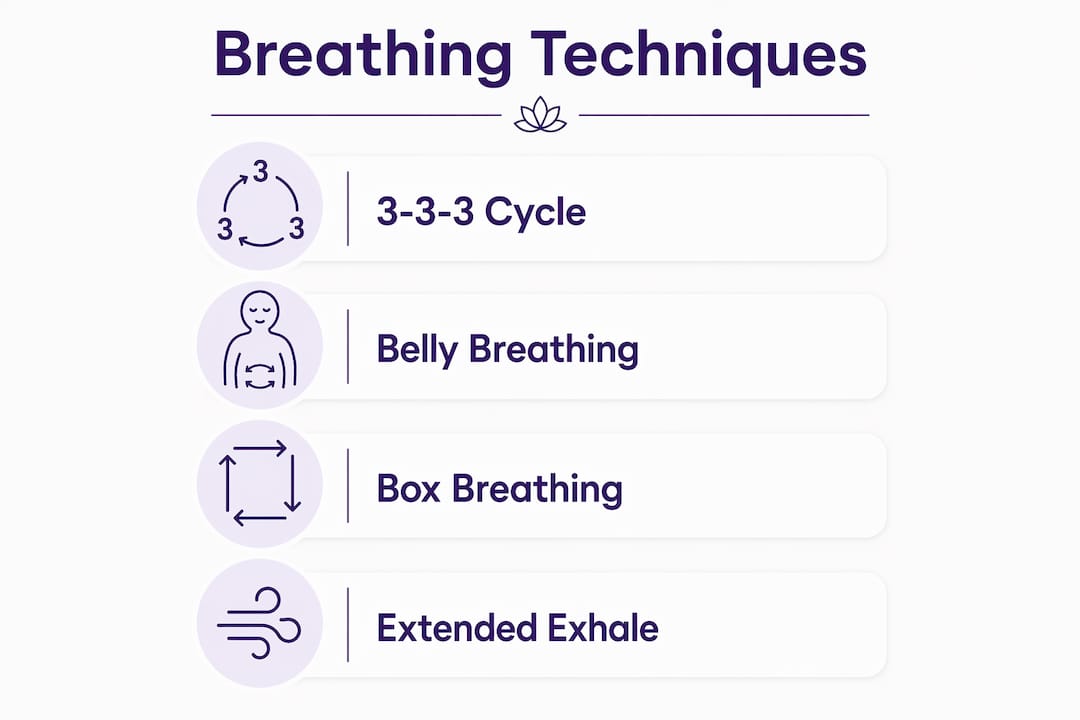
Controlled breathing (3-3-3 cycle)
The NHS-recommended 3-3-3 cycle is the most accessible starting point. Structured techniques with explicit inhale, hold, exhale, and hold timing retrain the rate and rhythm of breathing more effectively than simply telling yourself to take deep breaths. The counting gives your mind a task, which blocks anxious thought from filling the space.
- Sit or lie down in a comfortable position
- Inhale slowly through your nose for 3 seconds
- Hold your breath gently for 3 seconds
- Exhale slowly through your mouth for 3 seconds
- Hold again for 3 seconds
- Repeat the cycle for 3 to 5 minutes
This technique effectively turns off your brain’s alarm system by slowing breathing and creating space to think before reacting. That pause between stimulus and response is where anxiety loses its grip.
Belly (diaphragmatic) breathing
Belly breathing uses slow deep breaths through the nose and a gentle exhale through pursed lips, raising the tummy rather than the chest. Most anxious people breathe shallowly into the chest, which keeps the sympathetic system activated. Diaphragmatic breathing physically reverses that pattern.
- Place one hand on your tummy and one on your chest
- Breathe in slowly through your nose, letting your tummy rise while your chest stays still
- Exhale gently through pursed lips, feeling your tummy fall
- Practice for 3 to 5 minutes, gradually building duration over days
Pro Tip: If your chest hand moves more than your belly hand, you are still chest-breathing. Lying flat on your back with a small book on your belly makes the correct movement easier to feel and learn.
Box (square) breathing
Box breathing uses four equal intervals: inhale, hold, exhale, hold, each lasting 4 seconds. The U.S. Navy SEALs use this technique for stress management under pressure, which tells you something about its reliability in high-anxiety moments. The visual metaphor of tracing a square helps anchor attention and prevents mind-wandering during the exercise.
Eight weeks of abdominal breathing training reduced anxiety scores significantly and improved autonomic nervous system regulation in clinical patients. That is the long game. But even a single session produces measurable short-term relief, which makes these techniques worth starting today. For a broader set of relaxation techniques that incorporate breath focus, the evidence base is equally strong.
Common misconceptions and risks of breathing exercises
Breathing exercises are safe for most people, but three specific mistakes can make anxiety worse rather than better.
The most common error is breathing too fast or too deeply. Forced or rapid breathing can cause hyperventilation, leading to dizziness, tingling in the hands and face, and possible fainting due to CO2 imbalance. This is called hypocapnia, and it mimics anxiety symptoms so closely that it can trigger a panic response in people who are already anxious. The fix is simple: slow down and breathe gently, not forcefully.
Watch for these signs that you need to stop and rest:
- Lightheadedness or dizziness during or after the exercise
- Tingling or numbness in fingers, toes, or lips
- Feeling more anxious or panicked than before you started
- Chest tightness that increases rather than decreases
People with asthma, COPD, or other respiratory conditions should consult a doctor before starting any structured breathing program. Breath-holding phases in particular can be uncomfortable or unsafe for people with compromised lung function.
Breathing exercises emphasize gentle pacing rather than forced or rapid breathing. The goal is a calm, steady rhythm, not maximum lung capacity. If it feels like effort, you are doing too much.
The mindfulness and breathing connection is also worth understanding here. Mindful attention during breathing, noticing the sensation without trying to control it aggressively, produces better outcomes than mechanical breath-counting alone.
How to build a daily breathing practice for lasting anxiety relief
Consistency matters more than duration. Regular practice of breathing exercises helps you feel calmer by slowing breathing and shifting attention away from uncomfortable thoughts, with the most benefit coming from daily routines rather than occasional sessions. Think of it like physical exercise: one workout does not transform fitness, but three weeks of daily practice does.
Here is a practical framework for building the habit:
- Pick a fixed time. Morning practice before checking your phone sets a calm baseline for the day. Evening practice before sleep reduces the cortisol spike that disrupts sleep onset.
- Start with 3 minutes. Three minutes of the 3-3-3 cycle is enough to produce a measurable physiological shift. Extend to 10 minutes as the habit solidifies.
- Use rising anxiety as a trigger. Slow-paced breathing used just as anxiety increases produces immediate reductions in anxiety and perseverative cognition. Do not wait until you are overwhelmed. Start the exercise at the first sign of tension.
- Create a low-distraction environment. Silence your phone, sit in a consistent location, and use the same posture each time. Environmental cues accelerate habit formation by reducing the decision cost of starting.
- Combine with cognitive focus. After completing a breathing cycle, spend 30 seconds naming three things you can see, hear, and feel. This grounds attention in the present and extends the parasympathetic window opened by the breath work.
The timing of your practice affects the magnitude of relief you experience. Using breathing as a just-in-time intervention, right when anxiety starts to climb, produces stronger immediate effects than practicing only when you are already calm. Both approaches have value, but the early-intervention use is the one most people overlook. For a full protocol on integrating these techniques into your anxiety management, the step-by-step anxiety plan at Cognicareai covers the sequencing in detail.
Key takeaways
Breathing exercises calm anxiety because they activate the parasympathetic nervous system through slow, controlled breath patterns while simultaneously redirecting attention away from anxious thought loops.
| Point | Details |
|---|---|
| Dual mechanism | Breathing calms anxiety through both physiological changes and attention redirection, not one or the other. |
| Best techniques | The NHS 3-3-3 cycle, belly breathing, and box breathing each have strong evidence and clear step-by-step structure. |
| Timing matters | Using breathing exercises at the first sign of rising anxiety produces stronger immediate relief than waiting. |
| Eight-week payoff | Consistent abdominal breathing training over eight weeks produces measurable reductions in anxiety scores and autonomic improvements. |
| Avoid overbreathing | Forced or rapid breathing causes CO2 imbalance and can worsen anxiety symptoms through hyperventilation. |
What I have learned from practicing this daily
I used to think breathing exercises were something you did in a yoga class, not a real tool for managing anxiety in the middle of a difficult day. That changed when I started treating them as a physiological intervention rather than a relaxation ritual.
The shift that made the biggest difference was catching anxiety early. Most people wait until they are already spiraling before they try to breathe their way out of it. At that point, the sympathetic nervous system is running at full speed, and a few slow breaths feel inadequate. Starting a 3-3-3 cycle at the first sign of tension, before the thought loop accelerates, is a completely different experience. The body responds much faster when it has not yet committed fully to the stress response.
Mind wandering is the other challenge nobody talks about honestly. The first week of daily practice, my attention left the breath every 10 to 15 seconds. That is normal. The act of noticing you have wandered and returning to the count is itself a form of attention training. It gets easier, and the cognitive benefit of that training extends well beyond the breathing session itself.
The combination of breath control with a brief grounding exercise afterward, naming what you see, hear, and feel, extends the calm window significantly. On its own, a breathing session might hold for 20 minutes. With the grounding addition, that window stretches to an hour or more in my experience. That is enough time to make a decision, have a conversation, or get through a difficult task without anxiety driving the outcome.
— dushyantha
Explore AI tools that support your breathing practice
Breathing exercises are a proven foundation for anxiety management, and the right digital tools can help you stay consistent, track your progress, and personalize your practice. Cognicareai has built a directory of AI-powered mental health tools that complement techniques like box breathing and belly breathing with personalized reminders, mood tracking, and guided sessions that adapt to your anxiety patterns. These tools do not replace the practice. They remove the friction that stops most people from maintaining it. Visit Cognicareai to find the right combination of AI support and evidence-based techniques for your specific needs.
FAQ
Why do breathing exercises reduce anxiety so quickly?
Slow breathing activates the vagus nerve, which triggers the parasympathetic nervous system and lowers heart rate within seconds. This physiological shift signals to the brain that the threat has passed, interrupting the anxiety cycle before it escalates.
How long does it take for breathing exercises to work?
Immediate anxiety reduction occurs within a single session when breathing exercises are used as anxiety rises. Sustained improvements in autonomic regulation and anxiety scores require consistent practice over approximately eight weeks.
Can breathing exercises make anxiety worse?
Yes, if done incorrectly. Forced or rapid breathing causes hyperventilation and CO2 imbalance, which mimics and can intensify anxiety symptoms. Gentle, paced breathing at a slow rhythm is the correct approach.
What is the best breathing technique for immediate anxiety relief?
The NHS-recommended 3-3-3 cycle (inhale 3 seconds, hold 3 seconds, exhale 3 seconds, hold 3 seconds) is the most accessible technique for immediate relief. Box breathing with 4-second intervals is equally effective and adds a visual attention anchor.
How often should I practice breathing exercises for anxiety?
Daily practice produces the strongest results. Even 3 to 5 minutes per day builds the autonomic regulation capacity that reduces baseline anxiety over time.