

Sorting through countless mental health apps to find trustworthy, tailored support wastes time and often leads to missed features that fit unique needs. Most directories list too many generic tools without context, and individual apps rarely match safety, privacy, and integration requirements all at once. You can match a mental health app to your privacy needs, safety concerns, and style of support without slogging through dozens of mismatched options.
Table of Contents
CogniCare AI
At a Glance
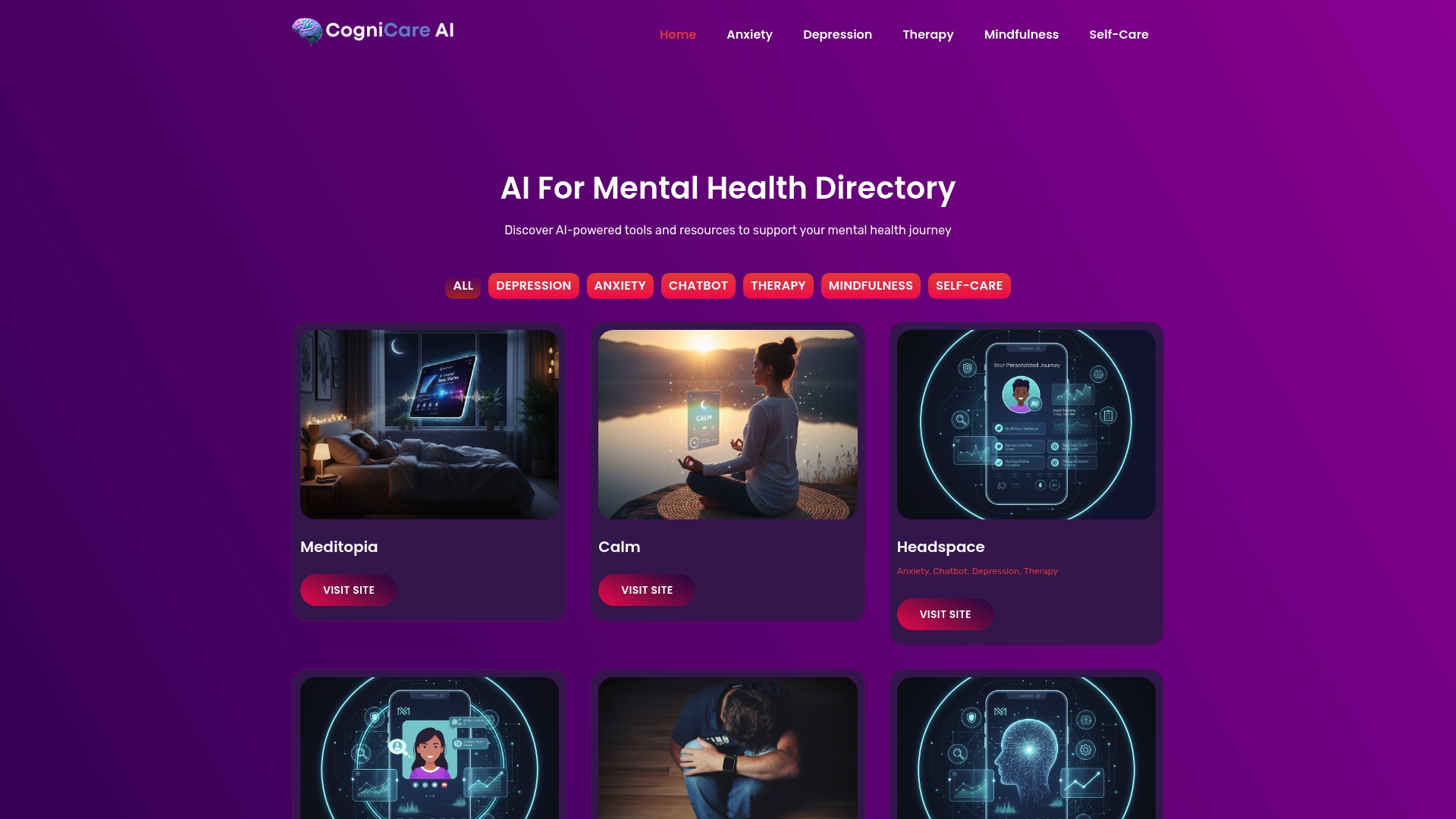
Vendor onboarding brings multiple AI mental health tools into a single marketplace. The vendor advertises a curated directory of evidence-based resources and self-reported improvements in coping strategies. The platform aims to connect people to tools for anxiety, depression, mindfulness, and self-care while emphasizing safety and privacy.
Core Features
CogniCare AI runs a vendor onboarding process that vets third-party AI mental health tools and lists them in a curated directory. The marketplace delivers personalized recommendations based on user needs and includes AI-driven assessments and tracking to monitor progress. The platform also highlights privacy practices and accessibility to support broad, digital access.
Key Differentiator
CogniCare AI focuses on assembling a credible collection of third-party AI tools and matching them to individual needs through tailored suggestions. That curation plus recommendation logic reduces the time you spend testing tools and narrows choices to options the platform has reviewed.
Pros
The marketplace gathers a wide range of verified AI mental health tools in one place, which saves time when you want multiple options. Personalized recommendations guide selection and help keep engagement focused on what fits your symptoms and preferences. Emphasis on safety and privacy means listings include information about vendor practices. The digital model makes tools accessible globally and supports clinicians, organizations, and researchers who need a centralized directory.
Cons
- Limited in crisis intervention or emergency support. The platform lists digital tools but does not replace immediate professional crisis services.
Who It’s For
Tech-savvy individuals who want quick access to multiple digital mental health tools will get the most value. Mental health practitioners can use the directory to find AI tools for patient support or blended care. Organizations and researchers that need a curated set of interventions will appreciate the onboarding and tracking features.
Unique Value Proposition
Vendor onboarding for multiple AI-powered mental health tools gives CogniCare AI a workflow advantage. By vetting and listing third-party options, the marketplace reduces the trial-and-error clinicians and individuals face when testing apps and programs. That vetting also makes it easier for teams to recommend a vetted tool rather than discovering one tool at a time.
Real World Use Case
A person managing anxiety signs into CogniCare AI and fills out a brief assessment. The platform suggests AI mindfulness and CBT tools, sets reminders, and enables simple tracking of mood fluctuations. The user pairs an app with a peer support forum and keeps weekly notes to observe trends over time.
Pricing
Access to the curated directory is free. The vendor states that some premium tools or services listed in the marketplace may carry separate fees. There are no shipping thresholds since the offering is entirely digital.
Website: https://cognicareai.com
Woebot Health
At a Glance
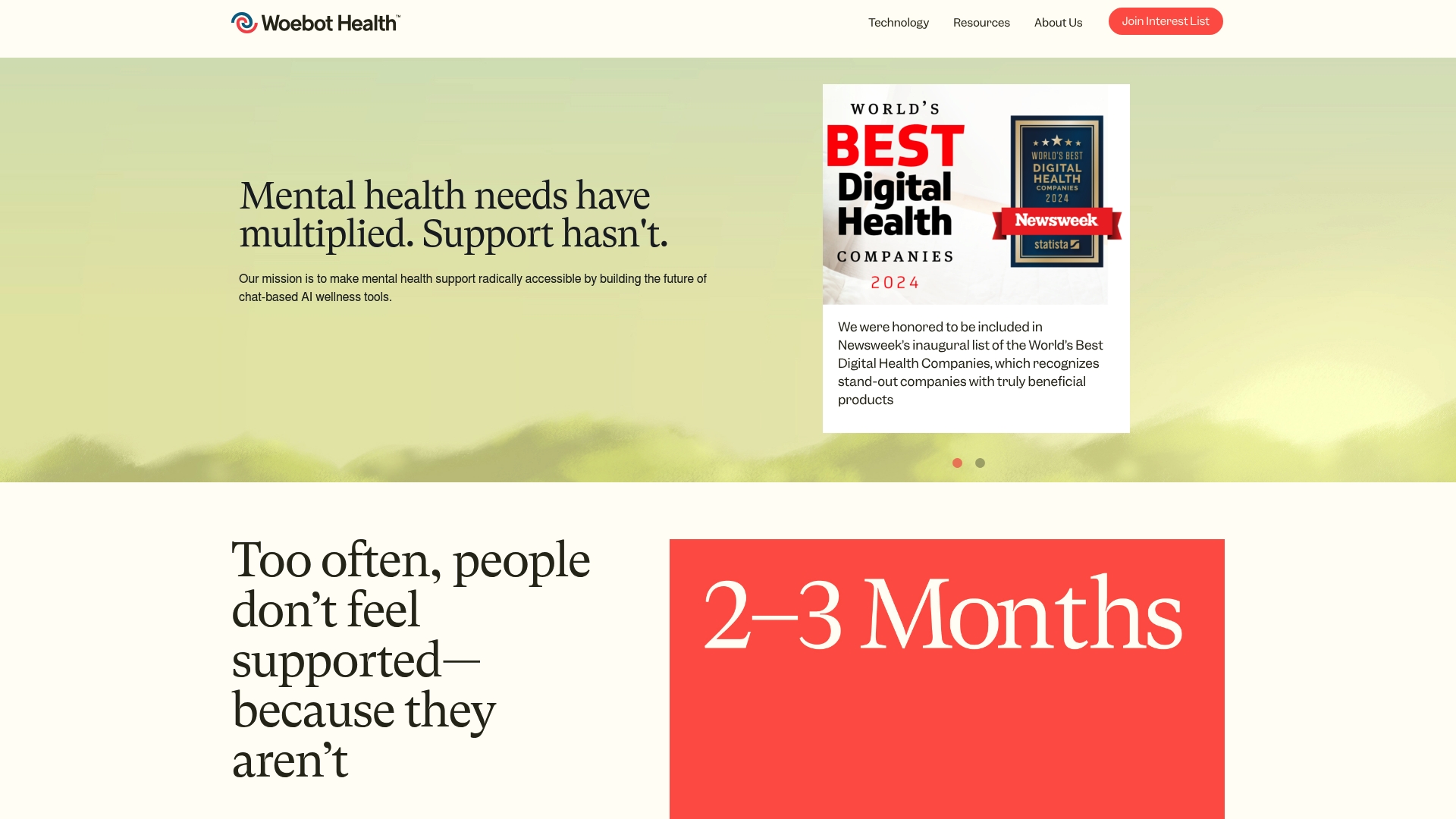
Founded in 2017 by clinical psychologist Dr. Alison Darcy, Woebot Health focuses on chat-based AI tools that support mental health care outside traditional settings. The company targets health systems and organizational programs with tools for measurement and population-level monitoring. Its platform emphasizes adjunct support rather than acting as a stand-alone clinical treatment.
Core Features
Woebot Health combines AI chat-based mental health support with integrations that connect to Electronic Medical Records for clinical workflows. The platform collects patient reported outcomes (PROs) to aid measurement and possible reimbursement, and it produces population health insights such as anxiety and depression metrics. These capabilities are designed to support value-based care and preventive behavioral health strategies.
Key Differentiator
Woebot Health’s marketing materials state it uses AI chat technology intended to build meaningful, therapeutic relationships with users at scale. That claim frames the product as a relational chatbot rather than a basic symptom checker. For organizations, that focus means the tool aims to increase engagement while fitting into clinical pathways.
Pros
The product addresses gaps in access by offering always-available digital support that complements clinical care rather than replacing it. It supports clinical workflows through EMR integration and structured PRO collection, which helps with patient monitoring and reporting. The vendor advertises industry recognition for innovation, and that external visibility can ease conversations with stakeholders who need evidence of market traction.
Cons
- Primary focus on adjunct support. The tool is not a direct replacement for professional therapy and should not be used as one.
- Limited to non-emergency use. The platform is not suitable for crisis intervention or emergency medical situations.
- Integration demands. Buyers must verify EMR and workflow compatibility before committing.
- Variable outcomes across groups. Effectiveness may differ by population and implementation approach.
When It May Not Fit
Choose a different solution if you need a stand-alone therapy platform that replaces clinician contact. Avoid this product if your service must handle emergency intervention or on-call crisis response. Also skip it if your organization lacks the IT capacity to integrate digital tools into existing medical records and care pathways.
Who It’s For
Woebot Health fits health systems, mental health providers, and large employers seeking digital augmentation for population health programs. It works for teams that want structured PRO collection and monitoring tied to clinical records. It is not aimed at individual consumers who expect one-on-one licensed therapy only.
Real World Use Case
A regional health system deploys Woebot to screen and monitor depression symptoms across primary care patients. Clinicians receive PRO summaries in the EMR, which helps prioritize follow-up care and supports billing discussions. The tool runs alongside traditional therapy and case management to widen reach and capture early signals.
Pricing
Woebot Health does not list public pricing. The vendor describes pricing as informational only, and enterprise quotes typically require direct contact with sales and implementation teams.
Website: https://woebothealth.com
Youper
At a Glance
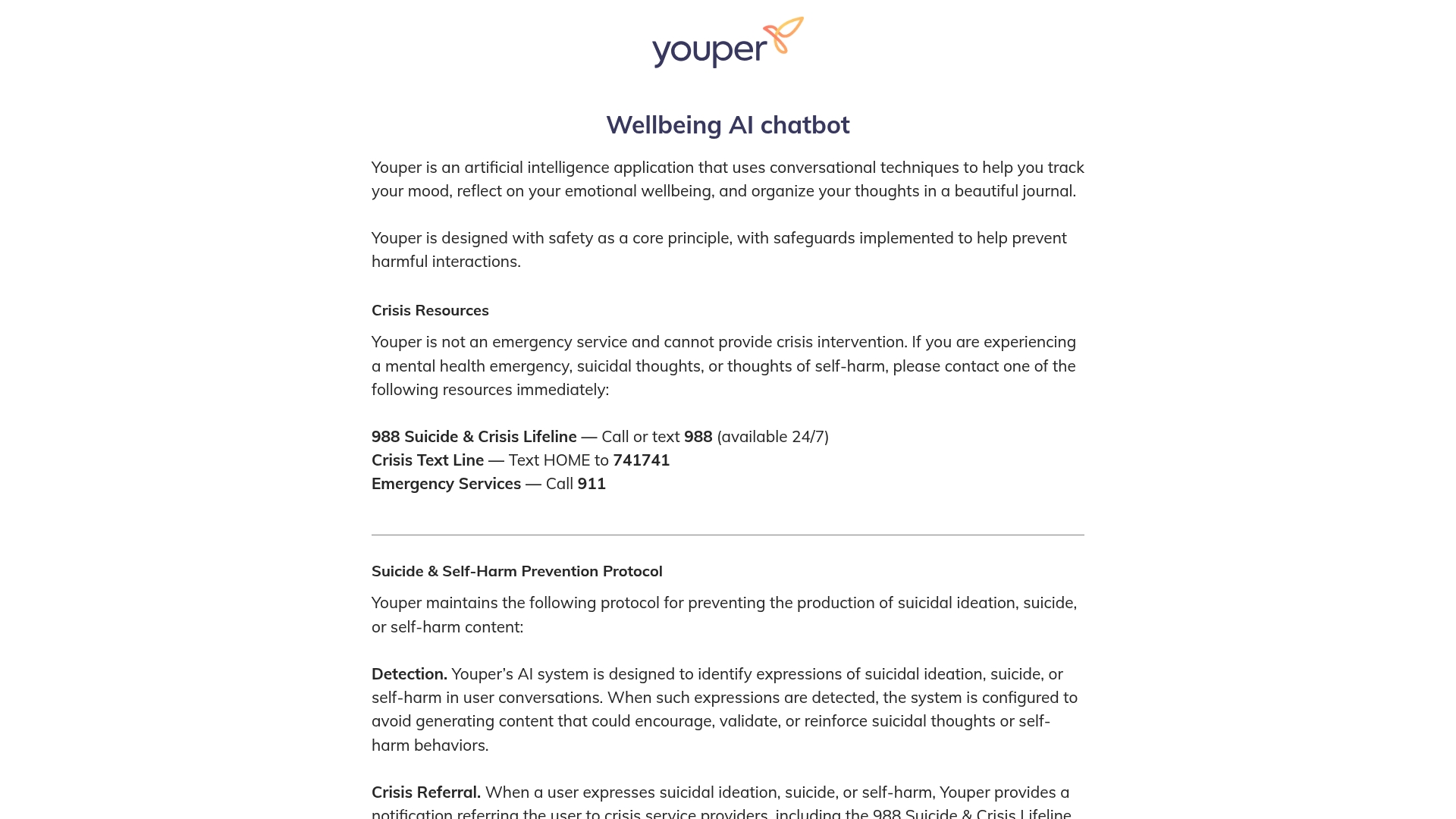
According to the company, Youper includes safety safeguards and crisis referral capabilities. Those features form the platform’s most specific claim and shape how conversations are handled. It focuses on adults who want an AI companion for mood tracking and reflective journaling.
Core Features
Youper uses an AI chatbot for conversational mood tracking and guided reflection. It organizes journal entries in a visual format and notifies people of crisis resources when risk appears. The app highlights privacy and safety through guardrails that aim to limit harmful exchanges.
Key Differentiator
Youper’s safety safeguards and built in crisis referrals set it apart among mental health chatbots. Those safeguards aim to reduce harmful interactions while offering links to crisis hotlines and resources. That focus narrows its appeal to people who prioritize protective AI behavior over clinical therapy features.
Pros
Youper makes reflective practice accessible through conversational prompts and visual journaling. Those prompts help adults notice mood trends and link entries to crisis resources when needed. The product emphasizes privacy and transparency in its controls and disclosures, which supports confidential self monitoring.
Cons
- Not a substitute for professional mental health care or emergency intervention. Use a clinician or emergency service for clinical treatment.
- Detection of distress expressions may not be fully accurate and can miss some signals. That limitation affects how reliably the chatbot recognizes high risk.
- Limited to users aged 18 and older, so it does not serve minors. Caregivers cannot rely on it for teen mental health support.
- Inherent limitations as an AI system for mental health mean it cannot deliver clinical assessments or therapy records.
When It May Not Fit
People needing emergency care or formal therapy must contact a clinical provider instead. Organizations that require clinical assessment tools will find the product lacks medical records and clinician workflows. Schools and youth programs should avoid it because it does not support minors.
Who It’s For
Adults seeking a confidential AI driven wellness companion for mood tracking will find Youper relevant. It suits people who prefer self reflection over live therapy and who are at least 18 years old. It also fits readers who want privacy controls and a lightweight journaling routine.
Real World Use Case
A person begins daily mood reflections using Youper and tracks emotional trends over time. They use insights to identify rising stress and follow crisis resources if the app signals risk. That routine helps notice patterns early and prompts them to seek human help when needed.
Website: https://youper.ai
Headspace Care
At a Glance
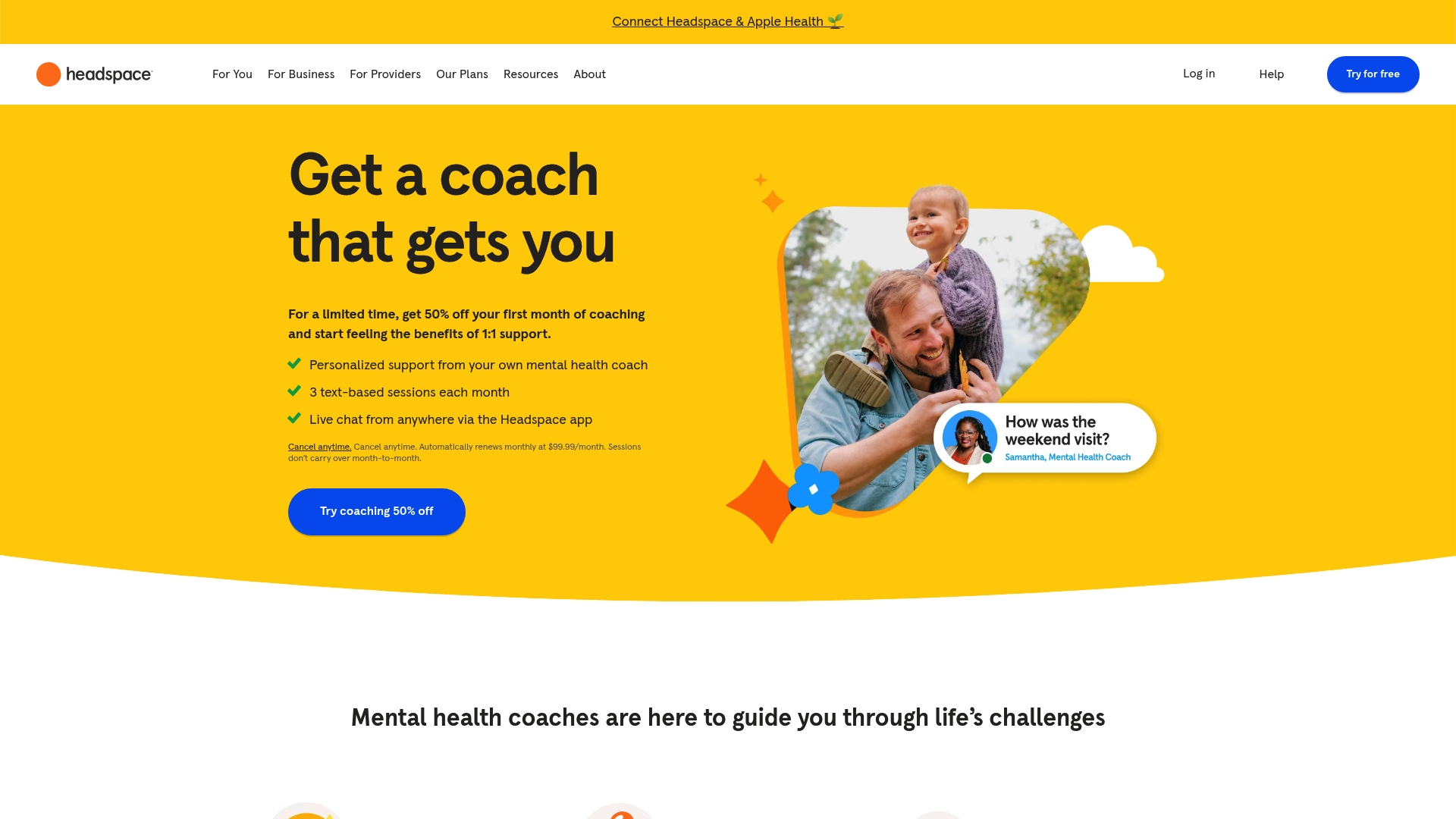
3 text-based sessions per month form the core of Headspace Care. The offering pairs certified coaches with a full meditation and sleep library for habit work and short-term support. Headspace Care’s marketing materials describe its techniques as clinically validated.
Core Features
Certified mental health coaches deliver personalized plans and text-based coaching across schedules, including after-hours and weekends. Members get access to meditations, sleep tools, and exercises alongside three coaching interactions each month. Coaching emphasizes habit building and coping skills rather than diagnosis or long-term psychotherapy. That claim appears in company materials.
Key Differentiator
The service emphasizes a text-first, coach-led approach paired with the Headspace content library. That pairing keeps interactions short and practical for people juggling busy schedules. Integration with tools like Apple Health helps coaches see sleep and activity context during sessions.
Pros
Trained coaches deliver structured techniques while the library supports self-practice between sessions. That model keeps interactions focused on concrete skills for sleep, stress, and relationship habits. Flexible scheduling and after-hours messaging reduce wait times for routine support. Subscription terms allow ongoing access with a cancel anytime option.
Cons
- Only text-based coaching. No video or in-person sessions are available.
- Support is non-diagnostic. It cannot diagnose or treat serious mental health conditions.
- Monthly sessions do not carry over. That structure can feel limiting for irregular schedules.
- Subscription cost may be high for some people compared with low-cost self-help resources.
When It May Not Fit
Not appropriate for people who need formal assessment or therapy for severe conditions. If you require video sessions or in-person care, this service will not meet that need. Those on tight budgets may prefer pay-per-session alternatives or free meditation resources.
Who It’s For
Adults who prefer human coaching over automated chat and who want short, text-based interactions will find this useful. It fits busy professionals who need after-hours access and routine habit work. It also suits people who want a single app combining coaching with a large library of meditations and sleep tools.
Real World Use Case
A busy professional schedules coaching messages after work and uses the sleep library to improve rest. They practice brief exercises between sessions to build coping skills for stress and burnout. Coaching focuses on skill building rather than diagnosis or long-term therapy.
Pricing
Automatically renews monthly at $99.99. Promotional pricing offers the first month at 50 percent off. You can cancel anytime, and pay-per-session options are advertised as available.
Website: https://headspace.com/care
Comparison of alternatives
When evaluating options for AI-driven mental health tools, Cognicare AI distinguishes itself by offering a curated directory of third-party tools with a focus on vetting for quality and relevance. This strength provides users rapid access to professionally verified resources that suit diverse mental health needs without the necessity of extensive manual research.
Versatility in user scenarios
CogniCare AI excels in its breadth of tools suited to varied conditions such as anxiety or mindfulness. This range contrasts with Youper, which focuses predominantly on mood tracking and journaling.
However, Youper safeguards user privacy and provides direct referrals to crisis resources, positioning it as preferable for users emphasizing immediate safety prioritizations.
Human vs. automated interaction
If human-guided methods appeal, Headspace Care offers live coaching supported by a mindfulness library. This human interaction caters to users seeking skills-based routines paired with one-on-one coaching flexibility unavailable in CogniCare AI’s primarily resource/tool-recommendation structure.
Best fit
- Individuals needing a wide range of vetted, AI-powered mental health tools with tailored recommendations will appreciate CogniCare AI’s precision and reliability.
- Professionals implementing solutions within EMR workflows would benefit from Woebot’s integration features designed to collect patient-reported outcomes effectively.
- Adults prioritizing precautions for mental health safety and reflection would enjoy Youper’s highlighting of crisis referral systems and reflective journaling interface.
- Users preferring real-time, text-based support with structured human feedback would find Headspace Care’s coaching approach particularly beneficial.
Our pick
CogniCare AI brings forward a distinct advantage with its ability to assemble and recommend third-party-verified mental health tools, ideal for users focused on exploring diverse solutions within a single marketplace. Additionally, with a free product listing access model, it lowers entry barriers for new users. However, for those who prioritize human-led coaching interactions or integration into clinical medical records, alternatives such as Headspace Care and Woebot Health may better align with their needs.
Explore options in mental health apps based on distinctive features.
| Product | Key Feature | Best For | Pricing | Limitation |
|---|---|---|---|---|
| Cognicareai | Curated marketplace for AI mental health tools | Tech-savvy individuals, clinicians | Free; premium tools may charge | Limited in crisis intervention or emergency support |
| Woebot Health | AI chat-based support with clinical integration | Health systems, population monitoring | Not disclosed | Not a replacement for professional therapy |
| Youper | AI chatbot with mood tracking and crisis links | Adults preferring reflective practice | Not disclosed | Limited to users aged 18 and older |
| Headspace Care | Text-based coaching with meditation library | Busy professionals needing habit work | $99.99 per month | Only offers text-based coaching |
Discover a Smarter Approach to Mental Health Support with Cognicareai
Finding effective mental health tools can feel overwhelming with so many options. The article highlights key challenges like sifting through multiple apps and the need for personalized, safe, and evidence-based resources. Cognicareai solves these problems by offering a curated directory of AI-powered tools that match your specific needs. Whether you seek support for anxiety, depression, or mindfulness, Cognicareai simplifies choosing trusted solutions while emphasizing privacy and proven coping strategies.
Explore a wide range of vetted mental health tools in one place. Get personalized recommendations that cut guesswork and help you stay engaged longer.
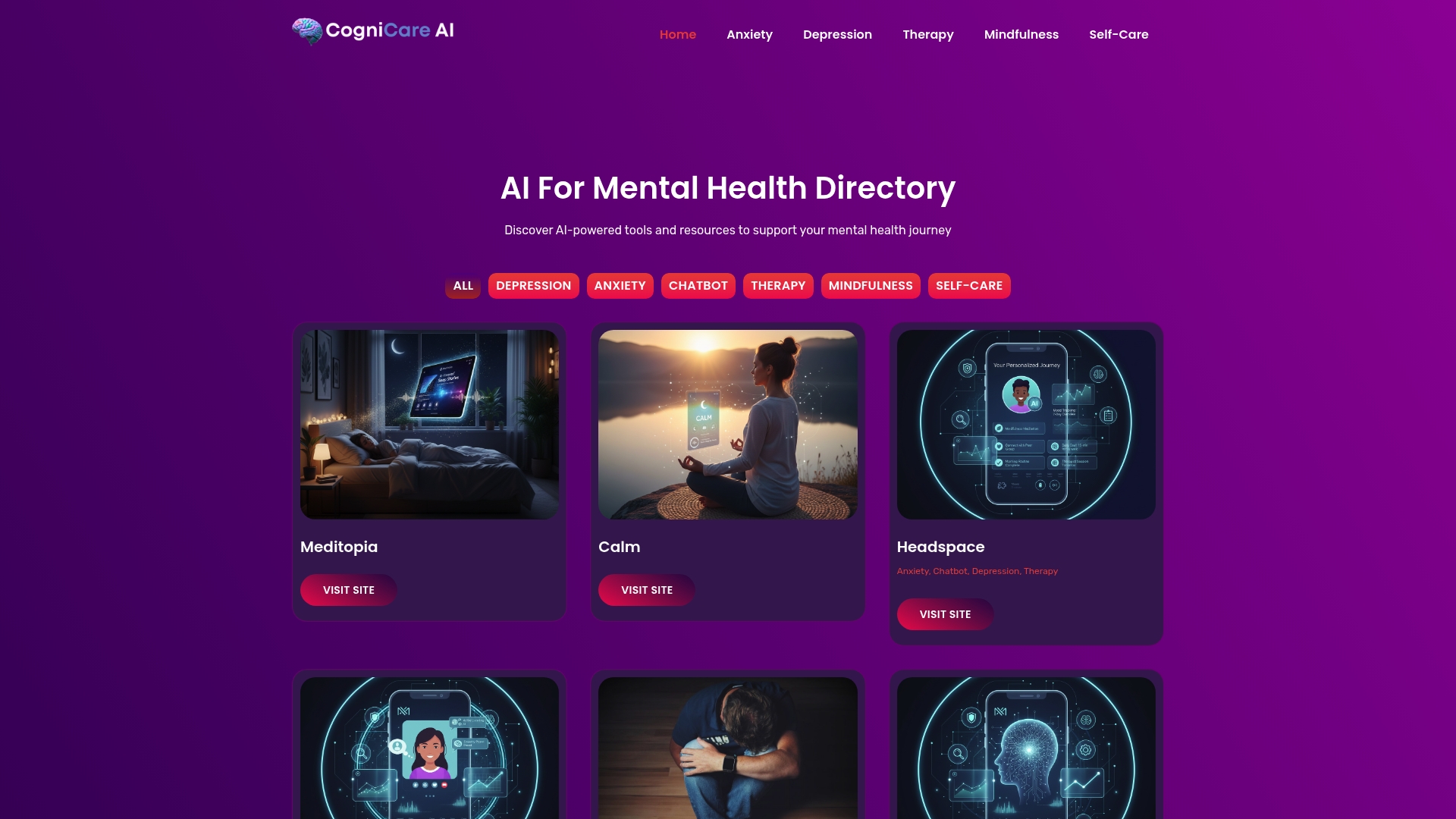
Ready to stop guessing and start benefiting from tailored support? Visit Cognicareai to find mental health resources built just for you. Take control of your emotional well-being by accessing trusted tools designed to fit your journey.
FAQ
What is a key feature of Cognicareai that supports mental health management?
Cognicareai generates personalized treatment plans from user assessments. This feature includes AI-driven assessments and tracking to monitor progress, making it a strong choice for tailored mental health care.
How does Cognicareai compare to Woebot Health in terms of support options?
Woebot Health focuses on chat-based AI tools that provide adjunct support rather than stand-alone clinical treatment. Unlike Woebot, Cognicareai connects users to multiple vetted mental health tools, allowing for more personalized resource selection tailored to specific needs.
Which platform offers a unique value proposition through vendor onboarding?
Cognicareai stands out by employing a vendor onboarding process to vet third-party AI mental health tools. This approach reduces the trial-and-error users often face when exploring mental health apps, ensuring that offered resources are credible and effective.
Can Cognicareai be used for crisis intervention?
Cognicareai is limited in crisis intervention or emergency support, as it does not replace immediate professional crisis services. Users should seek immediate help from professionals during emergencies, but Cognicareai can assist with ongoing mental health support.
What kind of audience will benefit the most from using Cognicareai?
Tech-savvy individuals seeking quick access to digital mental health tools will find Cognicareai particularly valuable. Clinicians, organizations, and researchers can also benefit from the platform’s curated directory of vetted mental health resources.