

Workplace stress is defined as the harmful physical and emotional response that occurs when job demands exceed a worker’s resources, control, or ability to cope. This directly explains why workplace stress affects mental health: the brain’s stress response, when activated repeatedly, disrupts mood regulation, cognitive function, and emotional stability. 59% of workers report their job negatively impacts mental health monthly, with 46% experiencing burnout. Those numbers signal a crisis that is no longer confined to high-risk professions. If you are a professional feeling the weight of your workload, this guide explains exactly what is happening in your mind and body, and what you can do about it.
Why workplace stress affects mental health: the core mechanism
Workplace stress triggers the body’s fight-or-flight response, flooding the system with cortisol and adrenaline. That response is designed for short bursts, not eight-hour workdays repeated five times a week. When stress becomes chronic, persistent stress worsens pre-existing health conditions and increases the risk of substance use. The brain essentially stays in emergency mode, which erodes the mental structures responsible for calm thinking, emotional regulation, and motivation.
The impact of job stress is not abstract. It shows up in your ability to focus during a meeting, your patience with colleagues, and your sleep quality on Sunday night. Occupational stress, the clinical term for work-related psychological strain, is now one of the most studied contributors to anxiety disorders and depression in working-age adults. Recognizing this connection is the first step toward addressing it with real solutions rather than willpower alone.

What are the primary causes of workplace stress?
The causes of occupational stress are well documented, and they cluster around a few consistent themes. The Monster 2026 Workplace Mental Health Report identifies the top stressors as:
- Increased workload and understaffing (39% of workers cite this as the primary driver)
- Poor management and toxic workplace culture (33%)
- Work-life balance struggles (30%)
- Job insecurity and lack of control over work decisions
- Systemic inequities, including pay gaps and lack of advancement opportunities
Each of these stressors operates differently. Workload overload creates a constant sense of falling behind, which activates anxiety. Poor management introduces unpredictability, which the brain reads as threat. Job insecurity triggers the same neurological alarm system as physical danger. Together, these factors create an environment where the nervous system rarely gets a chance to reset.
Environmental triggers matter too. Open-plan offices with constant noise, always-on communication tools like Slack and email, and blurred remote work boundaries all extend the stress window well beyond official working hours. The result is a professional who is technically off the clock but mentally still at their desk.
How does workplace stress show up in your mind and body?
The symptoms of work-related stress fall into three categories: emotional, cognitive, and physical. Recognizing them early is critical because they escalate quickly.
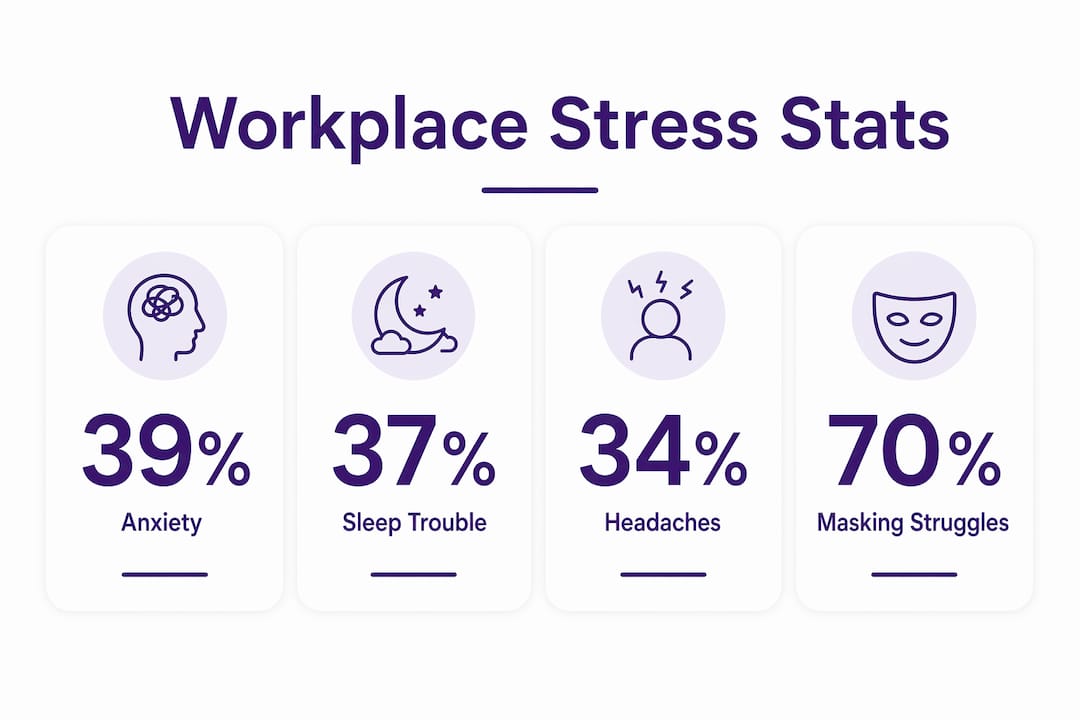
Emotional symptoms include irritability, anxiety, low mood, and a persistent sense of dread before the workday. Cognitive symptoms include difficulty concentrating, poor decision-making, and mental fatigue that makes even simple tasks feel heavy. Physical symptoms are often the most overlooked signal.
39% of workers experience anxiety or panic due to workplace stress, 37% report sleep disturbances, and 34% suffer headaches or physical pain. Sleep disruption is particularly damaging because it compounds every other symptom. A professional who cannot sleep well loses the cognitive recovery that the brain needs to regulate emotion the next day.
| Symptom category | Common examples | Risk if untreated |
|---|---|---|
| Emotional | Anxiety, irritability, low mood | Depression, panic disorder |
| Cognitive | Poor focus, indecision, memory lapses | Burnout, performance decline |
| Physical | Headaches, fatigue, sleep disruption | Chronic illness, cardiovascular risk |
| Behavioral | Withdrawal, absenteeism, substance use | Job loss, relationship breakdown |
Work-related stress symptoms including burnout lower adaptive capacity and increase the likelihood of leaving a job or profession entirely. That outcome is costly for both the individual and the organization.
How do resilience and personality shape your stress response?
Not every professional responds to the same stressor in the same way. Personal characteristics play a measurable role in how stress lands and how long it lingers.
Resilience buffers stress’s impact but does not replace the need for adaptive coping strategies. These are distinct constructs. A highly resilient professional can absorb more pressure before breaking, but if their coping methods are maladaptive (overworking, avoiding, numbing), the internal strain still accumulates. High resilience can actually hide the damage until it becomes a crisis.
Personality traits like vulnerability or narcissism intensify emotional reactivity to stress, creating feedback loops that increase professional burden. A professional with high neuroticism, for example, will interpret ambiguous feedback as criticism and a difficult client as a personal failure. Those interpretations amplify the stress signal beyond what the situation objectively warrants.
The masking problem makes this worse. 70% of workers feel forced to mask their mental health struggles, which delays intervention and deepens burnout. Performing wellness while suffering internally is exhausting. It also prevents the conversations that could lead to real workload adjustments.
Pro Tip: If you notice yourself performing “fine” at work while feeling anything but, that gap is a signal worth paying attention to. Naming the experience, even just in a private journal, reduces the cognitive load of suppression and is a recognized first step in behavioral health practice.
What practical strategies can professionals use to manage stress?
Managing the effects of stress at work requires both daily habits and deliberate communication. Neither alone is sufficient.
-
Exercise daily. Experts recommend 30–60 minutes of daily exercise to reduce the physiological effects of workplace stress. Movement lowers cortisol, improves sleep quality, and builds the neurological resilience that absorbs future stressors. Consult a physician before starting a new regimen if you have existing health conditions.
-
Communicate workload concerns to your supervisor. Anxiety disorders cause avoidance of career-advancing activities and lead professionals to suffer in silence. Supervisors are often unaware of employee overload. A direct, solution-focused conversation, framed around capacity rather than complaint, frequently produces real adjustments.
-
Use flexible work arrangements when available. Shifting your start time, working from home two days a week, or blocking focus time on your calendar are all structural changes that reduce the frequency of stress triggers.
-
Modify your environment. Noise-canceling headphones, notification batching, and designated offline hours are low-cost interventions that reduce the ambient stress load throughout the day.
-
Access Employee Assistance Programs (EAPs). Most mid-to-large employers offer free, confidential counseling sessions through EAPs. Many professionals are unaware they exist or feel reluctant to use them. They are one of the most underused mental health resources in the workplace.
Pro Tip: When raising workload concerns with a manager, use stress management boundaries framing: “I want to deliver quality work on X. To do that, I need to deprioritize Y this week.” This positions the conversation as professional problem-solving, not personal struggle.
For a broader toolkit, Cognicareai’s guide to stress management techniques covers ten evidence-informed approaches you can apply immediately.
What roles do employers and managers play in reducing stress?
Individual coping strategies matter, but they cannot fix a broken system. Managers play a critical role in preventing burnout by ensuring demands do not outpace resources. Systemic changes in workplace policies are the most effective interventions because they address root causes rather than symptoms.
| Reactive approach | Proactive approach |
|---|---|
| Offer EAP after burnout occurs | Train managers to spot early stress signals |
| Encourage individual resilience | Reduce workload and clarify role expectations |
| Provide one-time wellness days | Build flexible scheduling into standard policy |
| Address mental health stigma reactively | Create regular, safe channels for open discussion |
| Respond to complaints about bullying | Train managers on respectful leadership practices |
The comparison above shows why reactive approaches consistently underperform. They place the burden on the individual to recover from conditions the organization created. Proactive approaches change the conditions themselves.
Only 35% of workers feel safe discussing mental health openly without fearing negative career consequences. That statistic reflects a culture problem, not a personal one. Organizations that normalize mental health conversations, through manager training, anonymous feedback channels, and visible leadership modeling, see measurable reductions in absenteeism and turnover.
Key Takeaways
Workplace stress harms mental health through a direct biological mechanism, and the most effective response combines individual coping strategies with systemic employer action.
| Point | Details |
|---|---|
| Stress has a biological cause | Chronic cortisol exposure disrupts mood, cognition, and sleep, making mental health decline predictable, not personal. |
| Top stressors are structural | Workload, poor management, and work-life imbalance drive the majority of occupational stress cases. |
| Masking worsens outcomes | 70% of workers hide mental health struggles, which delays care and deepens burnout. |
| Resilience is not enough alone | High resilience can conceal maladaptive coping; adaptive strategies must be built separately. |
| Employers hold systemic responsibility | Policy changes and manager training reduce stress at the source more effectively than individual coping alone. |
What I’ve learned watching professionals burn out quietly
The pattern I see most often is this: a capable, conscientious professional absorbs more and more until the system breaks. They do not ask for help because asking feels like admitting failure. They exercise, meditate, and read productivity books. None of it works long-term because the root cause, an unsustainable workload in an unsupportive culture, never changes.
The uncomfortable truth about overcoming workplace stress is that individual strategies are necessary but not sufficient. You cannot mindfulness-app your way out of a 60-hour workweek with a manager who sends emails at midnight. The research is clear on this. Effective interventions target policy and practice, not just the person.
What I have also observed is that the professionals who recover fastest are not the most resilient. They are the ones who communicate earliest. A brief, direct conversation with a supervisor at week three of overload produces better outcomes than six months of silent suffering followed by a resignation letter. Proactive communication is a skill, and it is one most professionals were never taught.
If you are currently in a high-stress role, I would encourage you to use AI-assisted tools not as a replacement for professional support, but as a daily check-in mechanism. Tools that track mood patterns and flag early warning signs give you data to act on before the situation becomes a crisis. That early signal is worth more than any coping strategy applied after the fact.
— dushyantha
AI-powered mental health support for stressed professionals
Professionals dealing with work pressure often need support that fits into a demanding schedule, not just a weekly therapy appointment.
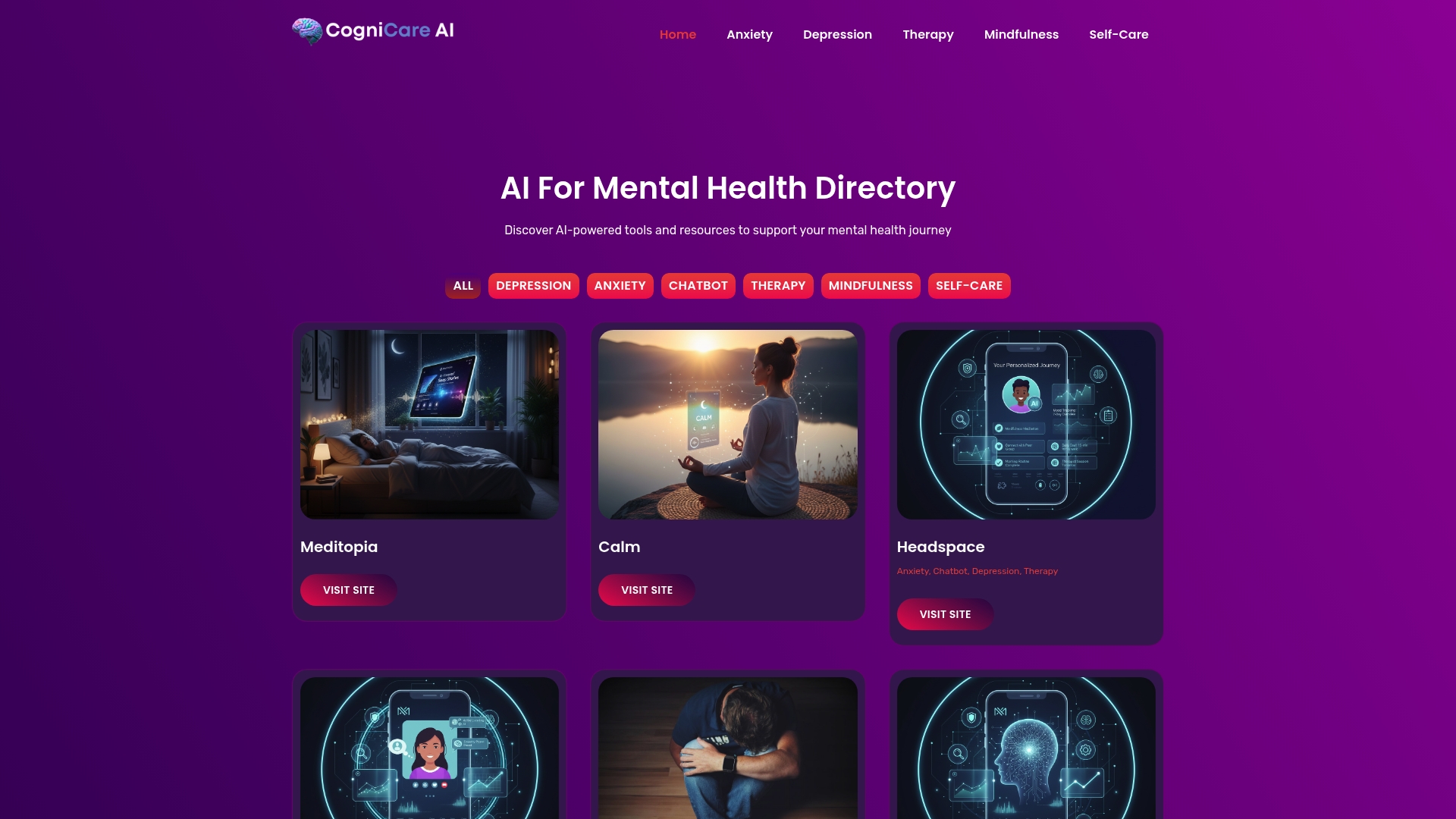
Cognicareai is a directory of AI-powered mental health tools built for exactly this situation. The platform connects professionals to personalized resources including mindfulness apps, therapy chatbots, and self-care programs that adapt to individual needs and schedules. Whether you are managing early-stage workplace stress and anxiety or looking for structured support for persistent burnout, Cognicareai simplifies access to the right tools. Start with the AI mental health tools guide to find the resources that match where you are right now.
FAQ
What is the main reason workplace stress harms mental health?
Workplace stress activates the body’s cortisol response repeatedly, which disrupts mood regulation, sleep, and cognitive function over time. When this stress becomes chronic, it creates conditions for anxiety, depression, and burnout.
What are the most common symptoms of job stress?
The most common symptoms include anxiety, sleep disturbances, headaches, irritability, and difficulty concentrating. Research shows 39% of workers experience anxiety or panic directly linked to workplace stress.
Can resilience protect you from the mental health effects of stress?
Resilience reduces the immediate impact of stress but does not replace the need for adaptive coping strategies. High resilience can actually mask internal strain if coping behaviors are unhealthy.
How should I talk to my manager about stress and workload?
Frame the conversation around capacity and output quality rather than personal struggle. Supervisors are often unaware of overload, and a solution-focused approach, such as proposing what to deprioritize, tends to produce real adjustments.
What role do employers play in protecting worker mental health?
Employers are responsible for systemic changes including workload management, manager training, and creating safe environments for mental health conversations. Individual coping strategies alone cannot compensate for structural workplace problems.