

Anxiety triggers often feel random, unpredictable, and completely out of nowhere. But they are not mysterious forces working against you. Why anxiety triggers explained so rarely in plain terms is itself part of the problem. Most people are told what to avoid, not why their brain reacts the way it does. Understanding the actual causes, from biology to behavior to the subtle environmental factors you never tracked, changes everything. This guide walks through the real science of what triggers anxiety responses, why those triggers form in the first place, and what you can do to stop feeling controlled by them.
Table of Contents
- Key takeaways
- Why anxiety triggers explained simply starts with your brain
- Common anxiety triggers: psychological, physical, and environmental
- The gut-brain connection and anxiety’s feedback loop
- Why “random” anxiety spikes are rarely random
- How to manage anxiety triggers by changing your response
- My take on why understanding triggers is genuinely empowering
- AI tools that help you understand and manage anxiety triggers
- FAQ
Key takeaways
| Point | Details |
|---|---|
| Triggers have biological roots | Your brain’s ancient alarm system, not a personal flaw, drives anxiety responses. |
| Avoidance makes triggers stronger | Avoiding feared situations teaches your brain they are dangerous, widening anxiety over time. |
| Hidden triggers are often physical | Caffeine, poor sleep, medication changes, and missed meals commonly cause unexplained anxiety spikes. |
| Gut and brain form a feedback loop | Stomach symptoms both result from and amplify anxiety, so treating the body matters. |
| Response matters more than removal | Building tolerance to triggers, not eliminating them, is what produces lasting relief. |
Why anxiety triggers explained simply starts with your brain
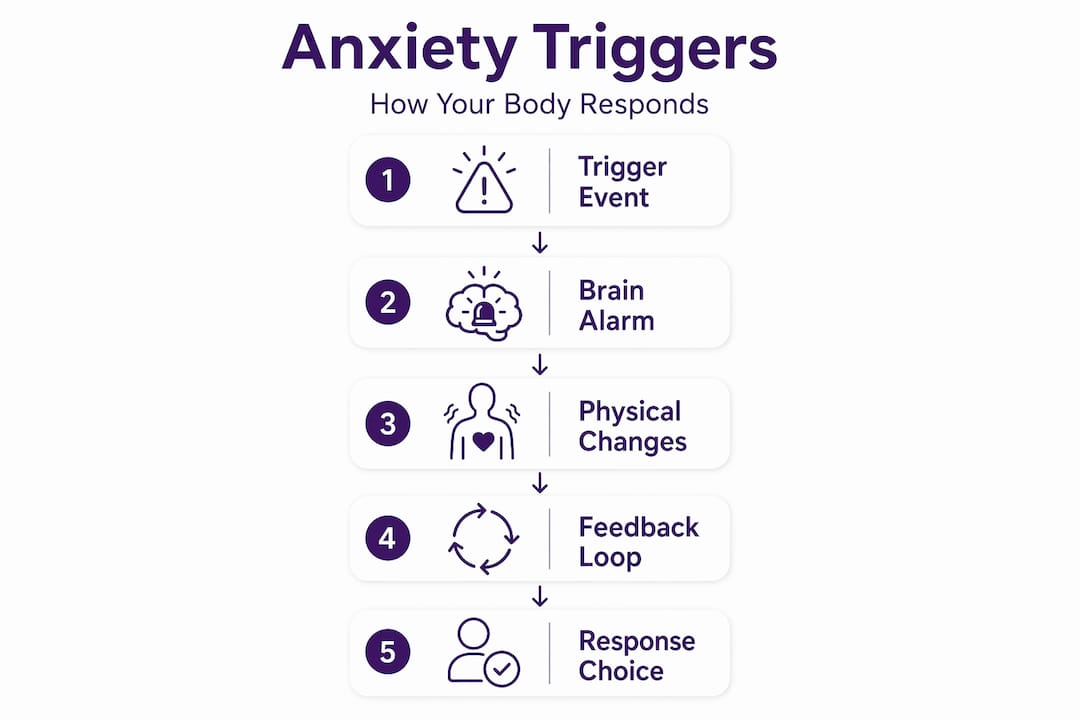
To understand anxiety trigger causes at a biological level, you need to know how your threat-detection system works. Anxiety functions as an ancient alarm: your amygdala detects a potential threat, signals your hypothalamus, which then activates your adrenal glands to flood your body with adrenaline and cortisol. Heart rate climbs. Muscles tighten. Breathing quickens. This is the fight-or-flight response, and it evolved to keep you alive.
Here is what most people miss: your amygdala cannot tell the difference between a physical threat and a perceived one. A deadline, a crowded subway, or even a memory of something embarrassing can trigger the exact same cascade as a real danger. The system is not broken. It is just overly generous with what it considers “dangerous.”
The Yerkes-Dodson law adds an important nuance. Moderate levels of arousal actually improve focus and performance. It is only when the system stays activated past the point of usefulness that anxiety becomes disabling. Your nervous system is not your enemy. It just needs recalibration.
“Anxiety is not a malfunction. It is a threat-detection system running on software written thousands of years ago, applied to a very different world.”
The physical changes that accompany a trigger are not signs of danger. They are signs that your body is doing its job. Once you recognize that distinction, understanding anxiety triggers becomes far less frightening and far more workable.
Common anxiety triggers: psychological, physical, and environmental
Not all triggers look the same, and that is where a lot of confusion comes from. Below is a breakdown of the main categories:
| Trigger type | Examples | Mechanism |
|---|---|---|
| Psychological | Social criticism, conflict, past trauma | Activates threat appraisal pathways |
| Environmental | Crowded spaces, loud noise, financial stress | Overloads sensory or cognitive load |
| Physiological | Caffeine, steroids, thyroid disorders | Mimics or amplifies arousal signals |
| Substance-related | Alcohol withdrawal, cocaine, sedative misuse | Disrupts neurotransmitter balance |
| Behavioral | Avoidance, safety behaviors | Reinforces perceived danger |
Medical conditions are an underappreciated anxiety trigger cause. Hyperthyroidism, heart arrhythmias, and even vitamin deficiencies can produce symptoms that look and feel like anxiety. Substances like caffeine, steroids, and withdrawal from alcohol or sedatives are also documented biological triggers that can worsen or create anxiety symptoms directly. This means your daily double espresso or a skipped dose of medication might be doing more to your nervous system than you realize.
If you want a clearer picture of whether your symptoms might have a medical root, distinguishing anxiety causes between psychological and physical sources is a useful place to start.

The behavioral category deserves special attention. Avoidance maintains anxiety by teaching the brain that any situation you sidestep is genuinely dangerous. Every time you leave the party early or cancel a plan because you feel anxious, your brain logs that as confirmation: “Yes, that place was a threat.” The trigger gets stronger, not weaker.
Pro Tip: When you notice a new anxiety trigger, ask yourself: “Have I been avoiding this?” If yes, the avoidance itself may be more responsible for the intensity than the trigger ever was.
The gut-brain connection and anxiety’s feedback loop
One of the most underestimated aspects of understanding anxiety triggers is what happens in your body, specifically your digestive system. The gut and the brain are in constant communication through the vagus nerve and the enteric nervous system, which contains around 100 million nerve cells lining your gastrointestinal tract.
When the fight-or-flight response fires, blood flow is redirected away from digestion and toward your muscles. Anxiety disrupts gut motility, leading to symptoms like diarrhea, constipation, cramping, and bloating. For many people, these gut symptoms then become triggers in themselves. You feel your stomach tighten before a meeting and immediately interpret it as evidence that something is wrong.
This is what clinicians call a feedback loop. Anxiety creates physical symptoms, those symptoms generate more anxiety, and the cycle continues.
| Physical symptom | What it signals to the brain | Effect on anxiety |
|---|---|---|
| Racing heart | “Something is wrong” | Escalates alertness |
| Stomach cramps | “I might be sick” | Increases vigilance |
| Shortness of breath | “I can’t cope” | Triggers panic response |
| Muscle tension | “Danger is near” | Prolongs fight-or-flight |
Breaking the loop requires working with both the body and the mind. Diaphragmatic breathing, for example, directly activates the parasympathetic nervous system through the vagus nerve, which reduces gut symptoms and calms the threat response simultaneously. For a deeper look at how anxiety affects the digestive system specifically, there is a lot more to unpack.
Pro Tip: If gut symptoms are part of your anxiety pattern, try slow belly breathing for three minutes before a known trigger situation. You are signaling safety directly to your nervous system, not just distracting yourself.
Panic attacks involve bodily symptoms forming feedback loops where anxiety heightens symptoms and symptoms intensify anxiety, which is why treatment approaches need to target both mind and body together.
Why “random” anxiety spikes are rarely random
One of the most distressing experiences in anxiety is the spike that seems to come from nowhere. You were fine, and then you were not. No obvious trigger. No explanation. This is deeply unsettling because the unknown feels uncontrollable.
But the research tells a different story. Apparent random spikes often trace back to untracked biological or environmental factors, such as caffeine intake, medication changes, or sleep disruption, rather than truly unpredictable causes. The trigger was there. You just were not looking for it.
Here is a practical framework for identifying hidden triggers:
- Track sleep quality. Even one night of disrupted sleep significantly reduces your nervous system’s tolerance for stress the next day. Keep a simple log of sleep hours and note anxiety levels the following morning.
- Monitor caffeine consumption. Most people are surprised by how much caffeine they are actually consuming across coffee, tea, energy drinks, and even chocolate. Try reducing intake for one week and observe the difference.
- Note meal timing. Low blood sugar from skipped meals produces physical symptoms like shakiness and light-headedness that your brain can misread as anxiety.
- Log medication changes. Starting, stopping, or adjusting any medication, including non-psychiatric ones, can shift anxiety levels in ways that feel unrelated.
- Track situational patterns. Even if the anxiety feels random, note the time of day, who you were with, and what you had just been doing. Patterns often emerge within two weeks of consistent logging.
Keeping a trigger journal is one of the most underused tools for managing anxiety. It shifts your relationship with anxiety from passive victim to active investigator. That shift alone reduces the fear that comes with unexplained spikes.
How to manage anxiety triggers by changing your response
Here is the part most anxiety advice gets wrong: the goal is not to eliminate your triggers. That is neither realistic nor necessary. The goal is to change what happens inside you when a trigger fires.
Avoiding panic-provoking situations creates a “fear of fear” cycle, increasing the likelihood of more attacks over time. The opposite approach, structured exposure, works by teaching your nervous system through direct experience that the trigger is survivable.
Exposure does not mean throwing yourself into the deep end. It means building a gradual hierarchy of situations, starting with mild discomfort, and working upward. Structured exposure exercises help build the skills to face anxiety-provoking situations rather than avoid them, and clinical evidence consistently supports this approach.
Beyond exposure, these strategies directly support managing anxiety triggers:
- Reduce safety behaviors. Checking your pulse repeatedly, always carrying medication “just in case,” or only going out with a trusted person all signal danger to your brain. Fading these out gradually is part of recovery.
- Practice interoceptive awareness. Learn to observe bodily sensations without immediately catastrophizing them. A racing heart is data, not a verdict.
- Use paced breathing. Four counts in, hold for four, six counts out. This ratio activates the calming branch of your nervous system and physically interrupts the feedback loop.
- Build a trigger map. Write down known triggers, your typical response, and one alternative response you could practice. This externalizes the process and reduces the sense of being overwhelmed.
- Seek professional support. Cognitive behavioral therapy and acceptance-based approaches have strong evidence behind them. AI-based tools can also provide anxiety management support between sessions or as a starting point.
The effects of anxiety triggers diminish significantly when you stop treating them as threats to eliminate and start treating them as situations to practice with.
My take on why understanding triggers is genuinely empowering
I have seen a lot of people come to the topic of anxiety triggers from a place of exhaustion. They have been told to avoid their triggers, to manage their stress, to breathe more. What they have not been told is why any of it is happening, and that gap is where so much suffering lives.
In my experience, the single most relieving thing a person can hear is that their anxiety has reasons. Not because knowing the reason makes it stop, but because it transforms anxiety from something happening to them into something they can study, understand, and respond to differently.
I have also seen people fall into the trap of obsessing over trigger identification at the expense of actually living. Tracking is a tool, not a lifestyle. The point is to gather enough information to recognize patterns, not to monitor every sensation indefinitely. There is a real risk of turning the trigger journal into another form of hypervigilance.
What actually shifts things, in my view, is cultivating genuine curiosity about your anxiety. Not “what is wrong with me” but “what is my nervous system trying to do here.” That reframe from threat to information changes how the whole system operates. Anxiety stops being a monster and starts being a signal, one that sometimes gets the volume level wrong but is rarely entirely without cause.
The discomfort is real. The fear is real. And so is the capacity to build a different relationship with both.
— dushyantha
AI tools that help you understand and manage anxiety triggers
If understanding your triggers is the first step, having the right support for that process matters enormously. That is where Cognicareai comes in.
Cognicareai connects you with a curated directory of AI-powered mental health tools designed to help you track patterns, recognize triggers, and build coping skills at your own pace. These are not one-size-fits-all solutions. They are personalized to your specific anxiety profile, whether you are dealing with social anxiety, panic episodes, or generalized worry. Explore AI mental health tools that adapt to where you are right now, and check out mindfulness apps with AI built specifically for calming the nervous system between therapy sessions or as a standalone resource.
FAQ
What does “anxiety trigger” actually mean?
An anxiety trigger is any stimulus, situation, thought, or physical sensation that activates your brain’s threat-detection system and produces anxiety symptoms. Triggers can be external, like a crowded room, or internal, like a physical sensation or a memory.
Why do anxiety triggers happen without an obvious cause?
Apparently random spikes often trace back to untracked factors like sleep disruption, caffeine, or missed meals. Keeping a detailed log for two weeks typically reveals patterns that were not visible before.
Can physical health conditions cause anxiety triggers?
Yes. Conditions like hyperthyroidism, heart arrhythmias, and substance-related causes including caffeine, steroids, and withdrawal from alcohol can directly produce or worsen anxiety symptoms independent of psychological stressors.
Does avoiding triggers make anxiety better or worse?
Avoidance provides short-term relief but reinforces the fear cycle long-term by signaling to your brain that the avoided situation is genuinely dangerous. Gradual, structured exposure is a more effective path.
How long does it take to reduce anxiety trigger sensitivity?
It varies by person and trigger type, but structured exposure therapy typically shows meaningful improvement within weeks of consistent practice. Progress depends on frequency of exposure and reducing avoidance behaviors alongside it.