

Virtual mental health support is the delivery of psychological care through digital platforms, connecting people with licensed providers via video, phone, or secure messaging without requiring an in-person visit. The industry term for this practice is telehealth mental health services, and it has moved from a pandemic workaround to a mainstream care option recognized by regulatory bodies including HIPAA and state licensing boards. Recovery rates of 38% for depression, 56% for generalized anxiety disorder, and 59% for PTSD in virtual settings virtually mirror in-person outcomes. That means the medium does not compromise the medicine. Cognicareai tracks this space closely, cataloging AI-powered tools and resources that extend mental health support beyond the therapy hour.
What is virtual mental health support and how does it work?
Virtual mental health support covers any licensed clinical service delivered through a digital channel. The most common formats are live video sessions, phone-only calls, asynchronous text or voice messaging, and hybrid models that blend online and in-person appointments. Each format serves a different need, and most platforms let you switch between them as your situation changes.
Virtual therapy sessions typically last 45–60 minutes, following the same structure as traditional in-person therapy. Early intake sessions often run longer because the therapist collects your history, sets treatment goals, and explains the platform’s privacy practices. Platforms use matching algorithms to pair you with a therapist based on specialty, availability, and your stated preferences.

Privacy is a non-negotiable standard in legitimate telehealth. Not all virtual platforms are HIPAA-compliant; only those with signed Business Associate Agreements are legally required to protect your health information. Before you book a first session, confirm that the platform has a BAA in place with its therapists. That single check separates a clinical tool from a consumer app with no legal accountability.
Pro Tip: Test your camera, microphone, and internet connection at least 15 minutes before your first session. Have a backup plan, such as a phone number to call, ready in case your connection drops. Technical failures are the most common barrier to effective virtual sessions, and a simple rehearsal eliminates most of them.
Is virtual therapy effective compared to in-person care?
The evidence is clear. Online therapy is as effective as in-person therapy for the most common conditions people seek help for, including depression, generalized anxiety disorder, and PTSD. The recovery rates across these conditions are nearly identical regardless of delivery mode. That finding removes the biggest hesitation most people have about trying telehealth.
The benefits of online therapy extend well beyond clinical outcomes. Flexible scheduling removes the barrier of taking half a day off work. Geographic reach means a person in a rural county can access a specialist who only practices in a major city. Reduced stigma is real too: entering a therapist’s waiting room is a visible act, while opening a video call from your living room is not.
Therapist sustainability is an underappreciated advantage. Therapists using virtual therapy report lower burnout rates, with significantly lower depersonalization scores compared to in-person-only practitioners. Lower burnout means higher quality care over time, which directly benefits you as the person receiving treatment.
Virtual care does have firm limits. Acute psychiatric crises and severe psychotic disorders usually require in-person care because they demand physical safety assessments and direct observation. If you or someone you know is in immediate danger, in-person emergency services are the right first step, not a video call.
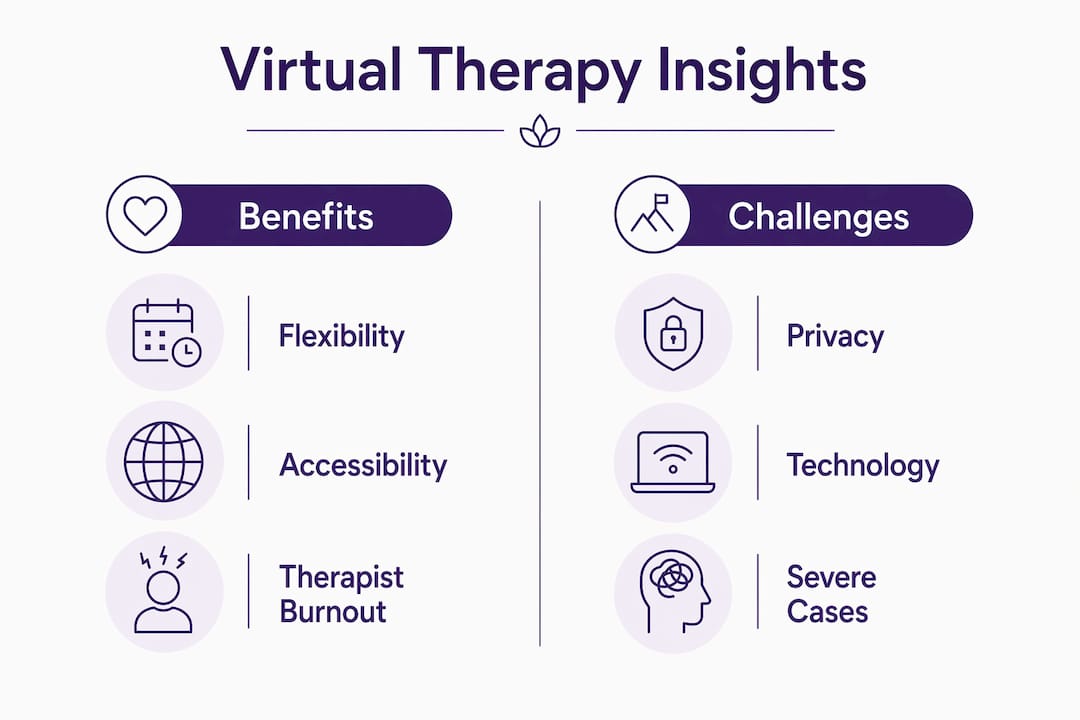
The key factor in whether virtual therapy works is not the screen. Effectiveness depends on consistent application of clinical standards including evidence-based practices, a strong therapeutic alliance, clear goals, and structured follow-up. A skilled therapist using Cognitive Behavioral Therapy or Dialectical Behavior Therapy online produces the same results as one working in an office.
What virtual counseling options are available?
The range of virtual counseling options is wider than most people realize. Individual therapy is the most common entry point, but the options extend well beyond weekly one-on-one sessions.
- Individual therapy: Weekly or biweekly sessions with a licensed counselor, psychologist, or social worker via video or phone.
- Group therapy: Structured sessions with a therapist and multiple participants, often focused on a shared condition like social anxiety or grief.
- Intensive Outpatient Programs (IOP): Multiple sessions per week for people who need more support than standard weekly therapy but do not require hospitalization.
- Partial Hospitalization Programs (PHP): Near-daily structured programming delivered virtually for people stepping down from inpatient care.
- Asynchronous messaging therapy: Text or voice messages exchanged with a therapist on a flexible schedule, useful for people with unpredictable work hours.
Hybrid models combining virtual and in-person care improve accessibility and treatment adherence, especially for complex cases. A person managing both a chronic condition and a demanding schedule might see their therapist in person once a month and connect virtually for the remaining sessions. That flexibility keeps treatment consistent without requiring rigid logistics.
| Format | Best use case | Potential drawback |
|---|---|---|
| Live video therapy | Standard weekly care, most conditions | Requires stable internet and private space |
| Phone-only therapy | Low bandwidth areas, camera anxiety | No visual cues for therapist |
| Asynchronous messaging | Irregular schedules, mild to moderate symptoms | Slower response, less crisis-ready |
| Group therapy online | Shared-condition support, cost reduction | Less individual attention |
| Hybrid IOP/PHP | Step-down from inpatient, complex cases | Requires local in-person component |
Pro Tip: Before signing up for any platform, verify that your therapist holds a license in the state where you are physically located during sessions. State licensing laws require location verification before virtual care can begin, and an unlicensed cross-state session is not legally protected.
How to prepare for your first virtual therapy session
Preparation makes the difference between a productive first session and a frustrating one. The steps below apply whether you are accessing therapy online for the first time or switching from in-person care.
- Choose a private space. Find a room where you will not be overheard or interrupted. A closed door, headphones, and a white noise machine outside the room all help.
- Test your technology. Check your camera, microphone, and internet speed before the session. Log into the platform at least 10 minutes early to resolve any login issues.
- Prepare your ID. Platforms must verify your identity and location before your first session. Have a government-issued ID ready and know your current physical address.
- Review the privacy policy. Confirm the platform has a signed Business Associate Agreement. If the privacy policy does not mention HIPAA compliance or a BAA, ask directly before sharing any health information.
- Write down your goals. Think about what brought you to therapy and what you want to change. A clear opening statement helps your therapist design a treatment plan faster.
- Set up a backup contact method. Give your therapist a phone number they can reach you on if the video connection fails. This keeps the session moving even if technology does not cooperate.
Building a therapeutic alliance remotely takes intentional effort. Show up on time, follow through on between-session exercises, and communicate openly when something is not working. The relationship with your therapist is the single strongest predictor of outcomes, and that relationship builds the same way online as it does in person: through consistency and honesty.
Key Takeaways
Virtual mental health support delivers clinical-grade care through digital channels, with recovery rates for depression, anxiety, and PTSD that match in-person therapy when evidence-based practices are applied consistently.
| Point | Details |
|---|---|
| Effectiveness is proven | Recovery rates for depression, anxiety, and PTSD in virtual settings match in-person outcomes. |
| HIPAA compliance matters | Only platforms with signed Business Associate Agreements are legally required to protect your health data. |
| Know the limits | Acute psychiatric crises and severe psychotic disorders require in-person care, not a video call. |
| Hybrid models work best for complex cases | Combining virtual and in-person sessions improves adherence and accessibility for ongoing conditions. |
| Preparation drives session quality | Testing technology, verifying therapist licensing, and setting clear goals before session one prevents the most common problems. |
My take on where virtual mental health care is actually headed
I have followed the mental health technology space long enough to see a clear pattern: the debate about whether virtual therapy is “real” therapy is over. The clinical data settled it. What I find more interesting now is the gap between what the research proves and what most people actually experience when they try to access care online.
The platforms that work well share one trait. They treat the technology as infrastructure, not the product. The product is still the therapeutic relationship. Platforms that lead with features, AI matching scores, or subscription tiers before they lead with clinical credentials are selling convenience, not care. Those are different things, and the distinction matters when you are dealing with depression or trauma.
The future of mental health care is clearly patient-centered and hybrid. I do not think fully virtual or fully in-person will win. The people I see getting the best outcomes use both, shifting the ratio based on what their life demands at a given time. That flexibility is the real innovation, not any single app or platform.
My caution for anyone starting out: do not let the convenience of virtual access lower your standards for clinical quality. Ask about your therapist’s training, their approach, and how they measure progress. A good therapist will welcome those questions. One who deflects them is a signal worth heeding.
— dushyantha
AI-powered tools that extend your mental health support
Virtual therapy sessions give you 45–60 minutes of structured care each week. The other 167 hours are yours to manage, and that is where AI-powered tools make a measurable difference.
Cognicareai catalogs the most effective AI mental health tools available in 2026, from mindfulness apps that adapt to your stress patterns to therapy chatbots that provide structured support between sessions. Each tool in the directory is selected for clinical relevance, not just popularity. If you are already working with a therapist virtually, these resources extend the work you are doing in sessions into your daily routine. If you are not yet in therapy, they offer a lower-barrier starting point while you find the right provider. Visit Cognicareai to find tools matched to your specific needs, whether that is anxiety management, sleep, or building emotional resilience over time.
FAQ
What is virtual mental health support?
Virtual mental health support is the delivery of therapy and counseling through digital tools including video calls, phone sessions, and secure messaging. It connects people with licensed mental health providers without requiring an in-person visit.
Is virtual therapy as effective as in-person therapy?
Yes. Recovery rates for depression, generalized anxiety disorder, and PTSD in virtual settings closely match in-person outcomes when evidence-based practices are applied consistently.
What technology do I need for online therapy?
A smartphone, tablet, or computer with a working camera and microphone, plus a stable internet connection, covers the technical requirements for most platforms. Always test your setup before your first session.
How do I know if a virtual therapy platform is private and secure?
Check whether the platform has a signed Business Associate Agreement with its therapists. Only platforms with a BAA are legally required under HIPAA to protect your personal health information.
When is in-person care better than virtual therapy?
In-person care is necessary for acute psychiatric crises, severe psychotic disorders, and situations requiring physical safety assessments. Virtual therapy is not equipped to manage emergencies that require immediate physical intervention.