

Tracking your mood in a notebook or app might feel like a small act, but the role of self-monitoring in depression care is far more significant than most people realize. It is not a cure. It will not lift a depressive episode on its own. What it does is give you and your care team something genuinely useful: real data about how you are actually doing, not just how you felt in the 10 minutes before your last appointment. This article breaks down how self-monitoring works, what it can and cannot do for you, and how to use it in a way that helps rather than hurts.
Table of Contents
- Key Takeaways
- The role of self-monitoring in depression care explained
- Real benefits of tracking your mood in depression
- What self-monitoring cannot do, and where it can backfire
- How to build a self-monitoring practice that actually works
- My honest take on self-monitoring and depression
- Tools that make self-monitoring easier
- FAQ
Key Takeaways
| Point | Details |
|---|---|
| Self-monitoring builds awareness | Tracking mood, sleep, and activity reveals patterns that are invisible without data. |
| It supports clinical care | Sharing tracked data with your provider improves treatment decisions and communication. |
| It is not a standalone fix | Research shows mood monitoring alone does not reliably reduce depressive symptoms. |
| Over-monitoring carries risks | Excessive tracking can increase rumination and distress in some individuals. |
| Pairing data with action plans matters | Monitoring is most useful when linked to a specific response, like contacting your clinician. |
The role of self-monitoring in depression care explained
Self-monitoring is a clinical term for the deliberate, ongoing observation and recording of your own mental and physical states. In the context of depression, this practice falls into two broad categories: active self-report and passive sensor-based data collection.
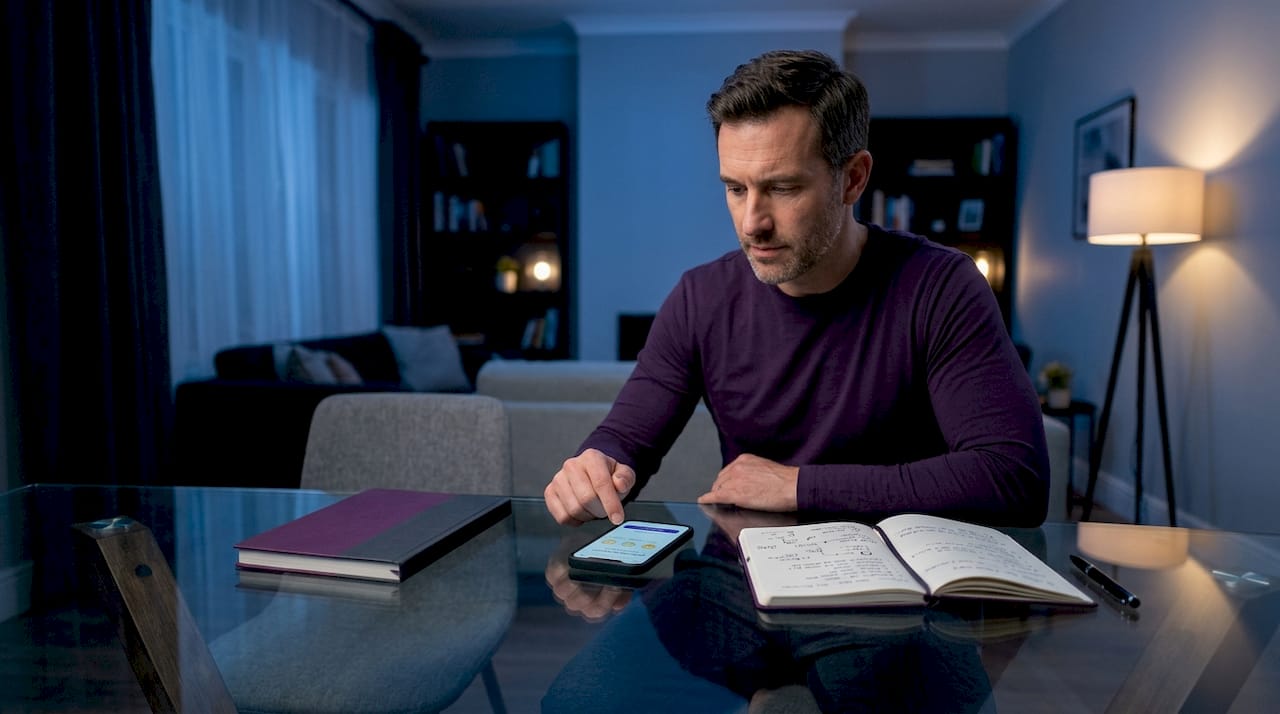
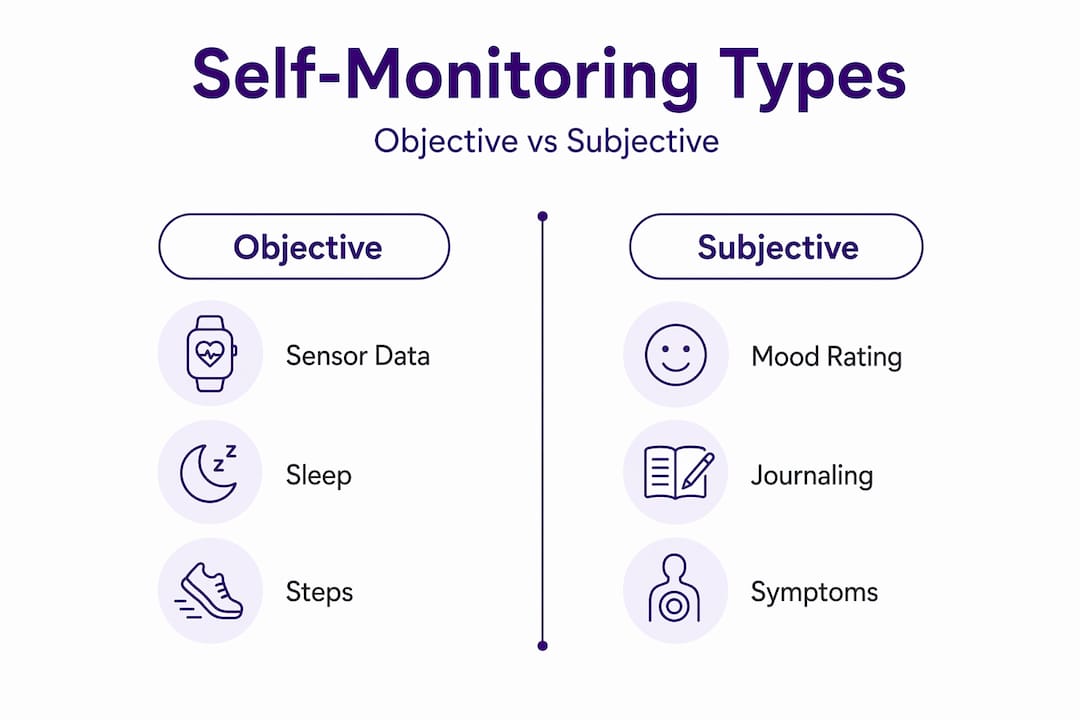
Active self-report means you intentionally log information. You rate your mood on a scale, note how many hours you slept, record whether you left the house, or describe your energy level. Passive monitoring happens in the background. Your smartphone tracks movement through its accelerometer, logs screen time, or notes call frequency without you doing anything manually.
What gets tracked varies, but five major parameter categories appear consistently across digital depression monitoring programs: mood, sleep, physical activity, social behavior, and cognitive function. Each of these offers a different window into how depression is affecting your daily life.
The technology side has advanced quickly. Wearables measure heart rate variability and sleep stages. Smartphone apps prompt you to rate your mood two or three times a day. Some platforms combine both, giving clinicians a richer picture than any single weekly check-in could provide.
One distinction worth understanding: objective sensor data and subjective mood ratings are not the same thing, and both matter. Smartphone mood ratings correlate negatively with standard depression scales like the Beck Depression Inventory, meaning the numbers you enter actually reflect clinically meaningful symptom severity. Sensors add context. Your mood rating tells the story; your step count and sleep data help explain it.
Pro Tip: If you are new to self-monitoring, start with just one variable. Track your mood at the same time each day for two weeks before adding sleep or activity data. Consistency matters more than comprehensiveness at the start.
Real benefits of tracking your mood in depression
When done well, self-assessment in depression treatment offers benefits that go well beyond what most people expect. Here is what the research and user experience actually show.
-
You spot patterns you would otherwise miss. Depression distorts memory. When you are in a low period, it feels like you have always been this low. Tracked data shows you that your mood tends to drop on Sunday evenings, or that poor sleep reliably precedes a difficult week. That kind of pattern is invisible without records.
-
You catch early warning signs before they become crises. A 2025 systematic review found that mood monitoring can improve insight and help detect early relapse indicators. Knowing that three consecutive nights of poor sleep usually signals a coming dip gives you and your clinician a chance to respond before the dip becomes a crisis.
-
Your clinical appointments become more productive. Instead of trying to summarize six weeks of experience in a 50-minute session, you walk in with data. Your provider can see trends, not just snapshots. This supports shared decision making in a way that verbal recall simply cannot.
-
You gain a sense of agency. Depression often strips away the feeling that anything you do matters. Watching your data and noticing that a walk actually did shift your mood, even slightly, is concrete evidence that your choices have an effect.
-
You can make smarter lifestyle adjustments. If your data shows that social contact correlates with better mood ratings, that is a signal worth acting on. Self-monitoring supports behavioral activation, one of the most evidence-backed strategies in holistic depression treatment, by making the connection between behavior and mood visible.
“People with depression and clinicians should view self-monitoring as a measurement and personalization tool rather than expecting it to reduce symptoms directly.” — Mood Monitoring, Mood Tracking, and Ambulatory Assessment Interventions
That framing matters. The goal is insight and informed action, not symptom reduction through tracking alone.
What self-monitoring cannot do, and where it can backfire
This is the part most articles skip, and skipping it does real harm. The impact of self-monitoring on mental health is not uniformly positive, and you deserve an honest picture.
The clearest finding from current research is that mood monitoring alone does not reliably reduce depressive symptoms in unipolar depression. A 2026 systematic review and meta-analysis found only two randomized controlled trials with usable symptom outcome data, and neither provided robust evidence for symptom improvement from monitoring alone. If you are tracking your mood expecting the tracking itself to make you feel better, the evidence does not support that expectation.
Beyond the symptom question, there are psychological risks that are real and documented:
- Rumination. Repeatedly focusing on how you feel can pull you deeper into negative thought loops rather than creating helpful distance from them.
- Monitoring burden. Multiple daily check-ins can feel like a second job, adding stress rather than reducing it.
- Distress from data. Seeing a string of low mood ratings can feel discouraging, especially without a framework for interpreting what the numbers mean.
- Avoidance. Some people stop tracking entirely when their mood drops, which is exactly when data would be most useful.
Research across multiple user experience studies reported mild to severe distress from mood monitoring, with recommendations for stop rules and frequency limits built into any monitoring protocol.
Self-monitoring is also not universally beneficial. For some people, particularly those prone to health anxiety or obsessive patterns, frequent symptom tracking can amplify distress rather than reduce it. The importance of self-monitoring in therapy is real, but it needs to happen within a therapeutic context, not in isolation.
Pro Tip: Set a maximum. If you are tracking mood, two to three check-ins per day is generally the ceiling before it starts generating more noise than signal. Talk to your therapist or provider about what frequency makes sense for your specific situation.
How to build a self-monitoring practice that actually works
Knowing the benefits and risks is only useful if you translate that knowledge into a practice that fits your life. Here is how to do that.
Choosing the right tools
The best tool is the one you will actually use. Look for apps with customizable prompts, simple interfaces, and the ability to export or share data with your provider. Some people prefer a paper journal. Others want a smartphone app that sends gentle reminders. Neither is wrong.
A comparison of the two main monitoring approaches:
| Approach | Strengths | Watch out for |
|---|---|---|
| Active self-report (manual entries) | Captures subjective experience; highly customizable | Can feel burdensome; prone to skipping during low periods |
| Passive sensor monitoring | Low effort; runs in background automatically | Lacks context; cannot capture how you feel, only what you do |
| Combined approach | Richer data; balances effort and depth | Requires setup; may feel overwhelming at first |
Balancing active and passive monitoring reduces burden while keeping the data meaningful. Passive sensors handle the objective side; your manual entries provide the subjective layer that makes the data interpretable.
Linking your data to action
This is where most self-monitoring practices fail. Tracking without a response plan is like checking the weather without deciding whether to bring an umbrella. Pairing frequent symptom entries with explicit action plans is what makes monitoring clinically useful. Your plan might look like this: if your mood rating drops below a certain threshold for three consecutive days, you contact your therapist or use a pre-agreed coping strategy.
Explore AI-powered mental health tools that can help you build these response triggers directly into your monitoring routine.
Sharing data with your care team
Bring your tracking records to appointments. You do not need a polished report. A screenshot, a printed log, or even a verbal summary of what you noticed is enough to shift the conversation from “how have you been feeling?” to “here is what I actually observed.” That shift changes the quality of care you receive. For more on how self-care ideas connect to clinical strategies, pairing personal tracking with professional guidance consistently produces better outcomes than either alone.
Knowing when to pause
If tracking is making you feel worse, that is data too. Tell your provider. Adjust the frequency. Switch from mood ratings to a simpler yes/no daily check-in. The goal is sustainable awareness, not perfect records.
An ongoing trial called MENTINA, launched in May 2025, is testing smartphone-based daily monitoring with rule-based feedback across 660 participants. Results from this kind of research will sharpen our understanding of which monitoring formats work best and for whom.
My honest take on self-monitoring and depression
I have spent years watching people with depression approach self-monitoring with two very different mindsets. The first group treats it like a report card, checking their mood scores daily and feeling like a failure when the numbers stay low. The second group uses it like a map, not to judge where they are, but to figure out where they have been and where they might go next.
The second approach works. The first one often makes things worse.
What I have learned is that self-monitoring adds the most value when it is paired with a clear, pre-agreed response plan and when it is reviewed with someone who can help you interpret what you are seeing. Data without context is just noise. And more data is not always better. As one body of research makes clear, clarity about which parameters matter is more important than tracking everything possible.
I also think we are in an early but genuinely promising period for digital mental health tools. The technology is improving faster than the clinical guidelines can keep up with, which means you have to be your own advocate. Use these tools with intention. Set limits. Talk to your provider about what you are tracking. And if the tracking itself starts to feel like a source of stress, give yourself permission to scale back. The point is to support your care, not to add another burden to it.
— dushyantha
Tools that make self-monitoring easier
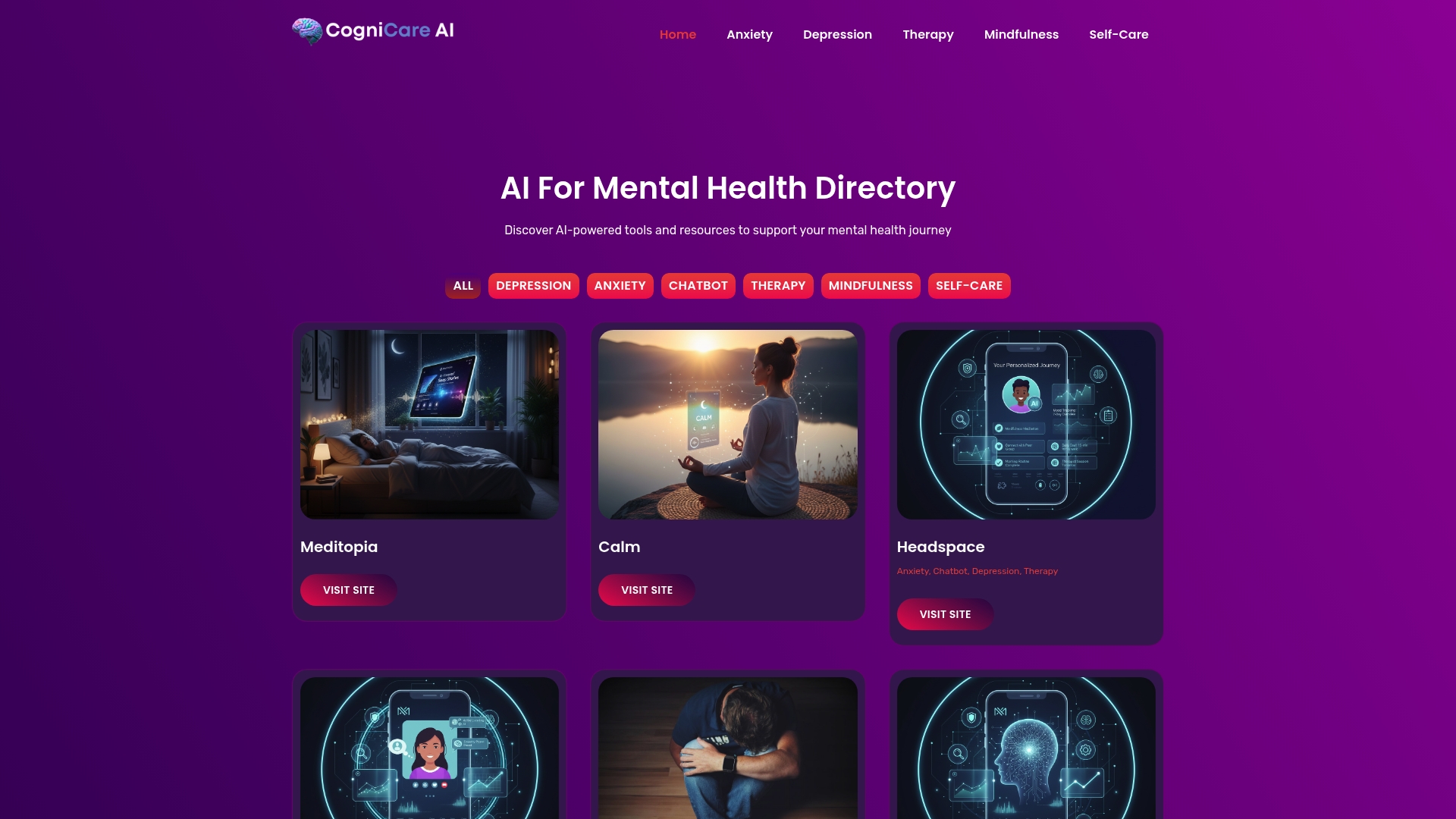
If you are ready to move beyond a basic mood journal and want tools that actually adapt to you, Cognicareai has built a directory of AI-powered resources designed specifically for people managing depression and anxiety. These tools go beyond simple tracking. They offer personalized prompts, pattern recognition, and connections to evidence-based depression treatment options that align with what your data shows. Whether you are looking for a chatbot that checks in with you daily or an app that integrates with your care provider’s workflow, Cognicareai helps you find the right fit without the guesswork. Start exploring AI mental health tools that are built to work alongside your care plan, not replace it.
FAQ
What does self-monitoring actually mean in depression care?
Self-monitoring in depression care refers to the systematic tracking of your own mood, sleep, activity, and other mental health indicators. It includes both manual entries, like mood ratings, and passive data from smartphone sensors or wearables.
Can tracking my mood make depression worse?
Yes, for some people it can. Research shows that mood monitoring can increase rumination and distress in certain individuals. Setting frequency limits and discussing your monitoring plan with a clinician reduces this risk significantly.
How often should I track my mood?
Two to three times per day is a common starting point, but the right frequency depends on your individual situation. More frequent tracking does not always produce better insight and can increase monitoring burden.
Does self-monitoring replace therapy or medication?
No. Self-monitoring is a tool for insight and communication, not a treatment. Research confirms that mood tracking alone does not reliably reduce depressive symptoms and works best when integrated into a broader care plan.
What should I do when my tracked mood scores stay low?
Use a pre-agreed action plan. If your scores drop below a certain level for several consecutive days, contact your therapist, use a coping strategy you have practiced, or reach out to a crisis support line. Tracking without a response plan limits the clinical value of the data you collect.