

Diet directly shapes anxiety levels by influencing brain chemistry, inflammation, and the gut-brain axis. The role of nutrition in anxiety management is now backed by large-scale research, including a meta-analysis of 633,317 individuals across 23 countries showing that healthy diets associate with significantly lower anxiety compared to unhealthy ones. Clinically, this field is often called nutritional psychiatry, and it treats food as an adjunctive tool alongside therapy and medication. Key nutrients including omega-3 fatty acids, magnesium, B vitamins, and zinc each play measurable roles in regulating mood and stress response. Understanding how diet affects anxiety gives you a concrete, evidence-based lever you can pull every day.
What is the role of nutrition in anxiety management?
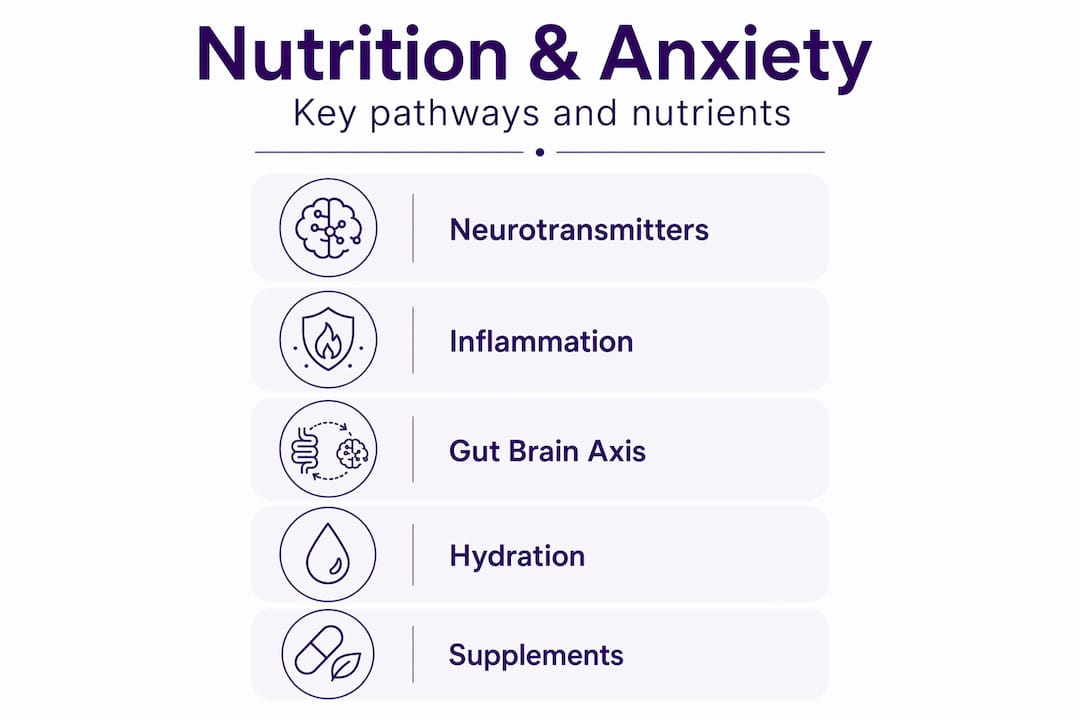
Nutrition shapes anxiety through three main pathways: neurotransmitter production, systemic inflammation, and the gut-brain axis. Each pathway responds directly to what you eat.
Omega-3 fatty acids found in fatty fish like salmon, sardines, and mackerel reduce neuroinflammation and support serotonin signaling. Low omega-3 intake correlates with higher anxiety scores in clinical populations.

Magnesium regulates the HPA axis, which controls your stress hormone response. Foods rich in magnesium include dark leafy greens, pumpkin seeds, and black beans. Deficiency is common and directly linked to heightened anxiety.
B vitamins, especially B6 and B12, are cofactors in serotonin and dopamine synthesis. Without adequate B6, your brain cannot efficiently convert tryptophan into serotonin. Eggs, poultry, and fortified cereals are reliable sources.
Vitamin C and vitamin E act as antioxidants that protect neurons from oxidative stress, a known contributor to anxiety disorders. Citrus fruits, bell peppers, almonds, and sunflower seeds cover both.
Dietary fiber feeds beneficial gut bacteria, which produce short-chain fatty acids that signal the brain through the vagus nerve. Fermented foods like yogurt, kefir, and kimchi deliver live probiotics that reduce anxiety symptoms by supporting this gut-brain communication.
Ashwagandha is one of the most studied herbal supplements for anxiety. Clinical evidence supports doses of 300–600 mg daily for reducing the physiological stress response, with some studies examining doses up to 12,000 mg daily for anxiety reduction.
Hydration is a simple but frequently overlooked factor. Even mild dehydration raises cortisol. Caffeine from energy drinks mimics anxiety symptoms by triggering the same physiological arousal, including elevated heart rate and muscle tension.
Pro Tip: Supplements work best as additions to a balanced diet, not replacements for one. Always consult a healthcare provider before starting ashwagandha or any new supplement, especially if you take medication for anxiety or depression.
How do dietary patterns affect anxiety levels?
Single nutrients matter, but the overall pattern of your diet produces the most consistent results. Whole dietary patterns rather than isolated superfoods or nutrients deliver more reliable anxiety symptom improvements. That finding comes from researchers who noted too much variation across individual nutrient studies to draw firm conclusions from any one food alone.
The gut microbiome is the key mechanism here. Your gut contains trillions of bacteria that communicate with your brain through the vagus nerve, immune signaling, and neurotransmitter production. Diet shapes which bacteria thrive. A diverse, fiber-rich diet supports a balanced microbiome. A diet high in ultra-processed foods does the opposite.
| Diet type | Key features | Anxiety risk association |
|---|---|---|
| Mediterranean diet | Fruits, vegetables, whole grains, fish, olive oil, legumes, nuts | Lower anxiety risk |
| MIND diet | Mediterranean plus brain-specific foods like berries and leafy greens | Lower anxiety and depression risk |
| Western diet | Ultra-processed foods, saturated fats, refined sugars | Higher anxiety risk via gut dysbiosis and inflammation |
| High-fiber plant-based | Legumes, whole grains, vegetables, fermented foods | Lower anxiety risk through microbiome support |
The Mediterranean diet includes daily servings of fruits, vegetables, whole grains, legumes, nuts, fish, and olive oil, with moderate amounts of fermented dairy. Research consistently links this pattern to lower anxiety scores. The mechanism runs partly through inflammation. Western diets high in ultra-processed foods and saturated fats promote gut dysbiosis and systemic inflammation, both of which drive anxiety symptoms. Switching from a Western pattern to a Mediterranean one changes the gut microbiome within weeks, which is fast enough to produce measurable mood effects. Pairing dietary changes with mindfulness practices compounds the benefit.
What pitfalls should you avoid when using diet for anxiety relief?
Nutrition for anxiety management carries real risks when taken to extremes. The most important pitfall is orthorexia, a rigid obsession with eating “perfectly” that can trigger anxiety and IBS symptoms rather than relieve them. The irony is sharp. Pursuing a clean diet with excessive rules creates the very psychological distress you are trying to reduce.
Several other traps are worth knowing:
- Over-relying on supplements. No single supplement replaces a balanced diet. Acute nutrient spikes from high-dose supplements lack sufficient evidence for anxiety relief. Long-term dietary patterns produce more reliable results than any pill.
- Cutting entire food groups. Eliminating carbohydrates, for example, removes a key source of tryptophan transport to the brain. Restrictive eating also raises cortisol, which worsens anxiety.
- Ignoring caffeine intake. Caffeine from coffee, tea, and especially energy drinks mimics or worsens anxiety symptoms by activating the same physiological arousal pathway as the stress response.
- Skipping meals. Blood sugar drops between meals trigger cortisol release, which amplifies anxiety. Regular eating intervals matter as much as food quality.
- Treating nutrition as a cure. Nutrition is an adjunctive therapy, not a replacement for cognitive behavioral therapy, medication, or professional mental health care.
Pro Tip: Track your mood alongside your meals for two weeks using a simple journal or a mood-tracking app. Patterns often emerge quickly, showing which foods or skipped meals correlate with your worst anxiety days.
Psycho-nutritional education, which means learning how the gut-brain axis works and why certain foods affect mood, reduces the fear-based thinking that leads to orthorexia. Understanding the mechanism gives you confidence to eat flexibly rather than rigidly. You can read more about non-medication anxiety strategies that pair well with nutritional changes.
How can you apply nutritional strategies to reduce anxiety?
Practical application matters more than theoretical knowledge. Here is a step-by-step approach grounded in clinical recommendations.
-
Build meals around three core components. Each meal should include a protein source, a complex carbohydrate, and a healthy fat. This combination maintains blood sugar stability and prevents the cortisol spikes that trigger anxiety. Think grilled salmon with brown rice and avocado, or eggs with whole grain toast and olive oil.
-
Eat at regular intervals. Aim for meals every 3–5 hours. Skipping meals or going long stretches without eating destabilizes blood sugar and raises anxiety. Consistency matters more than perfection.
-
Add fermented foods daily. One serving of yogurt, kefir, sauerkraut, or kimchi per day supports gut microbiome diversity. Probiotics have RCT-level evidence for reducing anxiety and depressive symptoms through the gut-brain connection.
-
Prioritize hydration. Drink water consistently throughout the day. Replace energy drinks and excessive coffee with water, herbal teas, or diluted fruit juice. Reducing caffeine intake, especially after noon, lowers baseline physiological arousal.
-
Follow a Mediterranean-style pattern. Fill half your plate with vegetables and fruit. Use olive oil instead of butter. Eat fatty fish twice a week. Include a handful of nuts or seeds daily. This pattern does not require perfection or calorie counting.
-
Track mood and food together. Keep a simple log for two weeks noting what you ate, when you ate, and how anxious you felt. This practice builds self-awareness and helps identify personal triggers without creating rigid food rules.
-
Consult a healthcare provider before major changes. This applies especially to supplement use. A registered dietitian or psychiatrist familiar with nutritional psychiatry can tailor recommendations to your specific situation, medications, and health history.
Key takeaways
Nutrition directly reduces anxiety by supporting the gut-brain axis, lowering inflammation, and stabilizing blood sugar through consistent, balanced dietary patterns.
| Point | Details |
|---|---|
| Dietary patterns over single nutrients | Whole diets like the Mediterranean pattern produce more reliable anxiety relief than any one food or supplement. |
| Gut-brain axis is the core mechanism | Fermented foods and dietary fiber support gut bacteria that signal the brain and reduce anxiety symptoms. |
| Supplements are adjunctive, not primary | Ashwagandha and probiotics have evidence, but they work best alongside a balanced diet, not instead of one. |
| Orthorexia is a real risk | Rigid food rules can worsen anxiety. Flexible, sustainable eating habits protect mental health better than strict diets. |
| Regular meals stabilize mood | Eating protein, complex carbs, and healthy fats every 3–5 hours prevents blood sugar drops that spike cortisol and anxiety. |
What I’ve learned about food and anxiety that most articles miss
Most nutrition and anxiety content focuses on what to add to your diet. The harder lesson is what to stop fearing about food.
I have seen people with anxiety spend enormous energy tracking every gram of sugar or avoiding entire food groups, convinced that one wrong meal will derail their mental health. That fear becomes its own anxiety trigger. The research backs this up. Orthorexia is a documented clinical concern in anxiety care, not a fringe idea.
The most effective dietary approach I have observed is also the least dramatic. Eat real food regularly. Include fish, vegetables, fermented foods, and whole grains most of the time. Drink water. Cut back on energy drinks. That is genuinely it for the vast majority of people.
Nutritional psychiatry is a legitimate and growing field, but it works best when paired with therapy, not used as a substitute for it. The gut-brain axis is real and powerful, but it responds to consistent long-term habits, not short-term cleanses or supplement protocols. Sustainable change beats intensity every time.
The people who see the most improvement are not the ones with the strictest diets. They are the ones who eat consistently, sleep well, stay hydrated, and treat food as nourishment rather than medicine or punishment.
— dushyantha
Cognicareai and anxiety support tools
Nutrition is one piece of a larger anxiety management picture. AI-powered mental health tools can help you track mood patterns, practice evidence-based techniques, and access personalized support between therapy sessions.

Cognicareai maintains a curated directory of AI-powered mental health tools designed specifically for anxiety and emotional well-being. These tools include AI-guided mindfulness apps, self-care programs, and specialized therapy applications that adapt to your needs over time. Whether you are building better eating habits, managing stress, or working through anxiety with professional support, Cognicareai connects you with resources that fit your situation. Explore the full range of mental health resources available through the platform to find what works for you.
FAQ
What foods reduce anxiety the most?
Fatty fish, fermented foods, leafy greens, nuts, and whole grains have the strongest evidence for reducing anxiety. These foods support the gut-brain axis, lower inflammation, and stabilize blood sugar.
Does the Mediterranean diet help with anxiety?
Yes. The Mediterranean diet associates with lower anxiety scores in multiple studies. Its combination of omega-3-rich fish, fiber-rich vegetables, and fermented dairy supports gut microbiome health and reduces systemic inflammation.
Can supplements replace a healthy diet for anxiety?
No. Supplements like ashwagandha and probiotics have clinical support as additions to a balanced diet, but whole dietary patterns produce more reliable results than isolated nutrients or supplements alone.
How does caffeine affect anxiety?
Caffeine from coffee and energy drinks activates the same physiological arousal pathway as the stress response, mimicking or worsening anxiety symptoms. Reducing caffeine intake, especially in the afternoon and evening, lowers baseline anxiety for many people.
How long does it take for dietary changes to affect anxiety?
Gut microbiome composition can shift within weeks of changing your diet. Mood effects from consistent dietary improvements typically become noticeable within four to eight weeks, though individual results vary based on baseline diet, stress levels, and other health factors.