

Mindfulness-based cognitive therapy (MBCT) is a structured, evidence-based treatment that combines mindfulness meditation with cognitive therapy techniques to help you change your relationship with negative thoughts and reduce the risk of depression and anxiety relapse. Developed by psychologists Zindel Segal, Mark Williams, and John Teasdale in the 1990s, MBCT draws from Jon Kabat-Zinn’s Mindfulness-Based Stress Reduction (MBSR) program and merges it with principles from cognitive behavioral therapy (CBT). The result is a clinically validated approach that teaches you to observe thoughts as passing mental events rather than facts. Research confirms it works, and this guide explains exactly how.
What is mindfulness-based cognitive therapy and how does it work?
MBCT teaches you to step back from your thoughts instead of fighting them. That single shift is what separates it from traditional cognitive therapy.
Standard CBT asks you to examine a negative thought and challenge its accuracy. MBCT takes a different path. Unlike traditional CBT, MBCT focuses on changing your relationship with thoughts rather than altering their content. You learn to notice a thought like “I am worthless” and recognize it as a mental event, not a verdict on reality.

This process is called decentering. You observe your thoughts from a slight distance, the way you might watch clouds pass across a sky. The thought still appears. You simply stop treating it as a command or a truth.
MBCT achieves this through four core mechanisms:
- Mindfulness meditation: You practice sitting with your breath and noticing when your mind wanders. Each time you bring attention back, you build the mental muscle of present-moment awareness.
- Body scan: You move attention slowly through different parts of your body, noticing physical sensations without judgment. This grounds you in the present and interrupts the mental loops that feed anxiety and depression.
- Mindful movement: Gentle stretching or walking done with full attention teaches you to stay present during physical activity, extending mindfulness beyond formal practice.
- Cognitive exercises: Drawn from CBT, these help you recognize patterns in your thinking, particularly the rumination cycles that trigger depressive episodes.
The combination reduces emotional reactivity. When you stop automatically fusing with every negative thought, you interrupt the spiral before it gains momentum.
Pro Tip: Set a two-minute timer each morning and simply notice five things you can feel physically. This brief body awareness exercise is a foundational MBCT skill you can build before ever entering a formal program.
What does a typical MBCT program look like?
MBCT is not a drop-in class or a weekend workshop. It is a structured commitment, and knowing what to expect helps you prepare.
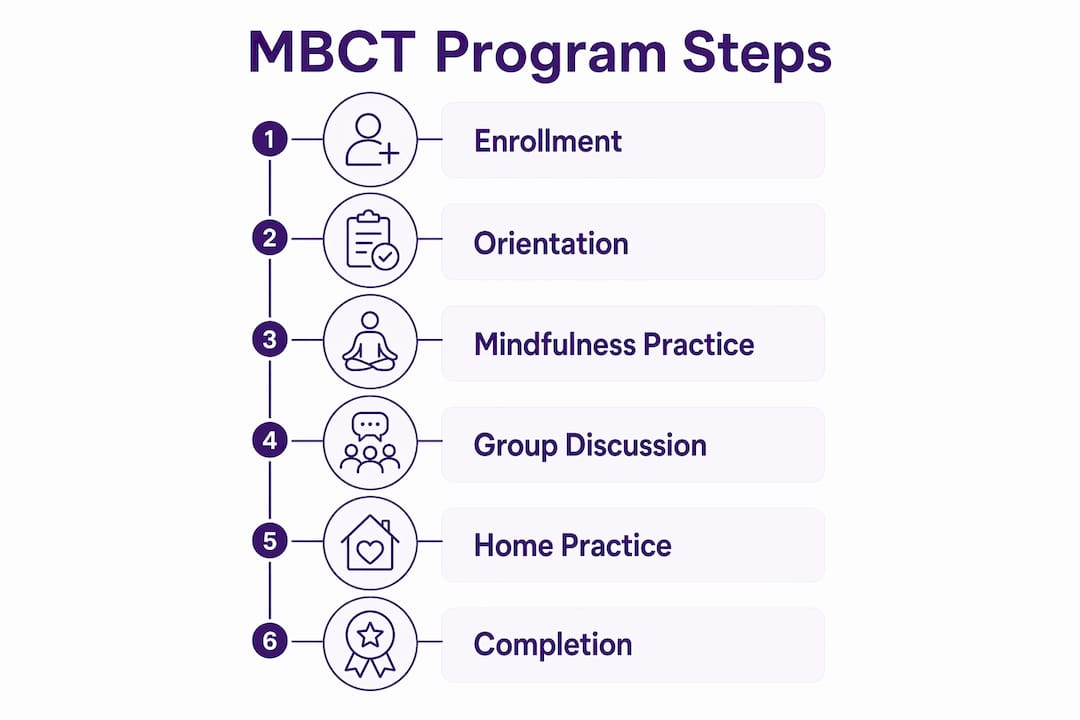
A standard MBCT program runs eight weeks, with weekly sessions lasting approximately two hours each. Sessions combine guided mindfulness meditation, body scans, mindful movement, and cognitive therapy exercises. Most programs run in a group format, which adds a layer of shared experience that many participants find grounding.
Here is what a typical week includes:
- Guided mindfulness practice: The therapist leads the group through a meditation or body scan, then facilitates discussion about what participants noticed.
- Psychoeducation: You learn about how depression and anxiety work, including how rumination sustains low mood and how early warning signs appear.
- Home practice: Between sessions, you complete daily mindfulness exercises, often 30–45 minutes per day. This is where most of the real skill-building happens.
- Cognitive exercises: You map your personal patterns of negative thinking and practice recognizing them in real time.
- Relapse prevention planning: In later sessions, you build a personal action plan for responding to early signs of a depressive episode.
The therapist’s role is not to fix your thinking. Their job is to guide your practice, hold the group space, and help you connect insights from meditation to your daily emotional life.
MBCT is best viewed as a skill-building process, not a stand-alone cure. Beginners regularly experience wandering minds and discomfort in early sessions. That is not failure. That is the skill developing.
Pro Tip: Treat home practice like a medical prescription. Missing sessions is the single biggest predictor of reduced benefit. Even ten minutes of body scan practice on a busy day counts.
How effective is MBCT for treating anxiety and depression?
The evidence for MBCT is strong, specific, and growing. This is not a wellness trend with anecdotal backing.
A 2025 meta-analysis of 14 randomized controlled trials with over 2,000 participants found a 27% reduction in depression relapse risk compared to treatment as usual. That figure represents a meaningful clinical difference for people who have experienced multiple depressive episodes. The same analysis confirmed that benefits were sustained at follow-up, meaning the skills you build in MBCT continue protecting you after the program ends.
“MBCT significantly reduces rumination and symptoms of depression and anxiety, with benefits sustained over time.” — BMC Psychology, 2025
Rumination is the key mechanism. It is the repetitive, self-critical thinking loop that keeps depression active long after the triggering event has passed. MBCT directly targets this loop by teaching you to notice when you have entered it and to disengage without judgment.
| Outcome | MBCT Result |
|---|---|
| Depression relapse risk | 27% reduction vs. treatment as usual |
| Rumination severity | Significantly reduced post-program |
| Anxiety symptom severity | Improved present-moment awareness; reduced automatic negative patterns |
| Long-term benefit | Effects maintained at follow-up assessments |
MBCT is recommended by NICE, the United Kingdom’s National Institute for Health and Care Excellence, for people with recurrent depression. That endorsement reflects the weight of repeated clinical trials, not a single promising study. For anxiety, MBCT improves emotional regulation and reduces the automatic negative cognitive patterns that sustain anxious thinking.
The honest caveat is that MBCT works best for people with three or more past depressive episodes. For first-episode depression or mild anxiety, other approaches may be equally effective. Knowing where MBCT fits helps you make a genuinely informed choice.
What are the real-world benefits of MBCT for anxiety and depression?
The clinical data matters. What matters equally is how MBCT changes your daily life.
The most practical benefit is early warning recognition. MBCT helps you notice the early signs of depressive relapse and choose a different response before the spiral takes hold. Most people who have experienced depression describe a familiar sequence: a bad day triggers a familiar thought, the thought triggers withdrawal, withdrawal deepens the mood. MBCT teaches you to catch that sequence at step one.
The benefits extend well beyond depression prevention:
- Emotional regulation: You develop the ability to feel a difficult emotion without immediately acting on it or suppressing it. This is the foundation of emotional resilience.
- Reduced anxiety reactivity: Mindfulness practices for anxiety work by weakening the automatic link between a trigger and a fear response. You create a pause where none existed before.
- Stress management: Daily mindfulness practices transfer directly to high-pressure situations at work, in relationships, and during health challenges.
- Chronic illness support: Research shows MBCT benefits extend to people managing chronic pain and illness, where psychological distress often amplifies physical symptoms.
- Improved self-awareness: You become a more accurate observer of your own mental states, which makes every other therapeutic tool you use more effective.
The distinction between formal MBCT and self-guided mindfulness apps matters here. MBCT is led by a qualified therapist within a structured program that combines mindfulness and cognitive elements. A meditation app can support your practice between sessions, but it does not replicate the clinical relationship or the cognitive therapy component. Both have value. They serve different functions.
For people managing holistic depression treatment, MBCT works best as part of a broader strategy that may include medication, lifestyle changes, and social support. It is a powerful tool, not a complete system on its own.
Key takeaways
MBCT reduces depression relapse risk by 27% and builds lasting emotional regulation skills through a structured eight-week program that changes how you relate to your thoughts, not just what you think.
| Point | Details |
|---|---|
| Core mechanism | MBCT changes your relationship to thoughts, not their content, using decentering and present-moment awareness. |
| Program structure | Eight weekly two-hour sessions combining mindfulness meditation, body scans, and cognitive exercises. |
| Clinical evidence | A 2025 meta-analysis of 14 RCTs found a 27% reduction in depression relapse vs. treatment as usual. |
| Key benefit | Early recognition of depressive relapse signs allows you to interrupt negative thought spirals before they escalate. |
| Ongoing practice | MBCT is a skill-building process; benefits depend on continued practice beyond the initial eight-week course. |
Why MBCT changed how I think about mental health care
People come to MBCT expecting to learn how to clear their minds. That expectation sets them up for frustration in the first two weeks.
Mindfulness is not a relaxation technique. It is an active skill that sometimes means sitting with uncomfortable thoughts rather than escaping them. The discomfort in early practice is not a sign that you are doing it wrong. It is a sign that you are finally paying attention to what was already there.
What I find most underappreciated about MBCT is its honesty. It does not promise to eliminate negative thoughts. It promises to change your relationship with them. That is a more modest claim, and it is also a more durable one. I have seen people complete the eight weeks and feel disappointed because they still have dark thoughts. Then, six months later, they realize they have not had a depressive episode. The protection was working quietly the whole time.
My practical advice: do not wait until you are in crisis to explore MBCT. The program is most effective as a preventive tool for people who know their patterns. If you have had two or more depressive episodes, MBCT is worth serious consideration now, not after the next one hits.
When selecting a program, look for therapists trained specifically in MBCT, not just general mindfulness or CBT. The integration of both disciplines requires specific training. Organizations like the Oxford Mindfulness Centre and the Center for Mindfulness at UMass Medical School certify qualified practitioners.
— dushyantha
How Cognicareai can support your MBCT practice
MBCT gives you a clinical foundation. The right digital tools help you maintain that practice between sessions and beyond the eight-week program.
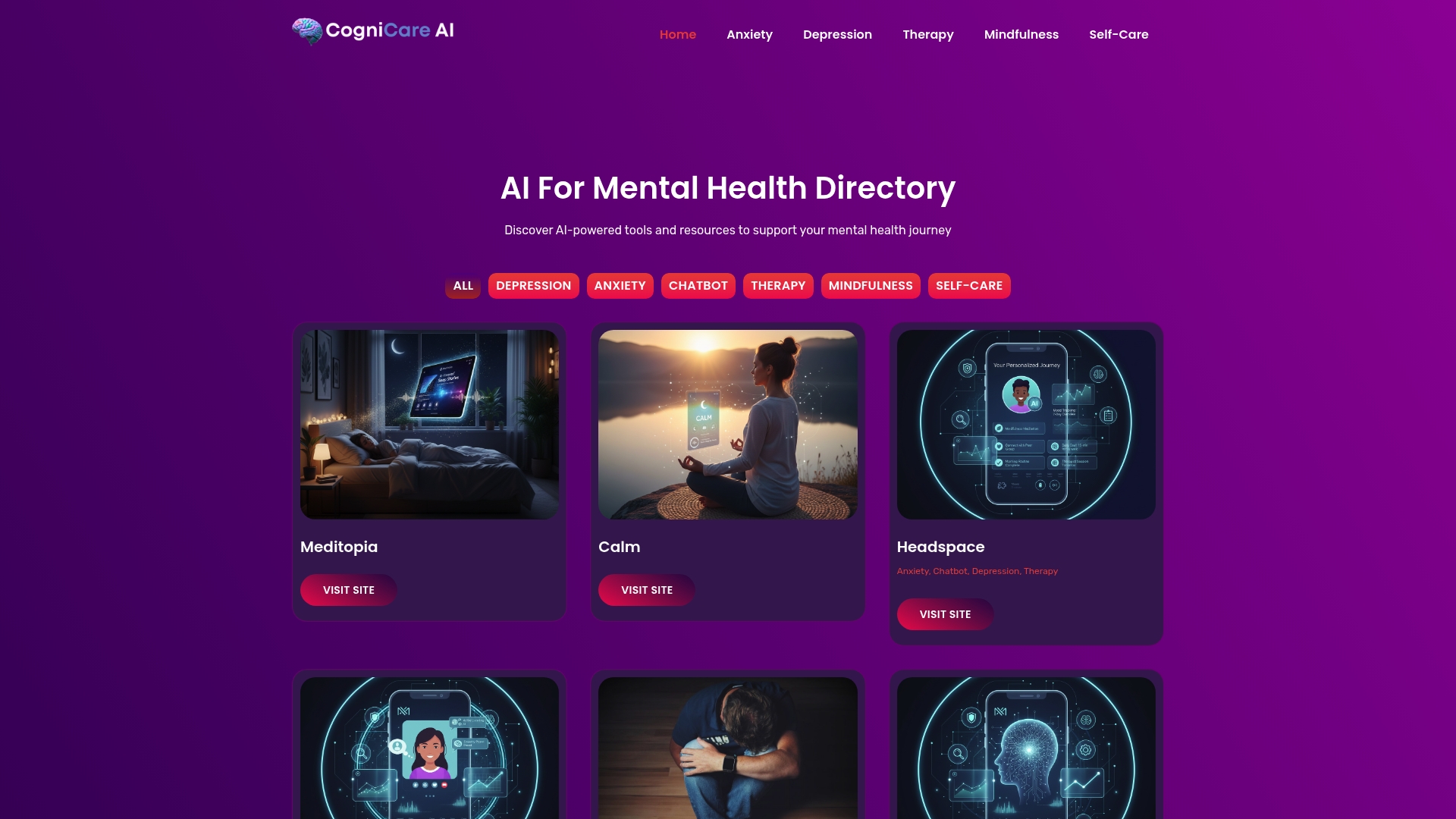
Cognicareai curates a directory of AI-powered mental health tools designed to complement evidence-based approaches like MBCT. Whether you are looking for guided mindfulness apps that reinforce body scan techniques, or personalized cognitive therapy tools that adapt to your specific patterns, Cognicareai connects you to resources built around your mental health journey. The platform also covers AI-assisted anxiety management techniques that align with MBCT principles. Explore the full range of AI-powered mental health tools at Cognicareai and find what fits your practice.
FAQ
What is the main goal of MBCT?
MBCT’s primary goal is to prevent depression relapse by teaching you to observe negative thoughts without judgment rather than reacting to them automatically. It targets the rumination cycles that sustain depression and anxiety.
How is MBCT different from standard CBT?
Standard CBT focuses on identifying and changing the content of negative thoughts. MBCT focuses on changing your relationship to those thoughts by teaching you to observe them as passing mental events rather than facts.
Who is MBCT best suited for?
MBCT is most effective for people with three or more past depressive episodes. Clinical guidelines from NICE recommend it specifically for recurrent depression, though research also supports its use for anxiety disorders.
Can I practice MBCT on my own without a therapist?
Self-guided mindfulness apps can support your practice, but they do not replace formal MBCT. A qualified therapist provides the structured cognitive therapy component and clinical support that differentiates MBCT from general meditation practice.
How long does it take to see results from MBCT?
Most participants complete the eight-week program before noticing significant changes. Research shows benefits are sustained at follow-up, meaning the protective effects of MBCT build over time with continued practice.