
You don’t need a spa day to feel better. Micro self-care routine examples prove that two minutes of intentional breathing or a single grateful thought can shift your nervous system out of stress mode. If you’ve been waiting for a free weekend to finally take care of yourself, this is the reframe you need. Small, repeatable behaviors compound quietly over time to build real emotional resilience. This article gives you concrete, tiered examples you can start today, no extra time required.
Table of Contents
- Key takeaways
- What makes a good micro self-care routine
- 10 micro self-care routine examples you can start today
- Comparing micro routines at a glance
- How to build your personal micro self-care plan
- My honest take on micro self-care
- Take your self-care further with AI-powered tools
- FAQ
Key takeaways
| Point | Details |
|---|---|
| Tiny habits move the needle | Simple changes like bed-making increase happiness by 19%, proving small acts create measurable emotional shifts. |
| Anchor habits to existing moments | Tying micro routines to morning coffee or lunch breaks makes them nearly automatic and far easier to maintain. |
| Use tiers, not perfection | Define full, medium, and minimum versions of each habit so a busy day never breaks your streak. |
| Three micro-moments per day is enough | Practicing self-care at least three times daily in short bursts effectively regulates your nervous system without added stress. |
| Consistency beats intensity | A one-minute practice done daily outperforms a 30-minute session done once a week in terms of lasting habit formation. |
What makes a good micro self-care routine
Not every quick activity qualifies as a micro self-care habit. The best ones share a few specific traits that make them stick, especially when life gets chaotic.
Time investment matters. The sweet spot is one to five minutes. That’s short enough to fit between meetings, during a bathroom break, or while your coffee brews. Micro-dosing self-care using one to five minute practices at least three times daily is effective for nervous system regulation without adding stress or cost to your day.
Anchor points make habits automatic. The most sustainable micro self-care habits for busy schedules attach to something you already do. Think: after you pour your morning coffee, while you wait for a video call to start, or right before you brush your teeth at night. Anchoring new habits to existing routines makes them nearly automatic and dramatically easier to maintain long term.
Flexibility is non-negotiable. A good micro routine has at least two versions: a full version for when you have time and a minimum version for when you don’t. This is what separates habits that last from ones that collapse after a hard week.
- Easy to do without special equipment or a quiet room
- Tied to a natural pause in your day (morning, lunch, bedtime)
- Available in a “minimum viable” version that takes under 90 seconds
- Focused on one specific benefit: calm, energy, clarity, or connection
Pro Tip: Pick your anchor point before you pick your habit. Ask yourself, “What do I already do every single day without thinking?” Start there.
10 micro self-care routine examples you can start today
1. Box breathing (1 minute)
Inhale for four counts, hold for four, exhale for four, hold for four. One cycle takes about 16 seconds. Do four rounds. This is one of the most effective quick self-care routines for anxiety because it directly activates your parasympathetic nervous system. Anchor it to your morning alarm or the moment before you open your email.
2. Gratitude note (2 minutes)
Write one specific thing you appreciated today. Not “I’m grateful for my family.” Something concrete: “My coworker covered for me during that call.” Specificity is what makes this work emotionally. Keep a sticky note pad on your desk or nightstand so the friction stays low.
3. Mindful hydration (1 minute)
Drink a full glass of water slowly and without multitasking. Feel the temperature, notice the sensation. This sounds almost too simple, which is exactly the point. Choosing habits that feel too easy bypasses motivational resistance and keeps you consistent over months, not just days.

4. One slow task (2 minutes)
Pick one thing you normally rush through and do it deliberately slowly. Wash your hands like you have nowhere to be. Stir your tea like it matters. Doing a task slowly interrupts the cortisol-driven “hurry sickness” cycle and gives your nervous system a genuine reset. This is one of the most underrated easy self-care examples because it requires nothing new.
5. Outdoor light exposure (5 minutes)
Step outside and look at the sky. No headphones, no phone. Natural light in the morning regulates your circadian rhythm and improves mood. Even on a cloudy day, outdoor light is significantly brighter than indoor lighting. Anchor this to your first bathroom break of the morning or right after lunch.
6. Body scan stretch (3 minutes)
Stand up, close your eyes, and slowly move attention from your feet to your head. Stretch anything that feels tight. This self-care mini practice works especially well at the two-hour desk mark, when tension has built up without you noticing. No yoga mat required.
7. Playful interruption (1 minute)
Name every object in the room alphabetically. Speak in a silly accent for 30 seconds. These sound absurd, but brains cannot hold high stress and novelty simultaneously, which means playful micro actions can interrupt an anxiety spiral faster than most breathing techniques. Use this one when you feel your thoughts racing.
8. Three-breath reset (30 seconds)
Before you walk into any new situation, take three slow, deliberate breaths. Before a meeting. Before picking up your kids. Before opening a stressful email thread. This micro self-care technique costs nothing and creates a genuine psychological boundary between one moment and the next.
9. Quick walk (5 to 15 minutes)
Even a five-minute walk outside changes your mental state. Movement clears stress hormones and the change of scenery interrupts rumination. This is one of the most flexible short self-care activities because it scales: five minutes around the block counts just as much as a 15-minute loop through the neighborhood. Check out more self-care routines for busy people to see how movement fits into a full daily plan.
10. Sensory grounding (2 minutes)
Name five things you can see, four you can touch, three you can hear, two you can smell, one you can taste. This classic grounding technique works because it pulls your attention fully into the present moment, which is the opposite of where anxiety lives. Anchor it to any moment you feel overwhelmed.
Pro Tip: Don’t try all ten at once. Pick two that match your current biggest stressor: one for mornings and one for your most stressful time of day.
Comparing micro routines at a glance
| Routine | Time needed | Materials | Best time of day | Primary benefit |
|---|---|---|---|---|
| Box breathing | 1 minute | None | Morning or pre-meeting | Anxiety relief |
| Gratitude note | 2 minutes | Pen and paper | Evening | Mood improvement |
| Mindful hydration | 1 minute | Glass of water | Morning | Mindfulness and focus |
| One slow task | 2 minutes | None | Anytime | Stress reduction |
| Outdoor light exposure | 5 minutes | None | Morning | Energy and circadian reset |
| Body scan stretch | 3 minutes | None | Midday | Physical tension release |
| Playful interruption | 1 minute | None | When anxious | Anxiety interruption |
| Quick walk | 5 to 15 minutes | Comfortable shoes | Lunch or afternoon | Mood and clarity |
| Sensory grounding | 2 minutes | None | When overwhelmed | Present-moment focus |
How to build your personal micro self-care plan
Knowing the examples is one thing. Building a plan that actually sticks is a design problem, not a willpower problem. The goal is to reduce friction until the habit feels automatic.
Start with three routines from different time tiers: one that takes under two minutes, one around five minutes, and one that can scale up to 15 minutes on good days. This gives you coverage across the full range of days you’ll actually have.
Habit stacking is your best tool. Pair each new micro routine with something you already do without thinking. “After I pour my morning coffee, I will do box breathing.” “Before I open my laptop, I will write one gratitude note.” Anchoring new habits to existing behaviors is far more effective than trying to carve out new time slots in an already packed schedule.
Define your tiers before you need them:
- Full version: The complete practice when you have time and energy
- Medium version: A shortened version for average days
- Minimum version: The smallest possible action that still counts (often 60 to 90 seconds)
Tiered habit versions allow flexible adherence and prevent habits from breaking entirely on your hardest days. A 90-second walk to the mailbox still counts. Three breaths before bed still counts.
The biggest barrier most people hit is guilt. They skip one day and decide the habit is broken. It isn’t. Consistency over optimization is the actual goal. A gentle return to the practice after a miss is itself a form of self-care.
Pro Tip: Set a two-week experiment instead of a lifetime commitment. Tell yourself you’re just testing these habits to see how they feel. This removes the pressure that kills most new routines before they start.
For a broader look at daily self-care habits that complement these micro practices, Cognicareai has a full resource worth bookmarking.
My honest take on micro self-care
I used to dismiss anything under 20 minutes as not “real” self-care. That thinking kept me stuck in a cycle where I either did everything perfectly or did nothing at all. What I’ve learned is that the tiny moments are actually the foundation, not the filler.
When I started treating a single deep breath as a complete practice, something shifted. Not because one breath is magic. Because doing it consistently built a relationship with my own nervous system that I’d never had before. Over weeks, I noticed I was catching stress earlier. Responding instead of reacting. That’s not a small thing.
The misconception I see most often is that micro self-care is what you do when you can’t do “real” self-care. That framing is backwards. Smallest practice versions minimize friction and build the consistency that longer sessions never could, because longer sessions depend on perfect conditions. Micro habits don’t.
If you feel guilty because your self-care feels too easy, that guilt is worth examining. Easy is the point. Easy is what lasts. Give yourself permission to start embarrassingly small and watch what builds.
— dushyantha
Take your self-care further with AI-powered tools
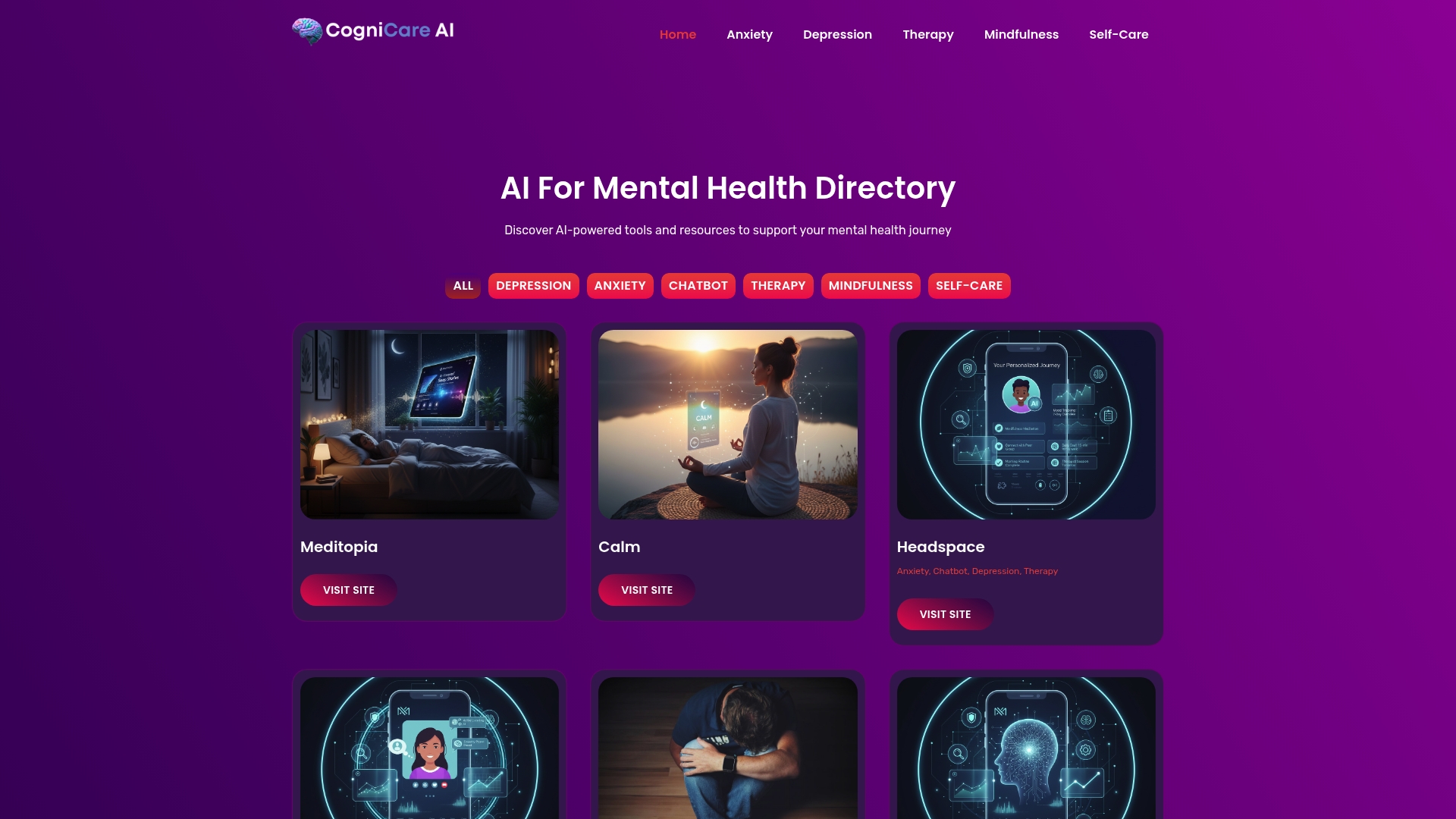
Micro habits create a strong foundation, and the right tools can help you go deeper without adding complexity. Cognicareai curates a directory of AI-powered mental health tools designed to complement exactly the kind of daily practices covered in this article. Whether you’re managing anxiety, building emotional resilience, or just trying to stay consistent, these tools adapt to where you are right now. From AI-enhanced mindfulness apps to personalized stress support, explore top mindfulness apps that make micro self-care smarter and more sustainable over time.
FAQ
What are micro self-care routines?
Micro self-care routines are intentional self-care practices that take one to five minutes and fit into existing daily moments. They target mental, emotional, or physical wellbeing without requiring dedicated blocks of time.
How often should I practice micro self-care?
Practicing at least three micro-moments of self-care per day is enough to support nervous system regulation. Spreading them across morning, midday, and evening works best.
Can micro self-care actually improve mental health?
Yes. Small incremental changes like bed-making increase happiness by 19% and nutritional improvements reduce anxiety by around 30%, showing that small consistent actions create measurable emotional change.
What if I miss a day?
Missing a day does not break the habit. The minimum version of any practice, even 60 seconds, counts and keeps the habit alive. Self-compassion after a miss is itself a form of micro self-care.
How do I choose which micro routine to start with?
Start with the one that matches your biggest current stressor and has the lowest barrier to entry. If anxiety is the issue, box breathing or sensory grounding fits well. If energy is low, outdoor light exposure or a short walk will serve you better.