

Most people assume self-care means a spa day, a yoga retreat, or at minimum an hour carved out of a packed schedule. That assumption quietly stops a lot of people from practicing any self-care at all. What is micro self-care explained simply? It is the practice of taking intentional, restorative pauses lasting anywhere from 30 seconds to a few minutes, woven directly into your existing day. No schedule overhaul required. This guide breaks down exactly what micro self-care is, why it works, and how you can start using it today, even if your calendar looks impossible.
Table of Contents
- Key Takeaways
- What is micro self-care, explained clearly
- Why micro self-care works: the benefits
- Micro self-care options and how to choose
- Common misconceptions that undermine micro self-care
- How to build a micro self-care routine
- My honest take on why micro self-care changed my practice
- Support your micro self-care with the right tools
- FAQ
Key Takeaways
| Point | Details |
|---|---|
| Micro self-care is small but intentional | It involves pauses of 30 seconds to 3 minutes, repeated throughout the day for emotional reset. |
| It differs from traditional self-care | Macro self-care requires planning and time; micro self-care fits inside your existing routine. |
| Presence matters more than duration | A 60-second breathing exercise done with full attention outperforms a distracted 30-minute bath. |
| Anchor it to daily cues | Attach micro moments to coffee, meals, or transitions so they happen automatically. |
| Consistency builds resilience | Repeated small moments of care, not occasional big ones, are what reduce stress over time. |
What is micro self-care, explained clearly
Micro self-care is not a trendy repackaging of relaxation. The formal concept appears in behavioral health literature as “micro moments of care,” defined as very small, intentional pauses lasting seconds to a few minutes, used frequently to reset during demanding periods. Think of it as nervous system maintenance rather than nervous system repair.
Traditional self-care, sometimes called macro self-care, involves longer activities: a workout, a therapy session, a weekend off the grid. Those things matter. But they require planning, energy, and time that many people simply do not have on a Tuesday afternoon when stress is peaking.
Micro self-care fills the gap. Here are some concrete examples of what it actually looks like in practice:
- Breathing reset: Three slow exhales at your desk before opening the next email
- Hydration pause: Drinking a full glass of water with your attention on the act itself, not on your phone
- Posture check: Rolling your shoulders back and releasing jaw tension for 30 seconds
- Sensory grounding: Holding a warm mug and noticing the temperature and texture for one minute
- Mindful transition: Walking to a meeting slowly and deliberately instead of rushing
The key word in every example above is intentional. Microhabits under five minutes support emotional regulation and stress reduction precisely because they lower the entry barrier. You do not need to feel ready. You just need 60 seconds and the choice to use them well.
Why micro self-care works: the benefits
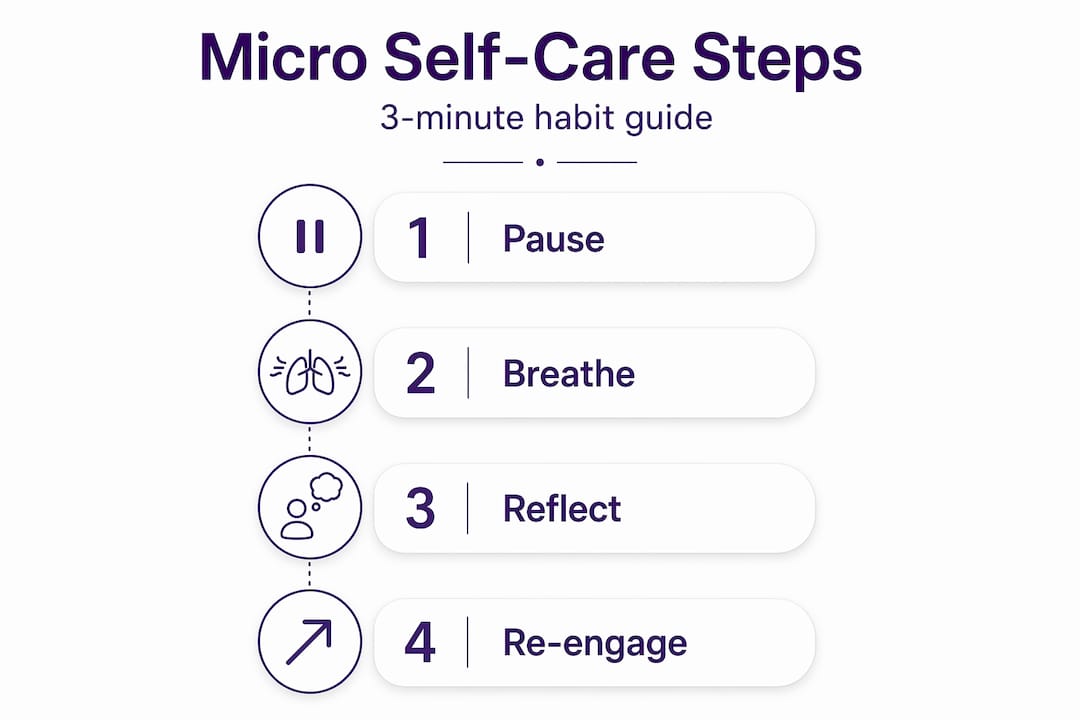
The reason small moments carry real psychological weight comes down to how the nervous system responds to signals. When you are stressed, your body runs on threat-detection mode. A brief, intentional pause sends a counter-signal. It says: you are safe right now.

Micro self-care moments function as nervous system shifts, most effective when they involve low-stimulation, sensory, or embodied activities. These give your body clear feedback that the threat has passed, even temporarily. That is why staring at your phone during a break often leaves you more anxious. Scrolling is stimulating, not restorative.
The measurable benefits of practicing micro self-care consistently include:
- Reduced anxiety spikes during the workday, because stress is interrupted before it compounds
- Improved mood regulation, since the nervous system gets frequent recalibration rather than waiting until burnout
- Better focus after each micro pause, because attention resets with the body
- Lower cumulative fatigue, particularly relevant in high-demand jobs like healthcare, where microbreaks reduce fatigue and support performance across long shifts
One finding that tends to surprise people: consistency and repetition drive emotional resilience, not intensity or duration. A single long meditation on Sunday does less for your nervous system than three mindful breaths practiced eight times throughout the week.
Pro Tip: If you notice your shoulders creeping toward your ears or your jaw clenching, treat that as a built-in alarm. Those physical cues are your body’s way of requesting a micro moment, not a full break.
Micro self-care options and how to choose
Not every technique fits every person or every moment. The table below compares common micro self-care methods by time required and primary benefit so you can quickly identify what fits your life.
| Practice | Time needed | Primary benefit |
|---|---|---|
| Box breathing (4-4-4-4 counts) | 60 to 90 seconds | Nervous system calm, reduced anxiety |
| Hydration pause (mindful water drinking) | 30 to 60 seconds | Grounding, physical reset |
| Posture and tension release | 30 seconds | Body awareness, muscle relief |
| Short walk (to another room or outside) | 2 to 5 minutes | Mood lift, mental clarity |
| Sensory grounding (touch, smell, sound) | 60 seconds | Anxiety reduction, presence |
| Gratitude note (one thing written down) | 60 to 90 seconds | Mood shift, perspective reset |
The most sustainable micro self-care approach uses what researchers call “habit anchoring.” Anchoring practices to existing daily routines, like your morning coffee, a bathroom break, or the transition between meetings, dramatically increases follow-through. You are not adding new time slots. You are enriching moments that already exist.
For people exploring daily self-care habits, starting with just two anchored micro moments per day is more effective than trying to schedule five and abandoning them by Wednesday.
Pro Tip: Build a tiered plan with a “full version” and a “minimum version” of each micro practice. On hard days, the minimum version, even just one slow exhale, keeps the habit alive without adding pressure. Sustainable self-care is about consistency, not perfection.
Common misconceptions that undermine micro self-care
The biggest pitfall people fall into is confusing distraction with restoration. Checking social media, watching a clip, or scrolling headlines feels like a break but stimulates rather than calms the nervous system. You finish it more activated, not less.
A few other misconceptions worth correcting:
- “It only counts if I feel better immediately.” Micro self-care works cumulatively. One breath will not erase a hard morning. Eight intentional pauses across a day absolutely will shift how you feel by evening.
- “I do not have time even for micro moments.” A posture reset takes 20 seconds. Drinking water mindfully adds zero time to something you were already doing. The barrier here is attention, not time.
- “Self-care should feel productive or impressive.” The entire point of micro self-care is that it is quiet and undramatic. Meaningful self-care happens when your attention is fully present, not when the activity looks good to an outside observer.
There is also a subtler trap: turning micro self-care into another thing to optimize and feel guilty about skipping. If a missed day becomes a source of shame, that defeats the purpose. The goal is care, not compliance.
Pro Tip: Start with one micro self-care cue you already have, like the moment your morning coffee is ready. Use that 90 seconds to breathe, feel the warmth of the mug, and arrive in your body before the day starts. You can find practical micro routine examples to match almost any schedule.
How to build a micro self-care routine
Building a practice that actually sticks follows a simple sequence. Here is a step-by-step approach you can start this week:
- Identify three existing daily cues. Pick moments that already happen every day: waking up, your first drink of water, sitting down at your desk, or a lunch break. These become your anchors.
- Assign one micro practice to each cue. Keep it specific. “When I sit at my desk, I will do three slow exhales before opening my laptop.” Vague intentions fade; specific ones stick.
- Choose your minimum version. For each practice, define what counts on a genuinely hard day. One exhale counts. One sip of water with awareness counts. This protects the habit on low-energy days.
- Track for one week without judgment. Note which cues you hit and which you missed. Not to grade yourself, but to learn where your natural rhythm already supports micro care.
- Add one new practice every two weeks. Stacking too many at once is how good habits collapse. Grow slowly and the routine becomes durable.
- Reassess monthly. Routines shift. A practice that worked in winter might not fit a summer travel schedule. Adaptive self-care rituals flex with your life rather than demanding you fit around them.
The entire science of micro self-care points to one truth: repeated small moments of regulation build the emotional resilience that carries you through hard periods. You are not waiting to feel better. You are practicing feeling better, over and over, in the spaces your day already contains.
My honest take on why micro self-care changed my practice
I spent years telling myself I would commit to self-care “when things slowed down.” That slowdown never arrived. What I found instead was that waiting for big windows of time meant I was accumulating stress without ever releasing it.
The first time I genuinely tried micro self-care, I felt almost embarrassed by how simple it was. Three breaths before a difficult call. Stepping outside for two minutes after a hard piece of writing. Drinking water slowly instead of gulping it while staring at a screen. None of it felt significant in the moment.
But here is what I noticed after two weeks: I was not arriving at the end of the day completely depleted. The edges were softer. Situations that used to spike my anxiety were still stressful but they did not escalate the same way. That is the nervous system recalibration that sensory and embodied micro interventions actually produce. It is not dramatic. It just works.
What surprised me most was the role of presence. I had previously assumed duration was what made self-care effective. I was wrong. A distracted hour of “relaxing” left me more restless than 60 seconds of genuinely paying attention to my own body. Full attention in small moments is the whole game.
If you are skeptical, good. Try two anchored micro moments for one week and trust what you actually experience, not what sounds too small to matter.
— dushyantha
Support your micro self-care with the right tools
The hardest part of micro self-care is not knowing what to do. It is remembering to do it when stress has already taken over. That is exactly where AI-powered tools can make a real difference.
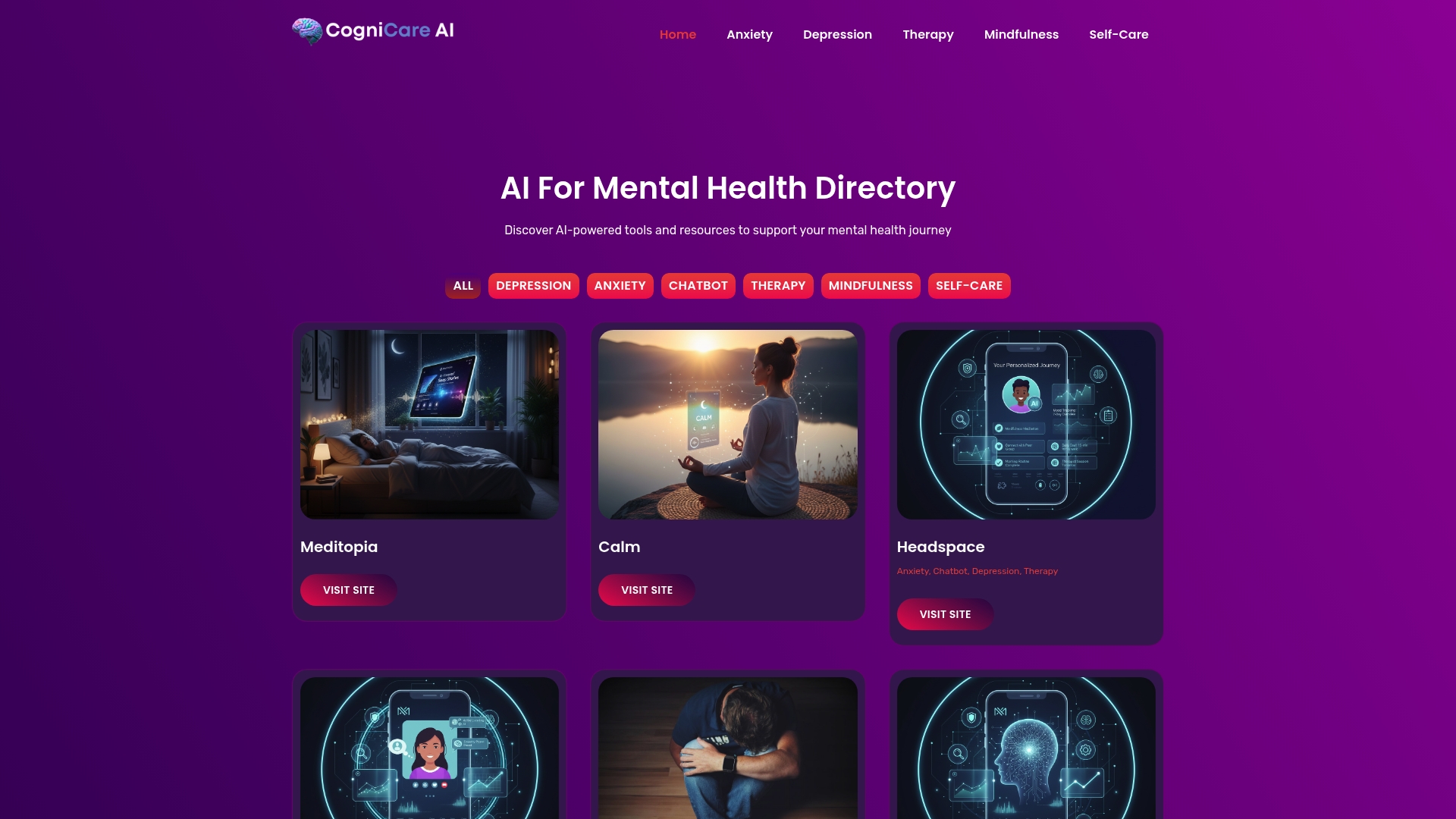
Cognicareai is a directory of AI-powered mental health resources designed to help you find personalized tools that complement the micro self-care habits you are building. Whether you need a guided breathing app, a mindfulness chatbot that fits into a 90-second work break, or a structured program to improve emotional regulation, Cognicareai surfaces options matched to your specific needs and challenges. Explore the AI mental health tools available on the platform and find what actually fits your life. You can also browse the AI-powered mental health tools curated specifically for managing daily stress and building emotional resilience.
FAQ
What is micro self-care?
Micro self-care refers to very small, intentional moments of care lasting 30 seconds to a few minutes, used repeatedly throughout the day to reset emotionally and physically. Unlike traditional self-care, it requires no dedicated time blocks.
How is micro self-care different from taking a break?
A regular break can be passive or stimulating, like scrolling social media. Micro self-care is specifically restorative and intentional, focused on calming the nervous system rather than distracting from stress.
How often should you practice micro self-care?
Frequency matters more than duration. Practicing three to eight micro moments spread across the day produces greater emotional regulation benefits than one longer session done occasionally.
Can micro self-care really reduce anxiety?
Yes. Research supports that microhabits under five minutes reduce anxiety and support emotional regulation when repeated consistently, because they interrupt the stress cycle before it compounds.
What is the easiest micro self-care practice to start with?
A mindful hydration pause is one of the simplest entry points. Drink a glass of water slowly with your full attention on the act itself. It takes under 60 seconds, requires nothing extra, and fits into any schedule.