

Finding an AI mental health directory that offers trustworthy guidance and clear evidence without commercial bias or confusing navigation is harder than expected. Most sites list sponsors or paid partners, hide evidence levels, or restrict peer networking to narrow professional circles. This comparison details scope, evidence framing, peer access, and fee structure for six recognized directories and collectives so you can choose one that matches your clinical or personal goals without trial and error.
Table of Contents
- CogniCare AI
- Honeycomb
- PsyCare+
- Student Mental Health Network
- AI Mental Health Collective
- ASAIMH (Australasian Society for Artificial Intelligence in Mental Health)
- Comparison of alternatives
CogniCare AI
At a Glance
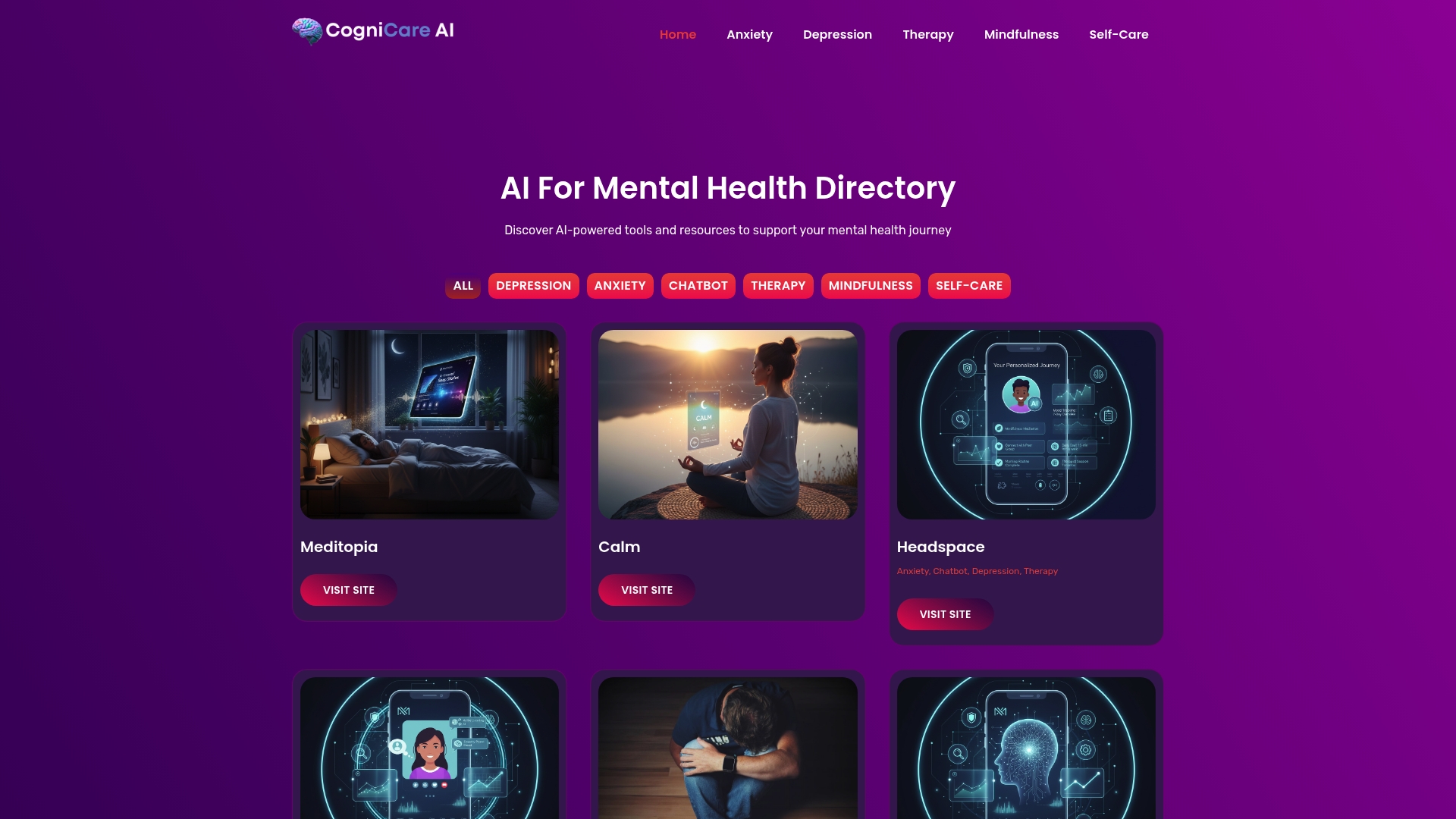
Organizes tools by condition, evidence, and approach to simplify choice for anxiety, depression, and stress. The vendor advertises that listings are filtered by clinical frameworks and evidence levels. That structure lets you compare apps, chatbots, and guides side by side.
Core Features
The site runs a curated directory of AI-powered mental health tools and groups entries under therapy, self-care, and mindfulness. It sorts resources across depression, anxiety, and stress while tagging each entry by evidence level and clinical approach. The directory also includes guides and short overviews that explain how each tool can fit into a reader’s care plan.
Key Differentiator
The primary distinction is its focus on AI-organized curation that combines condition, therapeutic approach, and evidence markers into one searchable index. That single view reduces guesswork when you want an app or chatbot matched to a specific symptom or therapy style.
Pros
Access to a broad selection of AI-driven tools makes it easier to sample options without long searches. The site’s organization by condition and evidence level speeds comparison and shortlisting. Editorial guides clarify clinical framing and use cases so clinicians and readers can pick tools that match treatment goals.
Cons
- Limited to AI-powered and digital interventions. It does not replace professional care.
Who It’s For
People who want evidence-focused AI resources for mild to moderate anxiety, depression, or stress will get the most value. Mental health professionals who recommend digital adjuncts will find the evidence tags useful for clinical conversations. Readers who need quick, condition-specific suggestions rather than open-ended app lists will prefer this format.
Unique Value Proposition
Offers structured guides and overviews that turn the directory into a practical shortlist for clinicians and individuals. That workflow saves time by surfacing clinically framed options and the evidence cues needed to decide which digital tool to try next.
Real World Use Case
A person with mild anxiety wants a chatbot that provides coping exercises between therapy sessions. They search by condition and evidence level, read the guide on chatbots, and pick an app that lists clinical backing and targeted exercises. The person then brings the short list to their therapist for discussion.
Website: https://cognicareai.com
Honeycomb
At a Glance
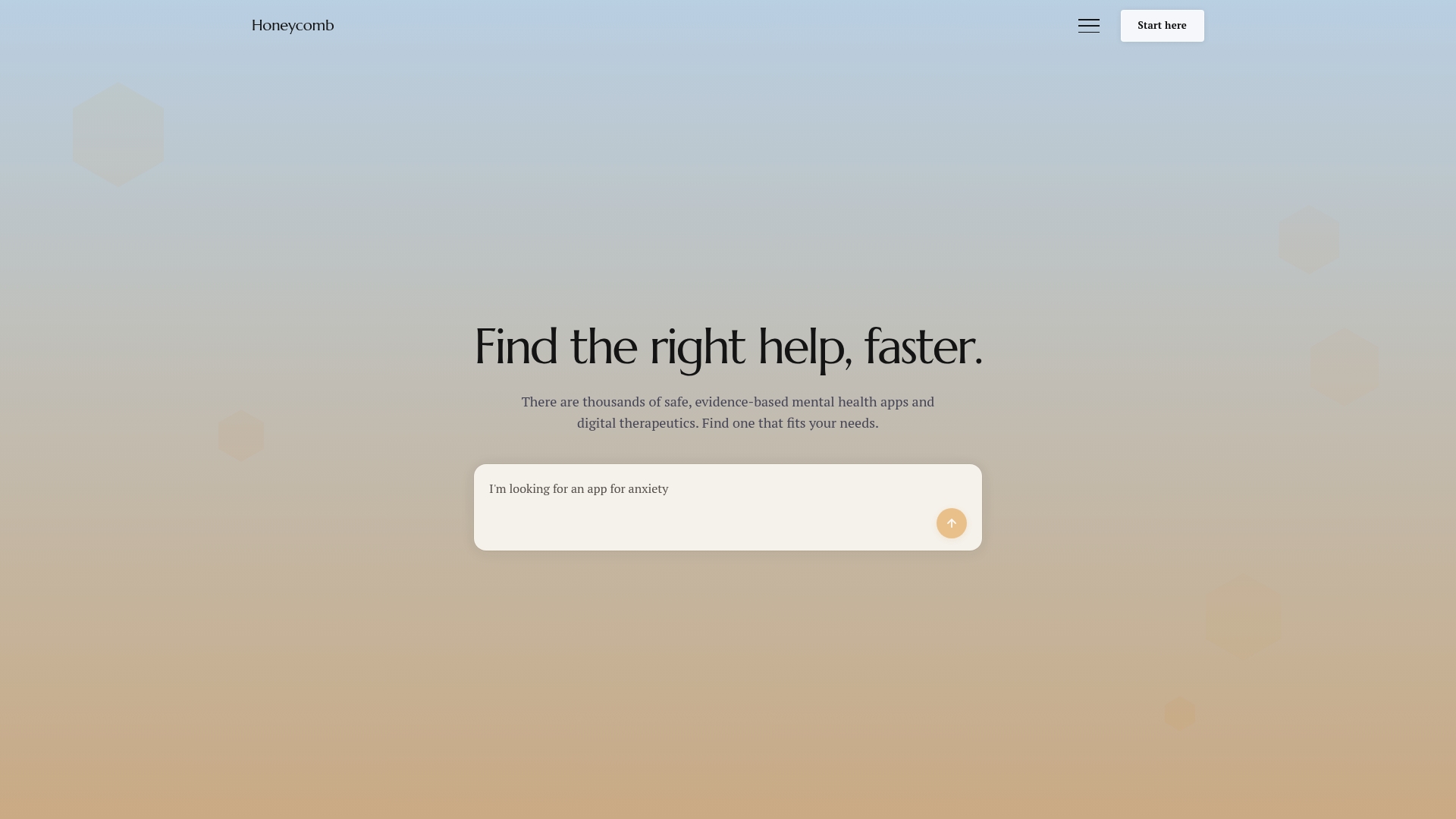
Honeycomb offers free, no registration guidance that links you directly to recommended mental health apps and therapeutics. The site uses a chat-driven, four-step process to clarify needs, present options, and answer questions. It does not deliver therapy itself but helps you narrow choices and follow direct links to providers.
Core Features
Honeycomb reports an evidence based approach with clinical backing. The site evaluates digital tools against established frameworks and summarizes findings for nontechnical readers. An AI led chat matches options to user preferences, walks through a four step selection process, and supplies direct links to each recommended provider.
Key Differentiator
The service emphasizes independent assessments and matching that avoid commercial bias. That claim positions Honeycomb as a marketplace filter rather than a marketplace vendor. Its stated focus on needs driven recommendations separates it from directories that list partners or paid sponsors.
Pros
The platform is free and requires no signup, which lowers the barrier for people exploring mental health tools. Its independent research framework aims to translate clinical and technical signals into plain language recommendations. Clinicians and employers can use the output to suggest vetted options to patients or employees, and the chat driven flow reduces overwhelm by breaking selection into clear steps.
Cons
- Limited transparency about which specific apps and therapeutics were evaluated and how reviewers reached their conclusions.
- Does not provide direct mental health services or therapy; users must follow external links for care.
- Recommendations depend on the accuracy of the AI led chat and the quality of user input, which can vary.
- Third party commentary flags limited public detail on proprietary assessment methods.
When It May Not Fit
If you need ongoing therapy, Honeycomb will not provide clinical care or session management. If procurement requires full methodological disclosure, its public documentation may not meet strict vendor audit needs. If your team prefers human led assessments rather than AI assisted matching, this site may not fit your workflow.
Who It’s For
People who want trustworthy, evidence based app recommendations without cost or registration will benefit most. Clinicians and employers looking for a quick, vetted shortlist for referrals will find it useful. Mental health organizations researching safe digital therapeutics can use Honeycomb as an initial screening tool.
Real World Use Case
A parent searching for an app for their teen uses Honeycomb’s guided chat to describe symptoms, age, and budget. The chat returns a short list of evidence aligned options with links and concise summaries. The parent compares summaries, follows links, and trials a chosen app.
Website: https://athoneycomb.com
PsyCare+
At a Glance
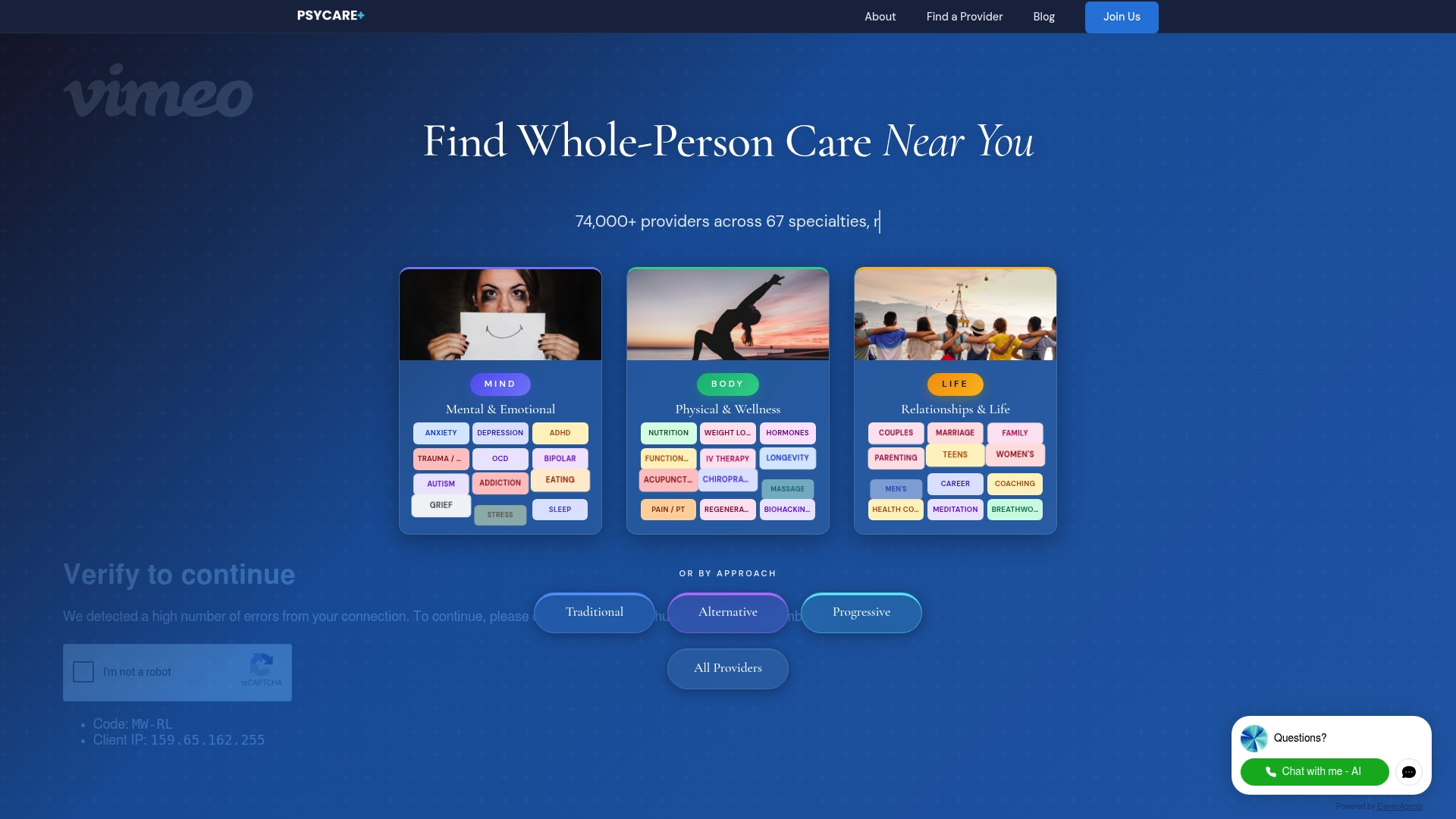
PsyCare+ reports more than 74,000 listings across 67 specialties in the United States. That scale concentrates on alternative and integrative practices such as neurofeedback, functional medicine, and acupuncture. The directory pairs visibility with marketing and practice management services to help providers attract patients interested in holistic care.
Core Features
The site combines a searchable provider directory with custom website and SEO services. Marketing packages cover social media, content, and advertising while practice management includes EHR, scheduling, billing, and compliance. The platform also offers insurance reimbursement support for in network and out of network claims processing.
Key Differentiator
PsyCare+ focuses on organic growth and AI search visibility for alternative, integrative, and holistic healthcare providers in the U.S. That angle targets providers who want patient acquisition through search and content rather than paid lead buys. The emphasis suits clinics that can invest in steady SEO work and content creation.
Pros
Specialization in alternative and integrative care gives providers access to a concentrated patient pool. Combining marketing and practice management reduces vendor juggling, with tools for websites, ads, and billing in a single account. That listing figure supports long term visibility while month to month subscriptions let providers avoid long contracts and keep their session earnings.
Cons
- Requires a subscription for visibility and marketing services rather than a pay per lead model.
- Key features require higher tiers, which may be costly for solo or new practices.
- Outcomes depend on active SEO and content management, so results vary by competition and provider effort.
When It May Not Fit
If your priority is immediate paid leads, this site will not deliver guaranteed patient flow. Small practices with minimal marketing budgets may find the higher tiers impractical. Providers unwilling to maintain SEO and content will see limited benefit from the platform’s visibility tools.
Who It’s For
Licensed healthcare practitioners and clinics offering alternative, holistic, or integrative treatments will gain the most. Therapists, chiropractors, functional medicine providers, and neurofeedback clinicians fit the directory’s specialties. Providers who want unified marketing and practice management and who can commit to SEO work will benefit.
Real World Use Case
A holistic chiropractor in Atlanta claims a listing for $30 per month to raise local visibility. As bookings increase, the clinic upgrades to a full website and SEO package starting near $500 per month. The practice uses marketing tools to attract patients seeking integrative care and to streamline scheduling and billing.
Website: https://psycareplus.com
Student Mental Health Network
At a Glance
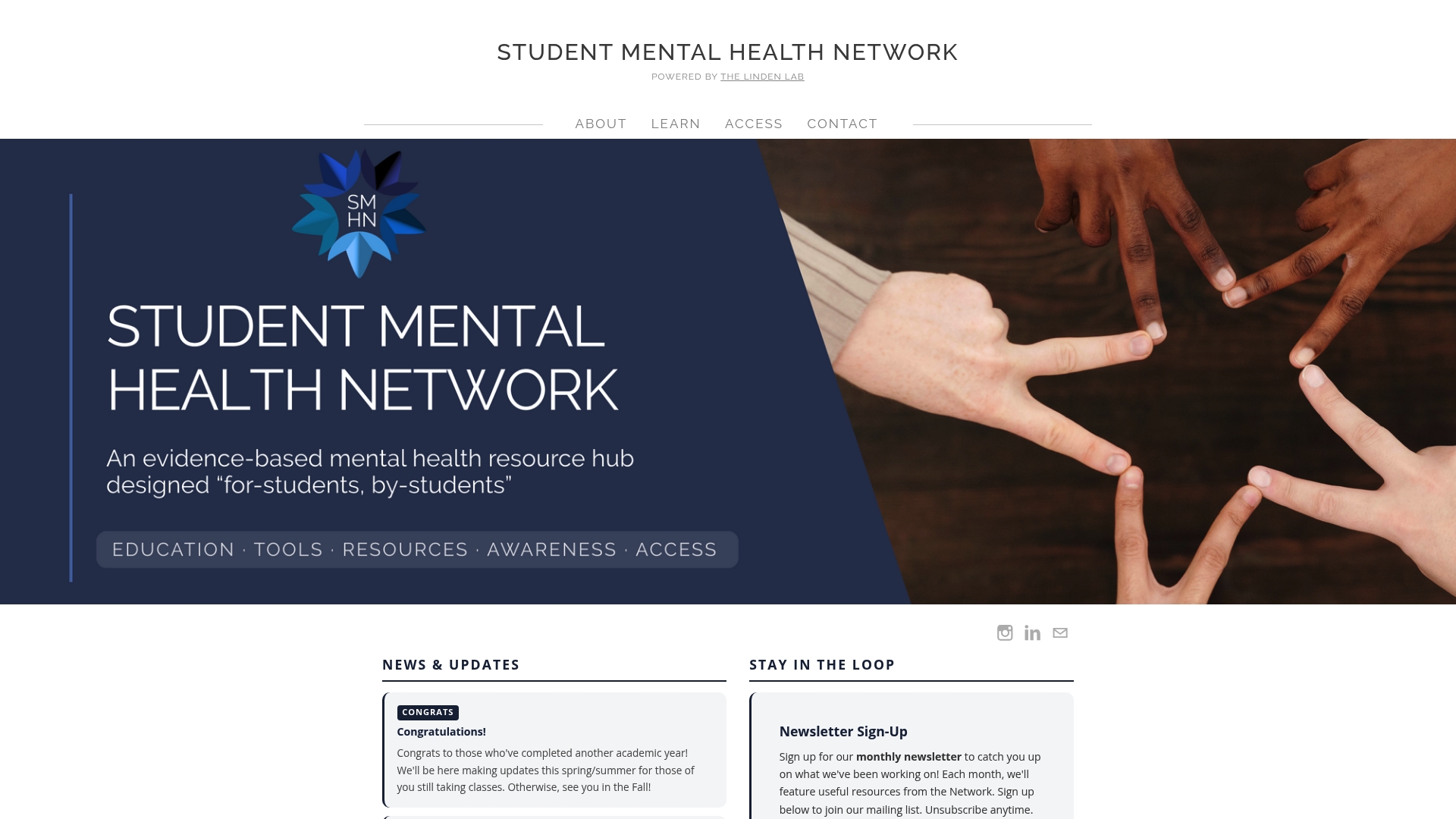
Everything offered is created “for students, by students” and reviewed by mental health professionals for psychological safety. The resource is free and publicly available to postsecondary students across Canada. Content focuses on awareness, stress management, stigma reduction, and help seeking.
Core Features
The site organizes modules, toolkits, and training into a searchable library tailored to campus audiences. Interactive tools guide skill development and peer support practice, and resources cover stress management and help seeking. Subject matter experts review content to keep materials accurate and safe for student use.
Key Differentiator
The single strongest distinction is the peer origin of content combined with professional review. That approach aims for higher student relevance than generic resources. The focus narrows squarely to Canadian postsecondary settings, making material directly applicable to campus groups and staff.
Pros
The resource is free, which removes cost barriers for students and campus groups. Content emphasizes student involvement and peer support, so material reads like it was written by other students. Professional review supports safety and factual accuracy, and the library covers a broad set of topics relevant to campus well being.
Cons
- Primarily digital resources, so access depends on reliable internet and a device.
- Limited information on in person services or pathways to one on one counseling.
- Third party commentary highlights content quality but offers limited evidence on long term effectiveness.
When It May Not Fit
This network does not provide direct crisis support or personalized mental health counseling. If you need immediate crisis intervention or ongoing therapy referrals, another service will be necessary. Campus teams seeking in person clinical care pathways should pair these materials with local health services.
Who It’s For
Postsecondary students across Canada who want practical, evidence based education and peer oriented resources. Campus mental health advocates and student clubs that run orientations or peer support programs will find ready made materials. Faculty and staff can adopt modules for classroom or training use.
Real World Use Case
A university mental health club runs the module series during welcome week to introduce help seeking and reduce stigma. Peer supporters complete the training module before facilitating small group sessions. Faculty integrate a toolkit into first year seminars to teach stress management skills.
Website: https://studentmentalhealthnetwork.ca
AI Mental Health Collective

At a Glance
Offers Continuing Education credits for clinicians while operating as a professional community, not a therapeutic service. Membership includes clinicians, technologists, researchers, and industry leaders focused on ethics and practice. The group runs recorded expert sessions, clinician gatherings, cross discipline collaborations, and local in person dinners where chapters exist.
Core Features
Members join a vetted professional forum that organizes monthly expert discussion sessions with recordings and clinician specific gatherings for case consultation. The community supports cross discipline collaboration tracks between clinicians and technologists and maintains curated resources and community news for members. Local chapters also host in person dinners when organizers set them up.
Key Differentiator
A curated vetting process limits membership to professionals and helps keep discussions focused on responsible AI, ethics, and clinical practice. That curation narrows the audience compared with broad public forums and raises the level of technical and clinical exchange. The focus steers conversations toward practice oriented reflection rather than headline driven debate.
Pros
Vetted membership keeps discussions professional and reduces off topic posts, so conversations stay substantive and technical. The community offers Continuing Education credits and regular recorded sessions, which helps clinicians track learning and builds a reference library. Cross discipline networking opens collaboration paths between researchers and developers, and curated resources speed orientation for new members.
Cons
-
Page not found messages imply the website may have navigation issues or an incomplete online presence.
-
Limited public detail on specific AI tools means members must rely on discussions and shared projects rather than platform delivered software.
-
The community appears specialized, which may limit accessibility for the general public or for people without professional credentials.
When It May Not Fit
If you want an open public forum with broad membership and many consumer resources, this group will feel too restricted. If you need a platform that ships AI tools or software directly, this community will not provide those deliverables. If the website shows errors during signup or browsing, finding and joining chapters will be harder.
Who It’s For
Vetted mental health clinicians and AI professionals interested in ethics and responsible innovation will gain the most from this community. Researchers and industry leaders seeking cross discipline peer review will find relevant colleagues. Early career practitioners may benefit but should expect a vetted entry process.
Real World Use Case
A mental health clinician joins to earn credits, attend recorded expert sessions, and consult peers on AI ethical dilemmas. They present a de identified case at a clinician gathering and receive multidisciplinary feedback from researchers and technologists. That collaboration leads to a co authored white paper and follow up meetings at a local chapter dinner.
Website: https://aimentalhealthcollective.com
ASAIMH (Australasian Society for Artificial Intelligence in Mental Health)
At a Glance
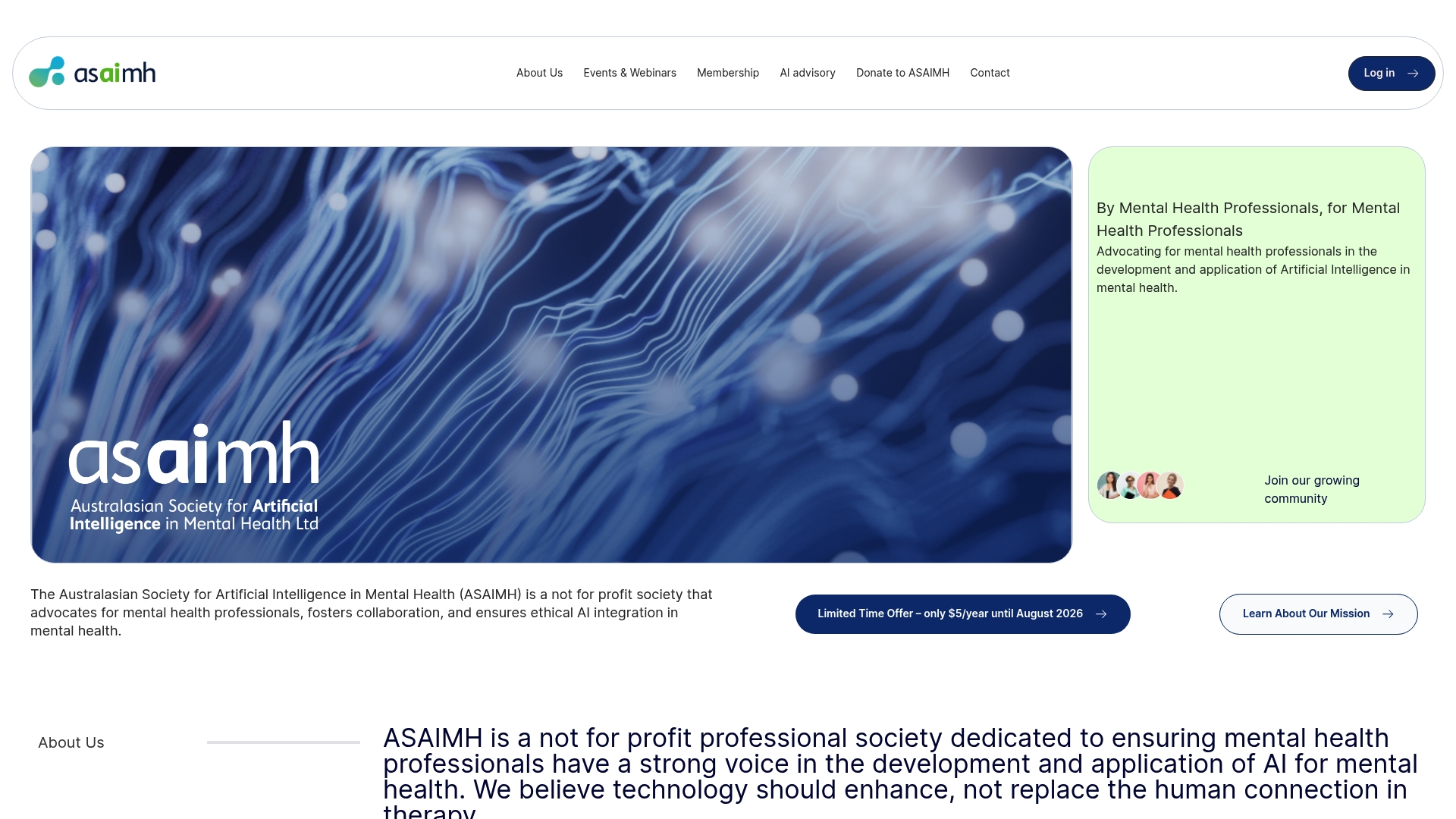
ASAIMH reports an affordable membership fee of $5/year until 2026. The society operates as a not for profit advocate for clinicians, researchers, and technologists across Australia and Australasia. Its stated focus is keeping AI ethics aligned with clinical values and protecting human connection in care.
Core Features
The society runs education and training programs for clinicians and researchers and facilitates research collaboration among members. It pursues policy influence through advocacy work and builds community ties between clinicians, legal experts, and AI developers. Meetings, workshops, and collaborative projects form the practical backbone of its member activity.
Key Differentiator
ASAIMH centers its work on ethical, clinician centered AI in mental health and actively pushes policy and professional conversation rather than product development. That sustained advocacy effort aims to keep human judgment and patient safety central as AI tools gain traction. The society’s mix of professional roles gives policy work clinical credibility.
Pros
The group maintains a clear emphasis on ethical, human-centered AI, which helps clinicians weigh technology against therapeutic goals. It bundles education, research, and advocacy into membership, so learning and policy input happen in the same forum. The society lists broad professional participation, from clinicians to legal experts, which strengthens policy recommendations. The low reported fee makes joining accessible for early career professionals and small practices.
Cons
- Not a software vendor. The society does not build or ship AI tools, so practitioners seeking ready made platforms will need a different provider.
- Limited public detail on specific AI systems. Materials emphasize principles and training more than tool catalogs.
- Membership services are community and policy focused. That setup may not satisfy teams who want commercial support or turnkey implementations.
When It May Not Fit
Choose another option if you need immediate access to off the shelf AI tools or vendor grade integrations. ASAIMH will not supply engineering resources, technical support, or platform road maps. Organizations seeking a technical partner for deployment projects will find the society’s advocacy and education remit a poor match.
Who It’s For
Mental health clinicians, researchers, legal experts, and AI developers who want to shape how AI is used in clinical care will find value in membership. Early career professionals and clinicians concerned about ethics and policy will benefit most from the society’s training and networking.
Real World Use Case
A clinical psychologist attends an ASAIMH workshop to learn how to assess AI recommendations while preserving therapeutic rapport. The psychologist then joins a working group to advise a regional health service on safe pilot testing of a symptom triage tool. That combination of training and policy input influences local deployment decisions.
Website: https://aiclinpsych.com.au
Comparison of alternatives
Among the evaluated AI-based mental health directories, each highlighted platform serves distinct audience needs and offers unique operational approaches for managing clinical tools and resources.
Accessibility and Initial Cost
Accessibility and affordability are critical factors for individuals seeking mental health resources. Honeycomb stands out as the only platform offering free access without requiring registrations, making it an ideal choice for those exploring immediate recommendations within a stress-free environment. By contrast, platforms like PsyCare+ rely on subscription-based models, which though structured, may not align with users seeking straightforward entry points. However, ASAIMH’s notably minimal membership fee of $5 annually prioritizes inclusivity for early career professionals.
Curation and Focus
When selecting platforms based on focused content delivery, the distinctions are clear. Cognicare AI supports readers with scientifically tagged resources for managing conditions like anxiety, depression, and stress. This targeted organizational structure simplifies decision-making for clinicians and individuals. Conversely, the Student Mental Health Network excels in providing peer-originated content reviewed by professionals, tailored specifically to Canadian students’ mental health education and awareness needs. For broader scope inclusions, PsyCare+ accommodates multiple practices and integrates marketing support for healthcare providers.
Best fit
- Clinicians and individuals needing evidence-based AI tools for precise recommendations suited to interventions for mild to moderate mental health issues will gain substantial benefits using Cognicare AI.
- Those seeking easy onboarding with rapid access to recommendations will appreciate Honeycomb’s barrier-free and free-to-use platform.
- Providers from the alternative and integrative medicine sectors looking to extend their patient base while streamlining operational overhead can leverage PsyCare+’s combined directory and practice management services.
- Postsecondary students in Canada aiming to develop practical mental health skills will find the Student Mental Health Network’s reviewed resources highly focused and effective.
- Professionals drawn towards collaborative discussion on ethical AI in mental health practices will value the opportunities provided by AI Mental Health Collective.
Our pick
Cognicare AI emerges as a top choice for readers prioritizing structured guidance in selecting AI-driven mental health tools, thanks to its articulated frameworks. This platform is valuable for individuals and clinicians focusing on evidence-grounded and therapy-specific tools. However, those prioritizing free offerings and straightforward access may find Honeycomb better suited to their needs.
The following table outlines the features of various AI-driven mental health platforms to assist users in selecting the most suitable resource for their needs.
| Product | Key Feature | Best For | Pricing | Limitation |
|---|---|---|---|---|
| Cognicareai | AI-organized resource curation | Users seeking AI-powered mental health tools | Price not published | Limited to digital interventions |
| Honeycomb | Chat-driven app recommendation | Quick evidence-based app selection | Free | Limited transparency on evaluation methodology |
| PsyCare+ | Marketing for integrative providers | Holistic and alternative care practitioners | $30–$500/month | Subscription-based model |
| Student Mental Health Network | Peer-created modules | Postsecondary students in Canada | Free | Limited in-person service information |
| AI Mental Health Collective | Vetted professional community | Clinicians focusing on ethics | Price not published | Specialized for professionals |
| ASAIMH | Advocacy for ethical AI | Clinicians and researchers | $5/year until 2026 | Not a tool provider |
How to Find Reliable Alternatives for mhapy.com That Match Your Mental Health Needs
People searching for mhapy.com alternatives often face the challenge of sorting through many options without clear guidance on evidence and condition fit. That can make choosing mental health apps or AI tools for anxiety, depression, or stress stressful and time consuming. Cognicareai addresses this problem by offering a curated directory that organizes AI-powered tools by condition, therapeutic approach, and evidence level. This setup helps readers and clinicians quickly identify resources that fit treatment goals without guesswork.
Cognicareai supports people looking for evidence-focused AI solutions tailored to individual mental health needs. It simplifies comparison across apps, chatbots, and guides so you can find supports that work well for mild to moderate symptoms. Users gain access to clinical overviews that explain how specific tools enhance coping and resilience. Visit Cognicareai to review trusted options organized to match your emotional well-being priorities.
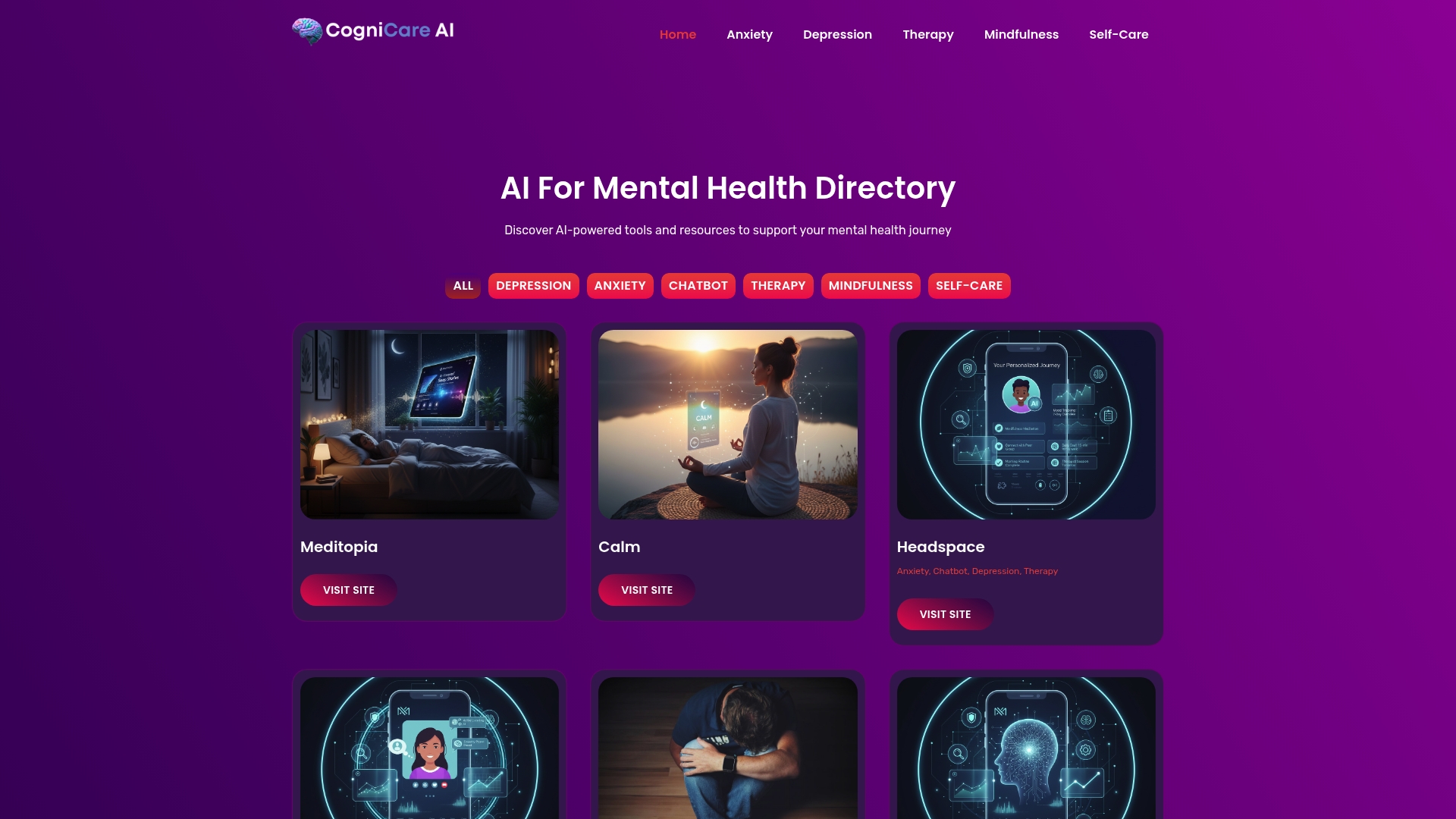
Explore how Cognicareai lets you filter choices by your condition and learn which AI tools have clinical backing. Take control of your mental health care with a platform designed for easy, evidence-guided selection. Check available resources at Cognicareai and start building a targeted shortlist tailored just for you.
FAQ
What makes Cognicareai suitable for finding AI mental health tools?
Cognicareai provides a curated directory of AI-powered mental health tools organized by condition and therapeutic approach. The site features a categorized listing that allows users to compare resources for anxiety, depression, and stress, which enhances the decision-making process for individuals seeking options. Users can efficiently explore tailored solutions that match their specific needs, making it an excellent starting point for mental health resource exploration.
How does Honeycomb compare to Cognicareai in terms of user independence?
Honeycomb emphasizes independent assessments and is particularly notable for providing no-cost, no-registration guidance to users. This is advantageous for users who prefer to explore and research mental health tools without any barriers. Cognicareai, on the other hand, excels at offering a comprehensive organizational structure that simplifies the selection process for specific conditions and therapeutic approaches. This makes Cognicareai a strong choice for users who want detailed, guided comparisons tailored to their mental health needs.
What is the benefit of using Cognicareai’s evidence tags?
Cognicareai employs evidence tags that highlight the clinical backing of its listed tools, facilitating informed decisions. These tags allow users to quickly identify tools that align with their treatment goals, adding transparency and value to their search. This structured approach ensures that individuals can focus on credible resources that enhance their overall mental well-being.
Can I find ongoing therapy options on Cognicareai?
Cognicareai primarily offers access to AI-driven and digital interventions rather than direct therapy services. This means that while users can discover various tools suited for managing mild to moderate mental health concerns, they will need to seek professional care separately for ongoing therapy sessions. Using Cognicareai as a resource can initiate the process of finding supportive tools to complement professional treatment.
How does PsyCare+ specialize in marketing for alternative care?
PsyCare+ focuses on organic growth and AI search visibility specifically tailored for alternative and integrative healthcare providers. It combines a provider directory with marketing and practice management services to help practitioners reach patients interested in holistic care. While Cognicareai is centered on comparing tools for individual users, PsyCare+ provides resources to help practitioners effectively market their services.