

Choosing a mental health directory that matches specific symptoms to actionable resources without overwhelming users with generic lists is rarely straightforward. Many directories either bury CBT tools and trackers behind loosely organized links or require tedious manual searching across scattered apps. This comparison clarifies recommendation style, privacy protections, and specialty niches across four mental health directories so you can select one that saves time and fits your preferred workflow.
Table of Contents
Cognicare AI
At a Glance
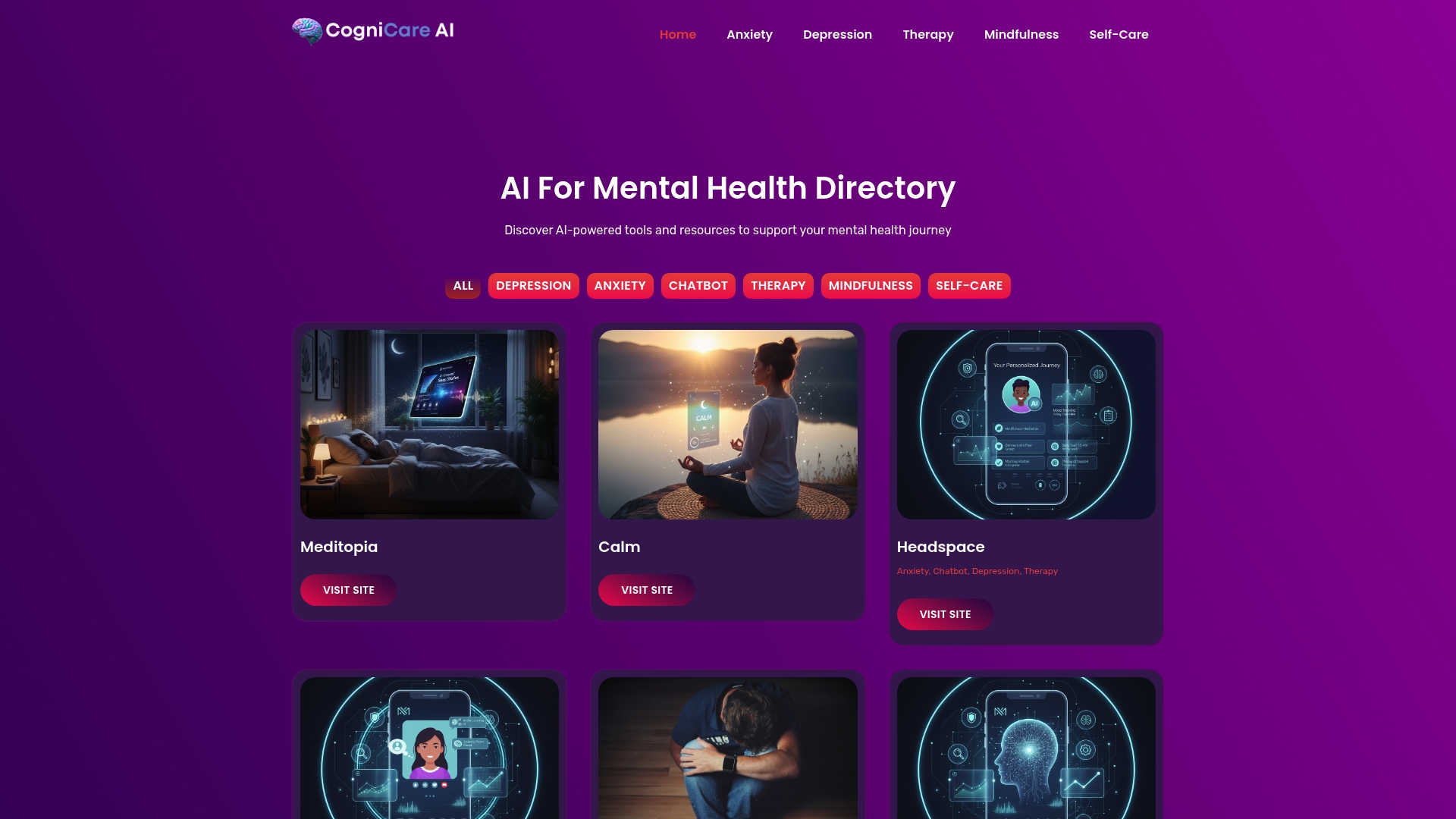
A curated directory that maps symptom reports to recommended CBT exercises, mindfulness apps, and therapy chatbots. Cognicareai’s marketing materials report improved coping strategies and emotional resilience among users, a vendor claim presented without independent verification.
Core Features
Curation of AI-powered mental health resources across anxiety, depression, mindfulness, and self-care.
Personalized recommendations that match your stated needs to specific digital interventions like CBT modules and guided mindfulness sessions.
Interactive guided programs designed for ongoing symptom monitoring and skill practice.
Built-in symptom tracking and progress monitoring so you can see trends and adapt what you use over time.
Key Differentiator
The platform connects symptom tracking to a handpicked directory of digital interventions rather than offering a single app. That match-making approach is designed to help you find a tool that fits a specific condition or coping style instead of forcing one workflow for everyone.
Pros
-
Curated choices reduce discovery friction; instead of testing dozens of apps, you get a short list tailored to anxiety, depression, or mindfulness needs.
-
The recommendation flow links symptom entries to concrete interventions such as CBT exercises and therapy chatbots, which helps translate a symptom label into usable practice.
-
Symptom tracking and progress monitoring are core parts of the experience, so usage can generate visible trends instead of one-off sessions.
-
Accessible online; you can use the resources anytime, which suits people balancing therapy, work, and caregiving responsibilities.
-
The platform is positioned to complement traditional care by offering digital interventions that a clinician or coach can review alongside in-person treatment.
Cons
- Relies heavily on user motivation and consistent engagement; without regular use the recommendations and tracking offer little value.
Who It’s For
Individuals who already use therapy or self-help apps and want a guided way to pick the next tool. Good for people managing common conditions like mild to moderate anxiety or depression who want digital exercises and monitoring to supplement professional care.
Unique Value Proposition
A curated directory that ties your symptom entries to specific, categorized digital tools. That setup shifts the work of finding a suitable app from you to the platform, saving hours of trial and error and helping you iterate on interventions faster.
Real World Use Case
Someone with recurring social anxiety logs symptoms for two weeks, then receives a recommended sequence: short CBT drills, daily mindfulness prompts, and a chatbot for on-demand grounding. Progress monitoring shows decreased peak-anxiety days over a month, letting the user and their therapist adjust in-session focus.
Pricing
Not applicable. Cognicareai serves as an informational directory and recommendation engine rather than a subscription product, so there is no listed pricing for platform access.
Website: https://cognicareai.com
Murror
At a Glance
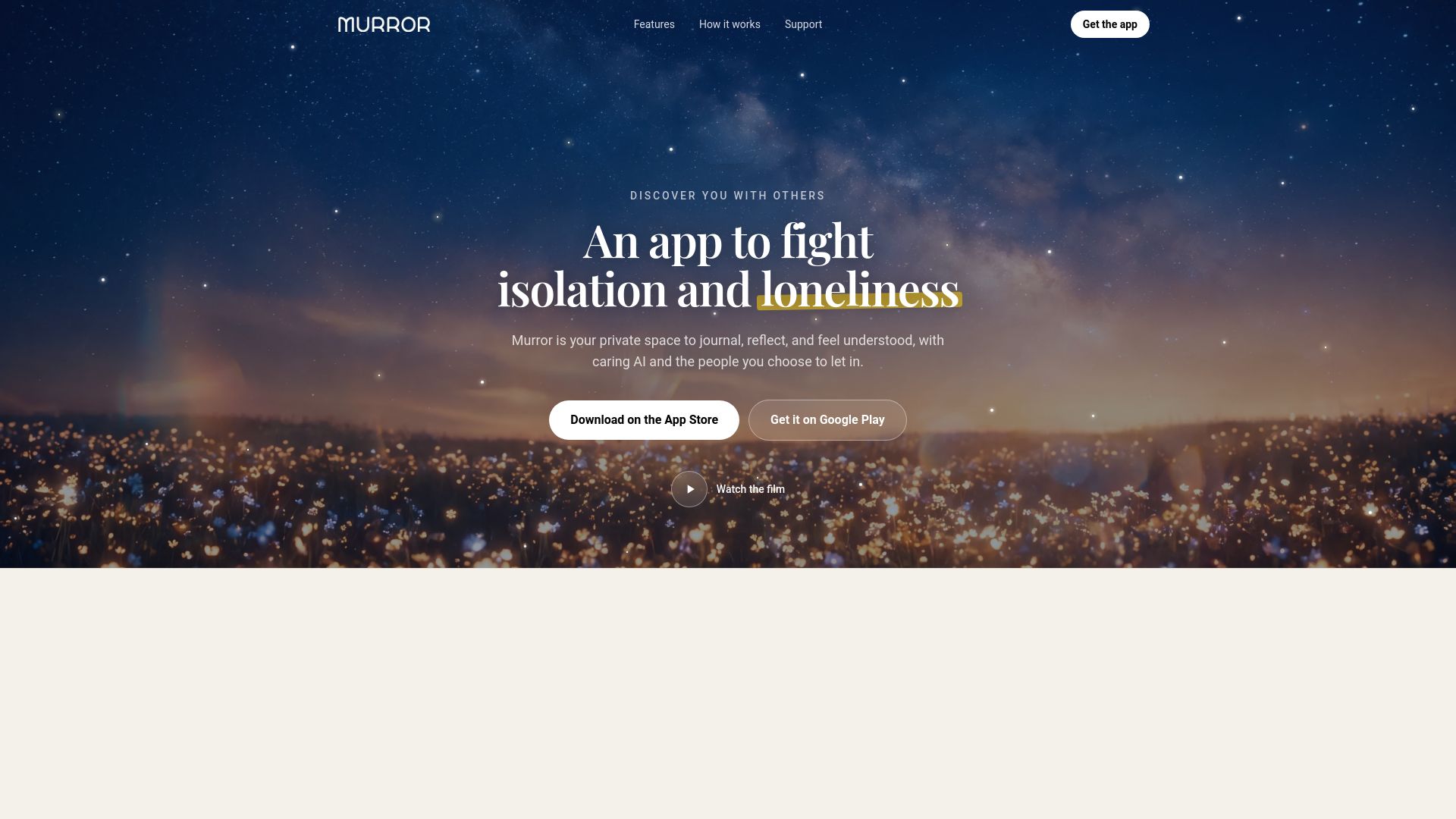
Murror’s marketing highlights a caring AI that remembers past reflections so conversations carry continuity over time. The app pairs guided journaling, mood tagging, and selective sharing inside a private space built to counter loneliness. Mobile clients are available on both iOS and Android for daily use.
Core Features
- Guided journaling for daily prompts that lower the barrier to start reflecting.
- Caring AI conversations that reply with warmth and reference earlier entries to keep context.
- Daily insights that visualise mood trends and emotional patterns over weeks and months.
- Connections feature to share entries selectively with trusted people rather than broadcasting publicly.
- Reflections that compile takeaways from diary entries into short summaries for self-awareness.
Key Differentiator
The vendor positions its AI around sustained, empathetic threads rather than one-off chatbot exchanges. That focus on continuity lets the app reference earlier notes and surface personal patterns during later conversations. This narrower model contrasts with Cognicareai’s broader directory approach and suits people who want a single, private companion rather than a wide set of resources.
Pros
- Approachable conversational tone. The AI keeps replies gentle and short, which lowers friction when you feel overwhelmed.
- Structured reflection tools. Combining prompts, mood tags, and end-of-week reflections helps you notice change without manual tracking.
- Selective sharing protects privacy. The connections control means you can show specific entries to one friend or family member, not your whole contact list.
- Designed for daily use on phones. Simple mobile workflows encourage habit formation without long sessions.
Cons
- Sparse public reviews. There are a limited number of public reviews available, which makes long-term evaluation difficult.
- Thin user feedback on specific features. The app lacks detailed community commentary that would clarify edge-case behavior.
- Reliant on user trust. The value depends heavily on your willingness to record and sometimes share vulnerable moments.
When It May Not Fit
If you want a tool with broad third-party validation or extensive user forums, this may feel lightweight. Clinical-grade therapy features are not part of the offering. Also, teams or clinicians needing multi-user administrative controls and exportable records will find the app too narrowly focused on private, individual reflection.
Who It’s For
Individuals seeking a discreet, phone-first space for emotional reflection and to reduce loneliness. Best for people who prefer a private companion that remembers threads and who will use short daily prompts rather than scheduling formal therapy sessions.
Real World Use Case
Someone feeling isolated uses Murror each morning to jot three sentences about mood, talks through a worry with the AI for five minutes, and lets weekly insights show a downward or upward trend. Selected entries are shared with a close friend to invite conversation and strengthen connection.
Website: https://murror.app
Neyu AI
At a Glance
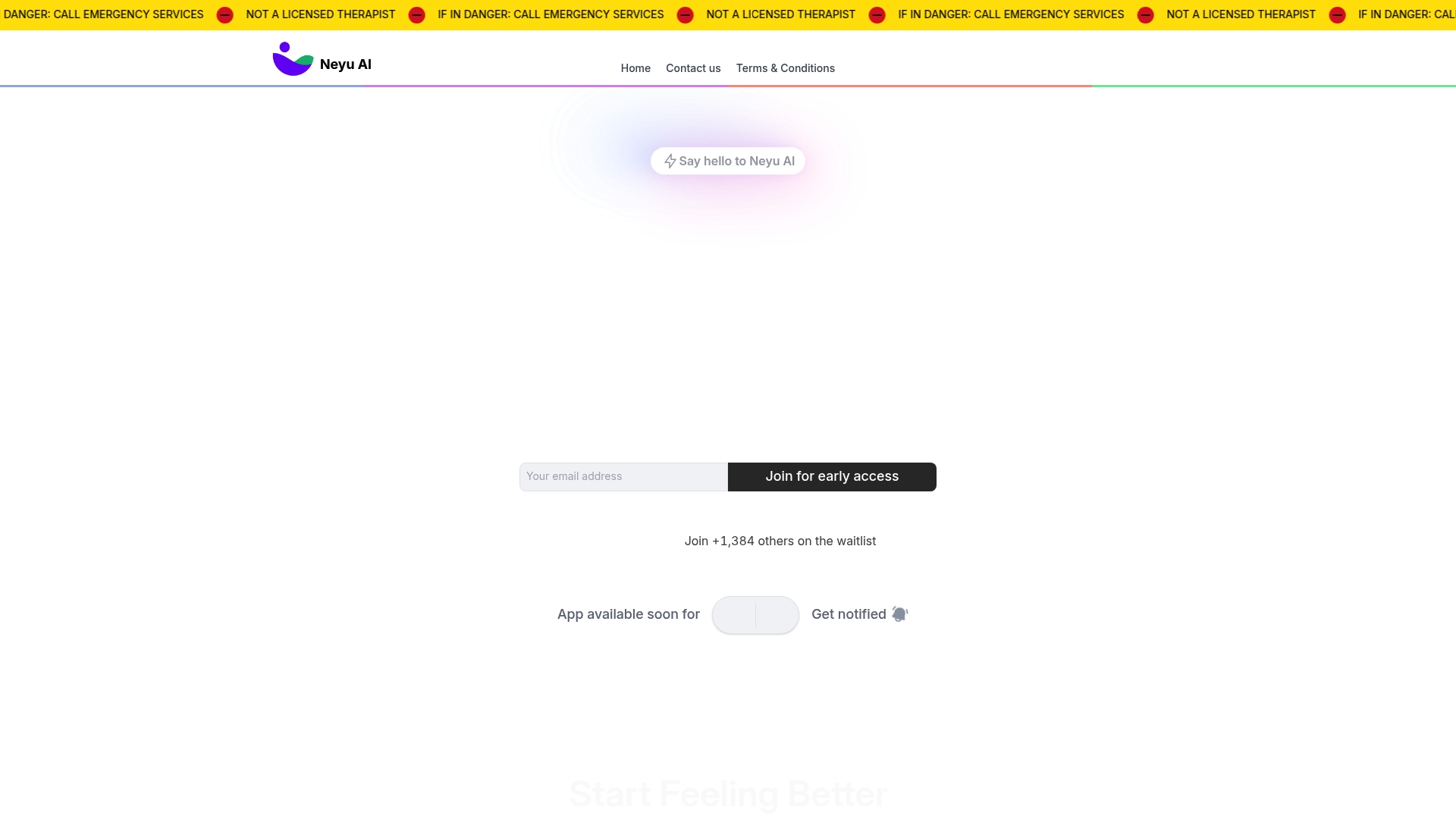
Early access is gated behind a mobile app waitlist, with the vendor advertising that Neyu AI is trained on therapy data to shape its conversational style. The app combines on-demand chat personas, mood tracking, and encrypted journaling while explicitly not replacing licensed care.
Core Features
Neyu AI focuses on a handful of practical tools built for daily use.
- SOS Support for crisis-oriented guidance and rapid de-escalation prompts.
- Secure Journaling with encryption so entries remain private and searchable.
- Mood Check-Ins and weekly summary reports that map patterns across days and weeks.
- Guided breathe-in exercises and basic AI analytics for progress spotting.
Key Differentiator
What sets Neyu AI apart is that therapy-style training sits at the center of its persona design. I found the conversational scripts lean toward therapeutic frameworks rather than casual small talk, and the app pairs that tone with privacy features to minimize data exposure during sensitive conversations.
Pros
- 24/7 emotional support: The chat personas are available at any hour, which is helpful for late-night anxiety or low-energy mornings.
- Personalized interactions: The app adapts prompts and follow-ups to recent mood check-ins and journaling entries.
- End-to-end encryption: Journals and private messages are protected, which matters when you record intimate feelings.
- Trained on therapy data: That training helps the system use familiar therapeutic techniques like grounding and cognitive reframes.
- Multiple specialized AI personas: You can select different tones and approaches depending on whether you want coaching, validation, or practical coping steps.
Cons
- The app is not a substitute for licensed therapist care and the vendor warns users to seek professional help for severe conditions.
- Early access status means features are unfinished and sessions occasionally disconnect or return inconsistent responses.
- Crisis handling is limited; the system advises calling emergency services when a situation requires human intervention.
When It May Not Fit
If you require ongoing, regulated therapy with a licensed clinician, Neyu AI is the wrong tool. Also avoid it as a primary crisis resource since the product explicitly cannot replace emergency services. Finally, people who need mature, stable releases may find the beta cadence disruptive.
Who It’s For
Neyu AI fits people looking for private, on-demand emotional support between formal sessions. It works well for self-guided users who want mood charts, short grounding exercises, and journaling that stays encrypted. It is aimed at those comfortable with digital-first tools rather than in-person therapy.
Real World Use Case
A client feeling overwhelmed before a job interview opens Neyu AI, selects a calming persona, and runs a three-minute breathe-in exercise followed by a structured journaling prompt. The weekly summary later highlights recurring pre-interview tension so the client can try targeted coping techniques.
Website: https://neyuai.com
Yevia
At a Glance
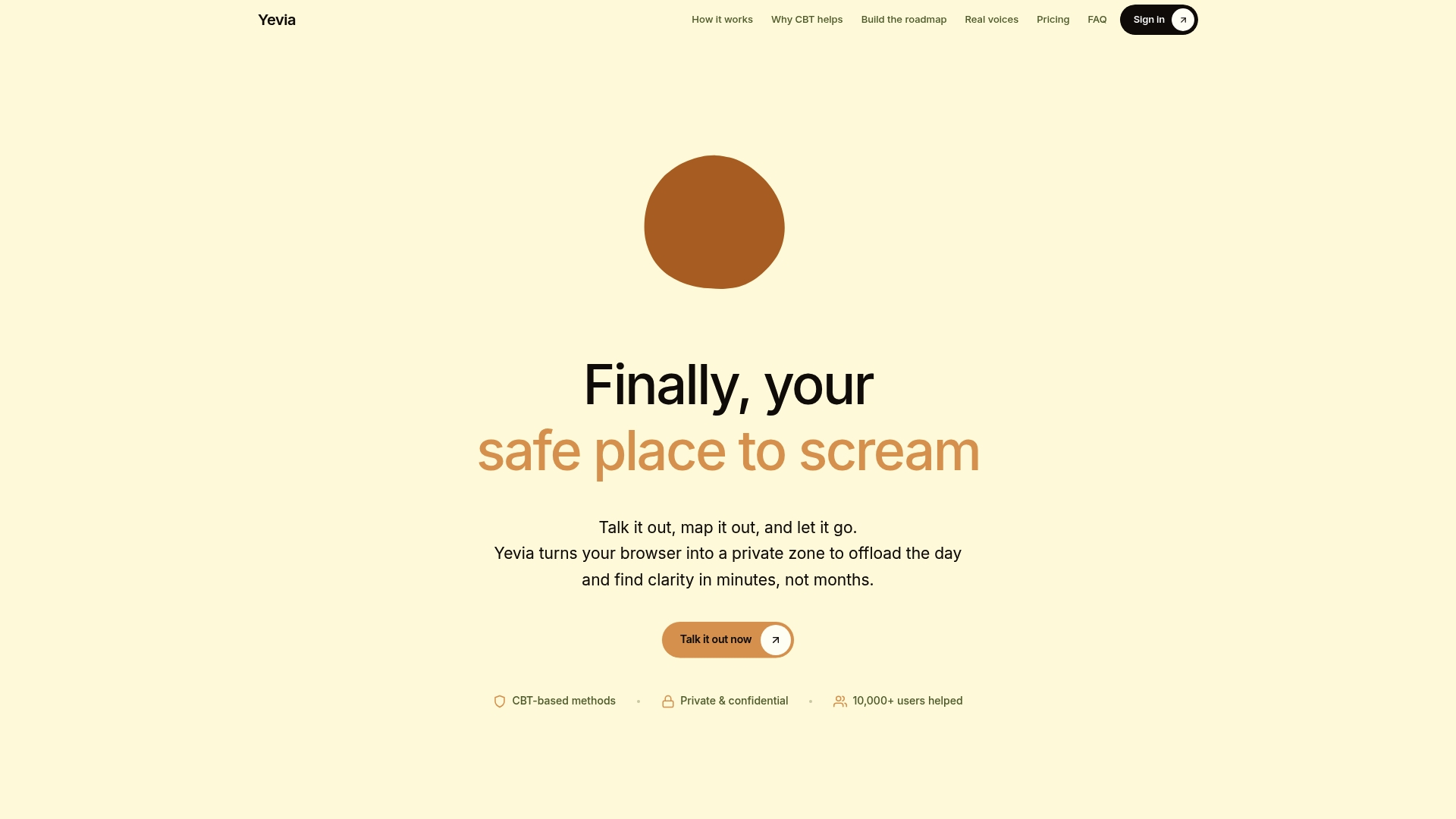
Yevia advertises a voice-first interface that lets you speak a full session and says sessions are private and encrypted with no records kept. The vendor describes its conversations as CBT-informed and evidence-informed rather than as clinical treatment.
Core Features
- Voice-first daily mental offloading that accepts natural speech on web and mobile.
- Structured CBT-informed conversations built around cognitive restructuring, behavioral activation, and mindfulness techniques.
- Thought mapping and feelings visualization to turn a spoken session into a simple map you can revisit.
- Guided mindfulness and behavioral prompts that encourage short practice tasks between sessions.
- Privacy-focused design: the vendor advertises encrypted sessions and no persistent records kept.
Key Differentiator
Yevia’s standout mechanic is the voice-first approach that lowers friction for users who are too overwhelmed to type or schedule. That emphasis on speaking naturally changes the dynamic from journaling to immediate offloading, which matters when you need quick clarity and simple behavioral steps.
Pros
- Accessible 24/7 without appointments. If a member needs to unload at midnight there is no wait or booking step.
- Private, nonjudgmental environment. The privacy claim above makes it suitable for people who avoid posting in public forums or joining groups.
- The voice modality reduces friction for exhausted or anxious members who struggle to type long entries.
- Evidence-informed CBT methods. The CBT framing above gives structure to reflections and produces concrete practice prompts rather than freeform venting.
- Affordable subscription positioning compared with repeated paid coaching sessions for light ongoing support.
Cons
- Not a substitute for licensed therapy or medical care. Members needing diagnosis, medication management, or complex casework should seek a clinician.
- Not suitable for emergency or crisis situations. The product explicitly lacks crisis response protocols and cannot replace emergency services.
- Limited clinical customization. This is a wellness tool and the vendor positions it short of clinical treatment or detailed diagnostic capability.
When It May Not Fit
Avoid Yevia if you need formal clinical assessment, a treatment plan from a licensed clinician, or crisis intervention. It also underperforms for people who require text-based records for therapy integration because the platform emphasizes ephemeral, private voice sessions.
Who It’s For
Individuals who want fast, private ways to practice CBT techniques without appointments. Ideal for people who prefer speaking to typing and who look for daily micro-practice rather than formal therapy blocks.
Real World Use Case
A member finishes a stressful workday, opens Yevia, and speaks freely for seven minutes. The app returns a short thought map, a cognitive restructuring prompt, and one behavioral activation task to try tomorrow morning.
Website: https://evaai.health
Comparative Analysis
Choosing an appropriate mental health directory platform involves weighing the details of their functionalities, specific focuses, and unique benefits to determine their suitability for particular needs.
Tailored Companion Tools vs. Directory Access
Cognicare AI stands apart with its curated directory approach, emphasizing personalized recommendations linking reported symptoms to specific mental health tools. This contrasts with competitors like Murror, which offers guided journaling and reflective tools emphasizing ongoing individual conversations, and Yevia, focusing on voice-first interactions for quick and private CBT-informed sessions. For users prioritizing flexibility and a broad array of resources, Cognicare AI provides a definitive advantage, while those desiring a focused, personal tool may find more alignment elsewhere.
Privacy Measures and Data Handling
Platforms within this field address privacy differently. Neyu AI, for instance, emphasizes end-to-end encryption for journaling entries and private messages, providing an elevated level of confidentiality for sensitive information. Yevia also champions privacy through ephemeral voice sessions, claiming no persistent data storage. For individuals highly concerned about data security in their mental health practice, these features may outweigh other platform functionalities.
Best Fit Recommendations
- Cognicare AI: Particularly suitable for those requiring a curated recommendation engine bridging symptom tracking and personalized interventions, ensuring a streamlined match between needs and tools available.
- Murror: Best suited for individuals valuing continuity in reflective journaling and the privacy to selectively share insights with trusted contacts.
- Neyu AI: Offers secure, therapy-informed interactions with functional mood tracking, fitting well for people seeking structured yet confidential mental health support.
- Yevia: A match for those who find speaking easier than typing and need rapid CBT guidance without committing to text-based session traces.
Our Pick
For individuals searching for a solution that marries diverse mental health needs with simple navigation and tailored recommendations, Cognicare AI presents the most option. Its curated directories and integrated symptom tracker stand out distinctly, even as competitors excel in specialized areas. However, those who prioritize advanced privacy features or singular-point tools may find more satisfaction pursuing Neyu AI or Murror, respectively.
Comparison of Mental Health Support Platforms
For individuals exploring digital tools to enhance their mental well-being, this table compares platform features, user benefits, and limitations to aid in decision-making.
| Product | Key Feature | Best For | Pricing | Limitation |
|---|---|---|---|---|
| Cognicareai | Curated AI-powered mental health resources | People managing mild to moderate anxiety | Not applicable | Relies on consistent user engagement |
| Murror | Empathetic AI journaling with selective sharing | Individuals seeking private, reflective journaling | Not disclosed | Sparse public reviews on functionality |
| Neyu AI | SOS support with encrypted journaling focused on therapeutic techniques | Users preferring on-demand emotional support | Not disclosed | Limited efficacy for licensed therapist replacement |
| Yevia | Voice-first CBT-informed daily offloading | Individuals preferring voice over typing | Affordable | Unsuitable for clinical diagnosis or crisis intervention |
Discover Smarter Alternatives to inaraapp.ai with Cognicareai
Searching for reliable inaraapp.ai alternatives that truly understand your mental health needs can feel overwhelming. Cognicareai offers a curated directory of AI-powered mental health tools designed to connect your specific symptoms with targeted resources like CBT exercises and therapy chatbots. This approach reduces guesswork by guiding you to the best-fit digital interventions for anxiety, depression, and mindfulness.
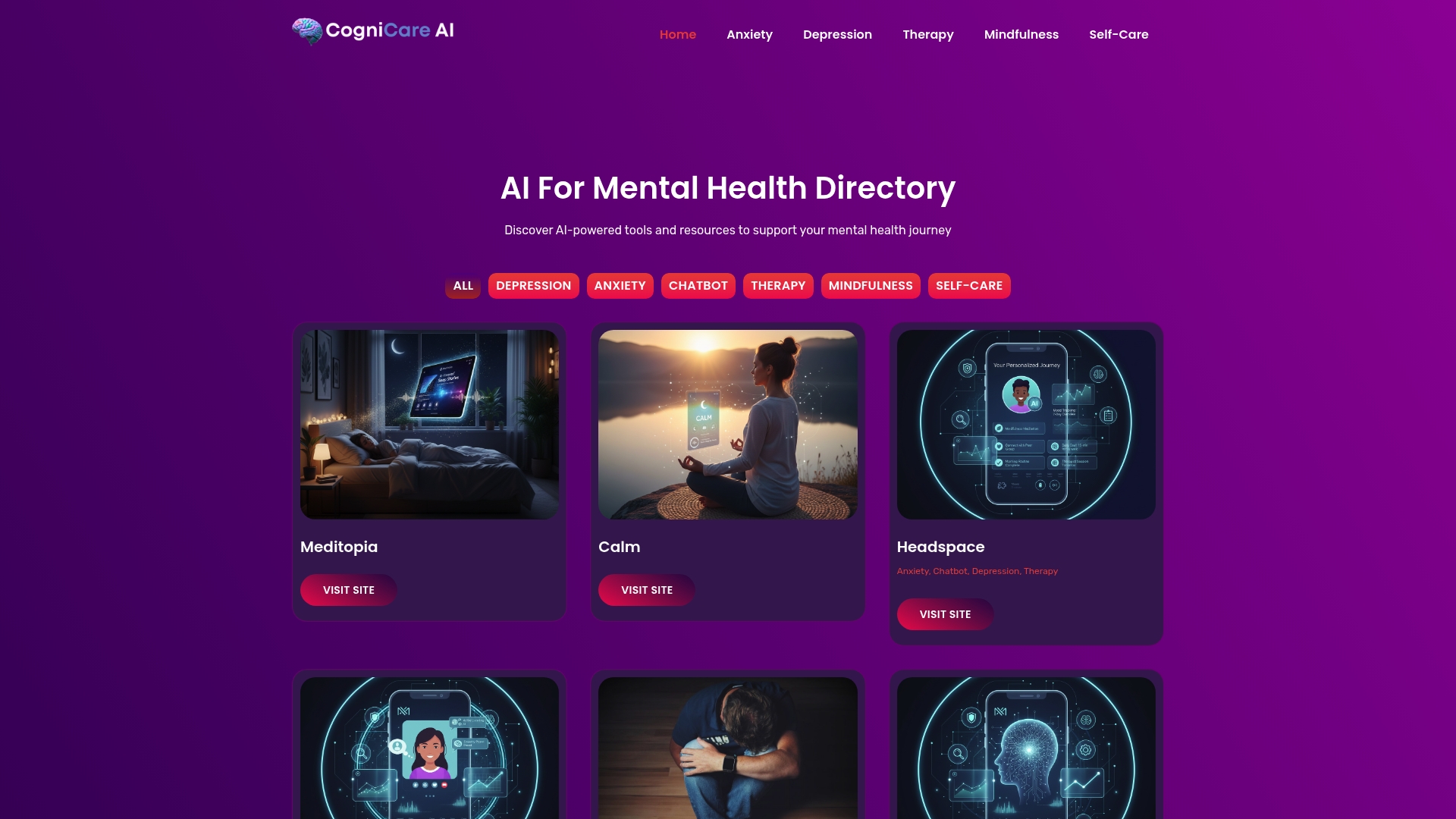
Explore the AI Cognite Archives for tailored solutions that adapt as your emotional wellness evolves. Take control now by visiting Cognicareai and find personalized tools that help you track progress and improve resilience through meaningful practice rather than trial and error.
Frequently Asked Questions
How does Cognicareai support users in managing symptoms like anxiety and depression?
Cognicareai offers personalized recommendations that match your stated needs to specific digital interventions, including CBT modules and mindfulness sessions. This tailored approach helps users find effective coping strategies that can be used to manage their symptoms. To benefit, users can start logging their symptoms for targeted support.
What is the difference between Murror and Cognicareai?
Murror excels in creating a caring, continuous conversation experience, remembering past reflections to maintain context in discussions. In contrast, Cognicareai provides a broader directory of AI-powered mental health resources tailored to specific symptoms, making it more suitable for users seeking diverse intervention options. Depending on your preference for personal interaction or a variety of resources, you may choose the one that fits your needs best.
Which platform offers symptom tracking features?
Cognicareai includes built-in symptom tracking and progress monitoring, allowing users to visualize trends and adapt their usage over time. This feature is essential for those who want to see the impact of their digital interventions in managing their mental health actively. Users should consider this aspect when looking for a platform that provides ongoing feedback and support.
Can I use Cognicareai if I’m currently in traditional therapy?
Yes, Cognicareai is designed to complement traditional care by offering digital interventions that can be reviewed alongside in-person treatment. This makes it a valuable tool for individuals wanting to enhance their therapy experience with additional resources and support.
How does Cognicareai maintain user engagement?
Cognicareai heavily relies on user motivation and consistent engagement to maximize the value of its recommendations and tracking features. Users who commit to regular logging and interaction with the platform will see more significant benefits in their mental health management. Keeping this in mind, it’s essential for users to remain proactive in using the service.