

AI personalizes mental health support by analyzing individual symptom data, conversation history, and behavioral patterns to deliver therapeutic responses tailored to each person’s specific condition. This process, formally called adaptive clinical personalization, uses methods like retrieval-augmented generation (RAG), Psychological Domain Adaptation (PDA), and standardized assessments such as the PHQ-9 and GAD-7 to move beyond generic advice. Platforms built on models like GPT-4o and Llama 3.1-8B now deliver AI-driven emotional support that adjusts in real time based on what you share. The result is a support experience that gets more relevant the longer you use it.
How AI personalizes mental health support: the core methods
AI personalization in mental health is not simply adjusting the tone of a response. Personalization means aligning AI outputs with established psychological principles so every interaction stays clinically relevant and consistent. Three technical methods make this possible at scale.
Retrieval-Augmented Generation (RAG)
RAG is the backbone of safe AI personalization in mental health. Instead of generating responses purely from a language model’s internal training, RAG externalizes knowledge at inference time by pulling from vetted clinical sources. This reduces hallucinations and allows the system to abstain from answering when evidence is insufficient. For someone managing anxiety, that means the AI will not invent a coping technique. It will cite one grounded in cognitive behavioral therapy (CBT) literature.

Psychological Domain Adaptation (PDA)
PDA fine-tunes how an AI model interprets and responds to mental health language. A general-purpose language model treats “I feel hopeless” as a sentiment. A model with PDA recognizes it as a potential clinical signal tied to depression severity scales. This distinction matters because it determines whether the AI escalates to a risk alert or offers a CBT reframing exercise.
Multi-Turn Empathetic Reasoning
Systems like PsyPARSE use multi-stage slow thinking and multi-turn rollouts to anticipate user emotions across long conversations. Rather than treating each message as isolated, the system builds a running model of your emotional state. This enables deeper, context-aware responses without requiring expensive model fine-tuning for every new user.
- RAG grounds responses in clinical evidence and prevents fabricated advice
- PDA ensures the AI interprets mental health language with clinical accuracy
- Multi-turn reasoning tracks emotional context across an entire conversation
- CBT clinical manuals and symptom scales like PHQ-9 and GAD-7 are embedded directly into the AI’s decision logic
Pro Tip: When evaluating any AI mental health tool, ask whether it uses RAG or a similar grounded retrieval method. Tools that generate responses purely from a base language model carry a higher risk of producing unsupported clinical claims.
Does AI personalization actually reduce anxiety and depression?
The clinical evidence is real, but it comes with important caveats. A meta-analysis of 48 trials covering 28,071 participants found that conversational AI agents achieved small-to-moderate reductions in depression, anxiety, and stress symptoms. That is a meaningful result at population scale, though it is not a replacement for clinical care.
The breakdown by population matters. Effects were stronger in clinical populations and for shorter-duration interventions. This suggests AI tools work best as a targeted, time-limited supplement rather than an open-ended standalone solution.
“Subgroup effects were stronger in clinical populations and for shorter-duration interventions; bias risk was low.” — Meta-analysis of 48 trials, 28,071 participants
CBT-based AI agents show a more nuanced picture. A separate systematic review found small to moderate effects on depressive symptoms but non-significant effects on generalized anxiety after adjusting for publication bias. Younger users consistently showed greater benefit than older adults. Higher-quality studies also reported larger effect sizes, which implies the true efficacy of well-designed tools may be underestimated in the current literature.
| Population | Depression Effect | Anxiety Effect | Notes |
|---|---|---|---|
| General users | Small to moderate | Small to moderate | Consistent across 48 trials |
| Clinical populations | Moderate | Moderate | Stronger than general user results |
| Younger adults | Moderate | Small to moderate | Greater benefit vs. older adults |
| Older adults | Small | Inconsistent | Less benefit; personalization gaps noted |
| CBT-based AI specifically | Small to moderate | Non-significant | After publication bias adjustment |
One critical finding from a systematic review in npj Digital Medicine is that personalization techniques do not automatically improve outcomes. Many AI tools adapt surface-level content, such as tone or greeting style, without changing the actual clinical intervention being delivered. That distinction is what separates genuinely personalized mental health solutions from tools that simply feel personal.
How do AI systems apply personalization during ongoing therapy?
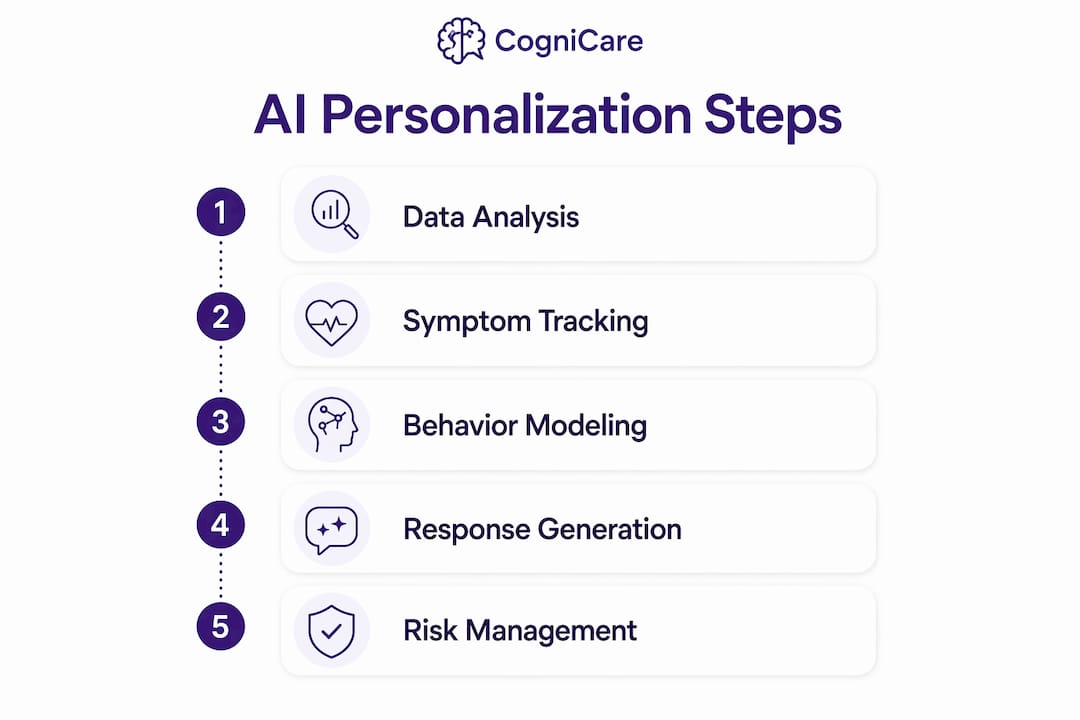
Personalization in practice means the AI remembers what you told it last week and adjusts what it offers you today. The MHAI study describes a platform that integrates GPT-4o and Llama 3.1-8B with secure session tracking, multilingual access, and structured clinical assessments to build a continuously updated picture of each user’s mental state.
Here is how a well-designed AI mental health platform delivers personalization across a care pathway:
- Initial symptom assessment. The platform administers PHQ-9 for depression and GAD-7 for anxiety at onboarding. These scores establish a baseline and determine which intervention track the user enters.
- Session history storage. Every conversation is stored and analyzed. The AI references prior sessions to detect changes in mood, language patterns, and reported behaviors over time.
- Weekly CBT task assignment. Based on current symptom scores and session history, the platform assigns specific CBT exercises. A user whose PHQ-9 score worsened this week receives different tasks than one who improved.
- Personalized therapeutic chat. Between structured tasks, users can engage in open conversation. The AI uses behavioral pattern data from sleep and movement tracking apps to inform these conversations with real context.
- Emergency alert system. When language or responses indicate acute risk, the platform triggers an alert and provides crisis resources. This is not optional. It is a core safety feature of any responsible AI mental health system.
This architecture, described as a user state model combined with a response selector and risk management layer, is what separates clinical-grade AI tools from general wellness chatbots.
Pro Tip: Before committing to any AI mental health platform, check whether it uses validated scales like PHQ-9 and GAD-7 for ongoing assessment. Platforms that skip standardized measurement are personalizing based on guesswork, not clinical data.
What are the limits and ethical risks of AI mental health personalization?
AI in mental health carries real risks that deserve honest discussion. Knowing these limits helps you use these tools more safely and set realistic expectations.
- Algorithmic bias. AI models trained on non-representative datasets produce less accurate personalization for underrepresented groups. Older adults, non-English speakers, and people from non-Western cultural backgrounds often receive less relevant responses. This is a documented gap, not a theoretical concern.
- Privacy and compliance. Mental health data is among the most sensitive personal information that exists. Platforms operating in the United States must comply with HIPAA. Those serving European users must meet GDPR standards. Before sharing anything personal with an AI tool, verify its data handling and storage policies.
- Transparency gaps. Many AI systems cannot explain why they recommended a specific intervention. This lack of explainability makes it difficult for clinicians to audit or trust AI-generated suggestions, which slows integration into formal care settings.
- AI as supplement, not replacement. Successful AI implementation in mental health complements human providers rather than replacing them. The evidence base for AI as a standalone treatment for moderate-to-severe depression or anxiety is not yet strong enough to justify removing human oversight from the equation.
- Inconsistent personalization depth. As the npj Digital Medicine review notes, many platforms adapt content style without changing the clinical intervention itself. That is surface personalization, and it does not reliably move symptom scores.
The benefits of AI support in mental health are real, but they depend heavily on how well a platform is built and whether it maintains clear human handoff protocols for high-risk situations.
Key takeaways
AI personalization in mental health produces measurable clinical benefits when it operates on validated symptom data, grounded retrieval methods, and structured intervention logic rather than surface-level content adaptation.
| Point | Details |
|---|---|
| RAG grounds clinical responses | Retrieval-augmented generation prevents hallucinated advice by linking outputs to vetted clinical sources. |
| PHQ-9 and GAD-7 drive personalization | Standardized assessments create the baseline data that makes adaptive intervention selection possible. |
| Small-to-moderate symptom reductions | Meta-analysis of 48 trials confirms real but limited benefits, strongest in clinical populations. |
| Surface personalization is not enough | Adapting tone without changing the intervention type does not reliably improve depression or anxiety outcomes. |
| Human oversight remains non-negotiable | AI tools work best as supplements to clinician care, with emergency alert systems as a required safety layer. |
The part most AI mental health articles skip
I have spent years tracking how technology intersects with psychological care, and the pattern I keep seeing is this: the tools that generate the most excitement are rarely the ones that produce the most durable results.
The honest truth about AI personalization in mental health is that the technology is ahead of the evidence. RAG and PDA are genuinely impressive engineering achievements. Multi-turn empathetic reasoning in systems like PsyPARSE represents a real leap forward in how machines model human emotional states. But a small-to-moderate effect size across a meta-analysis of 28,071 people is not a cure. It is a signal worth building on.
What I find most promising is not the AI itself. It is the combination of AI-driven assessment tools with human clinical judgment. When a platform uses PHQ-9 scores to flag a worsening trend and then routes that user to a licensed counselor, that is where the technology earns its place. The future of AI in therapy is not a chatbot replacing your therapist. It is a system that makes your therapist’s time more targeted and your between-session support more consistent.
My advice for anyone exploring these tools: treat them as a structured supplement, not a primary treatment. Use platforms that show you their assessment scores, explain their intervention logic, and have a clear crisis escalation path. Anything less is a wellness app wearing clinical clothing.
— dushyantha
Find the right AI mental health tools with Cognicareai
Cognicareai has built a directory specifically for people who want more than a generic wellness app. Every tool in the Cognicareai catalog is evaluated for clinical grounding, personalization depth, and safety features like crisis escalation.
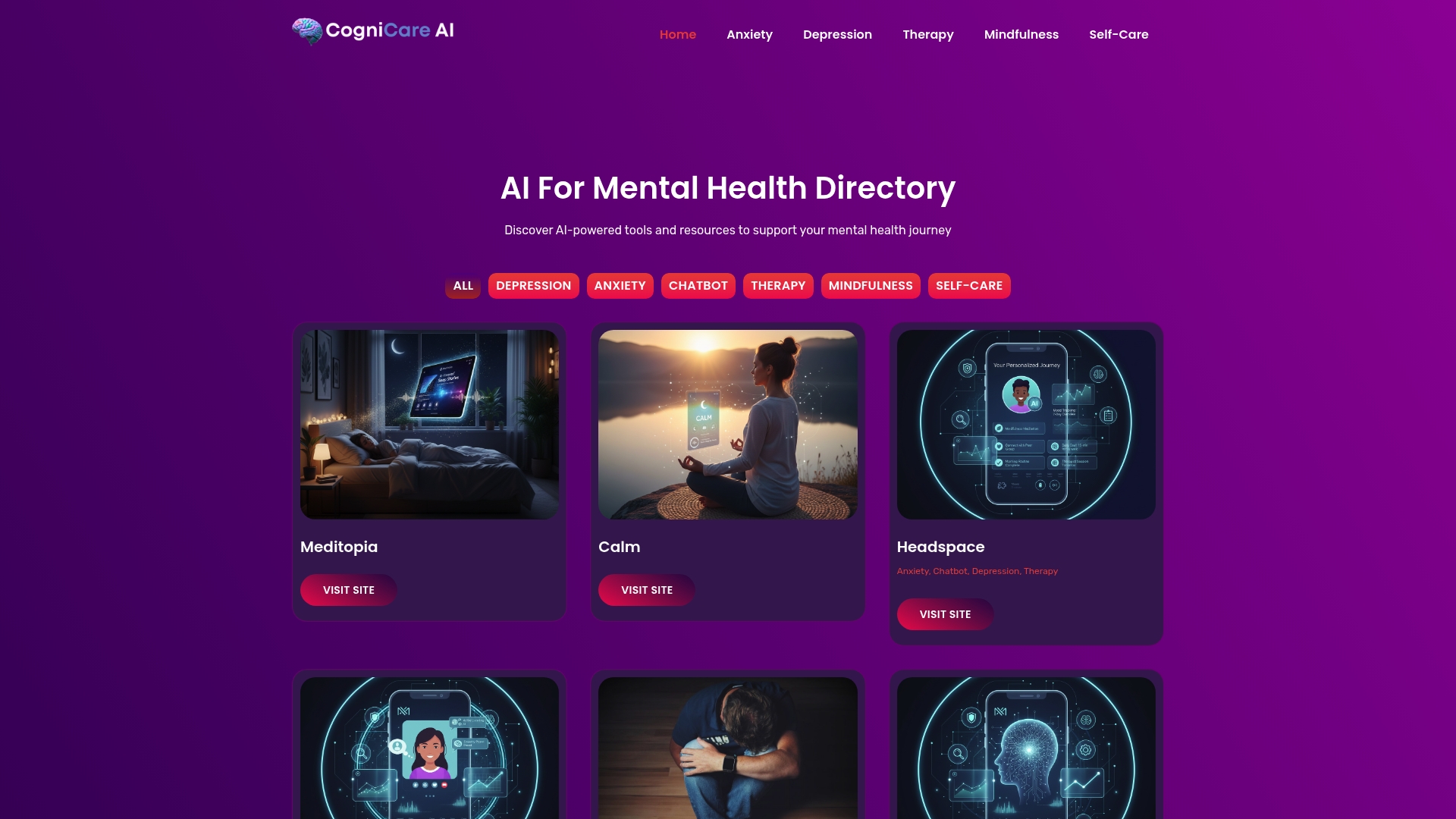
Whether you are managing anxiety, working through depression, or looking for structured CBT support between therapy sessions, Cognicareai connects you with AI-powered mental health tools that are built on the methods described in this article. From mindfulness apps with adaptive feedback to conversational agents using validated symptom tracking, the directory covers the full spectrum of personalized mental health solutions available in 2026. Start exploring at Cognicareai and find the tool that fits your specific needs.
FAQ
What does AI personalization in mental health actually mean?
AI personalization in mental health means the system adapts its therapeutic responses and intervention choices based on your individual symptom data, conversation history, and behavioral patterns. It goes beyond adjusting tone to selecting clinically relevant exercises and assessments specific to your condition.
How does RAG make AI mental health tools safer?
RAG links AI responses to vetted clinical sources rather than generating advice from scratch, which prevents the system from inventing unsupported techniques. It also allows the AI to abstain from answering when no reliable evidence exists.
Can AI tools actually reduce depression and anxiety symptoms?
A meta-analysis of 48 trials with 28,071 participants found small-to-moderate symptom reductions in depression, anxiety, and stress from conversational AI agents. Effects are strongest in clinical populations and with shorter, more targeted interventions.
Should AI replace my therapist for anxiety or depression?
No. AI works best as a supplement to human-provided care, not a replacement. The current evidence supports AI as a between-session support tool and a way to extend access to CBT techniques, not as a standalone treatment for moderate-to-severe conditions.
What should i look for in a personalized AI mental health platform?
Look for platforms that use validated assessments like PHQ-9 and GAD-7, store session history for adaptive responses, and include a clear crisis escalation protocol. Platforms that skip standardized measurement are personalizing based on incomplete data.