
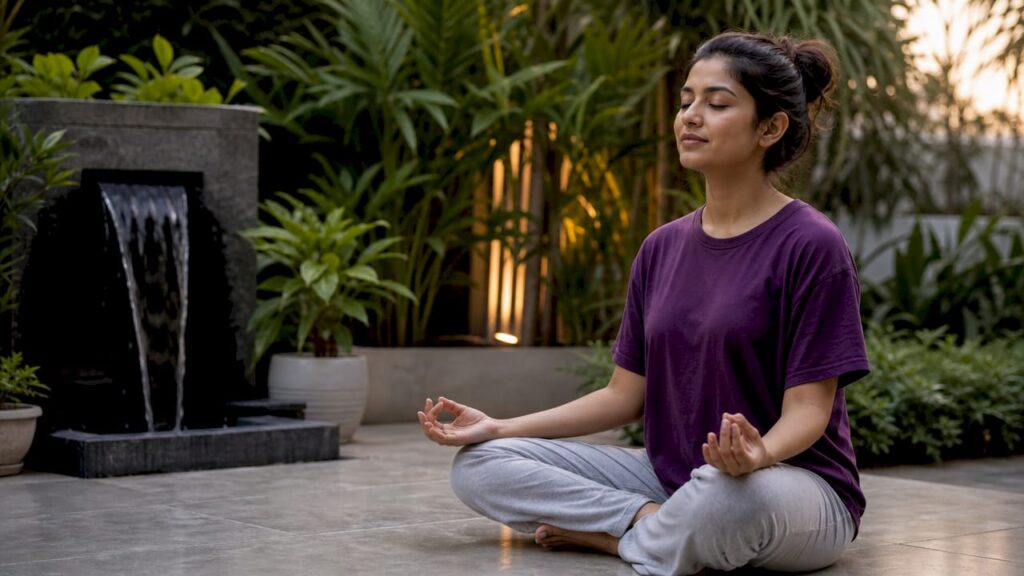
Guided meditation types for anxiety are specialized techniques that calm the nervous system, shift mental focus away from worry, and produce measurable symptom relief within weeks of consistent practice. The standard clinical term for this category is anxiety-focused mindfulness meditation, and it spans methods from controlled breathing to sensory grounding. Research confirms that daily practice of 10 to 20 minutes produces meaningful anxiety reduction beginning around the 8-week mark, while acute tools like 4-7-8 breathing work within seconds. Apps like Calm and Headspace have made these techniques accessible to millions, but knowing which technique fits your specific symptoms is what separates occasional relief from lasting change.
1. What is 4-7-8 breathing and why it works for acute anxiety
4-7-8 breathing is the most immediately effective guided meditation technique for acute anxiety spikes because it directly activates the parasympathetic nervous system. The method is simple: inhale for 4 counts, hold for 7, exhale for 8. The extended exhale is the key mechanism. Extended exhale breathing produces superior fast-acting calming effects during anxiety spikes compared to equal-ratio breathing patterns.
The physiological reason this works is that a longer exhale signals safety to the vagus nerve, which then slows heart rate and lowers cortisol. You feel the shift within two to three breath cycles. For anyone experiencing racing thoughts, chest tightness, or a sense of dread, this is the technique to reach for first.
How to practice 4-7-8 breathing:
- Sit upright or lie flat with your spine supported
- Exhale completely through your mouth before starting
- Close your mouth and inhale quietly through your nose for 4 counts
- Hold your breath for 7 counts
- Exhale completely through your mouth for 8 counts
- Repeat 3 to 4 cycles maximum per session when starting out
Pro Tip: Practice 4-7-8 breathing within 30 minutes of waking, when cortisol naturally peaks. Pairing it with AI-assisted breathing tools can help you track consistency and build the habit faster.
2. How body scan meditation reduces physical anxiety symptoms
Body scan meditation targets the physical dimension of anxiety, specifically the muscle tension, shallow breathing, and somatic tightness that accumulate when worry becomes chronic. The technique involves moving attention slowly through each region of the body, from the soles of the feet to the crown of the head, noticing sensations without trying to change them. This deliberate attention interrupts the feedback loop where physical tension amplifies anxious thoughts.
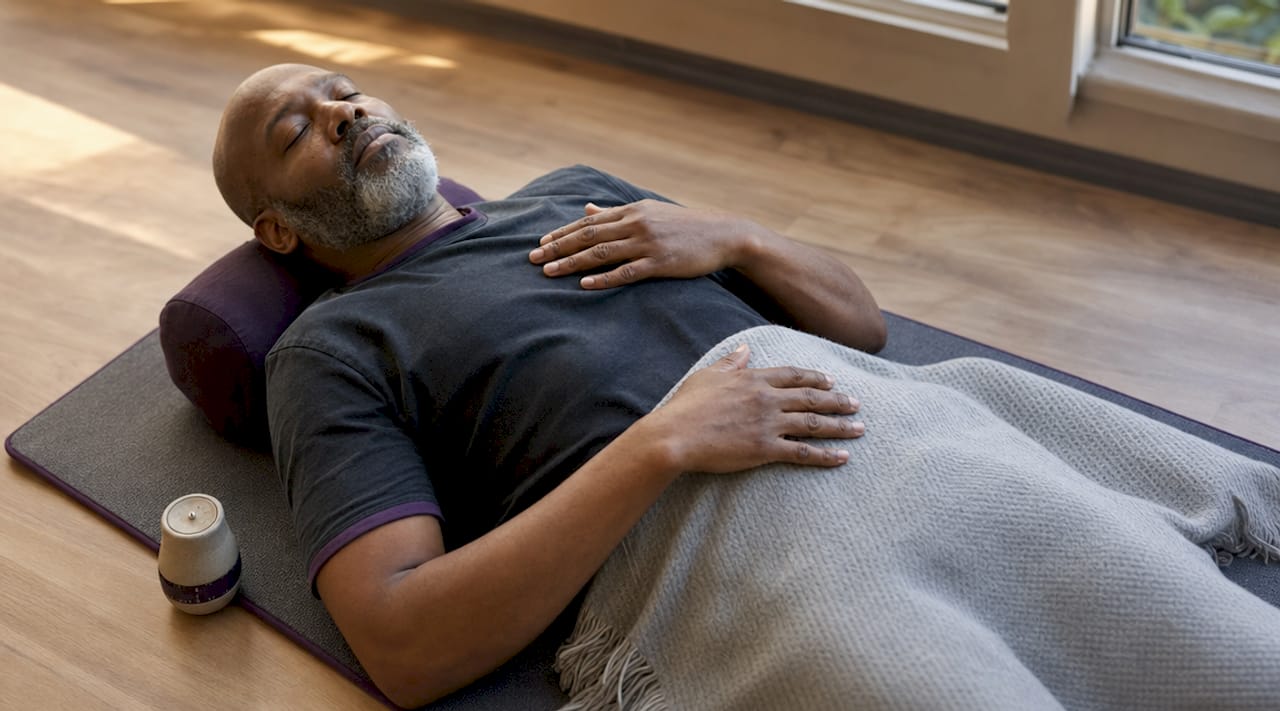
Five primary meditation techniques have been identified for targeted symptom relief, and body scans rank highest for muscle tension and insomnia. A 20-minute body scan before sleep is particularly effective for people whose anxiety manifests as an inability to wind down.
Steps to practice a body scan:
- Lie down in a comfortable position with arms slightly away from your sides
- Close your eyes and take three slow breaths to settle
- Bring attention to your feet. Notice any warmth, pressure, or tingling without judgment
- Move attention slowly upward: calves, knees, thighs, hips, abdomen, chest, hands, arms, shoulders, neck, face
- If you notice tension anywhere, breathe into that area and allow it to soften
- Complete the scan in 15 to 20 minutes for best results
Pro Tip: If your mind wanders repeatedly during a body scan, that is not failure. Noticing mind wandering and gently returning focus is the actual practice. Each return strengthens the attention muscle.
3. What loving-kindness meditation does for social anxiety
Loving-kindness meditation, known clinically as Metta meditation, builds emotional resilience by directing compassionate phrases toward yourself and others. It is the most effective guided mindfulness exercise for anxiety rooted in self-criticism, perfectionism, or social fear. The practice reduces amygdala reactivity, the brain region responsible for threat detection, which is chronically overactive in people with social anxiety disorder.
The core practice involves silently repeating phrases such as “May I be safe. May I be healthy. May I be at peace.” You then extend those same wishes outward to a loved one, a neutral person, and eventually someone you find difficult. This progression trains the brain to default toward connection rather than threat.
Why Metta works for anxiety:
- It replaces the self-critical inner voice with a structured, compassionate one
- It reduces the perceived social threat that drives avoidance behavior
- It builds a sense of safety that generalizes beyond the meditation session
- Sessions as short as 10 minutes show measurable mood improvement in clinical studies
The goal of meditation for anxiety is to change your relationship to anxious thoughts, observing them as mental events rather than facts. Loving-kindness accelerates this shift by making the observer stance feel warm rather than detached.
4. Sensory grounding meditation (5-4-3-2-1) for panic and dissociation
The 5-4-3-2-1 sensory grounding technique is the most practical tool for interrupting panic attacks or dissociative episodes because it anchors attention in present-moment sensory data, which the panicking brain cannot simultaneously process alongside catastrophic thoughts. Grounding techniques like 5-4-3-2-1 are among the safest starting points for beginners and for anyone with a trauma history.
The method works by systematically engaging all five senses:
- 5 things you can see: Name them aloud or silently. A lamp, a crack in the ceiling, your own hands.
- 4 things you can physically feel: The chair beneath you, the texture of your clothing, the temperature of the air.
- 3 things you can hear: Traffic outside, your own breathing, a distant voice.
- 2 things you can smell: Coffee, soap, fresh air through a window.
- 1 thing you can taste: A sip of water, a piece of gum, the air itself.
This technique pairs naturally with 4-7-8 breathing. Use 5-4-3-2-1 first to interrupt the panic spiral, then follow with two to three rounds of extended exhale breathing to bring the nervous system fully back to baseline. Trauma-sensitive meditation practice specifically recommends active sensory grounding over silent sitting to prevent dissociation from deepening.
5. Guided visualization for anxiety relief
Guided visualization for anxiety relief uses directed mental imagery to create a felt sense of safety and calm in the body. A trained voice or audio recording guides you to imagine a peaceful scene in specific sensory detail: the sound of water, the warmth of sunlight, the texture of grass underfoot. The brain responds to vivid imagined experience with real physiological changes, including reduced cortisol and slower heart rate.
This technique is particularly effective for anticipatory anxiety, the kind that builds before a presentation, a medical appointment, or a difficult conversation. Spending 10 minutes visualizing yourself moving through the feared situation calmly and competently reduces the threat response before the event occurs. Platforms like Calm and Headspace both offer structured visualization scripts ranging from 5 to 20 minutes.
For beginners, the best starting point is a guided audio track rather than self-directed visualization, because the external voice prevents the anxious mind from hijacking the imagery.
6. Mindfulness-Based Stress Reduction (MBSR) as a structured program
Mindfulness-Based Stress Reduction, developed by Jon Kabat-Zinn at the University of Massachusetts, is the most evidence-supported structured program for clinical anxiety. The 8-week MBSR program shows effect sizes comparable to antidepressants in reducing anxiety symptoms. It combines body scans, sitting meditation, and mindful movement into a progressive curriculum that builds skill over time rather than relying on single sessions.
MBSR is not a casual app experience. It requires roughly 45 minutes of daily practice and weekly group sessions. That commitment is also why it works: the structure prevents the inconsistency that undermines most self-directed meditation attempts. For anyone with generalized anxiety disorder or panic disorder, MBSR is the benchmark against which other approaches are measured.
Meditation complements professional treatment but should not replace therapy for clinical anxiety disorders. MBSR is most powerful when used alongside cognitive behavioral therapy or medication, not instead of them.
7. Mindful walking meditation for restless anxiety
Mindful walking meditation is the best option for people whose anxiety makes sitting still feel impossible. Mindful movement integrates awareness with physical sensation and prevents the rumination loops that often intensify during static seated practice. The technique involves walking at a slow, deliberate pace while directing full attention to the physical sensations of each step: the lift of the heel, the shift of weight, the contact of the foot with the ground.
A 10-minute mindful walk outdoors combines the anxiety-reducing effects of nature exposure with the attentional training of meditation. Research on walking meditation consistently shows reductions in both state anxiety (how you feel right now) and trait anxiety (your baseline tendency to worry). For people overwhelmed by the idea of sitting quietly with their thoughts, this is the most accessible entry point into a regular practice.
8. Comparing guided meditation types by symptom and situation
Not every technique fits every anxiety experience. The table below maps each method to the symptoms and situations where it performs best.
| Technique | Best for | Session length | Complexity |
|---|---|---|---|
| 4-7-8 breathing | Acute spikes, racing heart | 2 to 5 minutes | Beginner |
| Body scan | Muscle tension, insomnia | 15 to 20 minutes | Beginner |
| Loving-kindness (Metta) | Social anxiety, self-criticism | 10 to 15 minutes | Beginner to intermediate |
| 5-4-3-2-1 grounding | Panic attacks, dissociation | 3 to 5 minutes | Beginner |
| Guided visualization | Anticipatory anxiety | 10 to 20 minutes | Beginner |
| MBSR program | Generalized or clinical anxiety | 45 minutes daily | Intermediate to advanced |
| Mindful walking | Restless anxiety, rumination | 10 to 20 minutes | Beginner |
The most common mistake is treating these techniques as interchangeable. A person experiencing a panic attack needs 5-4-3-2-1 grounding, not a 45-minute MBSR session. Someone with chronic generalized anxiety needs daily practice, not just crisis tools. Guided sessions as short as 5 to 10 minutes are effective for beginners, and even 1 to 2 minutes of breathing practice is a valid starting point for severe anxiety sufferers.
Key takeaways
The most effective approach to guided meditation for anxiety is matching the technique to the specific symptom, because acute panic, chronic tension, and social fear each respond to different methods.
| Point | Details |
|---|---|
| Match technique to symptom | Use 4-7-8 breathing for acute spikes and body scans for chronic muscle tension. |
| Start small and build | Even 1 to 2 minutes of guided breathing is a clinically valid starting point. |
| MBSR is the gold standard | The 8-week program shows effect sizes comparable to antidepressants for clinical anxiety. |
| Grounding beats silence for trauma | Sensory techniques like 5-4-3-2-1 are safer than silent sitting for trauma-sensitive individuals. |
| Meditation complements therapy | Guided meditation works best alongside professional care, not as a replacement for it. |
What I’ve learned from matching meditation to anxiety type
Most articles on this topic hand you a list of techniques and tell you to pick one you like. That advice misses the point entirely. Anxiety is not one experience. The person lying awake at 2 a.m. with a tight chest is not having the same problem as the person who freezes before a work presentation or the person who dissociates during stress. Giving them all the same body scan script is like prescribing the same medication for three different diagnoses.
What I’ve found actually works is starting with the symptom, not the technique. If your anxiety lives in your body as tension or insomnia, start with body scans. If it lives in your head as self-criticism or social dread, Metta meditation will move the needle faster than anything else. If panic is your primary experience, 5-4-3-2-1 grounding is the tool you need in your pocket before you ever attempt a seated practice.
The other thing most guides get wrong is the expectation of a blank mind. Meditation is not the absence of thought. It is the practice of noticing thoughts and returning focus without judgment. That distinction removes the frustration that causes most people to quit within two weeks. You can also explore mindfulness for anxiety through structured programs if self-directed practice feels too unstructured to start.
One more thing worth saying directly: if your anxiety is severe, chronic, or interfering with daily function, meditation is a powerful complement to professional care. It is not a substitute for it. Use both.
— dushyantha
Find the right tools to support your meditation practice
Cognicareai has built a directory of AI-powered mental health tools specifically designed to help people with anxiety find the right resources faster. Whether you are looking for a personalized mindfulness app, a guided breathing program, or a chatbot that adapts to your anxiety patterns, Cognicareai connects you with options matched to your specific needs.
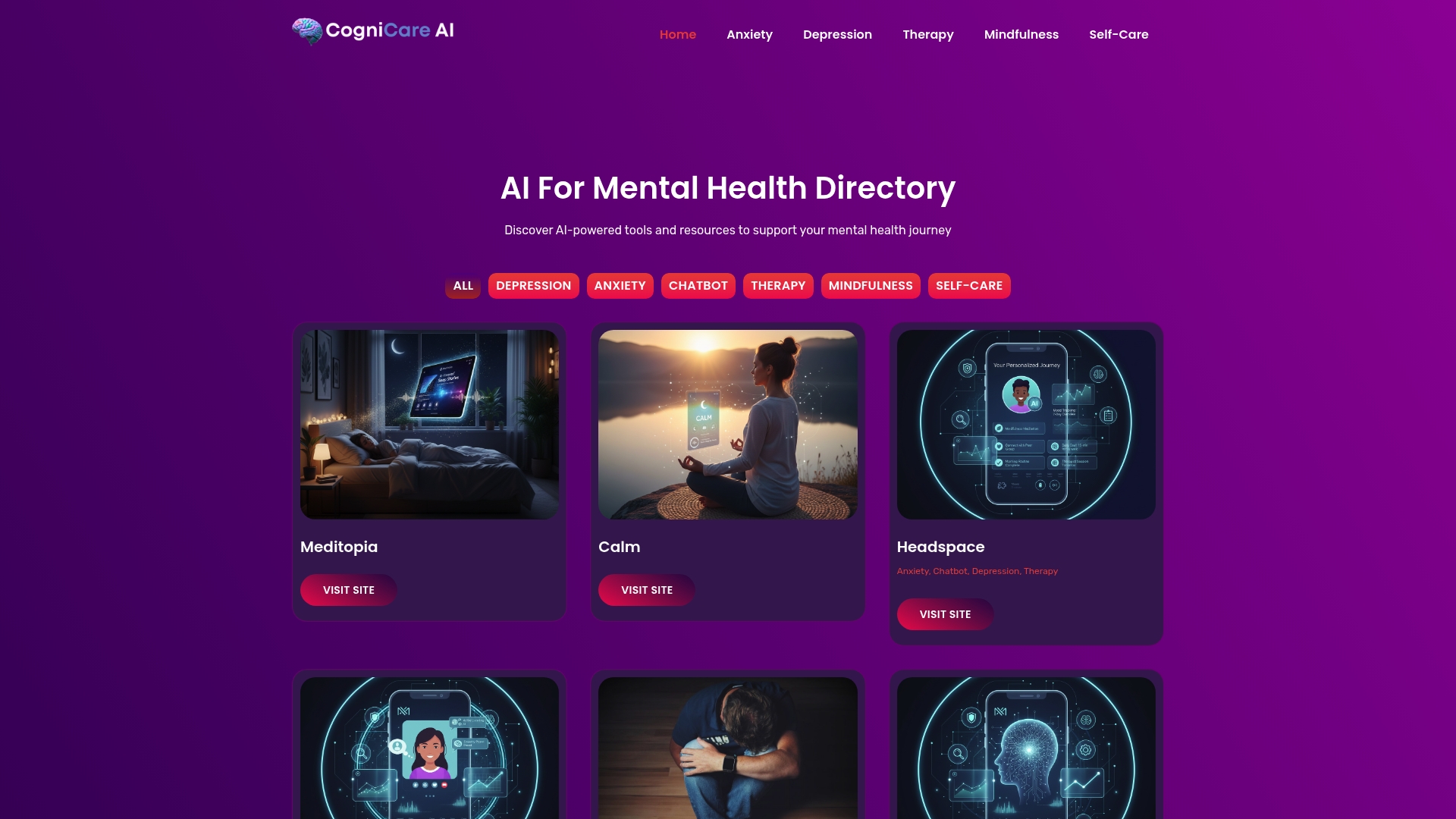
The top AI-powered mental health tools on Cognicareai include apps that track your practice consistency, adjust session length based on your stress levels, and recommend technique shifts when your symptom profile changes. If you want to go deeper, Cognicareai also covers AI-driven therapy approaches that pair meditation with structured clinical support. Start exploring at cognicareai.com to find tools built for where you actually are, not where a generic guide assumes you should be.
FAQ
What is the best guided meditation for anxiety beginners?
4-7-8 breathing and the 5-4-3-2-1 sensory grounding technique are the best starting points because both take under 5 minutes and require no prior experience. Guided audio sessions of 5 to 10 minutes on apps like Calm or Headspace are also highly effective for first-time practitioners.
How long does it take for meditation to reduce anxiety?
Measurable anxiety reduction typically begins within 8 weeks of daily practice at 10 to 20 minutes per session. Acute techniques like 4-7-8 breathing produce calming effects within seconds to minutes of use.
Can meditation make anxiety worse?
Beginners can experience meditation-induced anxiety or derealization, particularly with silent or unguided sitting. Starting with short, guided, sensory-grounding sessions minimizes this risk significantly.
Is guided meditation a replacement for therapy?
Meditation is a clinically validated complement to therapy, not a replacement. The MBSR program shows strong evidence for anxiety reduction, but it works best alongside cognitive behavioral therapy or medication for clinical anxiety disorders.
How do I choose between different types of anxiety meditation?
Match the technique to your primary symptom: 4-7-8 breathing for acute physical symptoms, body scans for tension and insomnia, loving-kindness for social anxiety, and 5-4-3-2-1 grounding for panic or dissociation. Trying each for one week gives you enough data to know what your nervous system responds to.