

Online depression support groups are structured communities where people with depression connect, share experiences, and receive emotional support from peers or trained facilitators. Finding online depression support groups has become one of the most practical first steps toward managing depression, especially for people who face barriers to in-person care. Group therapy is as effective as individual therapy for anxiety and depression, offering multiple perspectives and a safe space to practice social connection. Many groups are free, globally accessible, and available in formats that fit different schedules and comfort levels.
What types of online depression support groups exist?
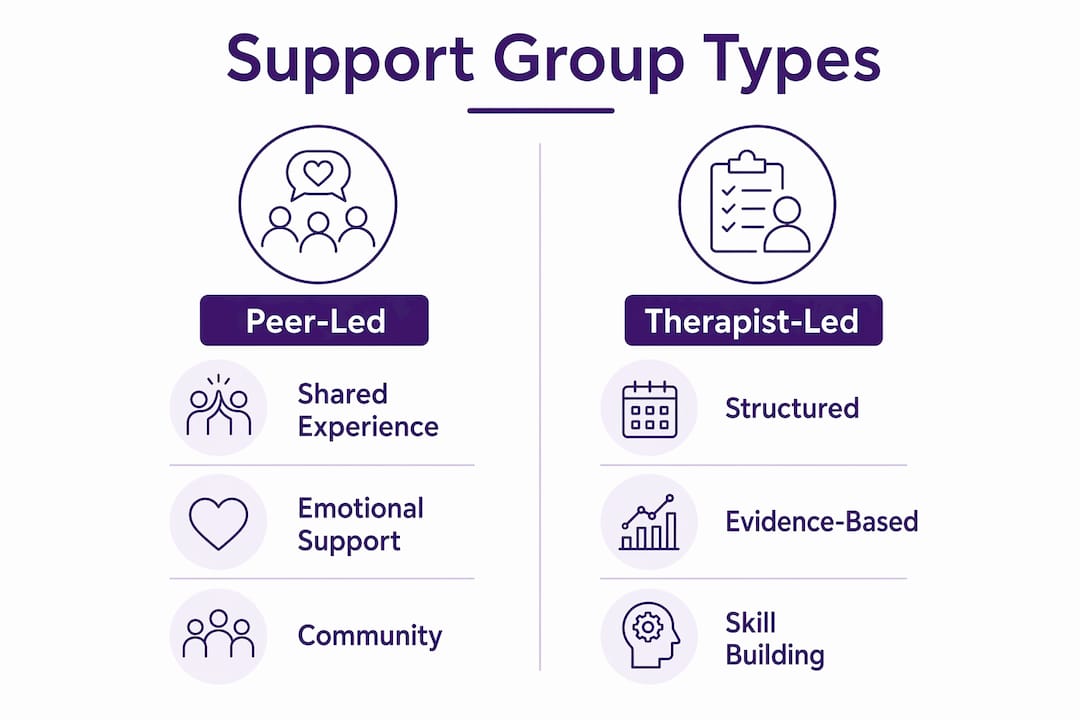
Online depression support groups fall into two broad categories: peer-led and therapist-led. Understanding the difference helps you match a group to your actual needs, not just your schedule.
Peer-led groups are run by people with lived experience of depression. They focus on shared understanding, emotional validation, and community. These groups are typically open-ended, meaning you can join and leave at any time without a fixed commitment.

Therapist-led groups use structured, evidence-based approaches. Structured CBT-based groups typically run for 8–16 weeks, while peer-led groups remain open-ended. Therapist-led formats often include Cognitive Behavioral Therapy (CBT), Acceptance and Commitment Therapy (ACT), or Behavioral Activation. CBT teaches you to identify and change negative thought patterns. ACT focuses on accepting difficult emotions rather than fighting them.
A third category worth knowing is Mindfulness-Based Cognitive Therapy, or MBCT. Both synchronous and asynchronous MBCT formats significantly improved depressive symptoms in people with mild to moderate depression over a 6-week period. That result matters because it shows format flexibility does not come at the cost of effectiveness.
Groups also differ by timing:
- Synchronous groups meet in real time via video call or live chat. They create immediate connection and accountability.
- Asynchronous groups use forums, message boards, or apps. You post and respond on your own schedule.
- Hybrid groups combine both, offering live sessions plus an ongoing forum between meetings.
Pro Tip: If depression makes it hard to commit to a fixed schedule, start with an asynchronous forum. Once you feel more stable, add a live synchronous group for deeper connection.
Where can you find credible online depression support groups?
The best online support communities share three traits: clear moderation policies, transparent facilitation credentials, and free or low-cost access. Several well-established platforms and organizations meet that standard.
HeyPeers is one of the largest directories of free peer-led groups. Over 1,000 free support groups are available through HeyPeers, led by trained or certified peer specialists. That scale means you can filter by topic, time zone, language, and group size to find a precise fit.
NAMI (National Alliance on Mental Illness) runs structured support groups for stress, anxiety, and depression through its affiliate network. NAMI-affiliated sessions run 60–90 minutes and are free, with schedules ranging from weekly to monthly. Facilitators are trained peer specialists, not licensed therapists, so the focus stays on shared experience rather than clinical treatment.
MyTherapyGroups.com lists both therapist-led and peer-led groups with details on session format, schedule, cost, and accessibility. It is a useful directory if you want to compare options before committing.
Here is a quick reference for the main platform types:
| Platform type | Facilitation | Cost | Format |
|---|---|---|---|
| HeyPeers | Certified peer specialists | Free | Synchronous and asynchronous |
| NAMI affiliates | Trained peer facilitators | Free | Synchronous (60–90 min) |
| MyTherapyGroups.com | Therapist-led and peer-led | Varies | Synchronous |
| General forums and apps | Community moderated | Free to low cost | Asynchronous |
For a broader overview of virtual mental health support options beyond group formats, Cognicareai maintains a detailed 2026 guide covering platforms, tools, and digital resources.
Pro Tip: Search NAMI’s national website and filter by your state or region. Local affiliates often run groups not listed on the main national directory.
How do you choose and join an online depression support group safely?
Choosing the right group is not just about convenience. The wrong fit can feel discouraging and reinforce the isolation depression already creates. A structured evaluation process protects you from that outcome.
Step 1: Define your goal. Are you looking for emotional validation, skill-building, or both? Peer-led groups excel at the first. Therapist-led groups deliver the second. Therapist-led groups are preferable for people with significant functional impairment, while peer-led groups provide ongoing community support.
Step 2: Verify facilitation credentials. Check whether the group is run by a licensed therapist, a certified peer specialist, or an unvetted volunteer. Legitimate groups list this information clearly on their registration page.
Step 3: Review confidentiality policies. Every credible group has a written policy on what members can and cannot share outside the group. Read it before joining.
Step 4: Prepare your environment. Joining from a private room and using headphones protects your confidentiality and lets you speak freely. A stable internet connection prevents disruptive dropouts during live sessions.
Step 5: Attend once before committing. Most groups allow a trial session. Use it to assess the tone, the facilitator’s style, and whether the group size feels comfortable.
“Participants benefit most when virtual groups balance structured evidence-based content and peer emotional support. Neither element alone produces the same outcome as both together.”
Pro Tip: Write down two or three things you want to share or ask before your first session. Depression often makes it hard to think clearly in the moment. Preparation reduces that friction significantly.
For a deeper look at the different therapy formats available online, Cognicareai’s 2026 guide breaks down CBT, ACT, MBCT, and Behavioral Activation in plain language.
What barriers come up in online groups and how do you handle them?
Depression itself is the biggest obstacle to participating in depression support groups. The condition creates withdrawal, low motivation, and social anxiety. Recognizing that barrier as a symptom, not a personal failure, is the first step to working around it.
Behavioral activation delivered in group settings helps break depression’s withdrawal cycle through scheduled, values-based activities. In practice, this means a group that assigns small weekly tasks, like a five-minute walk or one social interaction, gives you a concrete reason to show up the following week.
Common barriers and practical responses:
- Privacy at home: Use headphones, close your door, and if possible, join from a room others do not enter during your session time.
- Digital security concerns: Choose platforms that use end-to-end encryption and have a published privacy policy. Avoid groups that meet on unmoderated public platforms.
- Emotional triggers during sessions: Tell the facilitator before the session if there are topics you find particularly difficult. Good facilitators accommodate this.
- Feeling unheard in large groups: Smaller groups of 6–12 people allow more speaking time. Filter for group size when searching directories.
- Confusing peer support with therapy: Peer support reduces isolation and builds community. It does not replace clinical treatment for moderate to severe depression. Combining individual therapy with group support produces the most comprehensive mental health care.
If you are managing a mental health crisis alongside group participation, Cognicareai’s depression crisis resources guide lists no-cost emergency support options available in 2026.
Key Takeaways
Finding the right online depression support group requires matching group format, facilitation style, and platform to your specific needs, then joining with clear privacy safeguards in place.
| Point | Details |
|---|---|
| Match format to your needs | Peer-led groups suit ongoing community support; therapist-led groups suit structured skill-building. |
| Use verified directories | HeyPeers, NAMI affiliates, and MyTherapyGroups.com list credible, moderated options. |
| Protect your privacy | Join from a private room with headphones and verify the platform’s confidentiality policy first. |
| Combine support types | Pairing group participation with individual therapy produces better outcomes than either alone. |
| Start with one session | Attend a trial session before committing to assess fit, tone, and facilitator quality. |
What I’ve learned about online depression groups that most guides miss
The standard advice on online depression support groups focuses on finding them. The harder problem is staying in them long enough for them to work.
Depression distorts your perception of whether something is helping. After two or three sessions, many people conclude the group “isn’t for them” and drop out. What they are actually experiencing is the early discomfort of vulnerability in a new social setting, which depression amplifies. Real-time group interaction encourages better adherence and engagement compared to asynchronous formats. That finding points to a practical rule: if you can tolerate the schedule, choose a live synchronous group over a forum, at least to start.
The second thing most guides miss is the value of format-switching. Starting with an asynchronous forum lets you observe group culture and build confidence before speaking live. Once you have a sense of the community, moving to a synchronous group deepens the connection. The two formats are not competing options. They work better in sequence.
Finally, the groups that produce the most lasting benefit are the ones that hold both structure and warmth at the same time. A group that is all warmth and no structure drifts into venting without progress. A group that is all structure and no warmth feels clinical and cold. The best facilitators, whether peer specialists or therapists, know how to hold both. That balance is worth searching for, even if it takes trying two or three groups to find it.
— dushyantha
How Cognicareai supports your mental health beyond group sessions
Group support is one piece of a larger mental health picture. Between sessions, mood shifts, intrusive thoughts, and low motivation still need attention.
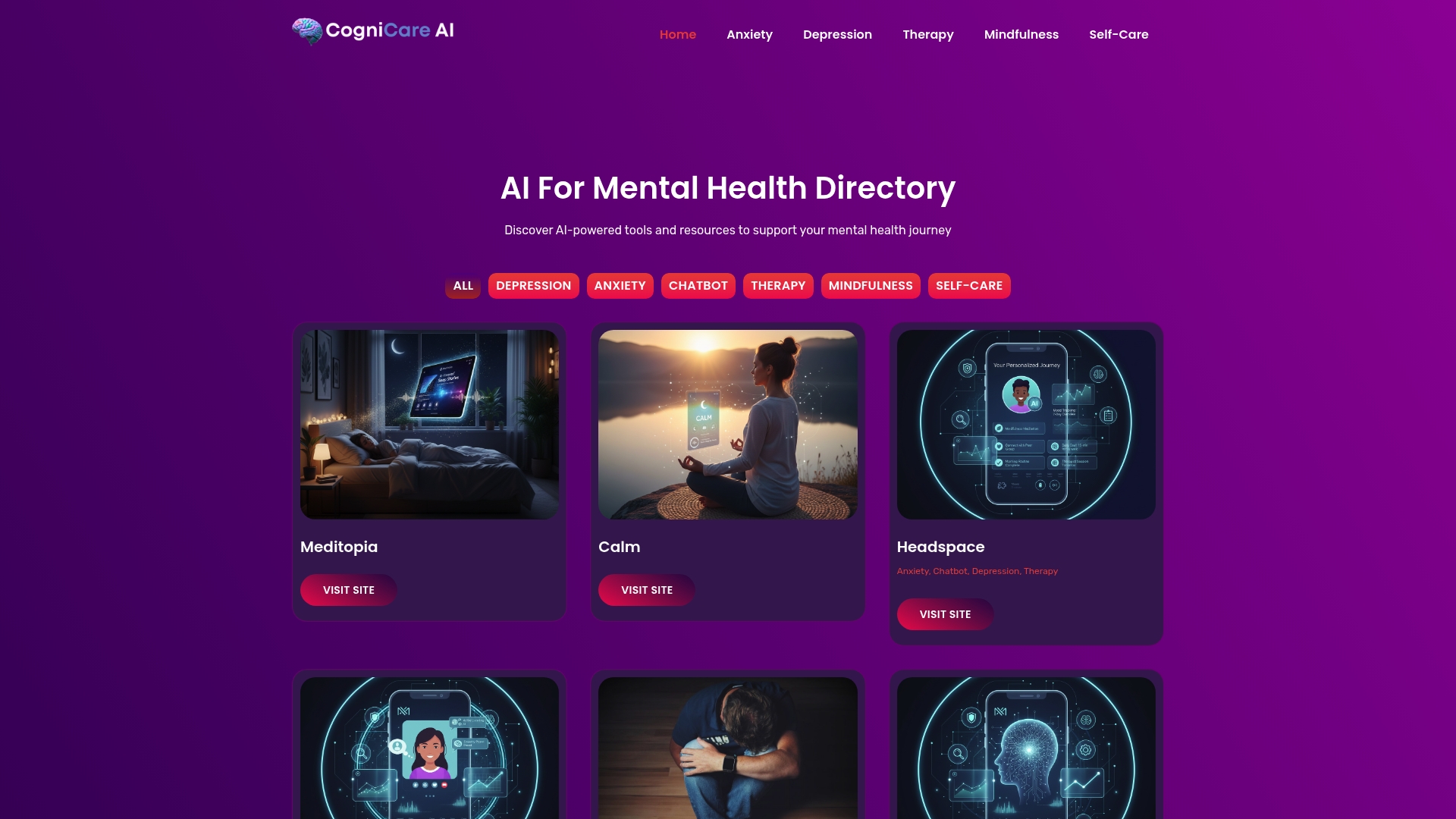
Cognicareai provides a directory of AI-powered mental health tools that complement group participation directly. These tools cover mood tracking, mindfulness practice, and cognitive restructuring exercises you can use on your own schedule. Cognicareai also lists AI mental health assessments that help you identify which type of group or therapy format fits your current symptom level. When you know where you stand, choosing between peer-led and therapist-led options becomes a much clearer decision.
FAQ
What is the difference between peer-led and therapist-led online groups?
Peer-led groups are run by people with lived experience of depression and focus on shared support. Therapist-led groups use evidence-based methods like CBT or MBCT and are better suited for people with significant functional impairment.
Are online depression support groups free?
Many are. NAMI-affiliated groups are free and run 60–90 minutes per session. HeyPeers lists over 1,000 free groups led by certified peer specialists.
How do I protect my privacy in an online support group?
Join from a private room, use headphones, and review the platform’s confidentiality policy before your first session. Avoid groups hosted on unmoderated public platforms.
Can online group support replace individual therapy?
No. Peer support reduces isolation and builds community, but it does not replace clinical treatment for moderate to severe depression. Combining both produces the most comprehensive care.
How do I know if a group is credible?
Check for clear facilitator credentials, a written confidentiality policy, and affiliation with a recognized organization like NAMI or a licensed therapy directory. Legitimate groups publish this information before you register.