

Depression self-care is defined as deliberate, evidence-based actions taken daily to reduce symptoms, restore functioning, and build emotional resilience. The most effective depression self-care strategy list centers on three proven pillars: moderate aerobic exercise, behavioral activation, and consistent sleep-wake timing. These are not generic wellness tips. They are the same mechanisms studied in clinical trials, recommended by the World Health Organization’s Step-by-Step program, and used in behavioral activation therapy. If you are managing depression and want a mental health self-care checklist grounded in real evidence, this is where to start.
1. Moderate aerobic exercise
Exercise reduces depression with effects comparable to antidepressants for mild-to-moderate cases, according to multiple meta-analyses. That is not a minor finding. It means 30 minutes of moderate aerobic activity most days produces measurable neurochemical changes, including increased serotonin and BDNF (brain-derived neurotrophic factor), that directly counter depressive symptoms.
The barrier is not information. It is activation. When you are depressed, starting feels impossible. The fix is to shrink the target. A 10-minute walk counts. A slow bike ride counts. The goal is movement, not performance. Once you are moving, the neurological benefits begin regardless of intensity.

Pro Tip: Set a “minimum viable workout” of just 5 minutes. On low-energy days, commit only to that. Most days, you will keep going once you start.
2. Behavioral activation
Behavioral activation works by reversing depression’s core trap: waiting to feel motivated before acting. Depression kills motivation first, so waiting for it means waiting indefinitely. Behavioral activation flips this by scheduling small, meaningful activities and doing them regardless of mood. Action produces mood improvement, not the other way around.
This is one of the most evidence-backed effective depression coping strategies in clinical psychology. You do not need a therapist to apply it. Write down three activities that once gave you a sense of mastery or pleasure. Schedule one per day. Do it even when it feels pointless. Track what happens to your mood afterward.
Pre-planning activities by energy level improves adherence significantly. Matching effort to capacity and noting pleasure or mastery signals without self-judgment is the clinical standard for making behavioral activation sustainable over weeks, not just days.
3. Consistent sleep-wake timing
Sleep-wake regularity produces antidepressant effects by restoring circadian rhythm function, which depression consistently disrupts. Waking at the same time every day, including weekends, is one of the most underused tools in depression management. It is free, requires no equipment, and works within days of consistent practice.
The critical mistake most people make is spending too much time in bed. Extended bed time beyond actual sleep need worsens the depression-inactivity cycle and further disrupts circadian signaling. Keep your bed for sleep only. Limit daytime naps to 20 minutes before 3 p.m.
This is not about forcing yourself to feel rested. It is about giving your brain’s internal clock a reliable anchor, which directly influences mood regulation hormones like cortisol and melatonin.
4. Planning one small daily goal
Planning one small goal each day promotes behavioral activation and creates a sense of accomplishment that depression actively suppresses. The goal does not need to be impressive. Replying to one email, making your bed, or stepping outside for five minutes all qualify.
This practice builds what psychologists call “self-efficacy,” the belief that your actions produce results. Depression erodes self-efficacy systematically. Small daily wins rebuild it incrementally. Over two to three weeks of consistent practice, the cumulative effect on mood is significant.
Use a simple journal or a notes app to write your one goal each morning. Check it off when done. That single checkmark is neurologically meaningful.
5. Low-energy self-care actions for difficult days
On the hardest days, a full routine is not realistic. Low-energy self-care actions like drinking a glass of water, washing your face, sitting near a window, or sending a short text to someone you trust are legitimate self-care. They maintain the habit of caring for yourself even when capacity is near zero.
This matters because consistency beats intensity every time. Starting with the smallest version of a practice that still counts produces better long-term results than ambitious efforts that collapse under low motivation. Think of it as keeping the flame alive rather than building a bonfire.
Build a personal “floor list” of five actions you can always do, no matter how bad the day. Post it somewhere visible. On difficult days, your only job is to complete the floor list.
6. Social connection in small doses
Social isolation worsens depression, and even minimal manageable contact buffers symptoms effectively. You do not need to attend social events or have deep conversations. A short text, a brief phone call, or simply being in the same room as another person without pressure all count as meaningful social contact.
The mechanism is partly neurological. Social interaction triggers oxytocin and reduces cortisol. But it is also behavioral. Isolation reinforces the depressive narrative that you are a burden or that no one cares. Small, low-pressure contacts directly challenge that narrative with evidence.
Practical options include texting one person per day, sitting in a coffee shop to work, joining an online community around a shared interest, or scheduling a weekly 15-minute call with a friend. None of these require significant energy. All of them work.
7. Morning light and nature exposure
Nature exposure and morning sunlight improve mood through three distinct mechanisms: circadian entrainment, serotonin synthesis, and reduced rumination. Green spaces and bright morning light have measurable effects on stress hormones and depression symptoms in controlled studies. This is not soft wellness advice. It is physiology.
Ten minutes of morning sunlight within an hour of waking sets your circadian clock more effectively than any supplement. A 20-minute walk in a park reduces cortisol and activates the default mode network differently than urban walking, reducing the repetitive negative thinking that characterizes depression.
If outdoor access is limited, a 10,000-lux light therapy lamp used for 20 to 30 minutes each morning produces similar circadian benefits. Brands like Verilux and Carex produce clinically validated options available for under $50.
8. Nutrition and hydration basics
Nutrition affects mood through the gut-brain axis. A diet with adequate omega-3 fatty acids, protein, and vitamin D supports neurotransmitter production and reduces inflammatory markers associated with depression. Regular eating intervals prevent blood sugar crashes that amplify fatigue and irritability.
You do not need a perfect diet. You need a consistent one. Eating at roughly the same times each day, including protein at breakfast, and drinking enough water are the minimum effective dose. Skipping meals or surviving on processed food directly worsens depressive fatigue.
Pro Tip: Prepare one simple, protein-rich breakfast option the night before. Removing the decision on low-motivation mornings makes it far more likely you will actually eat it.
9. Mindfulness and structured self-help tools
Mindfulness practice reduces depressive rumination by training attention away from repetitive negative thought loops. Apps like Headspace, Calm, and Insight Timer offer guided sessions starting at five minutes, which is a realistic entry point when motivation is low.
For more structured support, the WHO’s Step-by-Step intervention is a digitally delivered, evidence-based self-help program for depression tested in randomized controlled trials. It provides guided psychological support that goes well beyond generic advice, making it particularly useful when motivation is low and professional care is not immediately accessible.
Cognicareai’s directory of AI-powered mindfulness apps also identifies tools that adapt to your specific patterns, offering a more personalized experience than static meditation libraries.
10. Self-monitoring and mood tracking
Tracking your mood daily creates objective data about what is actually helping. Depression distorts perception, making it feel like nothing works even when progress is occurring. A mood log reveals patterns: which activities correlate with better days, which situations reliably worsen symptoms, and how your baseline shifts over weeks.
You can use a simple 1 to 10 scale in a paper journal, or apps like Daylio or Bearable that take under two minutes per entry. The role of self-monitoring in depression care is well-documented. It builds self-awareness, supports communication with therapists, and reinforces the connection between your actions and your mood.
Review your log weekly. Look for one pattern. Act on it.
Key takeaways
Consistent, small-scale self-care actions grounded in behavioral activation, sleep regularity, and social connection produce measurable and lasting improvements in depression symptoms.
| Point | Details |
|---|---|
| Exercise is a clinical tool | 30 minutes of moderate aerobic activity most days reduces depression symptoms comparably to medication. |
| Act before motivation arrives | Behavioral activation requires scheduling activities and doing them regardless of current mood. |
| Sleep timing matters more than duration | Consistent wake times regulate circadian rhythms and produce direct antidepressant effects. |
| Small actions count on hard days | A floor list of five low-energy actions maintains self-care continuity when capacity is minimal. |
| Track to see real progress | Daily mood logging counters depression’s distortion of perceived progress and reveals what actually works. |
What I’ve learned about self-care and depression after years of watching people try
The most common mistake I see is treating self-care as something you earn by feeling better first. People wait until they have enough energy to exercise, enough motivation to reach out socially, enough clarity to plan a routine. Depression makes that wait indefinite. The action has to come before the feeling, every time.
The second trap is all-or-nothing thinking about self-care itself. Missing a day of exercise or skipping a journaling session feels like failure, which feeds the depressive narrative. The truth is that sustainable self-care is built on flexibility, not perfection. A three-day streak followed by one missed day is still a three-day streak. What matters is returning, not maintaining an unbroken record.
Self-compassion is not a soft add-on to this list. It is the infrastructure that holds everything else together. Without it, every setback becomes evidence that you are broken rather than evidence that depression is hard. These are very different conclusions with very different outcomes.
Self-care also does not replace professional support. It works alongside therapy, medication, and structured programs. If you are working with a counselor or psychiatrist, this list gives you something concrete to bring to those conversations. If you are not yet connected to professional care, holistic depression strategies like these are a legitimate starting point, not a substitute.
Start with one item from this list today. Not tomorrow. One item, the smallest version of it, right now.
— dushyantha
How Cognicareai can support your self-care routine
Cognicareai is a directory of AI-powered mental health tools built specifically for people managing depression, anxiety, and related challenges. The platform cuts through the noise of hundreds of apps and chatbots to surface tools that are actually evidence-informed and personalized to your needs.
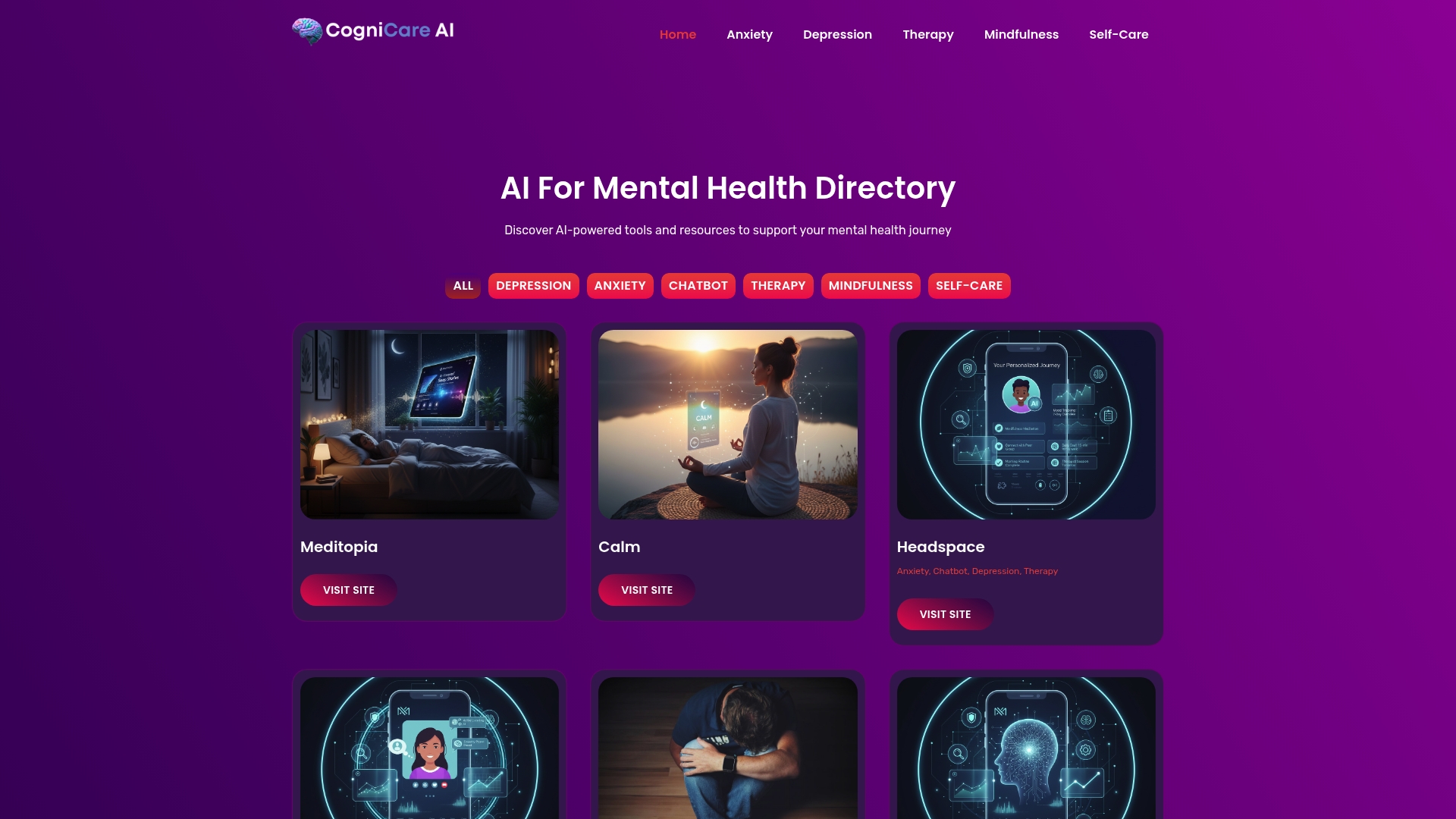
Whether you are looking for AI mental health tools to supplement your self-care routine, a therapy chatbot for low-pressure daily check-ins, or a mindfulness app that adapts to your patterns, Cognicareai maps the options clearly. You can also explore the 2026 guide to AI mental health tools to understand how these technologies work and which ones fit your specific situation. Technology does not replace human connection or professional care. It does make consistent self-care significantly easier to maintain.
FAQ
What is the most effective self-care strategy for depression?
Moderate aerobic exercise is the single most evidence-backed self-care strategy for depression, with meta-analyses showing effects comparable to antidepressants for mild-to-moderate cases. Behavioral activation and consistent sleep-wake timing are equally critical and work best when practiced together.
How do I practice self-care when I have no energy?
Start with a floor list of five actions that require minimal effort, such as drinking water, washing your face, or sending a short text. Low-energy self-care maintains the habit of caring for yourself even on the hardest days, which is more important than the scale of the action.
How long does it take for self-care to improve depression symptoms?
Consistent behavioral activation and exercise typically produce noticeable mood improvements within two to three weeks. Sleep regularity can shift mood within days. Progress is rarely linear, so mood tracking helps you see real change that depression’s distorted perception often hides.
Can self-care replace therapy or medication for depression?
Self-care strategies complement but do not replace professional treatment. Structured programs like the WHO’s Step-by-Step intervention provide guided support beyond generic advice, and they work best alongside professional care when that is accessible.
What is a good mental health self-care checklist for daily use?
A practical daily checklist includes: one planned physical activity, one behavioral activation task, consistent wake time, one social contact, a nutritious meal at regular intervals, and five minutes of mindfulness or journaling. Daily self-care habits done consistently outperform elaborate routines done occasionally.