

A depression crisis resource is any service, tool, or program that provides immediate or ongoing support to someone experiencing a mental health emergency related to depression. The most critical options available right now are the 988 Suicide and Crisis Lifeline, SAMHSA’s treatment locators, and the CDC’s two-track support model. This depression crisis resources access guide covers every major resource type, how to reach them, and how to move from immediate crisis care into lasting treatment. You do not need insurance, a referral, or a diagnosis to use most of these services.
What is the 988 crisis lifeline and how does it help?
The 988 Suicide and Crisis Lifeline is the primary crisis intervention tool for depression-related emergencies in the United States. You can call, text, or chat at 988lifeline.org, 24 hours a day, 7 days a week, at no cost. Counselors are trained to handle depression, emotional distress, anxiety, and suicidal thoughts without judgment.
988 is not limited to suicide calls. SAMHSA confirms that 988 responds to a wide range of crises, including overwhelming sadness, panic, and severe depression episodes. That means you do not need to be in immediate danger to call. If you feel like you cannot cope, 988 is the right number.
Here is what to expect when you contact 988:
- Call: You are connected to a trained counselor within minutes. Specialized lines exist for veterans, LGBTQ+ individuals, and Spanish speakers.
- Text: Send a text to 988 for a written conversation with a counselor. This works well if speaking feels too difficult.
- Chat: Visit 988lifeline.org to start a live text chat from any browser.
- Tribal support: Dedicated counselors are available for Native American and Alaska Native callers.
One of the most important and least-known facts about 988 is its design around de-escalation. 988 reduces law-enforcement involvement by routing callers to mental health professionals first. This matters because many people in crisis fear police contact. The system prioritizes stabilization in the least restrictive setting possible.
Studies show that most 988 callers feel less depressed and less overwhelmed after speaking with a counselor. That outcome is not accidental. Counselors are trained to reduce crisis intensity and connect you to local follow-up resources before the call ends.
Pro Tip: If you cannot speak safely, text 988 instead of calling. Counselors are equally trained for text-based support, and the conversation is confidential.
What other support options exist after immediate help?
The 988 Lifeline stabilizes a crisis. What comes next is equally important. Mental Health America recommends using local MHA affiliate services alongside 988 for both crisis response and follow-up care. These affiliates offer peer support, community programs, and referrals to licensed providers.
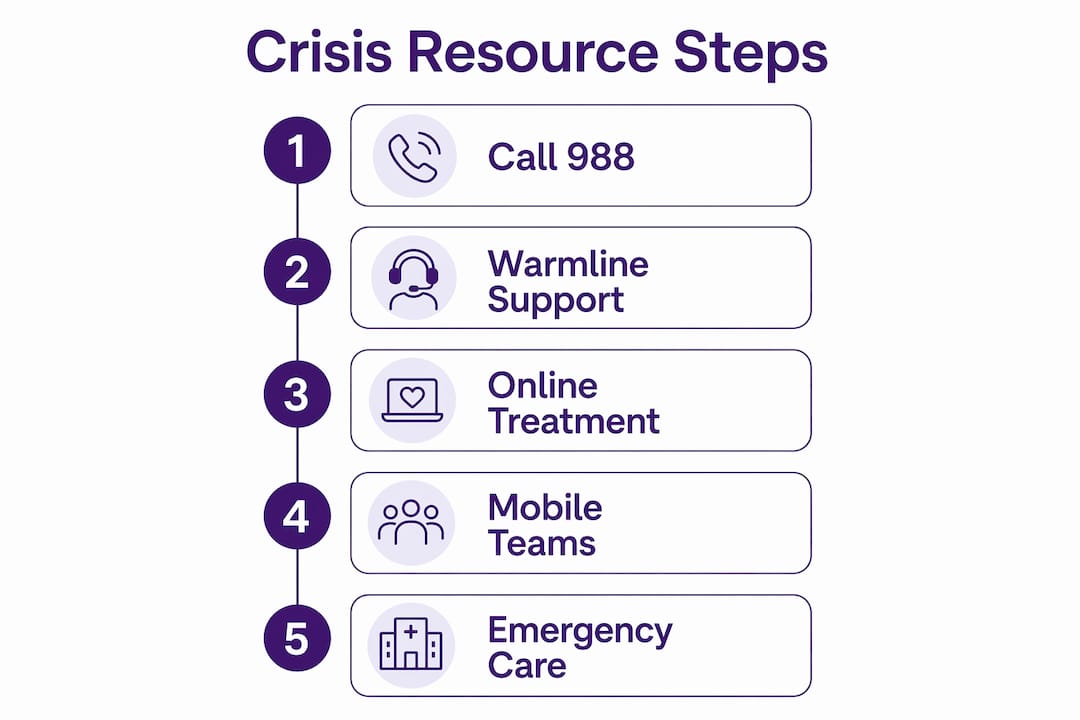
Here is a practical sequence for moving from crisis to ongoing care:
- Contact 988 first. Stabilize the immediate crisis before searching for anything else.
- Reach out to NAMI. The National Alliance on Mental Illness offers a helpline at 1-800-950-NAMI and a crisis planning guide with warning signs, scripts, and de-escalation strategies.
- Use a warmline. Warmlines are phone or text services for non-emergency emotional support. They fill the gap between crisis hotlines and scheduled therapy. The MHA warmline directory lists options by state.
- Search SAMHSA’s FindTreatment.gov. This confidential treatment locator connects you with licensed mental health providers, outpatient programs, and inpatient facilities near you.
- Contact your local MHA affiliate. Local chapters often know which providers are accepting new patients and which programs have shorter wait times.
Caregivers and family members also need support. NAMI’s Family Support Groups meet weekly in most states and are free to attend. These groups give caregivers a space to process their own stress while learning how to support someone in a depression crisis.
Pro Tip: When you call a warmline, you do not need to be in crisis. Warmlines exist for the moments when you feel yourself sliding toward one. Use them early.
How do online directories and treatment locators work?
The CDC recommends a two-track approach to mental health support: immediate hotline contact plus active use of treatment directories for ongoing care. These two tracks serve different purposes and should be used together, not interchangeably.

| Resource | Best For | Limitation |
|---|---|---|
| 988 Lifeline | Immediate crisis support | Not a treatment search tool |
| FindTreatment.gov | Finding licensed providers | Some listings may be outdated |
| FindSupport.gov | Broad mental health resource search | Less specific than SAMHSA locators |
| APA Therapist Locator | Finding licensed psychologists | Limited to APA member providers |
| NAMI Helpline | Peer guidance and referrals | Not a clinical service |
SAMHSA’s FindTreatment.gov is the most comprehensive free locator for mental health and substance use treatment in the U.S. You can filter by provider type, payment method, insurance accepted, and distance. The site is anonymous and does not require you to create an account.
One critical warning: a government audit found that some directory listings contain inaccurate information. That means a provider listed as accepting new patients may not be. Always call the provider directly to confirm availability, accepted insurance, and current hours before making an appointment.
When searching any directory, use these filters to narrow results:
- Provider type: Choose between therapist, psychiatrist, psychologist, or inpatient program based on your current needs.
- Payment options: Filter for sliding-scale fees, Medicaid, Medicare, or free community programs if cost is a barrier.
- Specialty: Look for providers who list depression, mood disorders, or crisis stabilization as areas of focus.
Understanding the difference between a mental health directory and a crisis hotline saves you time when you are already overwhelmed. Directories are for finding ongoing care. Hotlines are for right now.
How to prepare for a depression crisis before it happens
The best time to build a crisis plan is before you need one. NAMI’s crisis guide recommends preparing a written document that includes your current symptoms, recent changes in behavior, medications, and the names of people who can be contacted on your behalf.
Follow these steps to build a basic crisis plan:
- Write down your warning signs. These are the specific thoughts, feelings, or behaviors that signal a crisis is building. Examples include withdrawing from friends, sleeping more than 12 hours, or losing interest in food.
- List your support contacts. Include at least two people who know your mental health history and can speak on your behalf if you cannot.
- Record your medications. Include dosages and the name of your prescribing provider.
- Identify your preferred crisis pathway. Decide in advance whether you would call 988, go to an urgent psychiatric clinic, or ask a trusted person to take you to an emergency room.
- Share the plan. Give a copy to at least one trusted person and your primary care provider.
“Effective crisis plans include preparation with scripts and checklists detailing current state and contacts for crisis workers.” — NAMI Crisis Guide
Mobile crisis teams are an underused resource worth knowing. These are community-based teams of mental health professionals who respond to crisis calls in person, often as an alternative to police dispatch. NAMI documents that mobile crisis teams, Crisis Intervention Teams, and emergency psychiatric clinics offer an integrated response beyond hotlines in many localities. Search your county’s behavioral health department website to find out if a mobile crisis team operates in your area.
Which type of depression crisis resource fits your situation?
Depression crisis resource types range from phone hotlines to inpatient stabilization units. Choosing the right one depends on the severity of your situation and what you need in the moment.
| Resource Type | When to Use It | Key Limitation |
|---|---|---|
| 988 Lifeline (call/text/chat) | Emotional distress, suicidal thoughts, acute depression | Not a substitute for ongoing treatment |
| Crisis Text Line (text HOME to 741741) | Prefer text, cannot speak privately | Response times may vary |
| Mobile crisis team | Need in-person support without police | Not available in all counties |
| Emergency room | Immediate physical danger, severe self-harm risk | Long waits, high cost without insurance |
| Psychiatric urgent care | Moderate crisis, need same-day evaluation | Limited locations |
SAMHSA’s crisis care framework organizes the system into three components: Someone to Contact (like 988), Someone to Respond (mobile crisis teams), and A Safe Place for Help (stabilization centers and ERs). This framework means the system is designed to escalate with you. You start with a phone call and move to in-person support only if needed.
The emergency room is a last resort, not a first step. ER visits for mental health crises often involve long waits and limited psychiatric resources. Use 988 or a mobile crisis team first. Escalate to the ER only when there is immediate physical danger.
Pro Tip: Save 988 and the Crisis Text Line number in your phone contacts right now, before you need them. Searching for numbers during a crisis adds friction at the worst possible moment.
Key takeaways
Accessing depression crisis support starts with 988 and moves through a structured system of local resources, treatment directories, and personal crisis planning.
| Point | Details |
|---|---|
| Start with 988 | Call, text, or chat 988 for free, confidential, 24/7 crisis support anywhere in the U.S. |
| Use SAMHSA’s locator | FindTreatment.gov connects you with licensed providers, but always verify listings by calling directly. |
| Build a crisis plan | Write down warning signs, contacts, and your preferred care pathway before a crisis occurs. |
| Know your resource types | Hotlines, mobile crisis teams, and ERs serve different severity levels. Match the resource to the moment. |
| Combine crisis and ongoing care | Immediate stabilization and follow-up treatment work together. One without the other is incomplete. |
What i’ve learned about navigating depression crisis resources
Most people in a depression crisis do not fail to find help because resources are unavailable. They fail because the system feels overwhelming when you are already at your lowest. That is the real barrier.
My strongest recommendation is this: start with 988 and do nothing else until that call or text is done. The instinct to research providers, compare options, and plan next steps is understandable. But crisis treatment frameworks prioritize stabilization first, and that is the right order. You cannot make good decisions about ongoing care while you are in acute distress.
The verification mindset matters more than most people realize. I have seen people show up to providers listed on FindTreatment.gov only to find the practice closed or the provider no longer accepting patients. Call ahead. Confirm everything. A single phone call saves you a wasted trip and the discouragement that comes with it.
One misconception worth correcting: 988 is not only for suicidal crises. If you feel like depression is pulling you under and you cannot see a way forward, that qualifies. You do not need to be at the edge to reach out. The depression resources at Cognicareai reflect the same principle. Support should be accessible before things become unbearable, not only after.
NAMI’s crisis planning materials are genuinely useful, and most people never look at them until they are already in crisis. Download the guide now. Fill out a basic plan. Share it with one person you trust. That single act of preparation changes the experience of a future crisis more than any hotline number.
— dushyantha
How Cognicareai supports your mental health between crises
Crisis resources get you through the worst moments. What you do between those moments determines your long-term trajectory. Cognicareai is a directory of AI-powered mental health tools designed to support your daily emotional well-being, not just acute episodes.
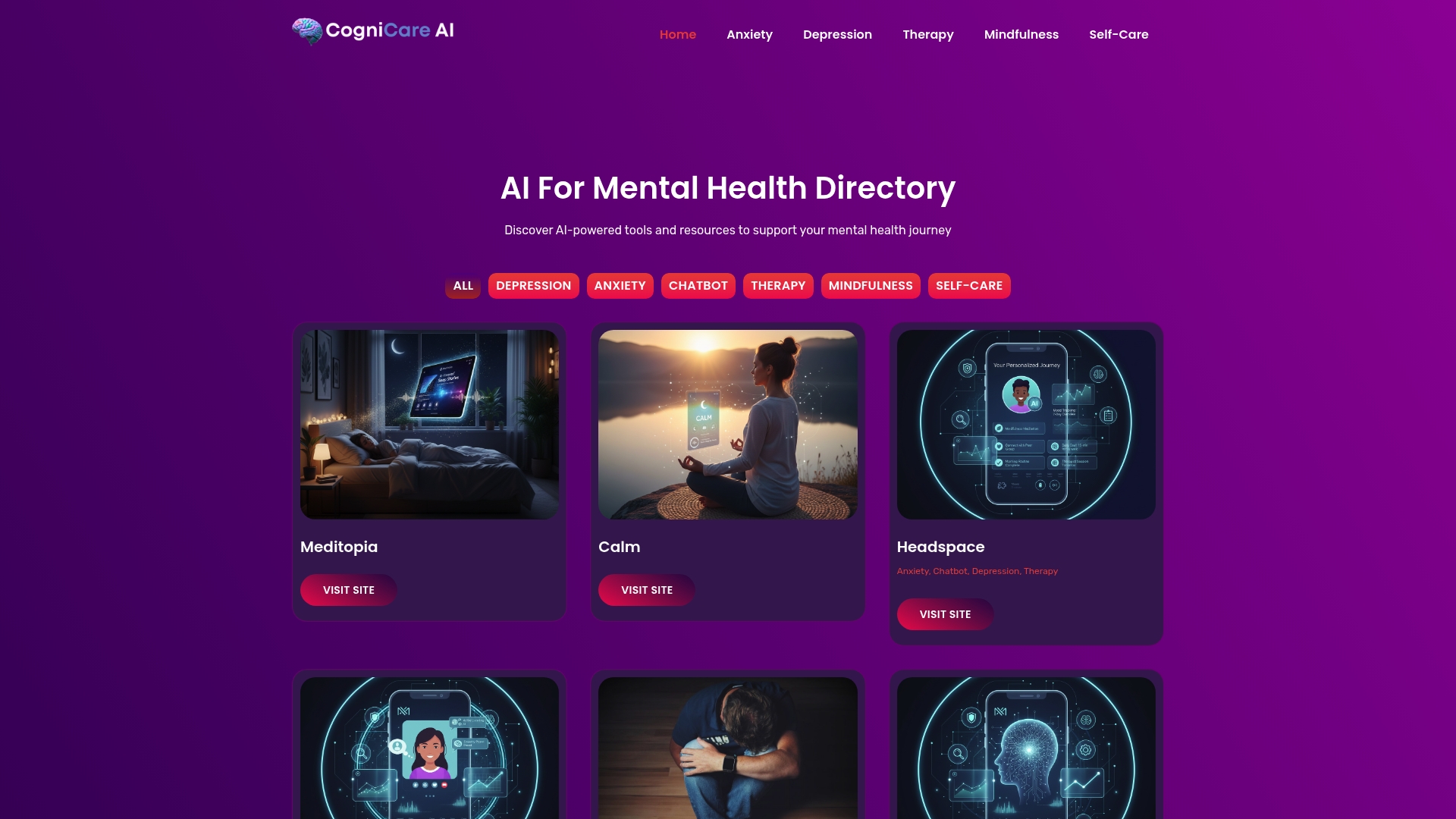
From AI-powered mental health tools and therapy chatbots to mindfulness apps tailored to depression and anxiety, Cognicareai connects you with resources that adapt to where you are in your recovery. These tools work alongside 988, NAMI, and your treatment providers. They are not a replacement for clinical care. They are what fills the hours between appointments and keeps you engaged with your own well-being. Explore the full directory at Cognicareai to find tools matched to your specific needs.
FAQ
What is a depression crisis resource?
A depression crisis resource is any service that provides immediate or ongoing support during a mental health emergency related to depression. Examples include the 988 Lifeline, Crisis Text Line, SAMHSA’s FindTreatment.gov, and local mobile crisis teams.
How do i access 988 for a depression crisis?
Call or text 988 from any phone in the United States, or chat at 988lifeline.org. The service is free, confidential, and available 24 hours a day, 7 days a week.
Is the 988 lifeline only for suicidal crises?
No. SAMHSA confirms that 988 supports any mental health crisis, including severe depression, emotional distress, and anxiety. You do not need to be suicidal to call.
How do i find a depression treatment provider near me?
Use SAMHSA’s FindTreatment.gov to search by location, provider type, and insurance. Always call the provider directly to confirm current availability, as some directory listings may be outdated.
What should i include in a depression crisis plan?
A strong crisis plan includes your current warning signs, a list of trusted contacts, your medications and prescriber’s name, and your preferred care pathway. NAMI’s crisis guide provides templates and checklists to help you build one.