

A daily routine is one of the most underutilized tools in depression management. The evidence is clear: consistent sleep and wake times are linked to a 38% lower depression risk and a 33% lower anxiety risk compared to irregular sleep patterns. That single habit alone illustrates what structured days do for a struggling brain.
Depression disrupts executive function, the brain’s ability to plan, prioritize, and make decisions. When those systems are impaired, even deciding what to eat for breakfast can feel paralyzing. Routines solve this by automating low-stakes decisions, freeing up whatever cognitive energy you have for things that actually matter. Social Rhythm Therapy, pioneered by Dr. Ellen Frank at the University of Pittsburgh, is built on exactly this insight: stabilizing daily rhythms directly regulates the biological clock and improves mood in people with mood disorders.
Depression also warps time perception. Days blur together, and that stagnation feeds hopelessness. A structured day creates differentiation between morning, afternoon, and evening, giving time shape when your brain cannot generate it on its own.
Core daily routine benefits for depression at a glance:
- Stabilizes mood by regulating circadian rhythms
- Reduces decision fatigue by automating routine tasks
- Builds self-efficacy through small, repeatable wins
- Counters the time distortion common in depressive episodes
- Supports behavioral activation, a core CBT technique that schedules activity regardless of mood
A 2025 study found that people who maintain consistent sleep and wake times have a 38% lower risk of depression and a 33% lower risk of anxiety compared to those with irregular sleep patterns.
Table of Contents
- Key daily habits that support mental health with depression
- How to build and actually stick to a routine when depression gets in the way
- How AI-powered tools can support routine building and depression management
- Your next steps for building routines that support recovery
- Key Takeaways
- Cognicareai makes finding the right mental health tools straightforward
Key daily habits that support mental health with depression
Knowing that routine helps is one thing. Knowing which habits move the needle is another. The good news: you do not need a packed schedule. A handful of well-chosen anchors can carry most of the weight.
Consistent sleep and wake times
This is the single highest-leverage habit. Your circadian rhythm governs cortisol, serotonin, and melatonin release. When sleep timing is erratic, those systems fall out of sync, and mood follows. Waking at the same time every day, even on weekends, is more important than the total hours you sleep. The NIMH recommends maintaining a regular bedtime and wake-up time as a core self-care strategy for depression.
Physical movement, even small doses
Thirty minutes of walking daily can measurably lift mood, per NIMH guidance. But when depression is severe, thirty minutes can feel impossible. Start with five. A short walk around the block still activates endorphins and breaks the inertia of staying still. The goal is not fitness; it is momentum.

Regular meals and hydration
Consistent meal times anchor the body’s metabolic rhythms alongside sleep. Skipping meals destabilizes blood sugar, which amplifies irritability and fatigue. Depression often kills appetite, so the habit here is scheduling eating, not waiting until you feel hungry.
Digital breaks and screen limits
Unstructured screen time, particularly social media scrolling, tends to amplify rumination. Building deliberate breaks into your day, even a 30-minute phone-free window in the morning, protects mental clarity. An evening self-care routine that excludes screens in the final hour before bed also supports the sleep consistency described above.

Morning and evening anchors
You do not need a 10-step morning routine. Two or three fixed actions, making coffee, taking medication, stepping outside for light, create a reliable start that signals the brain: the day has begun. Evening anchors work the same way in reverse, winding down the nervous system and preparing for sleep.
Quick habit checklist:
- Wake at the same time daily, including weekends
- Eat at least two meals at consistent times
- Move your body for at least 5–10 minutes
- Take one screen-free break during the day
- Follow a brief wind-down sequence before bed
Pro Tip: Set your wake alarm for the same time seven days a week for two weeks before adding any other habit. Sleep consistency alone often produces noticeable mood improvement before you change anything else.
How to build and actually stick to a routine when depression gets in the way
The hardest part of routine-building with depression is that the illness attacks the very capacities you need to build a routine. Motivation is low. Planning is difficult. Starting feels enormous. Here is how to work around that.
Start smaller than feels necessary
Micro-routines, tiny achievable habits, improve self-efficacy and reduce the failure rate that derails routine adherence in depression. “I will drink a glass of water when I wake up” is a complete routine. It takes ten seconds, it succeeds every time, and each success builds the neural reinforcement that makes the next habit easier to add.
Use behavioral activation, not willpower
Behavioral activation, a clinically validated CBT technique, means scheduling activities regardless of how you feel, then doing them anyway. Waiting until you feel motivated is a trap depression sets. The mood improvement comes after the action, not before. Schedule the walk. Do the walk. The feeling follows.
Build in flexibility from the start
Rigid routines break under the pressure of bad depression days, and a broken routine can spiral into shame and further withdrawal. Design yours with a “minimum viable version.” If your full morning routine is 20 minutes, your minimum version is 3 minutes. On hard days, the minimum version counts as a win.
Use social support and accountability
Telling one person your routine, or asking someone to check in with you, significantly improves follow-through. This does not need to be formal. A text to a friend saying “I’m going for my walk now” is enough. Self-monitoring also helps: a simple yes/no check at the end of each day (“Did I do my habit?”) builds awareness without judgment.
Practical strategies at a glance:
- Pick one habit to start, not five
- Schedule it at the same time each day
- Keep a binary habit log (yes/no, no streaks required)
- Tell one person about your routine
- Write a “minimum version” for hard days
Pro Tip: Avoid habit streaks when you’re managing depression. Streaks punish missed days. A simple yes/no log lets you see progress over weeks without the shame spiral that comes from “breaking” a streak.
How AI-powered tools can support routine building and depression management
Knowing what to do and actually doing it consistently are two different problems. AI-powered mental health tools address the second one by providing personalized tracking, gentle prompts, and adaptive support that adjusts to how you are actually doing, not how you should be doing.
AI tools support behavioral activation by helping users schedule and log daily activities, sending reminders calibrated to individual patterns, and surfacing mood trends that are hard to see in the moment. For someone whose depression impairs planning, having an app scaffold the structure externally removes a significant barrier.
| Tool Type | Primary Function | How It Supports Routine |
|---|---|---|
| Mindfulness apps | Guided meditation and breathing | Anchors morning or evening routine with a timed practice |
| Therapy chatbots | Conversational CBT and mood check-ins | Provides daily behavioral activation prompts and reflection |
| Self-care planners | Habit tracking and scheduling | Logs daily habits and visualizes consistency over time |
| Mood trackers | Emotional pattern recognition | Identifies triggers and low-mood patterns to adjust routine |
Therapy chatbots are particularly useful for people who cannot access frequent in-person therapy. They deliver CBT-style prompts between sessions, reinforcing the behavioral activation work a therapist might assign. They are not a replacement for professional care, but they close the gap between weekly appointments.
Cognicareai’s directory of AI-powered mental health tools connects people with apps across all four categories above, matched to their specific needs and goals.
Your next steps for building routines that support recovery
Recovery from depression is not linear, and your routine does not need to be perfect to be effective. Small, consistent habits compound over time in ways that are genuinely hard to predict from the inside. The research supports starting modest and staying patient.
A few things worth doing now:
- Pick one anchor habit and commit to it for two weeks before adding anything else
- Talk to a mental health professional about integrating behavioral activation into your treatment plan, whether you are in therapy, on medication, or both
- Give yourself permission to have minimum-version days without treating them as failures
- Use an AI tool or app to track your habits and surface patterns you cannot see yourself
- Lean on your support network, even in small ways, to maintain accountability
Depression responds to structure. Not because structure is a cure, but because it rebuilds the daily rhythms that depression disrupts, and those rhythms are the foundation everything else is built on. The habits you build now, however small, are not just coping strategies. They are the scaffolding for getting better.
For more depression self-care strategies that work alongside routine-building, Cognicareai has a practical resource worth bookmarking.
Key Takeaways
A consistent daily routine reduces depression risk by stabilizing biological rhythms, cutting decision fatigue, and building self-efficacy through small, repeatable wins.
| Point | Details |
|---|---|
| Sleep consistency matters most | Regular sleepers have a 38% lower depression risk than those with irregular sleep timing, according to a 2025 study. |
| Start with micro-routines | One small, achievable habit builds self-efficacy and reduces the failure that derails adherence. |
| Behavioral activation works | Scheduling activity regardless of mood, a core CBT method, improves depression by creating positive experiences. |
| Flexibility prevents collapse | A “minimum viable version” of your routine keeps momentum on hard days without triggering shame. |
| Cognicareai supports the process | Cognicareai’s directory of AI-powered tools helps people track habits, access therapy chatbots, and reinforce daily routines. |
Cognicareai makes finding the right mental health tools straightforward
When you are managing depression, researching apps and tools is one more task your brain does not have capacity for. Cognicareai cuts through that by curating a directory of AI-powered mental health tools, from mindfulness apps and therapy chatbots to self-care planners and mood trackers, organized by what you actually need.
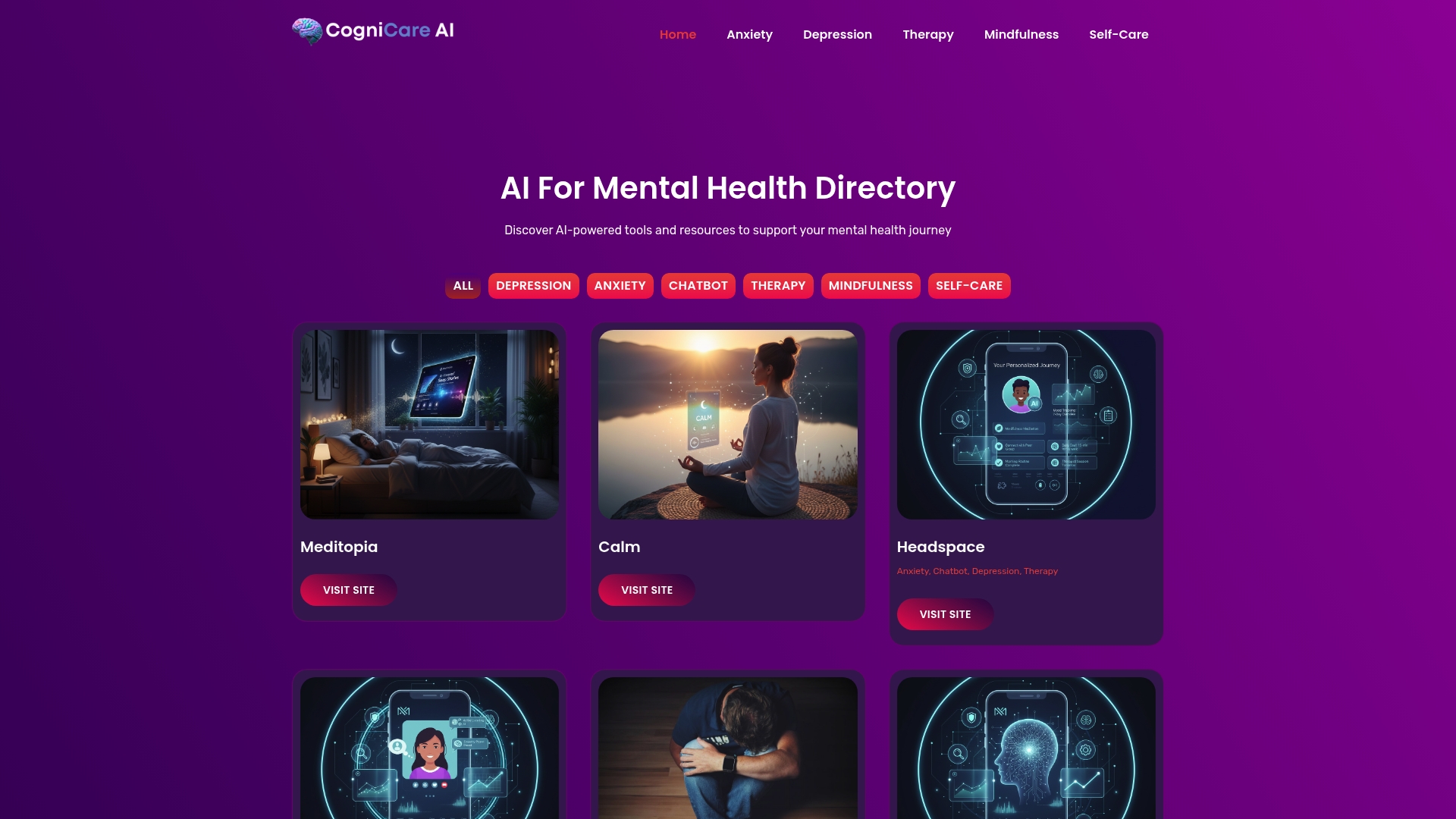
The difference from searching on your own: every tool in the Cognicareai directory is selected for people dealing with real mental health challenges, not general wellness. You get personalized recommendations based on your situation, whether you are trying to build a morning routine, stay consistent with behavioral activation between therapy sessions, or find a chatbot that fits how you actually communicate. Users report stronger coping strategies and better emotional resilience after engaging with tools found through the platform.
If you are ready to add an AI tool to your routine, start at Cognicareai’s mental health tools page and find what fits where you are right now.