
How to set up emergency contacts on iPhone and Android for depression crises
Your phone can be your fastest lifeline during a depression emergency. Setting up emergency contacts takes less than five minutes and gives first responders, friends, or family instant access to your support network, even from a locked screen.
iPhone setup
- Open the Health app and tap your profile photo in the top right corner.
- Select Medical ID, then tap Edit.
- Scroll to Emergency Contacts, tap the green plus icon, and choose a contact from your address book.
- Assign a relationship label (e.g., “sister,” “therapist”) and tap Done.
- Toggle Show When Locked to ON so anyone who finds your phone can see your contacts without a passcode.
To trigger Emergency SOS, press and hold the side button plus either volume button simultaneously. Your phone calls 911, and notifies your emergency contacts with your location.
Android setup
- Open the Personal Safety app (pre-installed on most Pixel devices; available on Google Play for other Android phones).
- Tap Emergency contacts and select Add contact.
- Choose contacts and enable Share location so they receive your GPS coordinates automatically.
- Under Emergency SOS, toggle the feature on and set it to activate by pressing the power button multiple times rapidly.
Android’s Emergency Location Service sends your location to emergency responders the moment you place an SOS call, no manual sharing required.
Quick setup checklist:
- Medical ID or Personal Safety app configured
- At least two emergency contacts added with relationship labels
- “Show When Locked” or lock screen access enabled
- Emergency SOS shortcut tested (without calling 911)
- Location sharing turned on
Pro Tip: The Emergency SOS shortcut can be activated silently, even during a dissociation or panic episode, without unlocking your phone. Test it in airplane mode first so you understand the button sequence before you ever need it.
Who should you choose as an emergency contact for mental health crises?
The right emergency contact for a depression crisis is not necessarily your closest family member. It is the person who stays calm when you cannot.

NAMI Spokane recommends choosing contacts who are crisis-aware, meaning they understand your triggers and know how to de-escalate rather than react emotionally. A sibling who loves you deeply but panics under pressure may unintentionally make a crisis worse. A neighbor who has seen you through hard times before and knows to speak quietly and stay present can be far more effective.
Criteria for strong emergency contacts:
- Stays calm and does not catastrophize
- Knows your diagnosis or at least your general mental health history
- Understands what helps you (and what does not)
- Is reliably reachable, including at night or on weekends
- Has agreed to the role and knows what to do
Aim for at least two contacts covering different roles: one person for emotional support and one who can coordinate logistics, like driving you to an appointment or calling your therapist. If your primary contact is unavailable during a crisis, a backup prevents a dangerous gap. Your depression crisis resources page on Cognicareai has additional guidance on building this network.
What information should your emergency contacts actually have?
Handing someone your phone number is not enough. A comprehensive mental health crisis plan lists the details your contacts need to respond effectively, not just react.
Include all of the following:
- Current medications and dosages, including any psychiatric medications that affect behavior or require specific handling
- Diagnoses, stated plainly so responders understand the context
- Treatment provider contacts, including your psychiatrist, therapist, and primary care doctor with phone numbers
- Behavioral warning signs that signal a crisis is building, such as social withdrawal, sleep disruption, or giving away possessions
- What helps you calm down, whether that is a specific phrase, a quiet room, or a particular person’s voice
- What makes things worse, including certain questions, physical contact, or loud environments
- Your communication preferences, for example, whether you want someone to stay on the phone silently or talk you through breathing
Privacy matters here. You control who sees this information. Your Medical ID on iPhone can be set to show only what you choose. Keep a printed copy of your crisis plan at home and share a digital version only with people you fully trust. Cognicareai’s guide on mental health resource categories covers how to organize and protect this kind of sensitive information.

National mental health emergency resources available 24/7 in the U.S.
Personal emergency contacts are your first layer of support. National crisis lines are your safety net when those contacts are unavailable or when the situation needs professional intervention.
Core U.S. crisis resources:
- 988 Suicide & Crisis Lifeline: Call or text 988 for free, confidential support from a trained counselor, available 24/7 by phone, text, and online chat. This is the right call when you need immediate intervention but there is no physical danger present.
- Crisis Text Line: Text HOME to 741741 to reach a trained crisis counselor by text, also free and confidential around the clock.
- SAMHSA National Helpline: Call 1-800-662-4357 for referrals to local mental health and substance use treatment services, available 24/7 in English and Spanish.
- NAMI HelpLine: Call 1-800-950-6264 or text “Helpline” to 62640 for emotional support and community resource referrals, available Monday through Friday.
- 211: Dialing 2-1-1 connects you to local non-emergency support services, peer warmlines, and social service referrals. Warmlines are staffed by peers with lived mental health experience, not crisis counselors, so use them for support before a situation becomes acute.
- 911: Call when there is immediate physical danger or you cannot keep yourself safe. When calling, ask specifically for officers with Crisis Intervention Team (CIT) training. CIT officers are trained to de-escalate mental health emergencies rather than treat them as criminal situations.
Save all of these numbers in your phone contacts now, before you need them. During a crisis, searching for a number takes cognitive effort you may not have available.
Key Takeaways
Setting up emergency contacts on your phone, paired with a written crisis plan and saved national helpline numbers, gives you the fastest and most reliable path to support during a depression emergency.
| Point | Details |
|---|---|
| Set up phone emergency contacts now | Use iPhone Health app or Android Personal Safety app; enable lock screen access so contacts are visible without a passcode. |
| Choose calm, crisis-aware contacts | Pick people who know your triggers and stay steady under pressure, not just those closest to you emotionally. |
| Document your crisis plan details | Include medications, diagnoses, provider contacts, warning signs, and what helps or worsens your crisis. |
| Save national crisis numbers | Store 988, Crisis Text Line (741741), and 211 in your phone before you ever need them. |
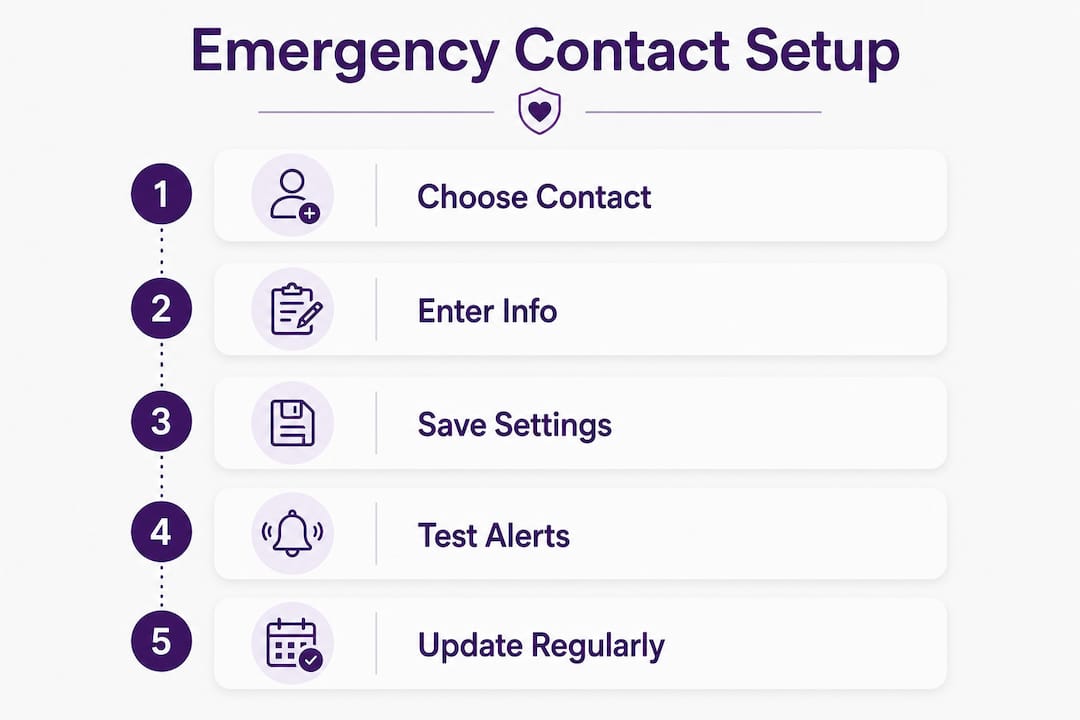
| Update your plan regularly | Review contacts and crisis information whenever your treatment, medications, or living situation changes. |
Cognicareai can help you go further
A crisis plan and emergency contacts are your foundation. Cognicareai’s directory of AI mental health tools helps you build on that foundation with personalized resources, from mood-tracking apps to AI-guided self-care strategies designed specifically for people managing depression and anxiety. When the acute moment passes, having the right tools in place makes the space between crises easier to navigate.