

Asynchronous self-care tools are digital applications that deliver mental health support without requiring real-time interaction, letting you access personalized interventions on your own schedule. The term “asynchronous” comes from the broader field of digital communication, where it describes any exchange that does not happen simultaneously. Applied to mental wellness, it means the tool responds to you when you engage with it, not on a therapist’s calendar. Platforms like Cognicareai organize these tools into a searchable directory, connecting people with AI-powered resources that fit their specific emotional needs. The WHO recognizes self-care interventions as evidence-based complements to clinical care, and asynchronous tools are now a primary delivery method for that support.
How do asynchronous self-care tools work?
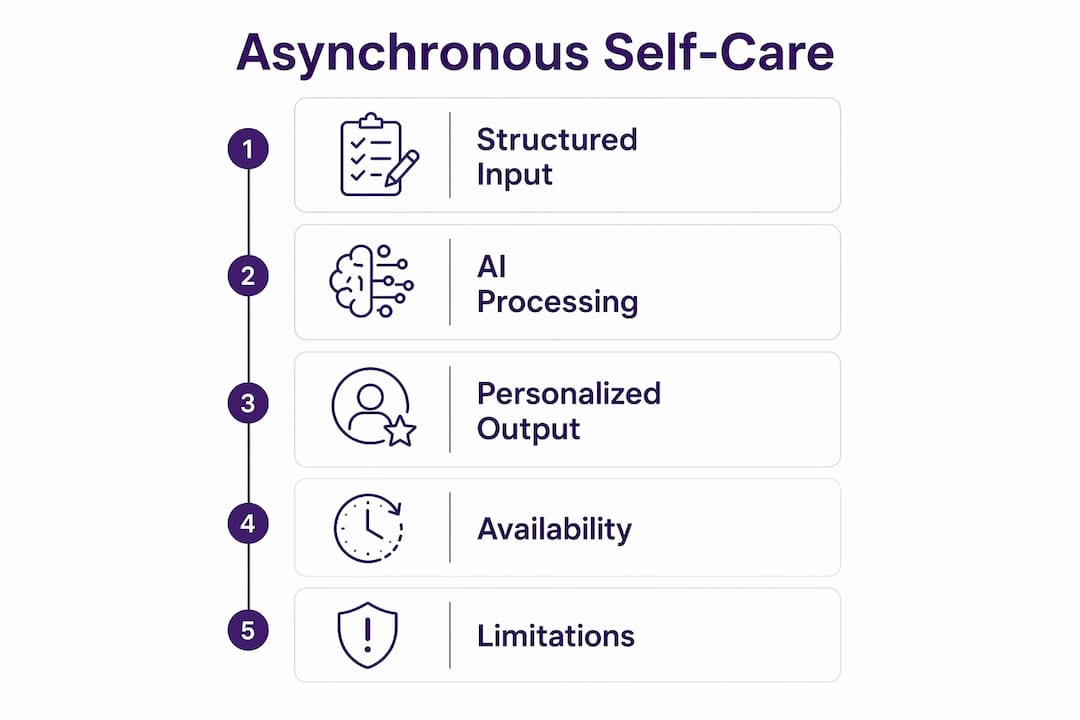
Asynchronous self-care tools operate through three core mechanisms: structured input, AI-driven processing, and personalized output delivered on demand. You submit something, the system analyzes it, and you receive a response or resource when you are ready to engage with it. No live session required.
Messaging frameworks
The most established format uses text, audio, and video messaging. Asynchronous messaging therapy allows flexible communication with licensed therapists via these modalities, with responses typically arriving within one business day. This model removes the scheduling barrier that stops many people from seeking support in the first place. You write when the feeling is fresh, and the response is there when you check in.
AI coaching and personalization
AI coaching tools go further by removing the human therapist from the loop entirely. The distinction between AI coaching and reactive chatbots is fundamental: AI coaching proactively delivers tailored micro-interventions, while chatbots wait for you to ask a question. That difference shapes outcomes. A coaching model might notice you have logged three consecutive nights of poor sleep and push a breathing exercise before you even think to ask for one. A chatbot waits.

Psychological effects of structured reflection
Asynchronous tools also work through a psychological mechanism called externalization. When you type out a worry or log a mood, you move it from inside your head to outside it. That act alone reduces its emotional weight. Structured reflection prompts, common in journaling apps and mood trackers, guide you toward specific observations rather than vague complaints. Better outcomes occur when people provide specific observations instead of vague complaints, a pattern confirmed across AI wellness coaching research.
Pro Tip: Set a specific time each day to engage with your self-care tool, even if only for three minutes. Consistency of timing matters more than session length for building the habit.
- Text messaging: low barrier, high frequency, good for daily mood logging
- Audio messages: captures emotional tone that text misses
- Video messages: strongest for nuanced communication, higher effort
- AI coaching prompts: proactive, personalized, no scheduling required
- Structured journaling: builds self-awareness through guided reflection
What are the benefits and limitations of asynchronous self-care tools?
The core benefit of asynchronous self-care tools is availability. They work at 2 AM, during a lunch break, or on a commute. That continuous access matters most for people whose stress does not follow a 9-to-5 schedule.
Research on self-monitoring and wellbeing shows that 84% of fitness tracker users reported improved wellbeing, even without measurable behavior changes. That finding reveals something important: the act of paying attention to your own data produces psychological benefit independent of what the data says. Asynchronous tools are built on this principle.
Coaching tone also shapes results significantly. People who received motivating, positive reinforcement feedback saw meaningful improvement rates of 57% compared to 32% for those who received purely factual feedback. The implication is clear: how a tool communicates matters as much as what it communicates.
Limitations are real, though. The most common is “data anxiety,” which occurs when tool data conflicts with how you actually feel. If your sleep tracker says you slept well but you feel exhausted, the mismatch creates frustration. Treating tool data as one input among many, rather than the final word, protects your sense of agency.
The second common pitfall is the “chat-trap.” This happens when you mistake an AI tool for an empathetic human. Framing AI as structured journaling or thought reframing, rather than a conversation partner, produces better results. You can read more about adaptive self-care practices that account for these nuances.
Benefits at a glance:
- Available 24 hours a day, seven days a week
- No scheduling or waitlists
- Lower cost than synchronous therapy in most cases
- Builds self-awareness through consistent reflection
- Reduces stigma by offering private, self-directed access
Limitations to watch for:
- Data anxiety when metrics conflict with feelings
- Chat-trap misconceptions about AI empathy
- No crisis intervention capability
- Requires self-motivation to engage consistently
How to integrate asynchronous self-care tools into daily routines
Consistent use, not occasional deep dives, produces the most durable mental health benefits from asynchronous tools. The research on environmental friction is direct: placing a self-care app in your phone’s home screen “thumb zone” significantly increases usage by intercepting habitual scrolling behavior. Small placement decisions produce large behavioral changes over time.
Habit stacking is the most reliable method for building consistency. You attach the new behavior to an existing one. Open your mood tracker right after your morning coffee. Log a reflection note right before you plug in your phone at night. The existing habit carries the new one until it becomes automatic.
Micro-interventions are the format that fits best into real life. A three-minute breathing exercise, a single journal prompt, or a quick mood check-in all qualify. These short sessions accumulate into meaningful self-awareness over weeks. For practical examples, micro self-care routines for busy schedules show how small actions compound into real change.
Pro Tip: Treat your self-care tool as a durable resource for reflection, not an instant responder. The value builds over time, not in a single session.
- Place your chosen app on your phone’s home screen in easy thumb reach
- Attach tool use to one existing daily habit (morning coffee, evening wind-down)
- Start with sessions of three minutes or less to reduce resistance
- Use specific prompts rather than open-ended entries for better AI responses
- Review your data weekly, not daily, to spot patterns without obsessing over single data points
- Treat the tool as a journal, not a chat partner, to avoid the chat-trap
How do asynchronous tools fit within broader mental health care?
Asynchronous self-care tools are not replacements for clinical treatment. The WHO is explicit: self-care interventions complement clinical care by empowering people to actively participate in managing their own health. That framing matters. These tools work best as a layer within a broader personal health strategy, not as a standalone solution for serious mental health conditions.
Digital literacy shapes how much benefit you extract from these tools. People who understand what AI coaching can and cannot do get more from it. Cognicareai addresses this directly by curating AI-powered mental health tools with clear explanations of each tool’s purpose and limitations, reducing the guesswork for people new to digital wellness.
Data privacy is a legitimate concern. Reputable asynchronous platforms use HIPAA-compliant infrastructure and encrypt stored messages. Before committing to any tool, check whether it stores your data on-device or in the cloud, and whether it shares data with third parties.
| Approach | Format | Availability | Best for |
|---|---|---|---|
| Asynchronous self-care tools | Self-paced, on-demand | 24/7 | Daily reflection, habit building, mild to moderate stress |
| Synchronous therapy | Live, scheduled sessions | Limited by provider hours | Crisis support, complex conditions, relational work |
| AI coaching apps | Proactive micro-interventions | 24/7 | Personalized nudges, behavior change |
| General wellness apps | Passive tracking | 24/7 | Sleep, fitness, basic mood logging |
The role of self-monitoring in depression care illustrates how asynchronous tracking integrates with clinical frameworks. Therapists increasingly ask clients to use between-session tools to capture real-time emotional data, which then informs live appointments. Asynchronous tools become the connective tissue between clinical touchpoints.
Key Takeaways
Asynchronous self-care tools work because they deliver personalized mental health support on demand, removing scheduling barriers while building self-awareness through structured, consistent reflection.
| Point | Details |
|---|---|
| Core mechanism | Tools use structured input, AI processing, and on-demand output to deliver support without live interaction. |
| Psychological benefit | 84% of self-monitoring users report improved wellbeing, even before behavior changes occur. |
| Coaching tone matters | Positive reinforcement feedback produces 57% meaningful improvement vs. 32% for factual-only feedback. |
| Habit integration | Placing apps in the thumb zone and stacking use onto existing habits drives consistent engagement. |
| Clinical complement | WHO endorses self-care tools as evidence-based adjuncts to clinical treatment, not replacements. |
What I have learned from watching people use these tools
Most people approach asynchronous self-care tools with the wrong mental model. They expect the experience to feel like texting a knowledgeable friend. When the AI does not respond with warmth or nuance, they disengage within two weeks. The tool did not fail them. Their expectation did.
The shift that actually works is treating the tool like a structured notebook that occasionally talks back. You are not seeking comfort from it. You are using it to see yourself more clearly. That reframe changes everything about how you interact with it, and the data bears this out: specific observations produce better AI responses and better personal insight than vague emotional dumps.
The other thing I have noticed is that people who use one tool consistently outperform people who rotate through five tools looking for the perfect one. Multi-tool overload creates decision fatigue and prevents the pattern recognition that makes these tools genuinely useful. Pick one format that fits your natural rhythm, whether that is voice notes, text journaling, or mood logging, and stay with it for at least 60 days before evaluating.
The “asynchronous-by-default” mindset shift is not just a usage tip. It is a philosophical reorientation toward your own mental health. You stop waiting for the right moment and start building a record of small moments. That record becomes your most reliable source of self-knowledge over time.
— dushyantha
Cognicareai and your asynchronous self-care practice
Mental health support works best when you can find the right tool without spending hours researching options.
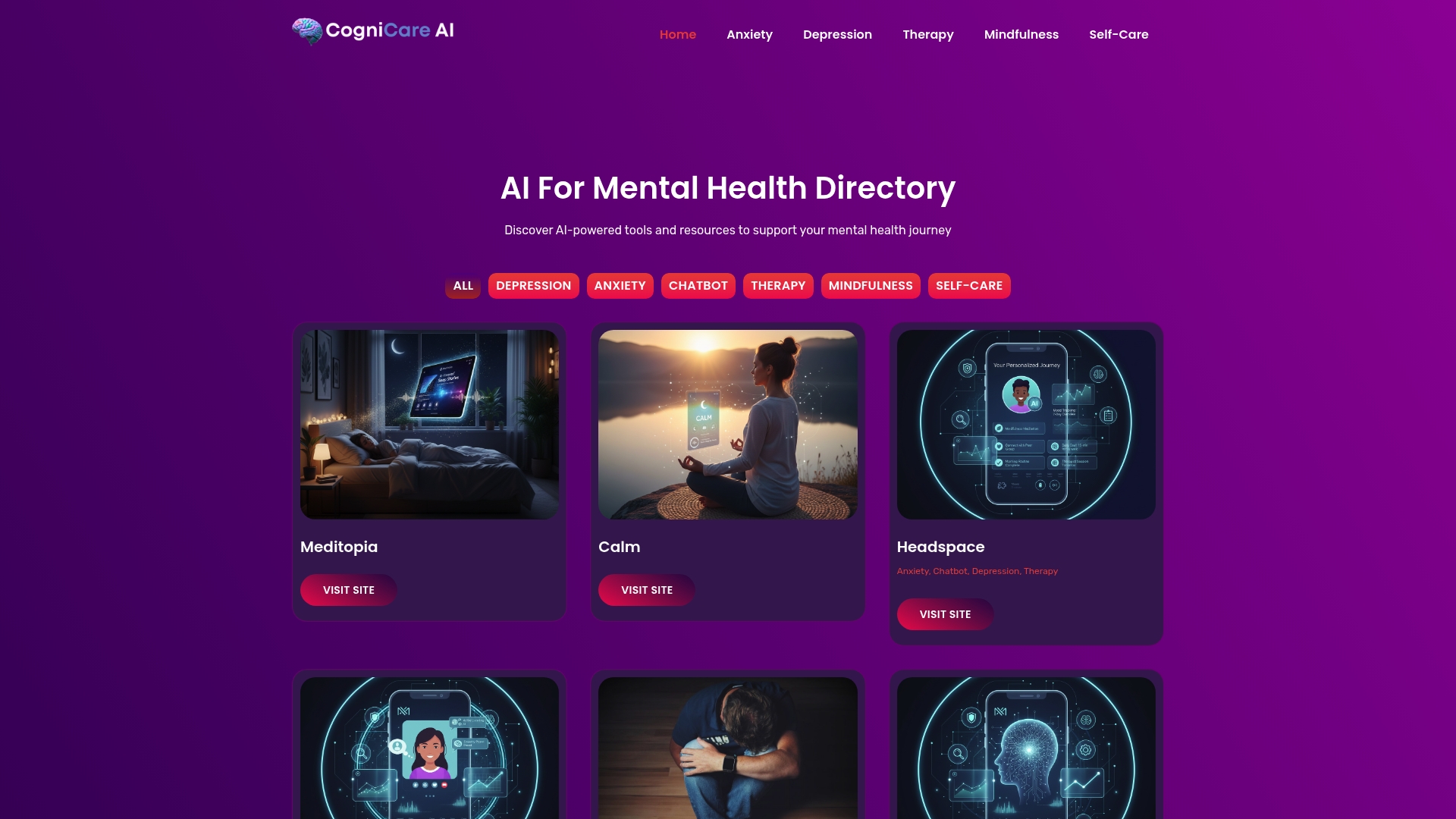
Cognicareai curates a directory of AI mental health tools organized by purpose, format, and condition, so you can match a tool to your actual situation rather than guessing. Whether you are managing daily stress, building emotional resilience, or looking for a structured journaling approach, the directory surfaces options that fit your needs. You can also browse AI-powered tools for mental health ranked by evidence and user outcomes. Cognicareai removes the friction between wanting support and finding it.
FAQ
What does “asynchronous” mean in self-care tools?
Asynchronous means the tool does not require you and a therapist or AI to be active at the same time. You engage on your schedule, and the response or resource is available when you return.
Are asynchronous self-care tools effective for anxiety and depression?
Research supports their use as complements to clinical care, with WHO endorsing self-care interventions as evidence-based adjuncts. They are most effective for mild to moderate symptoms and daily stress management, not crisis situations.
How do AI coaching tools differ from therapy chatbots?
AI coaching tools proactively deliver personalized micro-interventions based on your patterns, while chatbots respond reactively to what you type. Coaching models generally produce stronger outcomes for behavior change and emotional resilience.
How long before asynchronous self-care tools show results?
Consistent daily use over 60 days produces the most reliable pattern recognition and self-awareness gains. Short-term use of one to two weeks rarely generates enough data for meaningful personal insight.
What should I look for in a trustworthy asynchronous self-care tool?
Look for HIPAA-compliant data storage, clear disclosure of whether data is shared with third parties, and a coaching model that uses positive reinforcement rather than purely factual feedback, since motivated users see significantly higher improvement rates.