

Top psyhelp.info alternatives for mental health support in the US
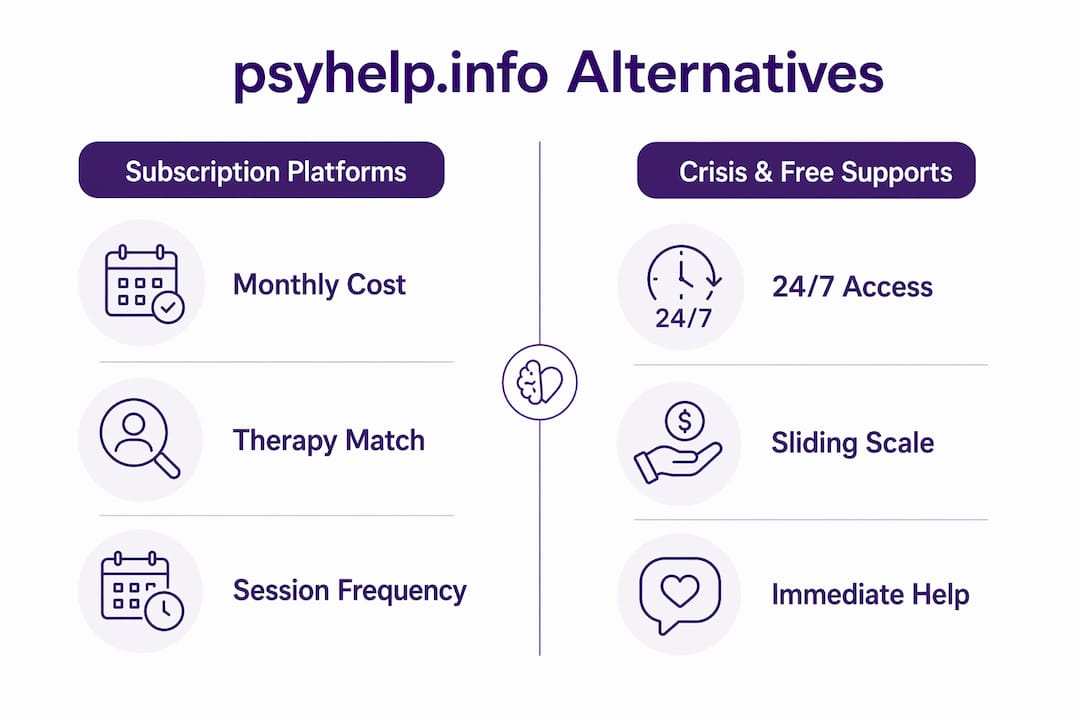
If you’re looking for psyhelp.info alternatives, the US market offers a range of credible options spanning licensed therapy platforms, government crisis lines, and AI-powered resource directories. The right fit depends on whether you need immediate crisis support, ongoing therapy, or a self-guided tool you can use on your own schedule.
Here’s a quick breakdown of the main categories:
- Licensed online therapy platforms (subscription-based): Connect you with a licensed therapist via video, phone, or messaging. BetterHelp and Talkspace are the most widely recognized in this category.
- Crisis helplines: Free, 24/7 phone and chat services for people in acute distress. The 988 Suicide & Crisis Lifeline is the primary US resource.
- Referral and treatment locators: Services like SAMHSA’s National Helpline and findtreatment.gov help you find local providers, sliding-scale clinics, and state-funded programs. They don’t provide therapy directly.
- AI-powered mental health directories: Platforms like Cognicareai curate tools such as mindfulness apps, therapy chatbots, and self-care programs tailored to your specific needs.
- Primary care referrals: Your family doctor can screen for mental health conditions and refer you to the right specialist, which NIMH recommends as a reliable starting point.
No single platform covers every need. A crisis line won’t replace weekly therapy, and a subscription platform won’t help you at 3 AM when you need someone immediately. Knowing which type of service matches your situation is the first real decision.
How to choose the right online mental health support platform

Choosing a platform is more personal than most comparison guides admit. The therapist relationship matters more than the app’s interface, and the “best” platform is the one you’ll actually use consistently.
Understand the provider types first. Mental Health America recommends researching whether a platform connects you with licensed clinical psychologists, licensed professional counselors, or licensed clinical social workers, since each has a different training background and scope of practice. A counselor and a clinical psychologist are not interchangeable for every situation.
Key questions to ask before committing to any platform:
- Credentials: Are therapists licensed in your state? Can you verify their license number independently?
- Privacy and data security: Does the platform comply with HIPAA? What data do they share with third parties?
- Pricing and insurance: Does the platform accept your insurance, or is it out-of-pocket only? Are there sliding-scale options?
- Session format: Do you prefer video calls, text messaging, or phone sessions? Not every platform offers all three.
- Cancellation flexibility: Can you pause or cancel without a penalty? Some platforms lock you into monthly billing cycles.
- Specialty fit: Does the platform have therapists who specialize in your specific concern, whether that’s trauma, anxiety, relationship issues, or something else?
Pro Tip: Before paying for a full month, check whether the platform offers a free trial or an initial consultation. Many licensed platforms let you switch therapists at no extra cost if the first match isn’t right. Use that flexibility before you commit.
Accessibility also matters more than it’s usually discussed. If a platform’s app crashes frequently or scheduling a session takes 20 minutes of navigation, you’re less likely to show up consistently. Read recent user reviews on the App Store or Google Play, not just the platform’s own testimonials, to get an honest picture of the experience. For additional guidance on finding the right therapist, especially if you have specific professional or personal circumstances, specialized counseling directories can help narrow the search.
Free and affordable mental health resources in the United States
Cost is one of the biggest barriers to mental health care in the US. The good news is that several well-funded, government-backed resources are available at no cost, and they cover more ground than most people realize.
- 988 Suicide & Crisis Lifeline: Call or text 988 anytime. The 988 Lifeline is free, confidential, and available every day of the year, around the clock. Veterans can dial 988 and press 1 to reach the Veterans Crisis Line directly.
- SAMHSA’s National Helpline (1-800-662-4357): Free, confidential, and available around the clock in English and Spanish, SAMHSA’s helpline connects you with local treatment facilities, support groups, and community organizations. It does not provide counseling directly; trained specialists refer you to appropriate local services.
- findtreatment.gov: A confidential online locator for mental health and substance use treatment programs across the US. You can search by location and filter by payment type, including Medicaid and sliding-scale options.
- State-funded programs: If you’re uninsured or underinsured, SAMHSA can refer you to your state office, which manages programs that adjust fees based on income.
- Employee Assistance Programs (EAPs): If you’re employed, your company may offer free, confidential mental health sessions through an EAP. NIMH lists this as one of the most underused resources available to working adults.
One distinction that trips people up: crisis lines and therapy are not the same thing. The 988 Lifeline stabilizes acute distress and connects you to follow-up resources. It’s not a substitute for ongoing therapy with a licensed provider. If you’re in a stable situation but need regular support, a referral through SAMHSA or findtreatment.gov is the better starting point. For people in a mental health emergency, the depression crisis resources guide from Cognicareai covers additional access points worth bookmarking.
Sliding-scale programs are more widely available than most people assume. SAMHSA’s helpline can connect underinsured individuals, not just those who are fully uninsured, to facilities that charge based on income or accept Medicare and Medicaid.
How Cognicareai brings AI-powered mental health tools to your fingertips
Traditional platforms match you with a therapist and leave the rest to you. Cognicareai takes a different approach: it curates a directory of AI-powered mental health tools that adapt to your specific situation, whether you’re managing daily anxiety, working through depression, or building long-term emotional resilience.
The types of tools available through Cognicareai include:
- Therapy chatbots: Conversational AI tools that provide structured support between therapy sessions or as a standalone resource for people not yet ready for formal therapy.
- Mindfulness apps with AI personalization: Apps that adjust meditation and breathing exercises based on your mood patterns and usage history, rather than offering a static library.
- Self-care strategy platforms: Tools that generate personalized daily routines and coping plans based on your mental health goals and current challenges.
- Specialized therapy applications: Targeted apps for specific conditions such as social anxiety, PTSD, or sleep disorders, curated and vetted within the Cognicareai directory.
What separates Cognicareai from a generic app store search is the curation layer. Rather than sifting through hundreds of apps with no clinical context, you get a filtered directory where tools are organized by condition, use case, and engagement style. Users report improved coping strategies and stronger emotional resilience over time, which reflects the platform’s focus on sustained engagement rather than one-time downloads.
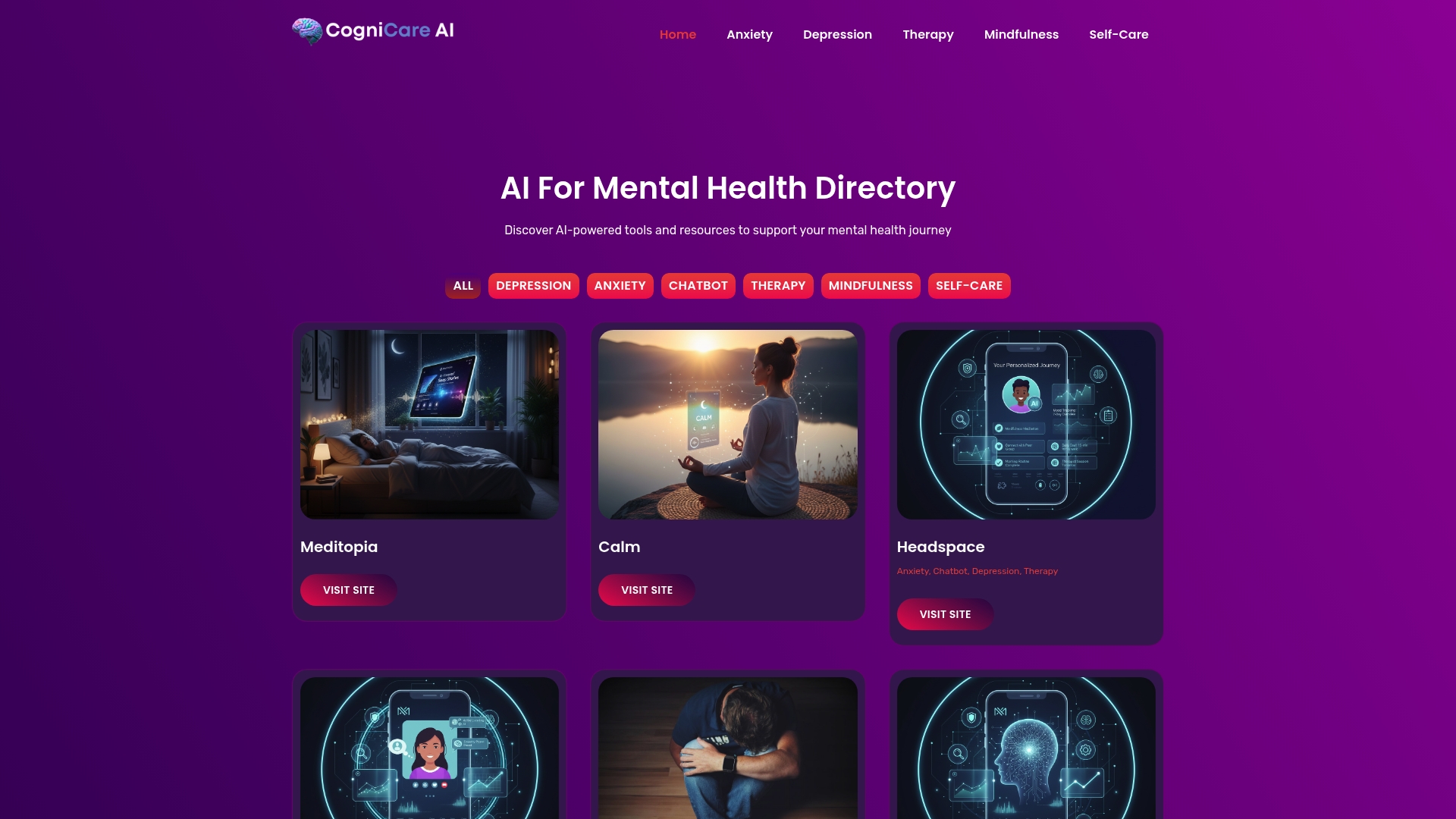
If you’re exploring psyhelp.info substitutes and want something that goes beyond a single app or a single therapist match, Cognicareai’s directory gives you a broader toolkit. You can also explore the online mental health resource categories guide to understand how different platform types fit different stages of mental health support.
Key Takeaways
The most effective approach to finding a psyhelp.info alternative is matching the service type to your actual need: crisis lines for immediate distress, referral services for finding local care, licensed platforms for ongoing therapy, and AI-powered directories for personalized self-guided support.
| Point | Details |
|---|---|
| Match service to need | Crisis lines, referral services, therapy platforms, and AI tools each serve a different purpose. |
| Verify credentials | Confirm therapist licensure in your state before paying for any subscription platform. |
| Free resources exist | The 988 Lifeline and SAMHSA’s helpline are free, confidential, and available 24/7 in English and Spanish. |
| Sliding-scale care is accessible | SAMHSA connects underinsured individuals to income-adjusted programs, not only those fully uninsured. |
| AI tools add a personalization layer | Cognicareai curates AI-powered tools that adapt to your specific mental health goals and challenges. |