
A natural language therapy chatbot is defined as a conversational AI system that combines natural language processing (NLP) with clinical safety frameworks to deliver structured mental health support. The industry standard term for the underlying technology is “NLP-enabled conversational agent,” though “therapy chatbot” has become the common shorthand. A proper natural language therapy chatbot setup requires three non-negotiable layers: a compliant language model, a clinical design process, and an independent safety classifier. CBT-based NLP therapy agents show a small to moderate effect in reducing depressive symptoms across 15 randomized controlled trials with 1,737 participants. That evidence base justifies the investment, but it also sets the bar for what responsible implementation looks like.
What does a natural language therapy chatbot setup require?
Every successful setup starts with the right infrastructure before a single line of code is written. The three core components are a HIPAA-compliant language model, a separate safety classifier, and an encrypted database for protected health information (PHI). Skipping any one of these is not a shortcut. It is a liability.
HIPAA-compliant data handling requires encrypted data storage, access controls, a Business Associate Agreement (BAA) with your model provider, and full audit logging. A BAA is a legal contract that binds your AI vendor to the same privacy standards your organization follows. Without it, you cannot legally process PHI.

Clinical oversight is equally non-negotiable before setup begins. Licensed clinicians must design and approve conversational flows, refusal language, and safety thresholds. A developer alone cannot make those calls. Bring a licensed counselor or clinical psychologist into the project from day one.
| Component | Purpose | Example |
|---|---|---|
| HIPAA-compliant LLM | Processes user messages without training on PHI | GPT-4o under a no-train BAA |
| Safety classifier | Detects crisis signals on every message | Separate fine-tuned model |
| Encrypted PHI database | Stores session data securely | AES-256 encrypted storage |
| Orchestration layer | Routes messages between components | Deterministic rule engine |
| Clinical review protocol | Validates flows and refusal language | Licensed clinician sign-off |
Pro Tip: Request a no-train endpoint from your LLM provider in writing before signing any contract. Some providers default to using your data for model improvement, which violates HIPAA.
A clinical-grade AI therapy chatbot MVP typically costs between $30,000 and $120,000 and takes 4–10 weeks to build. That range reflects the cost of building safety and clinical review layers, not just the conversational interface. Budget accordingly.
How do you build the technical architecture step by step?
The recommended tech stack for a safe therapy chatbot uses a strong general LLM under a no-train BAA, a separate safety model, deterministic orchestration code, and a HIPAA-ready database. Each layer has a specific job. None of them overlap.
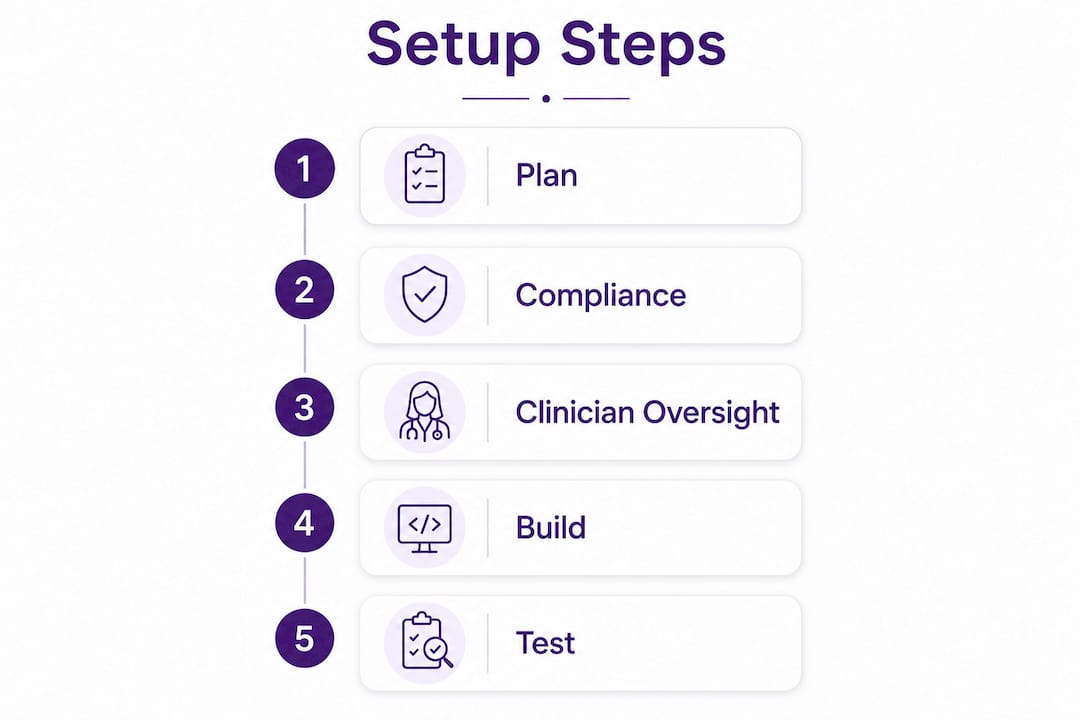
Cognitive layer architectures integrated with general LLMs significantly improve clinical outcomes over standalone models across approximately 10 weeks of use. A standalone GPT-4o or similar model is not enough. You need a specialized reasoning layer that structures therapeutic conversations around evidence-based frameworks like CBT.
The build process follows a clear sequence:
- Define therapeutic scope. Decide which conditions and use cases the chatbot will address. Anxiety management and mood tracking are common starting points.
- Select and contract your LLM. Choose a model with a no-train BAA. GPT-4o outperforms smaller open-source models in lexical diversity and response clarity, though model selection alone does not determine safety outcomes.
- Build the safety classifier. Train or fine-tune a separate model to detect distress signals, suicidal ideation, and crisis language on every incoming message.
- Design the orchestration layer. Write deterministic code that routes messages: safety classifier runs first, then the cognitive layer, then the LLM response generator.
- Design therapeutic conversation flows. Work with a licensed clinician to map structured CBT-based dialog trees. Avoid purely open-ended chat.
- Integrate with your delivery platform. Deploy on web, mobile, or a messaging platform. Each channel has different session management and notification requirements.
- Run security hardening. Apply AES-256 encryption, role-based access controls, and audit logging before any user testing.
- Conduct clinical review and red-teaming. Have clinicians test adversarial inputs and edge cases before launch.
Pro Tip: Build your chatbot architecture so the safety classifier always runs before the LLM generates a response. Reversing that order is the single most common technical mistake in therapy chatbot deployments.
The orchestration layer is where most teams underinvest. Deterministic code, not the LLM, must make the final call on whether a message triggers escalation. The LLM is a language generator. It is not a clinical decision-maker.
How do you implement safety and crisis detection that actually works?
The most critical component in any therapy chatbot is an independent safety layer that performs crisis detection on every message and enforces deterministic escalation protocols. This layer runs separately from the conversational model. It does not share context or state with the LLM.
Independent safety classifiers with deterministic escalation are the standard for preventing unsafe chatbot responses. “Deterministic” means the escalation rule fires every time a threshold is met, without exception. The LLM does not get a vote on whether to escalate a crisis.
A graded threshold system works best: low-distress signals trigger supportive responses and check-ins, moderate signals prompt the chatbot to offer human support resources, and acute risk signals immediately route the person to a crisis line or on-call clinician. The chatbot never attempts to manage acute suicidal ideation on its own.
Clinical involvement in safety design goes beyond writing prompts. Clinicians define the exact language the chatbot uses when it refuses a request, the specific phrases that trigger escalation, and the wording of crisis resource referrals. That language must be reviewed and approved before deployment.
Common safety pitfalls to avoid:
- Relying on system prompts alone for safety. A system prompt can be bypassed. A separate classifier cannot.
- Letting the LLM decide on crises. Allowing the LLM to manage crisis decisions produces inconsistent and sometimes dangerous outcomes.
- Skipping red-teaming. Adversarial testing by clinicians and ethicists catches failure modes that standard QA misses.
- Neglecting ongoing clinical review. A chatbot that was safe at launch can drift as user behavior evolves.
- Ignoring cultural and linguistic variation. Crisis language varies across cultures. A classifier trained on one demographic may miss signals from another.
Pro Tip: Schedule a formal clinical review of chatbot transcripts every 30 days for the first six months post-launch. Set a calendar reminder now. Most teams let this slip, and that is when safety gaps appear.
The most ethical NLP therapy applications augment clinical assessment with systematic feedback rather than replacing clinical judgment. That framing should guide every safety decision you make.
What are the most common challenges after deployment?
Post-deployment problems fall into three categories: model behavior, user engagement, and data governance. Each requires a different fix.
Model hallucinations are the most visible issue. An LLM occasionally generates confident-sounding responses that are clinically inaccurate. The fix is not a better prompt. The fix is a cognitive reasoning layer that constrains the LLM’s output to evidence-based therapeutic frameworks. Specialized cognitive reasoning layers significantly improve therapeutic quality over standalone general LLMs.
User disengagement is the second major challenge. People who start using a therapy chatbot often drop off within the first two weeks. Short session lengths, clear progress indicators, and personalized check-in messages improve retention. Avoid making the chatbot feel like a form. It should feel like a conversation.
Data governance lapses are the most legally dangerous issue. Common violations include storing session transcripts beyond the consented retention period, failing to honor deletion requests, and using session data for model fine-tuning without explicit consent. Build data retention and deletion workflows before launch, not after.
Best practices for ongoing maintenance:
- Review a random sample of transcripts weekly with a licensed clinician.
- Track response relevance scores and flag sessions where the chatbot gave off-topic answers.
- Update refusal language and escalation thresholds quarterly based on clinical review findings.
- Obtain fresh informed consent from people whenever you update the chatbot’s scope or data practices.
- Log every model update with a version number and clinical sign-off date.
Pro Tip: Use conversational AI support frameworks that separate user-facing features from the underlying model. That separation lets you update the LLM without redeploying the entire application.
Key Takeaways
A safe and effective therapy chatbot requires a layered architecture, licensed clinical oversight, and deterministic safety protocols working together from the first day of design.
| Point | Details |
|---|---|
| Clinical oversight from day one | Licensed clinicians must design flows, refusal language, and safety thresholds before any code is written. |
| Independent safety classifier | Run a separate crisis detection model on every message before the LLM generates a response. |
| HIPAA compliance is structural | Encrypted PHI storage, a BAA with your LLM provider, and audit logging are legal requirements, not optional features. |
| Cognitive layers improve outcomes | Adding a specialized reasoning layer to a general LLM significantly improves therapeutic quality over 10 weeks. |
| Ongoing review prevents drift | Monthly transcript reviews and quarterly threshold updates keep the chatbot safe after launch. |
Why I think most teams get therapy chatbot setup backwards
Most teams I have seen start with the language model and work backward to safety. That is the wrong order. The safety classifier and clinical protocols should be fully designed before you write a single prompt for the conversational layer. The LLM is the last piece, not the first.
The technology is genuinely ready. GPT-4o and similar models produce fluent, contextually appropriate responses. But fluency is not therapy. A chatbot that sounds empathetic and gives clinically wrong guidance is more dangerous than one that sounds robotic and stays within its lane. The gap between “sounds good” and “is safe” is where most deployments fail.
Multidisciplinary teams consistently outperform developer-only teams in this space. When a licensed psychologist, a software engineer, and a data privacy attorney sit in the same room from week one, the product that comes out is fundamentally different. The psychologist catches clinical errors the engineer cannot see. The attorney catches compliance gaps the psychologist would not know to look for.
My honest recommendation: treat the clinical validation process as a product feature, not a compliance checkbox. Build it into your sprint cycles. Budget for it. Measure it. The teams that do this ship products that people actually trust, and trust is the only metric that matters in mental health technology.
— dushyantha
Cognicareai’s AI mental health tools for your next step
Cognicareai curates a directory of AI-powered mental health tools built for people who want real support, not generic wellness content. Whether you are building a chatbot for your organization or looking for a ready-to-use solution, the platform connects you with AI mental health tools that meet clinical and compliance standards.
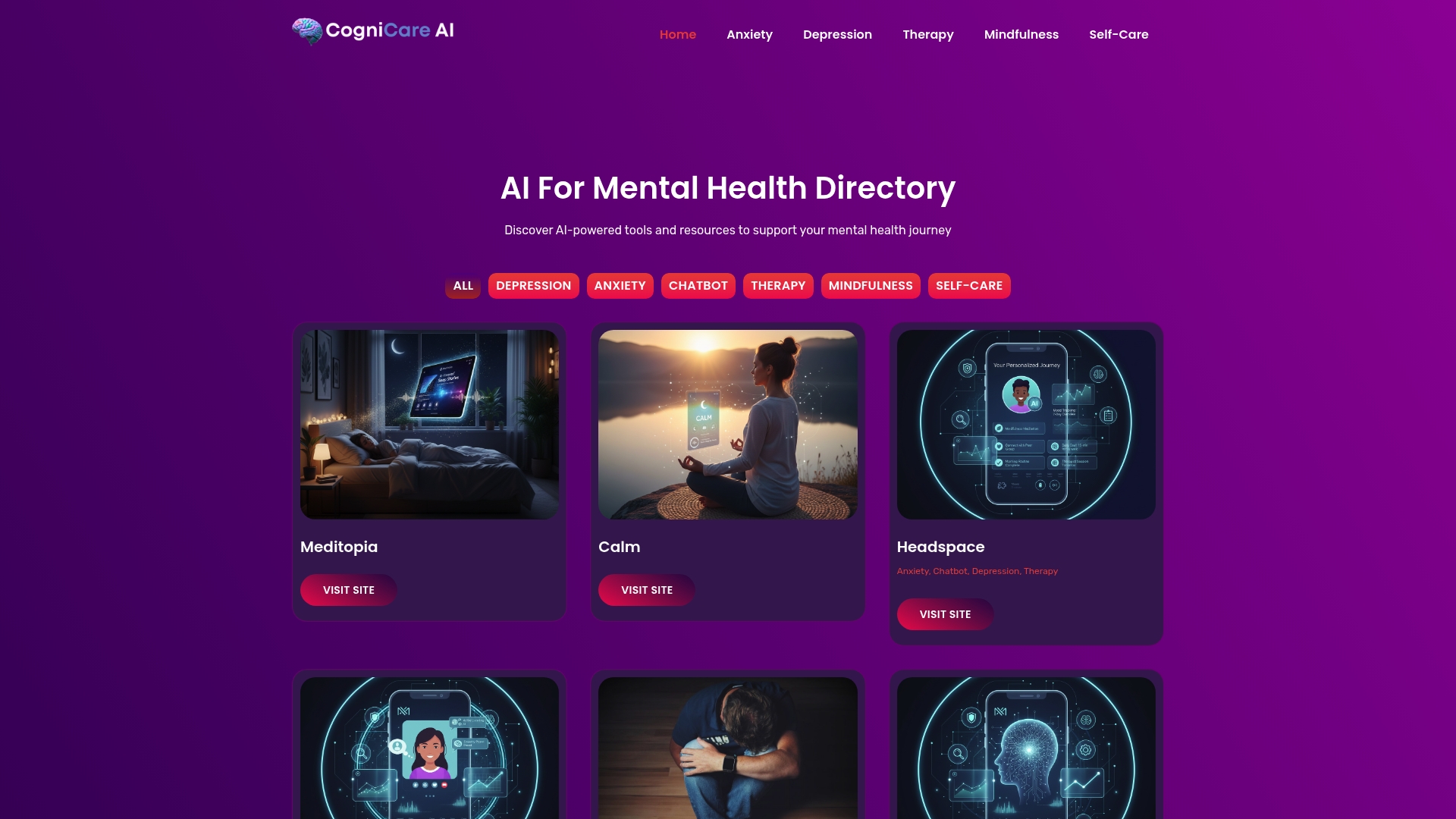
The Cognicareai directory includes specialized therapy applications covering anxiety, depression, and structured CBT-based programs. Each tool is evaluated for safety, personalization, and evidence-based design. If you are at the research stage, the platform’s 2026 guide to AI mental health tools gives you a clear framework for comparing options without the noise.
FAQ
What is a natural language therapy chatbot?
A natural language therapy chatbot is an NLP-enabled conversational agent designed to deliver structured mental health support using evidence-based frameworks like CBT. It differs from a general chatbot by requiring clinical oversight, safety classifiers, and HIPAA-compliant data handling.
How long does AI therapy chatbot installation take?
A clinical-grade therapy chatbot MVP typically takes 4–10 weeks to build, with costs ranging from $30,000 to $120,000. The timeline reflects the complexity of safety layers and clinical review, not just the conversational interface.
Do therapy chatbots need HIPAA compliance?
Yes. Any chatbot that processes protected health information requires HIPAA-compliant data storage, access controls, audit logging, and a Business Associate Agreement with the LLM provider.
Can a general LLM like GPT-4o run a therapy chatbot on its own?
No. Standalone general LLMs show unproven effectiveness in therapy without a specialized cognitive reasoning layer and an independent safety classifier. The LLM handles language generation; separate systems handle clinical reasoning and crisis detection.
What is the most important safety feature in a therapy chatbot?
The independent safety classifier is the most critical component. It runs on every incoming message, detects crisis signals, and triggers deterministic escalation protocols without relying on the LLM to make that judgment.