
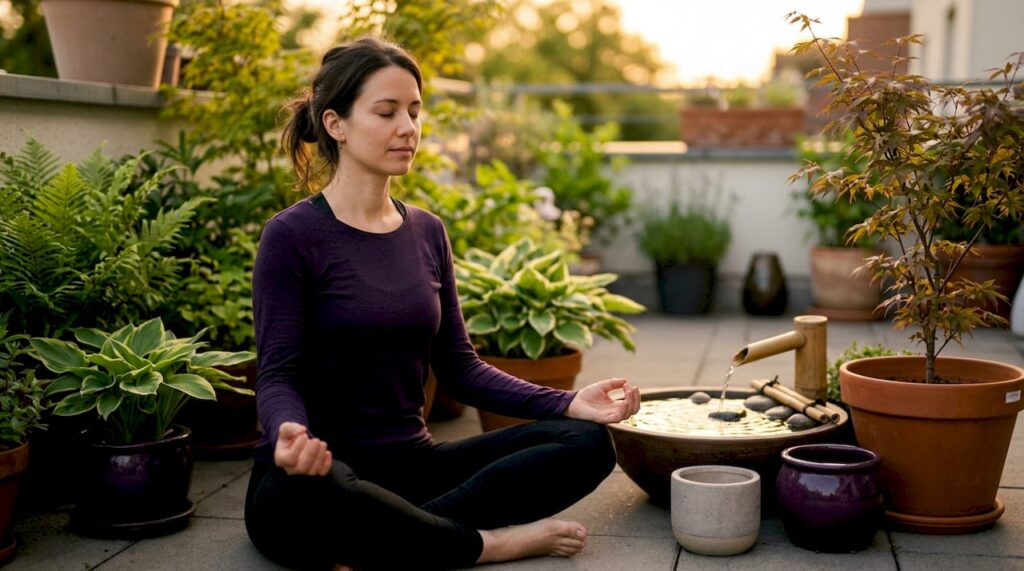
Five-minute mindfulness is defined as brief, intentional moments of present-moment awareness that reset the nervous system and reduce stress quickly. Known in clinical research as micro-mindfulness, this practice delivers measurable physiological benefits without requiring long meditation sessions or prior experience. Brief mindfulness interventions produce positive outcomes in 79 of 85 reviewed studies, confirming that short, consistent practice works. That finding matters because it removes the most common excuse people give for skipping mindfulness altogether: not having enough time.
How five-minute mindfulness works in the body and brain
Five-minute mindfulness works by activating the parasympathetic nervous system through vagus nerve stimulation. The vagus nerve runs from the brainstem through the chest and abdomen, and deliberate slow breathing triggers it directly. Brief mindfulness sessions of 1–5 minutes lower cortisol levels and heart rate within minutes of starting. That drop in cortisol is the body physically exiting its stress response.

The second mechanism is cognitive. Stress accumulates partly because the mind carries “attention residue” from one task into the next. Micro-mindfulness interrupts this cycle by clearing that residue, which lowers emotional exhaustion and improves how well you transition between tasks. UC Berkeley’s Greater Good Science Center reviewed this process and confirmed it as a core reason brief practices reduce burnout.
The long-term effect is equally important. Frequent brief nervous system interruptions retrain the brain to default to a calmer baseline over time. Think of it like physical therapy for your stress response. Each short session builds resilience, so the next stressful moment triggers a smaller reaction.
Key physiological changes during a five-minute session:
- Heart rate drops as slow breathing activates the vagus nerve
- Cortisol decreases, reducing the chemical signal of stress
- Heart rate variability improves, a marker of nervous system resilience
- Attention residue clears, improving cognitive transitions between tasks
What are the most effective five-minute mindfulness techniques?
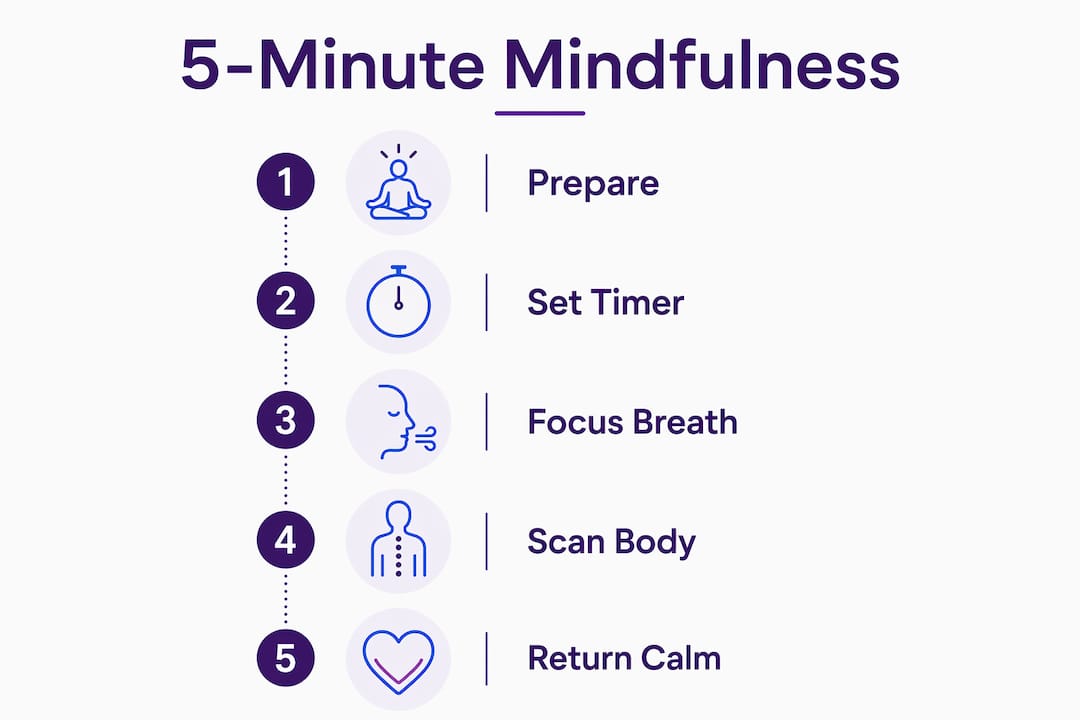
The best five-minute techniques share one quality: they give the mind a single, concrete anchor. Without an anchor, the mind wanders and the session loses its reset effect. The four methods below are research-supported and practical for people with no prior meditation experience.
1. Box breathing
Inhale for four counts, hold for four, exhale for four, hold for four. Repeat this cycle for five minutes. Box breathing is used by military personnel and emergency responders because it produces rapid nervous system calm. The structured count keeps the mind occupied, which prevents rumination.
2. Physiological sigh (cyclic sighing)
Take a normal inhale, then add a second short inhale through the nose before a long, slow exhale. A 2023 randomized controlled trial found that five minutes of daily cyclic sighing improved positive affect and significantly lowered respiratory and heart rates. This technique works faster than standard breath awareness because the double inhale fully inflates the lungs and maximizes the exhale’s calming effect.
3. Body scan snapshot
Close your eyes and move attention slowly from the top of your head to your feet. Notice tension without trying to fix it. This takes about three to five minutes and works well after long periods of sitting. The goal is awareness, not relaxation. Relaxation often follows, but it is a side effect, not the target.
4. Sensory awareness check (the 5-4-3-2-1 method)
Name five things you can see, four you can touch, three you can hear, two you can smell, and one you can taste. This technique grounds attention in the present moment by engaging all five senses. It is particularly effective during anxiety spikes because it interrupts the mental loop of worry with concrete sensory data.
Pro Tip: Set a soft timer with a gentle chime before starting any session. Using a soft timer lets you stay fully engaged without the anxiety of watching the clock.
Integrating these techniques requires anchor points. Pair a session with an existing habit: before your first cup of coffee, before opening email, or after a commute. Anchor points remove the decision of when to practice, which is the most common reason people skip sessions.
How does five-minute mindfulness compare to longer sessions?
The comparison between short and long meditation sessions surprises most people. A study with 2,239 participants across 37 sites found that four 5-minute sessions were as effective as, or superior to, four 20-minute sessions for reducing stress and improving mindfulness scores. That is not a fringe finding. It reflects a broader principle in learning science called distributed practice: multiple short sessions outperform one long session for both stress interruption and attention retention.
The table below compares the two formats across practical dimensions.
| Factor | Five-minute sessions | Twenty-minute sessions |
|---|---|---|
| Stress reduction | Comparable or better in studies | Effective but not superior |
| Consistency | Higher due to low time barrier | Lower; often skipped when busy |
| Nervous system reset | Rapid, within minutes | Gradual, builds over session |
| Depth of practice | Sufficient for most people | Beneficial for advanced practitioners |
| Daily feasibility | High for busy schedules | Moderate; requires dedicated time |
Consistency matters more than duration. Short mindfulness practices can reduce stress by nearly 30% in people who practice frequently. That reduction comes from repetition, not from any single long session. Experienced meditators do benefit from longer sits for depth of insight, but for stress relief and emotional regulation, five minutes practiced daily outperforms twenty minutes practiced occasionally.
Traditional long meditation formats fail many people because they are impractical. Brief interventions are scientifically validated alternatives, not compromises. Treating them as “less than” misreads the evidence.
How to build a sustainable five-minute mindfulness habit
Habit formation is the real challenge. The technique matters less than whether you actually do it. The strategies below address the specific reasons people abandon mindfulness practices within the first two weeks.
Anchor the practice to an existing habit. Habit stacking means attaching a new behavior to one you already do automatically. “Before I open my email, I do five minutes of box breathing” is more reliable than “I will meditate sometime in the morning.” The existing habit acts as a trigger.
Drop the performance mindset. The goal of a five-minute session is a reset, not a perfect meditation. Micro-mindfulness creates a pause between a stress trigger and your reaction. You are not trying to empty your mind. You are training the gap between stimulus and response to be slightly wider each time.
Common pitfalls and how to avoid them:
- Skipping because you “don’t have time”: Schedule two anchor points per day instead of one. If you miss the morning slot, the afternoon slot still counts.
- Judging the session as bad: Noticing that your mind wandered is the practice working. Returning attention is the repetition that builds the skill.
- Expecting immediate calm: Some sessions feel neutral. The benefit accumulates across days and weeks, not within a single session.
- Using the wrong technique for your state: High anxiety responds better to physiological sighing. Low energy responds better to a sensory awareness check. Match the tool to the moment.
Pro Tip: For self-care routines built around busy schedules, treat your mindfulness anchor point as a non-negotiable two-minute minimum. Two minutes always beats zero minutes.
Micro self-care practices show that small, repeated habits produce larger wellbeing gains than occasional intensive efforts. Five minutes of daily mindfulness fits that pattern exactly.
Key Takeaways
Five-minute mindfulness works because consistency and nervous system activation matter more than session length, making brief daily practice the most practical path to lasting stress relief.
| Point | Details |
|---|---|
| Physiological mechanism | Brief sessions activate the vagus nerve, lowering cortisol and heart rate within minutes. |
| Consistency beats duration | Four 5-minute sessions matched or outperformed four 20-minute sessions in a 2,239-person study. |
| Best techniques | Box breathing, physiological sighing, body scans, and sensory awareness checks each anchor attention effectively. |
| Habit stacking works | Attaching sessions to existing habits like morning coffee dramatically improves follow-through. |
| Long-term effect | Frequent brief practices retrain the nervous system to default to a calmer baseline over time. |
Why I stopped waiting for the “right” time to meditate
I spent two years believing that mindfulness only counted if I had 20 uninterrupted minutes, a quiet room, and the right mental state. That belief meant I practiced maybe twice a month. The research changed my thinking completely, but what changed my behavior was a single experiment: five minutes of box breathing before opening my laptop every morning for two weeks.
The results were not dramatic. They were quiet and cumulative. By day ten, I noticed I was reacting to stressful emails differently. Not calmly, exactly, but with a slightly longer pause before responding. That pause is the whole point. Mindfulness-based cognitive therapy research calls it the “observing gap,” and it is the mechanism behind most of the emotional regulation benefits people attribute to meditation.
The skepticism I hear most often is “five minutes can’t really do anything.” That skepticism is understandable and wrong. The evidence is not ambiguous. What holds people back is not the science. It is the cultural belief that effective self-care must be time-consuming or difficult. Five minutes of deliberate attention is neither glamorous nor complicated. That is exactly why it works for people who have tried and abandoned longer practices.
Start with one anchor point. Do it badly if you have to. The nervous system does not grade your form.
— dushyantha
AI tools that support your mindfulness practice
Mindfulness is most sustainable when you have the right support around it. Cognicareai curates a directory of AI-powered mental health tools that help people build and maintain practices like five-minute mindfulness, even on the most demanding days.
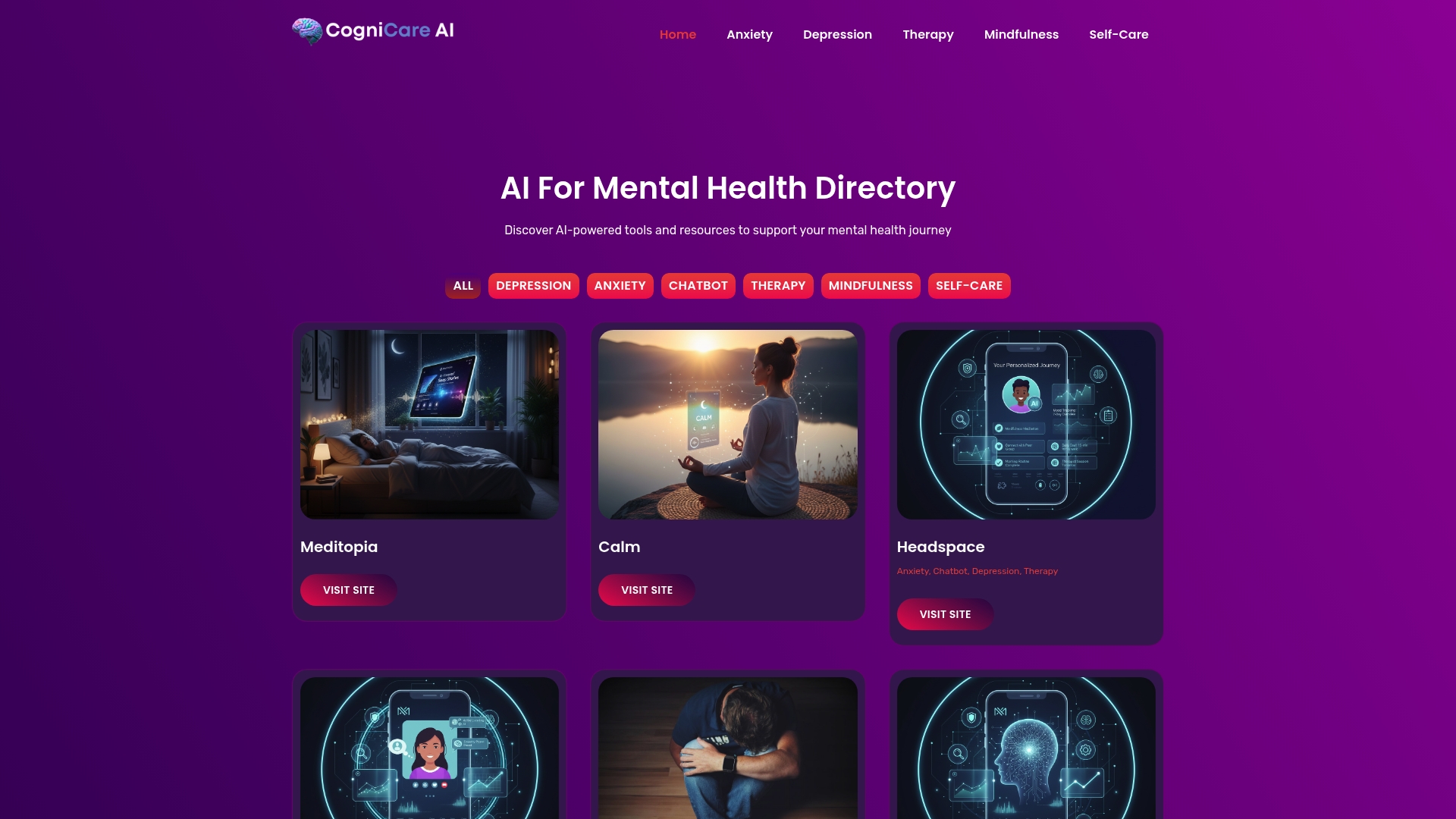
These tools include AI-guided breathing apps, personalized self-care programs, and mental wellness chatbots that adapt to your schedule and emotional state. They are built for people who need practical support, not another commitment that requires a perfect routine. Cognicareai also covers AI-enhanced mindfulness apps that make it easier to find the right technique for your specific needs, whether that is anxiety relief, focus, or sleep.
FAQ
What is five-minute mindfulness?
Five-minute mindfulness is a brief, intentional practice of present-moment awareness designed to activate the parasympathetic nervous system and reduce stress. It is also called micro-mindfulness in clinical research.
How quickly does five-minute mindfulness reduce stress?
Brief mindfulness sessions of 1–5 minutes begin lowering cortisol and heart rate within minutes of starting, through vagus nerve activation.
Is five minutes of mindfulness enough to make a difference?
A large study with 2,239 participants found that four 5-minute sessions were as effective as or better than four 20-minute sessions for stress reduction. Consistency matters more than duration.
What is the best five-minute mindfulness technique for anxiety?
The physiological sigh (cyclic sighing) is particularly effective for anxiety. A 2023 randomized controlled trial showed it significantly improved positive affect and lowered heart and respiratory rates in just five minutes daily.
How do I make five-minute mindfulness a daily habit?
Attach your session to an existing daily habit, such as before coffee or before opening email. This habit stacking approach removes the decision of when to practice and dramatically improves consistency.
Recommended
- Self-Care Routines for Busy People: Balance Work and Mental Health – CogniCare AI
- Mental Health Lunch Break Routine for Busy Professionals
- Unfolding Now: Neuroscience, Mindfulness, And Lived Experience – CogniCare AI
- Mindfulness Meditation for Beginners — Reduce Anxiety and Improve Focus – CogniCare AI