

Depression peer support platforms fall into four main types: moderated online forums, videoconferencing groups, mobile apps, and traditional text or call services. Each format serves a different need, and choosing the wrong one can slow your progress. Research from 2026 shows these four depression peer support platform types account for the vast majority of digital mental health peer delivery models. Understanding what separates them, including cost, structure, and clinical effectiveness, helps you find the right fit faster. Cognicareai covers the full picture of online mental health resources to help you make that call with confidence.
1. What are moderated online forums for depression support?
Moderated online forums are the most common peer support format. Studies covering 44 trials show they account for 50% of all digital peer support delivery for depression. That dominance reflects their accessibility: you can post at any hour, read others’ experiences, and respond at your own pace.
These forums typically include:
- Threaded discussion boards where members post about symptoms, coping strategies, and daily struggles
- Trained moderators who enforce community rules and flag crisis situations
- Resource libraries with links to professional help and self-care guides
- Anonymous or pseudonymous profiles that lower the barrier to honest sharing
The safety benefits are real. Moderation removes harmful content and keeps conversations from spiraling into negativity. That said, excessive moderation can strip out the raw emotional honesty that makes peer support feel genuine. When every post gets sanitized, the connection feels less human.
Forums work best for people who prefer written communication, process emotions through writing, or live in time zones that make live group sessions impractical. They are a strong starting point for anyone new to peer support who wants low-pressure engagement.

Pro Tip: Look for forums that distinguish between peer support threads and crisis threads. That separation signals a well-run community with clear safety protocols.
2. How does videoconferencing facilitate peer support for depression?
Videoconferencing is the second most common format, accounting for 25% of digital peer support delivery. It replicates the face-to-face group experience without requiring anyone to leave home. That combination of visual connection and geographic flexibility makes it a strong option for people who find text-based forums too impersonal.
Groups typically meet weekly or biweekly via platforms like Zoom or Google Meet, with sessions lasting 60 to 90 minutes. A trained peer facilitator guides the conversation using a structured agenda. That structure matters clinically.
Key advantages of videoconferencing peer support include:
- Real-time emotional feedback through facial expressions and tone of voice
- Structured session formats that keep conversations focused and productive
- Scheduled accountability that encourages consistent attendance
- Smaller group sizes (usually 6 to 12 people) that allow deeper sharing
Peer-delivered psychotherapies delivered by trained peers show the highest clinical effect sizes for reducing depressive symptoms. Videoconferencing is the primary vehicle for this format. Unstructured discussion groups reduce isolation but produce weaker symptom reduction. The structure built into videoconferencing sessions is what drives the clinical difference.
The main limitation is scheduling. You need reliable internet, a private space, and availability at a set time. For people with unpredictable schedules or social anxiety around cameras, this format creates friction.
3. What role do mobile apps play in depression peer support?
Mobile apps represent roughly 9% of peer support delivery models for depression. That share is smaller than forums or video groups, but apps offer something the others cannot: support at the exact moment you need it, wherever you are.
App-based peer support features typically include:
- On-demand chat with trained peer supporters or community members
- Anonymous profiles that protect privacy more effectively than video or voice formats
- Personalized matching that connects you with peers who share similar experiences
- Mood tracking tools that give context to your conversations
Cost varies widely. Volunteer-led platforms are typically free, while subscription-based apps with professional oversight range from $40 to $100 per month. That range puts app-based peer support well below the cost of traditional therapy, making it accessible for people who cannot afford clinical care.
Apps work best as a supplement to other support, not a standalone solution. The asynchronous nature means responses are not always immediate, and the lack of face-to-face contact limits the depth of connection. Still, for someone managing depression while commuting, working, or traveling, an app fills gaps that forums and video groups cannot.
Pro Tip: Before downloading any peer support app, check whether it employs trained peer specialists or relies entirely on unvetted volunteers. That distinction directly affects the quality and safety of the support you receive.
4. In what ways do text and call services provide peer support?
Text and call services account for 16% of peer support delivery for depression. They are the oldest digital format in this group and remain relevant because they require no app download, no account creation, and no internet connection beyond basic cellular service.
These services typically operate through:
- Staffed helplines with trained peer supporters available during set hours
- Text-based crisis lines that connect you with a live person within minutes
- Scheduled callback programs where a peer supporter calls you at an agreed time
- Warm referral services that connect callers to local mental health resources
The immediacy is the main draw. When depression hits hard at 2:00 AM and you do not want to post publicly or wait for a video session, a text line delivers human contact fast. The low-tech barrier also matters for older adults or people in rural areas with limited smartphone access.
The limitations are real. Response times vary by service and time of day. Anonymity is generally strong, but the lack of visual cues makes it harder for supporters to gauge severity. Text and call services work best as an entry point or a crisis bridge, not as a long-term peer community.
5. How do cost, effectiveness, and safety compare across platform types?
Choosing between peer support formats requires weighing three factors: what you can afford, what the research says works, and how safe the environment is.
Cost ranges from free to roughly $100 per month. Volunteer-led forums and text lines are almost always free. Subscription-based platforms with professional oversight cost $40 to $100 monthly. That is still a fraction of therapy costs, which average far higher for weekly sessions.
Effectiveness depends heavily on structure. Trained peer specialists leading structured group interventions produce the largest clinical improvements in depressive symptoms. Unstructured community groups reduce isolation but show weaker symptom reduction. The format matters less than whether the peer facilitator has real training and follows a structured approach.
Safety varies most on decentralized platforms. Poorly moderated communities on networks like Discord can expose you to harmful content or reinforce negative thinking. Well-moderated environments with clear rules and active oversight consistently produce better outcomes.
| Feature | Moderated forums | Videoconferencing | Mobile apps | Text/call services |
|---|---|---|---|---|
| Cost | Free to low | Free to moderate | Free to $100/month | Usually free |
| Effectiveness | Moderate | Highest (structured) | Moderate | Moderate |
| Anonymity | High | Low | High | High |
| Accessibility | 24/7 | Scheduled only | 24/7 | Hours vary |
| Safety level | Moderate to high | High | Varies | High |
Pro Tip: Regardless of format, look for platforms that have a documented crisis protocol. A good peer support community knows exactly what to do when someone is in danger, and that protocol should be visible before you join.
Key Takeaways
Peer-delivered psychotherapies in structured videoconferencing groups produce the strongest clinical results, but the right platform type depends on your schedule, budget, and comfort with different communication formats.
| Point | Details |
|---|---|
| Four main platform types | Forums, videoconferencing, mobile apps, and text/call services cover the full range of peer support formats. |
| Structure drives effectiveness | Trained peer facilitators using structured formats produce the highest reductions in depressive symptoms. |
| Cost is manageable | Most formats are free or cost $40 to $100 monthly, far below traditional therapy pricing. |
| Safety requires active moderation | Well-moderated platforms consistently outperform decentralized or lightly supervised communities. |
| Commitment length matters | Consistent engagement for at least 12 weeks is needed to see reliable symptom improvement. |
Why peer support works best alongside professional care
Peer support is not therapy. That distinction matters more than most people realize when they first start looking for help with depression.
What peer support does exceptionally well is provide companionship from people who have been where you are. Peers encourage professional care-seeking more effectively than clinicians alone, precisely because the endorsement comes from shared lived experience rather than clinical authority. That is a real and underappreciated function.
What peer support cannot do is replace clinical assessment, medication management, or evidence-based therapy like Cognitive Behavioral Therapy or Interpersonal Therapy. The difference between peer support and therapy is not a hierarchy. They serve different purposes. Responsible peer supporters recognize when someone needs professional intervention and guide them toward it.
The time commitment question is one I see people underestimate consistently. At least 12 weeks of engagement is needed before peer support produces consistent symptom reduction. People who drop out after three or four sessions often conclude that peer support does not work. What they experienced was not failure. It was an incomplete trial.
The platforms that work best are the ones that hold both things at once: authentic human connection and a clear pathway to professional care when the situation calls for it. That balance is harder to build than it looks, and it is the single most important thing to evaluate before committing to any community.
— dushyantha
AI-powered tools that complement your peer support plan
Peer support platforms address the community side of depression management. AI-powered tools address the personalization side, and the two work well together.
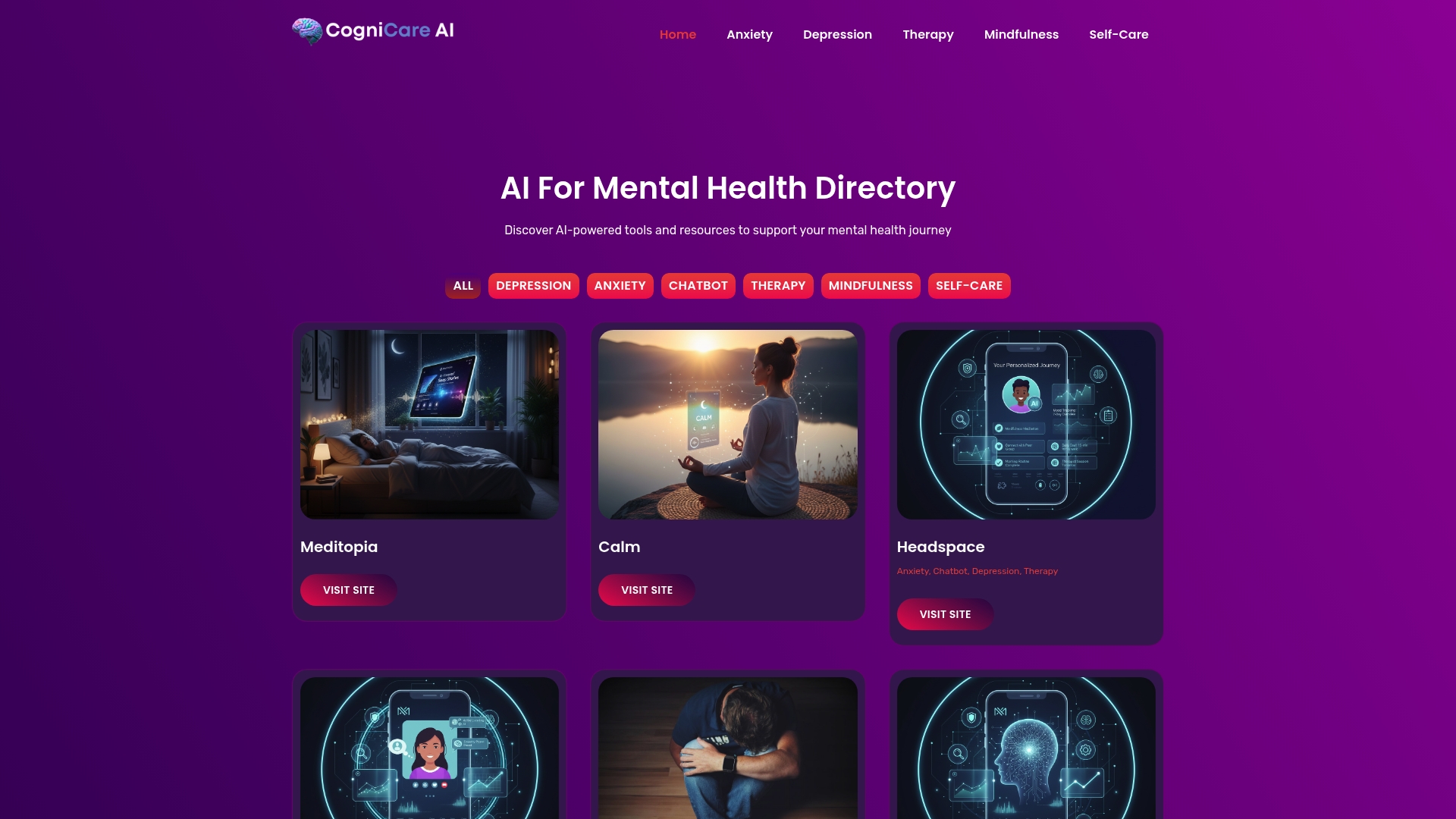
Cognicareai catalogs the leading AI mental health tools that pair with peer support to fill the gaps between sessions. These include mood-tracking apps, AI-guided mindfulness programs, and therapy chatbots that adapt to your specific patterns over time. Whether you are using a moderated forum, a video group, or a text line, adding a personalized AI tool gives you structured support between peer interactions. Cognicareai makes it straightforward to find the right combination for your situation, with resources organized by need, format, and cost.
FAQ
What are the four main depression peer support platform types?
The four main types are moderated online forums (50%), videoconferencing groups (25%), mobile apps (9%), and traditional text or call services (16%), based on a 2026 scoping review of 44 studies.
Which peer support format is most effective for reducing depression symptoms?
Structured peer-delivered psychotherapies delivered via videoconferencing by trained peer specialists show the highest clinical effect sizes for reducing depressive symptoms.
How much does peer support for depression cost?
Volunteer-led platforms are typically free, while subscription-based or professionally supported peer support costs $40 to $100 per month, well below standard therapy rates.
How long does peer support take to work for depression?
Research shows a minimum of 12 weeks of consistent engagement is needed to achieve reliable reductions in depressive symptoms from peer support programs.
Is peer support safe for people with depression?
Safety depends on moderation quality. Well-moderated platforms with clear crisis protocols are safe and beneficial. Decentralized or lightly moderated communities carry higher risk of harmful interactions.