

A mental health lunch break routine is a purposeful, work-disconnecting midday pause that combines mindful eating, breathing exercises, and sensory resets to reduce stress and restore afternoon focus. Most professionals treat lunch as a secondary task, eating at their desks while answering emails. That habit actively prevents the nervous system from shifting out of high-stress mode. Research shows 10–20 minutes of full disengagement from work tasks is the optimal window for physiological recovery. The practices in this guide are built on that evidence, not on wellness trends.
1. What is the ideal mental health lunch break routine?
The ideal mental health lunch break routine starts with a hard stop. You close your work tabs, silence your notifications, and physically leave your desk. That last part matters more than most professionals realize.

Decision fatigue and circadian lows between 1:00 PM and 3:00 PM cause the classic afternoon slump. Staying at your workstation during lunch keeps your nervous system in the same stressed state it was in all morning. Removing yourself from the sightline of your work, even briefly, is a zero-cost reset that actually works.
The structure of an effective break looks like this:
- Leave your desk. Go to a break room, outdoor space, or any area not associated with work tasks.
- Silence all notifications. Put your phone face down or on Do Not Disturb for the duration.
- Take three slow breaths before eating. This signals the parasympathetic nervous system to activate.
- Eat without screens for at least 15 minutes. A screen-free eating minimum of 15 minutes is the standard recommended for full restoration.
- Return on your own terms. Do not cut the break short because of guilt or habit.
Pro Tip: Block your lunch break as a recurring calendar event with a title like “Focus Recovery.” Treating it as a professional appointment, not a luxury, is what makes it stick.
2. How can mindful eating improve your mental health during lunch?
Mindful eating is the practice of giving full attention to your food, your body, and the act of eating itself. It is the opposite of desk lunches eaten on autopilot. For professionals, it is also one of the fastest ways to reduce stress hormones during the workday.
The mechanics are simple but specific. Chewing each bite 20–30 times slows the pace of eating and activates the parasympathetic nervous system. A 60–90 second pause halfway through your meal gives your body time to register satiety and your mind time to reset. These are not arbitrary numbers. They reflect how long the body needs to shift from a stress response into a digestive, restorative state.
Here is a simple sequence to follow:
- Sit down before you start eating. Standing while eating keeps your body in a rushed, task-oriented mode.
- Look at your food for five seconds before the first bite. This activates sensory awareness and anchors you in the present moment.
- Chew slowly and count bites when you notice yourself rushing. Aim for 20–30 chews per bite on denser foods.
- Put your utensil down halfway through the meal. Pause for 60–90 seconds. Breathe. Notice how you feel.
- Avoid all screens for the full meal. Eating while working prevents the nervous system from leaving stress mode, regardless of what you eat.
Pro Tip: If mindful eating feels forced at first, start with just the halfway pause. One 90-second stop is enough to interrupt the stress cycle and build the habit gradually.
The self-care during lunch principle here is not about eating perfectly. It is about eating consciously. That distinction makes the practice sustainable.
3. What are effective mental wellness activities for your lunch break?
Mental wellness activities during lunch do not require a gym, a meditation cushion, or 45 minutes of free time. The most effective ones fit inside a 10–20 minute window and require nothing but your attention.
Breathing exercises are the fastest reset available. The 4-7-8 technique, where you inhale for 4 counts, hold for 7, and exhale for 8, activates the vagus nerve and lowers cortisol within minutes. Three slow breaths before eating, as noted in the mindful eating sequence, also count. Brief meditation pauses as short as 30 seconds to 3 minutes stabilize attention and reduce stress hormones when practiced consistently.
Physical movement does not need to be intense to be effective. A fixed-loop walk, meaning the same short route repeated two or three times, removes decision-making from the equation and lets your mind decompress. Light desk stretches targeting the neck, shoulders, and wrists address the physical tension that builds from hours of keyboard work.
Sensory resets are underused but highly effective. Physical and sensory cues such as a specific scent, a hydration ritual, or a change in posture create a “mental container” that signals the transition from work to rest. The brain responds to these cues the same way it responds to environmental changes.
| Activity | Time needed | Setting | Intensity |
|---|---|---|---|
| 4-7-8 breathing | 2–3 minutes | Anywhere | Very low |
| Fixed-loop walk | 10–15 minutes | Outdoors or hallway | Low |
| Mindful eating pause | 1–2 minutes | Break room | Very low |
| Desk stretching | 5–7 minutes | At desk or nearby | Low |
| Short meditation | 5–10 minutes | Quiet space | Low |
The goal is not to pack every activity into one break. Pick one or two that match your energy level and workspace on any given day.
4. How to build and sustain a personalized break routine for anxiety and stress
Sustainable routines are built incrementally. Adopting one small habit change per week gives you time to find what works before adding the next layer. Trying to overhaul your entire lunch hour on day one is the fastest way to abandon the effort by day three.
The most common obstacles professionals face are predictable:
- Multitasking during lunch. Eating while working is the single biggest barrier to mental recovery. The fix is physical separation from your workstation, not willpower.
- Skipping breaks during busy periods. This is when breaks matter most. A non-negotiable calendar block protects the break from being overwritten by meetings.
- Feeling guilty for stopping. Productivity research consistently shows that short breaks improve output quality in the afternoon. The break is not a cost. It is an investment.
- Inconsistent schedules. If your lunch time shifts daily, anchor the break to a trigger instead of a clock time, such as “after my last morning meeting” rather than “at 12:30 PM.”
Pro Tip: Build your routine around your lowest-effort version first. If you can only manage three slow breaths and five minutes away from your desk, that is a real routine. Grow from there.
Adapting the routine to your environment matters too. Remote workers can use a different room or step outside. Office workers can use a stairwell, a lobby, or a nearby park. The location is less important than the act of full disengagement. Professionals who want structured guidance on setting mental health boundaries at work often find that the lunch break is the easiest boundary to establish first.
5. Comparing common lunch break practices by situation
Not every practice fits every professional or every workday. The right choice depends on your available time, your workspace, and what kind of stress you are recovering from.
| Practice | Best for | Minimum time | Requires | Limitation |
|---|---|---|---|---|
| Mindful eating | Daily use, any setting | 15 minutes | Food, no screen | Requires discipline to avoid multitasking |
| Breathing exercises | High-stress days, tight schedules | 2–3 minutes | Nothing | Easy to skip without a trigger |
| Walking | Mental fatigue, low energy | 10 minutes | Safe walking route | Weather or space dependent |
| Short meditation | Anxiety, emotional overload | 5–10 minutes | Quiet space | Harder to start without prior practice |
| Sensory reset | Transition support, habit anchoring | 1–2 minutes | Scent, water, or texture | Works best as a complement, not standalone |
Lunch break meditation of even 10 minutes or less significantly reduces stress hormones and improves attention and emotional regulation. That makes it the highest-return activity for professionals dealing with anxiety or decision fatigue. Walking is the best choice when mental fatigue is physical in nature, such as after hours of screen work. Sensory resets work best as bookends, used at the start and end of the break to signal transitions.
The most effective approach combines two practices: one that addresses the body and one that addresses the mind. Mindful eating plus three slow breaths before the meal covers both in under 20 minutes.
Key takeaways
A consistent mental health lunch break routine built on full disengagement, mindful eating, and brief sensory or breathing resets is the most efficient way for professionals to reduce afternoon stress and restore cognitive focus.
| Point | Details |
|---|---|
| Optimal break duration | 10–20 minutes of full work disengagement restores attention and reduces afternoon fatigue. |
| Mindful eating standard | Chew 20–30 times per bite and pause 60–90 seconds halfway through your meal. |
| Screen-free minimum | Eat without screens for at least 15 minutes to allow the nervous system to shift out of stress mode. |
| Calendar protection | Block lunch as a recurring appointment to prevent it from being overwritten by meetings. |
| Habit formation pace | Add one new habit per week to build a sustainable routine without burnout. |
What I’ve learned about lunch breaks that most productivity advice gets wrong
Most advice about lunch breaks focuses on what to do during them. The harder problem is actually stopping work in the first place.
I have watched professionals spend years optimizing their morning routines while eating lunch at their keyboards every single day. The irony is that the midday break has a faster, more measurable impact on afternoon performance than almost any morning ritual. The research on circadian dips and attention restoration is clear. The behavior does not follow.
The psychological barrier is guilt. Stopping feels like falling behind. But eating while working does not save time. It extends the stress state into the afternoon and degrades the quality of every task that follows. That is a net loss, not a gain.
The professionals who actually sustain a stress relief routine during lunch share one trait: they treat the break as a professional obligation, not a personal indulgence. They block it, they protect it, and they do not apologize for it. That mindset shift is more important than any specific technique.
Start with the smallest possible version. Three breaths. Five minutes away from your desk. One meal without a screen. Build from there. The routine does not need to be elaborate to work. It needs to be consistent.
— dushyantha
AI-powered tools that support your midday mental wellness
Professionals who want more structure around their midday mental wellness practices now have access to AI-powered tools that go beyond generic advice.
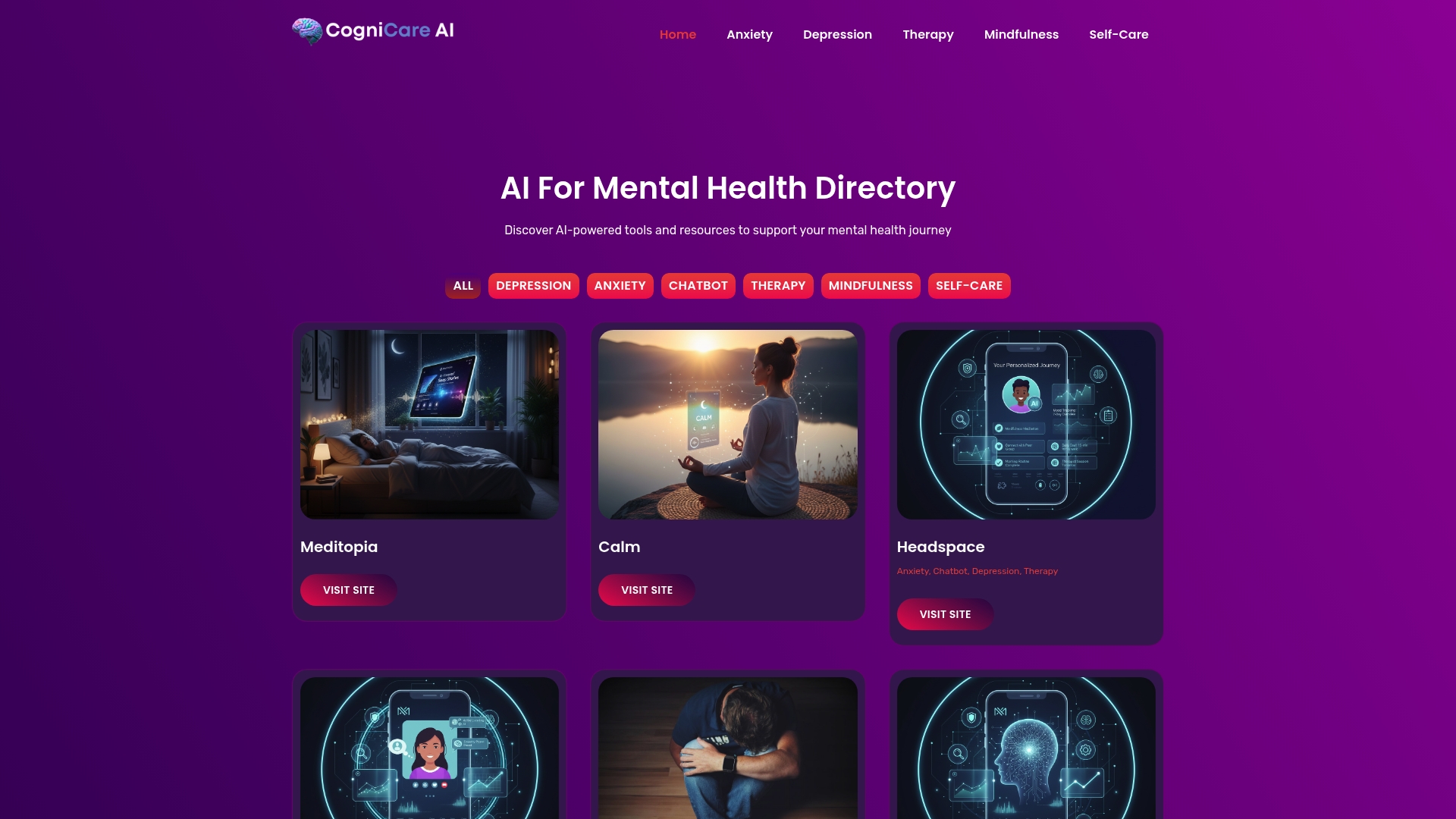
Cognicareai curates a directory of AI-powered mental health resources designed to fit real professional schedules. From personalized mindfulness recommendations to tools that track your stress patterns over time, the platform connects you with resources matched to your specific needs. The 2026 guide to AI mental health tools covers the most effective options available right now, including apps that support lunch break mindfulness and break routine tracking. If you are building a midday mental wellness practice and want tools that adapt to your progress, Cognicareai is a practical place to start.
FAQ
How long should a mental health lunch break be?
A break of 10–20 minutes with full disengagement from work tasks is the research-backed optimal duration for reducing afternoon fatigue and restoring attention.
What is the best mental wellness activity for a short lunch break?
Three slow breaths before eating combined with 15 minutes of screen-free mindful eating covers both physical and mental recovery in under 20 minutes.
Does eating at my desk really affect my mental health?
Eating while working prevents the nervous system from leaving stress mode, which means the mental and physical recovery benefits of the break do not occur regardless of what you eat.
How do I make a lunch break routine stick long-term?
Block the break as a non-negotiable calendar event and add one new habit per week. Starting small and building gradually produces more consistent results than overhauling the routine all at once.
Can a 5-minute meditation during lunch actually reduce stress?
Brief meditation pauses as short as 30 seconds to 3 minutes stabilize attention and reduce stress hormones when practiced consistently, making even very short sessions worth doing.