

Mental health tech is defined as digital technology designed to actively support mental health outcomes through evidence-based interventions, behavioral monitoring, and connection to clinical care. This is the standard industry term for what researchers and clinicians increasingly call “digital mental health.” The field spans everything from AI-powered chatbots delivering cognitive behavioral therapy (CBT) protocols to precision tools that analyze wearable data for early signs of depression. Understanding what mental health tech actually includes, and what it does not, helps you choose tools that produce real results rather than just a sense of calm.
What is mental health tech and how does it differ from wellness apps?
Mental health tech refers to digital interventions supporting prevention, behavior change, monitoring, and clinical connection rather than generic wellness. That distinction matters enormously. A relaxation timer or a breathing animation is a wellness feature. A structured program that delivers CBT exercises, tracks your mood over time, and adjusts its recommendations based on your responses is mental health technology.
The clearest way to separate the two categories is by asking one question: does this tool use health-related data to change a health outcome? Active digital health interventions differ from passive wellness apps by using that data to support prevention, behavior change, and clinical validation. Passive apps give you content. Active mental health tech responds to you.
The field breaks down into four broad categories:
- Meditation and stress-relief apps. These deliver guided audio and breathing exercises. They reduce acute stress but carry limited clinical evidence for diagnosing or treating conditions.
- Mood trackers and self-monitoring tools. These record daily emotional states and behavioral patterns, giving you and your clinician a data-rich picture over time.
- Crisis support tools. These provide immediate coping resources, safety planning, and direct links to crisis lines. They serve a triage function, not a treatment function.
- Clinical digital therapeutics. These are the most rigorous category. They deliver structured, evidence-based protocols such as CBT or dialectical behavior therapy (DBT), often with FDA clearance or peer-reviewed validation.
Pro Tip: Before downloading any mental health app, check whether it publishes peer-reviewed research on its outcomes. A credible tool cites clinical trials, not just user testimonials.
How does AI enhance mental health technology’s effectiveness?
AI is the engine behind the most effective mental health tech available today. AI-driven platforms employ adaptive feedback, gamification, and decision support to facilitate sustained behavior change. That means the tool learns from your responses and adjusts its approach, rather than delivering the same static content to every person.

The most clinically significant AI application is the therapeutic chatbot. Chatbots deliver structured CBT and DBT protocols and represent a genuine advancement in mental health technology. They can manage mild to moderate conditions effectively. They cannot replace the therapeutic relationship for severe cases, and no credible clinician claims otherwise.
A second major AI application is digital phenotyping. Behavioral signals from smartphone usage, including sleep duration, social interaction frequency, and physical activity levels, can predict depressive or manic episodes before they fully emerge. This is not passive data collection. It is predictive modeling that enables proactive care. Precision mental health tech integrates behavioral, clinical, and physiological data from wearables and smartphones to identify early risk and personalize interventions.
Key benefits AI brings to mental health technology include:
- Adaptive feedback loops that adjust content based on your progress and responses
- Early risk detection through continuous behavioral monitoring
- 24/7 availability for structured support between therapy sessions
- Reduced stigma barriers because many people engage more honestly with a digital interface than a human one
The limitation is equally clear. AI-enabled tools are most effective when complementing human providers, aiding clinical documentation, screening, and treatment monitoring. AI does not replace clinical judgment. It extends the reach of clinicians and fills gaps between appointments.
You can read more about how AI supports clinicians without replacing them in Cognicareai’s dedicated overview.
What does the clinical evidence say about mental health tech?
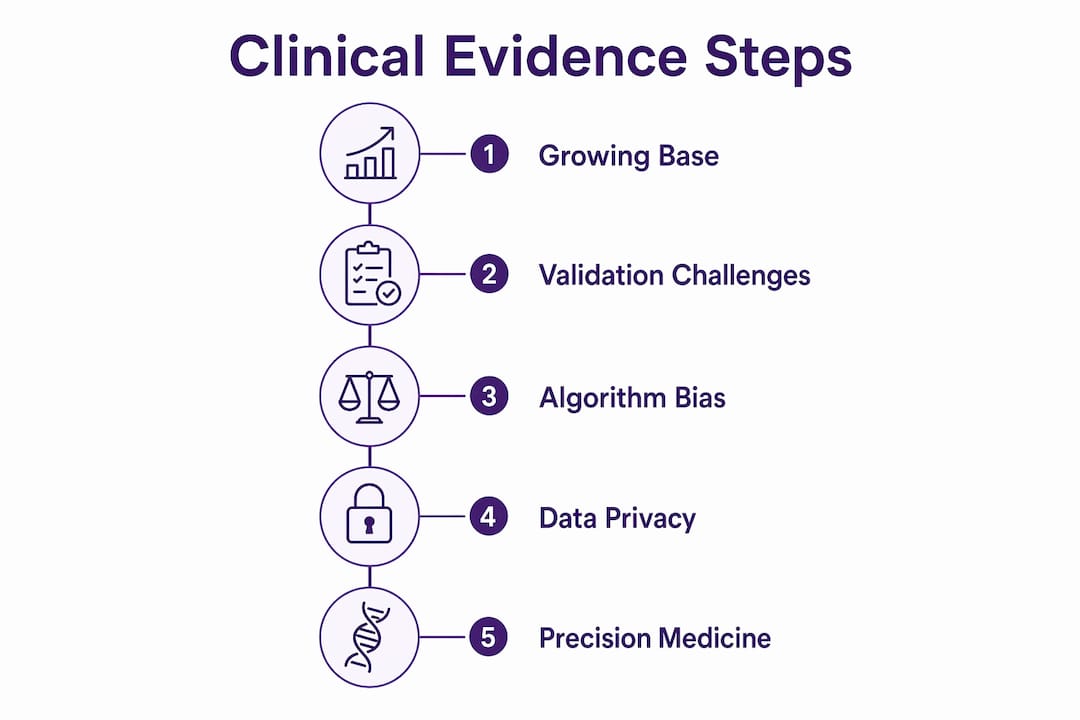
The evidence base for mental health technology is growing, but it is uneven. Digital therapeutics built on CBT protocols have the strongest research support. Mood trackers and general wellness apps have the weakest. The gap between those two ends of the spectrum is large.
Challenges include validating AI tools in longitudinal studies, managing algorithmic bias, and maintaining patient data privacy. These are not minor technical problems. Algorithmic bias means a tool trained on one demographic may perform poorly for another. Privacy concerns are real because behavioral data is among the most sensitive data a person can share.
The stepped-care model offers one of the clearest examples of mental health tech working well within a clinical system. The UK NHS pilot reduced waiting times drastically by integrating AI-powered tools for low-acuity cases. That freed human clinicians to focus on moderate to severe patients who genuinely need face-to-face care. The result was better outcomes at both ends of the severity spectrum.
Ethical considerations every person should know before using mental health tech:
- Data protection: Check whether the app complies with HIPAA (in the US) or GDPR (in Europe). Ethical and legal concerns around AI in mental health include data protection and the need for updated regulatory frameworks.
- Algorithmic bias: Ask whether the tool has been validated across diverse populations, not just the group it was originally trained on.
- Clinical validation: Prioritize tools that cite peer-reviewed trials, not just internal satisfaction surveys.
- Transparency: A credible tool discloses what data it collects, how it stores that data, and who can access it.
Precision medicine in mental health requires integration of genomics, neuroimaging, and behavioral data, with multidisciplinary collaboration for equitable access. That level of integration is still emerging, but it signals where the field is heading.
How can you use mental health technology for emotional well-being?
The most common mistake people make with mental health apps is choosing based on design rather than clinical substance. Most mental health apps lack evidence-based protocols and clinical validation, offering passive wellness content rather than active health interventions. A beautiful interface does not equal therapeutic value.
Here is a practical process for integrating mental health technology into your life effectively:
- Define your goal. Are you managing mild anxiety, tracking mood patterns, or supplementing ongoing therapy? Your goal determines which category of tool you need.
- Check for clinical validation. Search the app’s name alongside “clinical trial” or “peer-reviewed study.” If nothing appears, treat the app as a wellness product, not a therapeutic one.
- Review the privacy policy. Confirm the app does not sell behavioral data to third parties. This is non-negotiable given the sensitivity of mental health information.
- Start with one tool. Using multiple apps simultaneously creates noise. Pick one structured program and use it consistently for at least four weeks before evaluating its impact.
- Pair tech with professional care when needed. AI-driven therapeutic chatbots help manage mild anxiety by delivering structured coping strategies, but they cannot replace human therapists for moderate to severe cases. If your symptoms are persistent or worsening, contact a licensed clinician.
- Reassess monthly. Mental health needs change. A tool that helped with acute stress may not be the right fit for ongoing mood management.
Pro Tip: Look for apps that offer personalized mental health care through adaptive programs rather than fixed content libraries. Adaptive tools respond to your data. Fixed libraries do not.
Typical use cases where mental health technology delivers clear value include managing mild anxiety between therapy sessions, building consistent sleep and mood tracking habits, and accessing structured CBT exercises during high-stress periods at work or school.
Key Takeaways
Mental health technology is most effective when it delivers structured, evidence-based interventions and complements professional care rather than replacing it.
| Point | Details |
|---|---|
| Definition matters | Mental health tech uses health data to change outcomes; wellness apps deliver passive content without clinical validation. |
| AI adds real value | Adaptive feedback, digital phenotyping, and 24/7 chatbot support extend clinical reach between appointments. |
| Evidence is uneven | CBT-based digital therapeutics have the strongest research support; general mood apps have the weakest. |
| Privacy is non-negotiable | Always confirm HIPAA or GDPR compliance before sharing behavioral data with any mental health app. |
| Tech complements care | AI tools manage mild to moderate conditions effectively but cannot replace human clinicians for severe cases. |
The access gap is real, but so is the risk of overclaiming
I have spent years watching mental health technology get described in two equally wrong ways: as a cure-all that will replace therapists, and as a dangerous distraction from real care. Neither framing serves the people who actually need help.
The access gap is real. Millions of people cannot afford therapy, cannot find a provider, or cannot wait months for an appointment. Mental health tech fills a genuine gap for those people. A well-designed CBT chatbot at 2:00 AM is better than nothing. A mood tracker that helps someone recognize a pattern before it becomes a crisis has real clinical value.
What concerns me is the proliferation of apps that look clinical but are not. The design language of mental health tech has become sophisticated enough that a passive relaxation app and a validated digital therapeutic can look identical to the average person. That gap in transparency is where harm happens. Not dramatic harm, but the quiet harm of someone spending months on a tool that does not work while their condition worsens.
My honest view is that the field needs two things urgently: better consumer labeling standards so people can distinguish validated tools from wellness products, and stronger integration between digital tools and human care systems. The NHS stepped-care pilot is the right model. Tech handles the low-acuity cases. Clinicians focus where human judgment is irreplaceable. That division of labor, done well, is where mental health technology delivers its greatest value.
— dushyantha
Cognicareai’s approach to AI-powered mental health support
Cognicareai is a directory of AI-powered mental health tools built specifically to help people find resources that match their needs, whether that means a CBT-based chatbot, a mindfulness program, or a specialized therapy application.
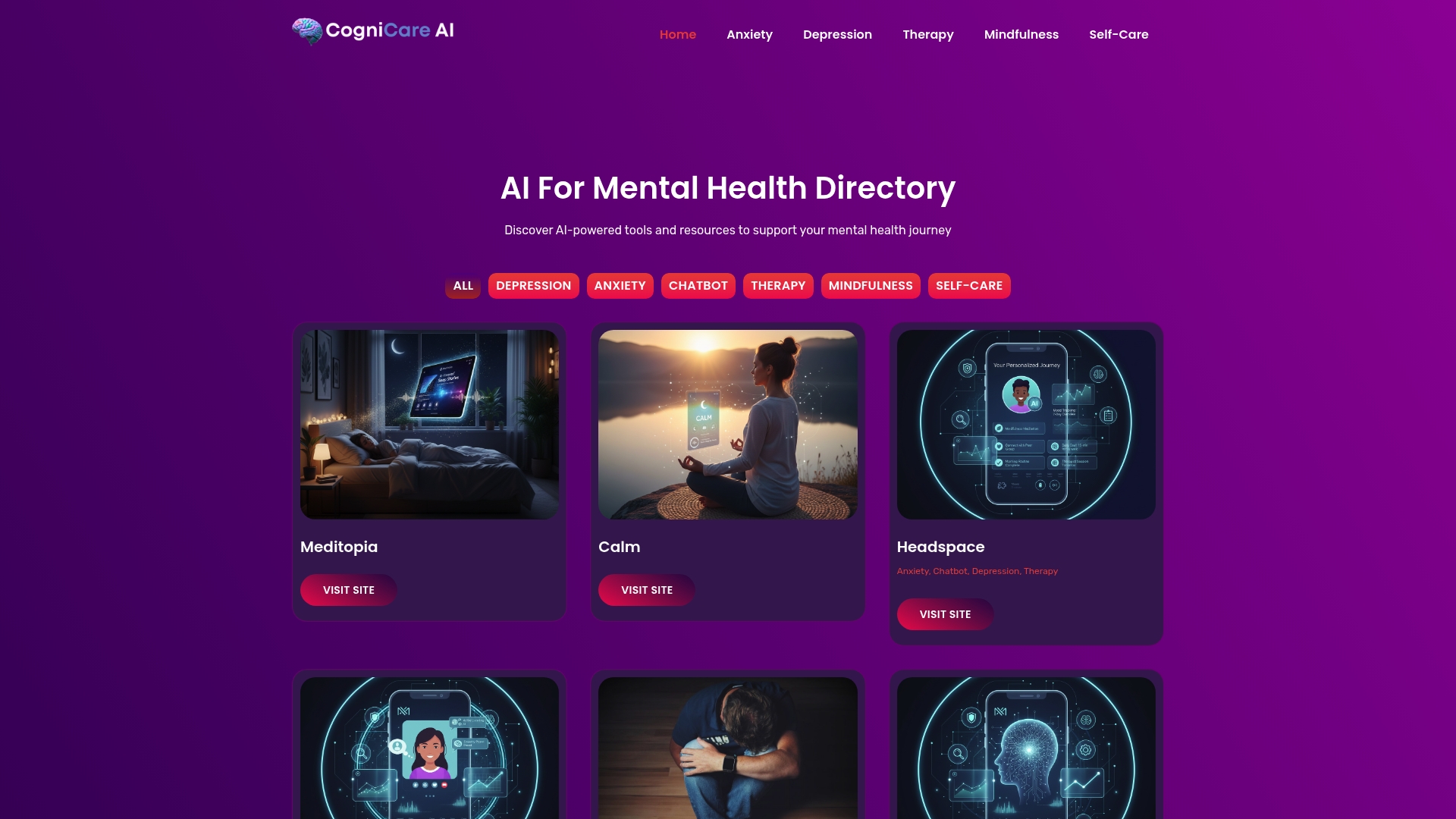
The platform organizes tools by condition, use case, and evidence level, so you are not left guessing whether an app is clinically grounded or just well-marketed. For people managing anxiety, depression, or stress, Cognicareai simplifies the process of finding tools that actually work. You can start with the AI mental health tools guide for a structured overview of what is available in 2026, or browse AI-powered tools by category to find options matched to your specific situation.
FAQ
What is mental health tech in simple terms?
Mental health tech is digital technology that actively supports mental health through evidence-based interventions, behavioral monitoring, or clinical connection. It differs from general wellness apps by using health data to produce measurable outcomes.
What are examples of mental health technology?
Examples include CBT-based therapeutic chatbots, digital phenotyping tools that analyze smartphone behavior, mood tracking apps with clinical validation, teletherapy platforms, and crisis support tools with direct links to care.
How does AI improve mental health apps?
AI enables adaptive feedback, early risk detection through behavioral data analysis, and personalized program adjustments. These features make AI-powered tools more effective than static content libraries for managing mild to moderate mental health conditions.
Are mental health apps safe to use?
Clinically validated apps that comply with HIPAA or GDPR are generally safe. The main risks are privacy exposure from apps that sell behavioral data and the risk of relying on unvalidated tools instead of seeking professional care for serious conditions.
Can mental health technology replace therapy?
Mental health technology cannot replace human therapy for moderate to severe conditions. It is most effective as a complement to professional care, handling low-acuity support and extending clinical reach between appointments.