

Effective depression coping resources are practical tools and strategies that help you manage symptoms and improve daily functioning. The term “coping resources” covers a broad set of methods, from behavioral techniques like behavioral activation to cognitive approaches like cognitive restructuring, plus digital tools and community support. Over 5% of U.S. adults experience serious mental illness that disrupts major life activities. That number shows just how urgent accessible, evidence-based support has become. The best coping strategies are not one-size-fits-all. They work when they fit your life, your energy, and your current symptoms.
1. Types of depression coping resources: an overview
Depression coping resources fall into four main categories: behavioral and lifestyle strategies, emotion-focused and cognitive skills, technology-assisted tools, and community and social support. Each category targets a different aspect of depression. Behavioral strategies address what you do each day. Cognitive tools address how you think. Digital tools add structure and accessibility. Social resources reduce isolation. The most effective approach combines at least two categories, chosen based on what you can realistically sustain.
Coping skills manage depressive symptoms to improve daily functioning and provide relief. They are not a cure. Setting that expectation from the start protects you from discouragement when progress feels slow.

2. Behavioral and lifestyle coping strategies
Behavior-based approaches are the foundation of most depression management plans. They work by changing what you do, which gradually shifts how you feel.
- Behavioral activation. Behavioral activation increases engagement in rewarding activities to counter depressive withdrawal. Start with one small activity you used to enjoy, even for 10 minutes.
- Sleep routine stabilization. Irregular sleep worsens mood and energy. Going to bed and waking at the same time each day stabilizes your body’s internal clock and supports emotional regulation.
- Physical movement. Exercise releases endorphins and reduces cortisol. A 20-minute walk counts. You do not need a gym membership to benefit.
- Daily structure. A predictable routine reduces decision fatigue. When depression drains your motivation, a set schedule carries you through low-energy periods.
- Nutrition. Whole foods, regular meals, and adequate hydration support brain chemistry. Skipping meals or relying on processed food amplifies fatigue and mood instability.
Pro Tip: Start with just one behavioral change this week. Adding sleep consistency before anything else gives your mood a stable base to build on.
Consistency matters more than intensity here. A short daily walk beats an ambitious workout plan you abandon after three days. You can find a practical list of sustainable coping habits that build on these behavioral foundations.
3. Emotion-focused and cognitive coping skills
Cognitive and emotion-focused strategies address the thought patterns and emotional responses that keep depression entrenched. These are the tools that change how you interpret your experience.
- Cognitive restructuring. Cognitive restructuring helps identify and modify negative thought patterns to reduce depressive symptoms. The practice involves writing down a distorted thought, questioning the evidence for it, and replacing it with a more balanced statement.
- Mindfulness and breathwork. Mindfulness-based practices, including diaphragmatic breathing and body scans, reduce the intensity of depressive episodes by anchoring attention to the present moment. Progressive muscle relaxation (PMR) is a structured technique that releases physical tension linked to low mood.
- Self-compassion. Treating yourself with the same kindness you would offer a friend interrupts the self-critical loop that depression amplifies. Self-compassion is not self-pity. It is a proven buffer against rumination.
- Journaling. Writing about your thoughts and feelings for 10–15 minutes a day creates distance from them. That distance is what makes them easier to examine and challenge.
- Mood and thought tracking. Logging your mood at set times each day reveals patterns. You may notice that your lowest points cluster around specific triggers, times, or situations.
Pro Tip: Pick one cognitive tool and practice it for two weeks before adding another. Depth of practice matters more than variety.
The goal is not to eliminate negative thoughts. The goal is to stop believing every one of them automatically. These practical coping techniques apply to both depression and anxiety, since the two often overlap.
4. Technology-assisted coping resources and digital tools
Digital tools have expanded access to depression management techniques for people who face barriers to in-person care. AI-powered digital tools augment depression management by offering mindfulness exercises, mood tracking, and personalization. That said, they work best alongside some level of professional support, not as a complete replacement.
| Tool type | Primary function | Best used for |
|---|---|---|
| AI-powered mindfulness apps | Guided meditation, breathwork | Daily stress and mood regulation |
| Mood tracking platforms | Logging emotions and triggers | Identifying patterns over time |
| AI chatbot tools | Conversational support, CBT prompts | Between-session support |
| Self-monitoring apps | Habit and sleep tracking | Behavioral consistency |
Digital mental health platforms show better outcomes when used alongside professional or non-specialist support. That finding matters because it reframes digital tools correctly: they are supplements, not substitutes.
Cognicareai provides a directory of AI-powered mental health tools that covers mindfulness apps, chatbot tools, and self-care resources, all organized to help you find what fits your needs. For a focused look at app options, the mindfulness app guide on Cognicareai walks through AI-enhanced options with practical context.
5. Community and social support resources
Social connection is one of the most underused depression coping resources. Peer support reduces isolation and provides emotional and practical assistance for people with depression. The effect is not trivial. Isolation accelerates depressive symptoms, while even brief social contact can interrupt that cycle.
- Peer support groups. Organizations like NAMI (National Alliance on Mental Illness) offer free peer-led groups, both in-person and online. These groups normalize your experience and connect you with people who understand it firsthand.
- SAMHSA National Helpline. The SAMHSA National Helpline (1-800-662-4357) provides free, confidential referrals to local treatment facilities, support groups, and community-based organizations, 24 hours a day.
- Treatment locators. SAMHSA’s online treatment locator helps you find licensed mental health providers in your area. Using it removes one of the most common barriers to care: not knowing where to start.
- Routine social interactions. You do not need deep conversations to benefit from connection. Regular, low-stakes contact with neighbors, coworkers, or community members builds a sense of belonging that buffers against depression.
If isolation is a specific challenge for you, the strategies covered in depression and isolation coping methods offer targeted approaches beyond general social advice.
6. How to choose and combine coping resources effectively
Selecting the right mix of depression management techniques is as important as knowing what the options are. The wrong combination, or too many changes at once, leads to burnout and abandonment.
- Start with one or two strategies. Starting with one or two manageable tools reduces overwhelm and improves sustained use. Behavioral activation and sleep stabilization are the two highest-impact, lowest-barrier starting points.
- Match tools to your current energy. On low-energy days, passive tools like a guided meditation app or a peer support call are more realistic than journaling or exercise. Adjust based on where you are, not where you think you should be.
- Avoid stacking too many changes. Trying to change too many things at once is a common pitfall. One new habit per week is a sustainable pace for most people.
- Add professional guidance when symptoms are severe. Self-help resources work best as complements to professional care. If your symptoms significantly impair daily functioning, a licensed therapist or psychiatrist should be part of your plan.
- Reassess every few weeks. What works during a mild episode may not be enough during a severe one. Check in with yourself regularly and adjust your toolkit accordingly.
- Set realistic expectations. Coping skills aim for symptom management and functional improvement. Progress is rarely linear, and setbacks are part of the process, not evidence of failure.
Key takeaways
The most effective depression coping resources combine behavioral, cognitive, digital, and social strategies, chosen for personal fit and introduced gradually to build sustainable habits.
| Point | Details |
|---|---|
| Start small and specific | Begin with one or two strategies like behavioral activation or sleep stabilization before adding more. |
| Match tools to energy levels | Choose passive tools on low-energy days and more active strategies when capacity allows. |
| Digital tools supplement, not replace | AI-powered apps and mood trackers work best alongside professional or peer support. |
| Social connection is a coping tool | Peer groups, helplines like SAMHSA, and routine contact reduce isolation and support recovery. |
| Expect symptom management, not a cure | Coping skills reduce symptom intensity and improve functioning. They are not a permanent fix. |
What I’ve learned about coping with depression over time
The most common mistake I see people make is treating depression coping like a productivity project. They build a 10-step plan, download five apps, and commit to daily journaling, exercise, and meditation all at once. Within two weeks, the plan collapses. Then they blame themselves instead of the plan.
The research is clear on this. The most effective coping skills are those that fit an individual’s energy levels and lifestyle, requiring personalized experimentation rather than rigid plans. That is not a soft suggestion. It is the actual mechanism behind sustained improvement.
What I have found works is this: pick the single lowest-barrier strategy available to you right now, and do it consistently for two weeks. That might be a five-minute walk. It might be texting one friend. It might be opening a mood-tracking app once a day. The point is not the strategy itself. The point is building the habit of showing up for yourself, even in a small way.
The other thing worth saying plainly: setbacks are not relapses into failure. They are data. If a strategy stops working, that tells you something about your current state, not your character. Adjust and continue. Persistence through imperfect practice is what actually moves the needle over months and years.
— dushyantha
AI-powered tools to support your coping plan
Managing depression is easier when you have the right resources in one place. Cognicareai offers a curated directory of AI-powered mental health tools, including mindfulness apps, mood-tracking platforms, and therapy chatbots, designed to complement the behavioral and cognitive strategies covered here.
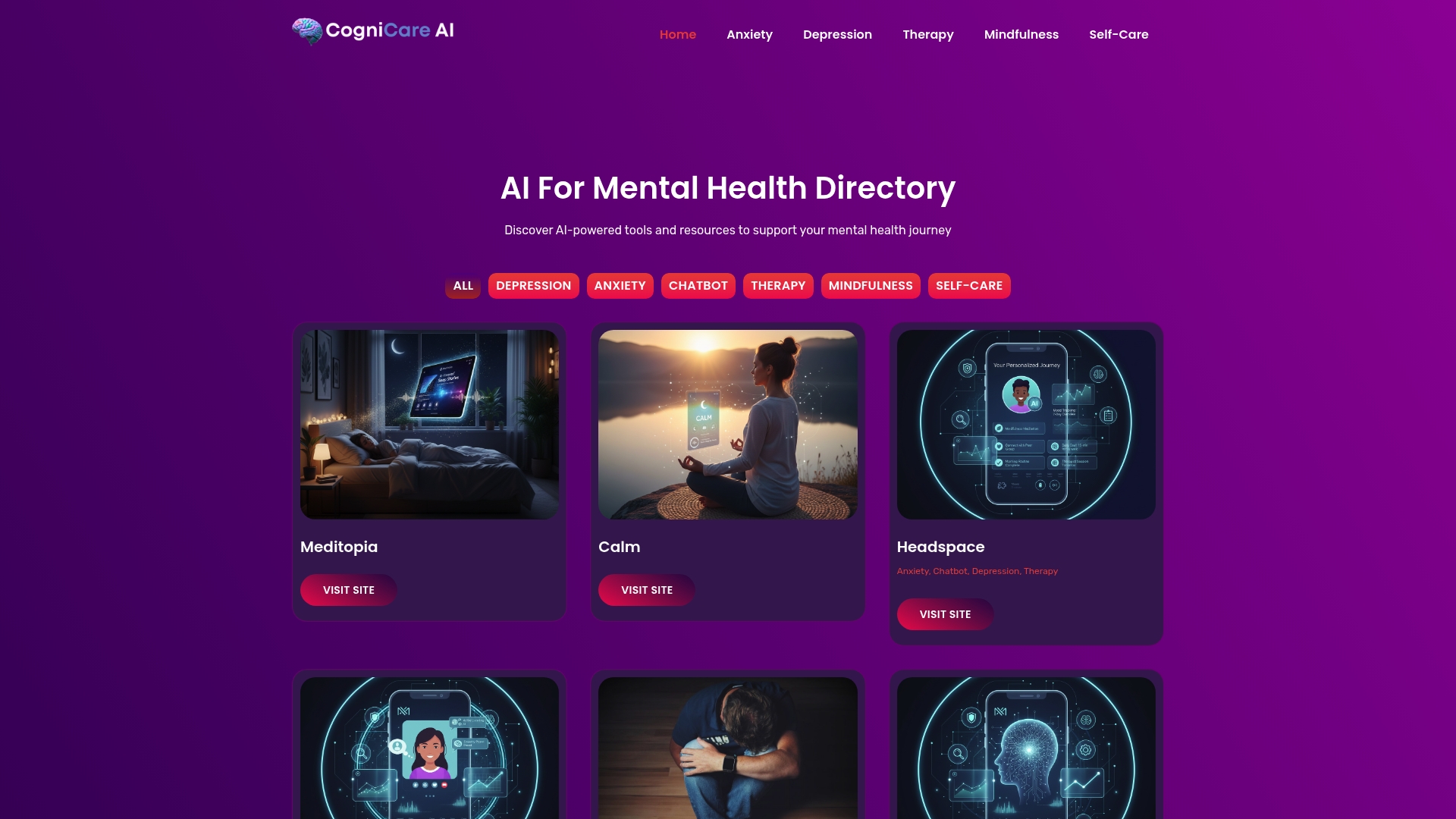
Whether you are building a coping plan from scratch or looking to add a digital layer to an existing routine, Cognicareai makes it straightforward to find tools matched to your specific needs. The mental health tools directory covers options across every category discussed in this article. For a deeper look at how AI is reshaping personal mental health support, the AI mental health tools guide is a practical next step.
FAQ
What are the main types of depression coping resources?
The four main types are behavioral and lifestyle strategies, cognitive and emotion-focused skills, technology-assisted digital tools, and community and social support resources. Each targets a different dimension of depression, and combining them produces the best results.
Can digital apps replace therapy for depression?
Digital apps cannot replace therapy, particularly for moderate to severe depression. Brief weekly support enhances digital intervention effectiveness, meaning apps work best as a supplement to professional care, not a standalone treatment.
How many coping strategies should I use at once?
Start with one or two. Experts advise low-barrier, high-impact strategies first to build consistency before adding more tools. Adding too many at once increases the risk of burnout and abandonment.
What is behavioral activation and why does it help?
Behavioral activation is a technique that increases engagement in rewarding activities to counter the withdrawal and inactivity that depression causes. It is one of the most well-supported, low-barrier coping strategies available.
Where can I find free depression support resources?
The SAMHSA National Helpline (1-800-662-4357) provides free, confidential referrals to treatment and support groups 24 hours a day. NAMI also offers free peer support groups and information online and in local communities.