

Emotional regulation is defined as the ability to influence which emotions you have, when you have them, and how you experience and express them. The Yale School of Medicine identifies emotion regulation as the linchpin of mental health, not a secondary skill. Psychologists also use the term “emotional self-control” to describe the deliberate side of this capacity, though regulation includes both automatic and conscious processes. A 2021 meta-analysis confirmed that cognitive reappraisal produces strong outcomes without the physiological rebound effects caused by suppression. The goal is never to eliminate negative emotions. The goal is to respond to them in ways that align with your values and goals.
What is emotional regulation and how does it work?
Emotional regulation covers both automatic and deliberate processes that shape the type, timing, and intensity of your emotional responses. You regulate automatically when you instinctively take a breath before responding to bad news. You regulate deliberately when you consciously reframe a stressful situation as a challenge rather than a threat. Both modes matter, and both can be strengthened.
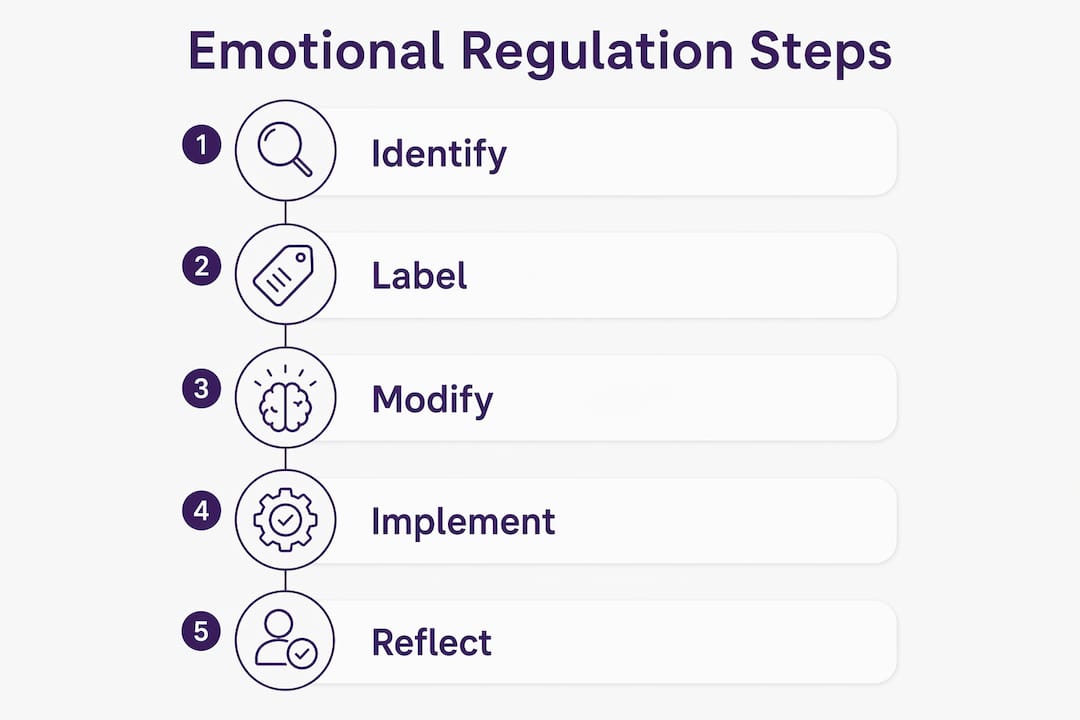
Gross’s process model remains the most influential framework in emotional regulation science. It defines four sequential stages: identification, strategy selection, implementation, and monitoring. Each stage builds on the last, and skipping one reduces the effectiveness of the whole process.

Accurate emotional labeling sits at the foundation of this model. Naming your feelings precisely, distinguishing “frustrated” from “ashamed” or “anxious” from “excited,” is a critical precursor to choosing the right strategy. Vague labels like “bad” or “upset” leave you without enough information to act effectively.
The model also distinguishes between two broad strategy types. Antecedent-focused strategies intervene before an emotion fully develops, such as reappraising a situation before it escalates. Response-focused strategies act after the emotion has already formed, such as suppressing a visible reaction. Research consistently shows antecedent-focused approaches produce better long-term outcomes.
The four stages at a glance
| Stage | What happens | Example |
|---|---|---|
| Identification | Recognize and label the emotion accurately | “I feel anxious, not just stressed” |
| Strategy selection | Choose a regulation method suited to the situation | Selecting reappraisal over suppression |
| Implementation | Apply the chosen strategy actively | Reframing a setback as a learning opportunity |
| Monitoring | Assess whether the strategy is working | Noticing tension remains and switching to paced breathing |
What evidence-based emotional regulation strategies work best?
Cognitive reappraisal is the most effective and widely supported strategy in the research literature. It works by changing how you interpret a situation, not by changing the situation itself. Telling yourself “this presentation is a chance to show what I know” instead of “this presentation could go badly” shifts the emotional trajectory before distress peaks.
Mindfulness practices take a different but equally validated route. Rather than reinterpreting an emotion, mindfulness trains you to observe emotions without judgment. This acceptance-based approach, rooted in Buddhist tradition and validated extensively in clinical settings, improves emotional stability and cognitive function over time.
Physiological interventions address the body directly when emotions run high. TIP skills, which stand for Temperature, Intense exercise, and Paced breathing, interrupt acute emotional arousal within 30–60 seconds. Splashing cold water on your face activates the dive reflex and slows heart rate almost immediately. These techniques are especially useful when cognitive strategies feel out of reach.
Distanced self-talk offers a practical alternative to suppression. Coaching yourself using your own name or the second person (“What should you do here, Alex?”) creates psychological distance without forcing you to push the emotion away. Suppression, by contrast, carries negative physiological effects and increases long-term stress.
Here is a summary of core strategies and when to use each:
- Cognitive reappraisal: Reframe the meaning of a situation. Best for moderate stress before emotions peak.
- Mindfulness: Observe emotions without reacting. Best for building baseline stability over weeks of practice.
- TIP skills: Use temperature, intense exercise, or paced breathing. Best for acute, high-intensity emotional states.
- Distanced self-talk: Coach yourself by name or in the second person. Best when you need immediate perspective without suppression.
- Opposite action: Act against the urge the emotion creates. Best for emotions like shame or fear that drive avoidance.
- Grounding techniques: Focus on sensory details in the present moment. Best for dissociation or overwhelming anxiety.
Pro Tip: Match your strategy to the intensity of the emotion. High-arousal states need physiological tools first. Once your nervous system calms, cognitive strategies like reappraisal become accessible.
Flexible use of strategies consistently outperforms rigid reliance on a single method. Empirical studies show that people who adapt their approach to the situation achieve better long-term emotional outcomes than those who default to one favored technique.
How does emotional regulation impact mental health and daily functioning?
Difficulty regulating emotions is a transdiagnostic mechanism underlying anxiety, depression, borderline personality disorder, and substance use disorders. This means poor regulation does not cause one condition. It contributes to many. Improving regulation skills therefore produces benefits across multiple areas of mental health simultaneously.
The effects extend well beyond clinical diagnoses. Strong regulation skills improve your relationships, your performance at work, your ability to manage stress, and your capacity for self-care. People who regulate effectively recover faster from setbacks and make clearer decisions under pressure.
Co-regulation adds a dimension that solo practice cannot replace. Receiving support from emotionally intelligent people, those who respond calmly and constructively, reinforces your own coping capacity over time. This is not a sign of weakness. It is a recognized strategy with its own evidence base.
The benefits of strong emotional regulation show up across life domains:
- Work: Clearer thinking under deadline pressure, fewer reactive conflicts with colleagues.
- Relationships: Greater capacity to listen, respond rather than react, and repair after disagreements.
- Self-care: Reduced emotional eating, better sleep habits, and more consistent exercise routines.
- Mental health: Lower baseline anxiety, reduced depressive episodes, and stronger resilience after stress.
Pro Tip: Choose your co-regulation allies deliberately. People who escalate or dismiss emotions make regulation harder. People who stay calm and validate your experience make it easier.
Emotional regulation also connects directly to mindfulness and anxiety. When regulation capacity is low, anxiety feeds on itself. When regulation improves, the cycle breaks.
What daily techniques build emotional regulation skills over time?
Consistent daily practice is what separates people who understand emotional regulation from people who actually get better at it. Researchers advocate a tiered approach: 10–20 minutes of daily mindfulness for foundational capacity, and 30–60 second TIP skills for acute moments. These two tiers address different needs and work best together.
A practical daily routine looks like this:
- Morning check-in (2 minutes): Name your current emotional state with precision. Write it down if possible. “Mildly anxious about the 10 AM call” is more useful than “stressed.”
- Mindfulness practice (10–20 minutes): Use a guided session or silent breath focus. The goal is observing thoughts and emotions without reacting to them.
- Reappraisal exercise (as needed): When a stressful event occurs, pause and ask: “What is another way to interpret this?” Write two alternative interpretations before responding.
- Distanced self-talk check (as needed): When emotions spike, use your own name. “What does [your name] actually need right now?” creates immediate perspective.
- Evening review (5 minutes): Identify one moment where you regulated well and one where you did not. Note which strategy you used or could have used.
Tracking your emotional responses over days and weeks reveals patterns you cannot see in the moment. A simple journal or a notes app works. The data you collect on yourself is more useful than any generic advice.
Pro Tip: Set a phone reminder for your morning check-in and evening review. Cognicareai lists AI-powered mental health tools that can guide TIP skills and paced breathing exercises in real time, making the acute tier of practice far more accessible.
Emotional regulation can be developed at any age. Reframing emotional challenges as skill-building opportunities rather than personal deficits accelerates progress. The skill grows through repetition, not insight alone.
Key Takeaways
Emotional regulation is a learnable skill built through consistent practice of evidence-based strategies, flexible application, and supported co-regulation with emotionally intelligent people.
| Point | Details |
|---|---|
| Definition and core purpose | Emotional regulation shapes the type, timing, and intensity of emotional responses, not their elimination. |
| Gross’s process model | Four stages, identification, selection, implementation, and monitoring, provide a structured path to effective regulation. |
| Most effective strategy | Cognitive reappraisal outperforms suppression and avoidance, with no negative physiological rebound effects. |
| Flexibility beats rigidity | Matching strategies to emotional intensity and context produces better long-term outcomes than using one fixed method. |
| Co-regulation matters | Emotionally intelligent social support reinforces personal regulation capacity in ways solo practice cannot replicate. |
Why emotional regulation changed how I think about mental health
Most articles on this topic treat emotional regulation as a checklist. Do these five things and feel better. That framing misses the point entirely.
What I have observed, working closely with mental health content and the people who seek it, is that the biggest obstacle is not a lack of techniques. People know about deep breathing. The real obstacle is the belief that strong emotions are a character flaw rather than a signal worth decoding. That belief drives suppression, and suppression is the one strategy the research consistently warns against.
The shift that actually changes things is treating each difficult emotion as information. Anger tells you a boundary was crossed. Anxiety tells you something feels uncertain or threatening. Shame tells you a value was violated. None of these are problems to eliminate. They are data points that, once labeled accurately, point directly to the right response.
The other thing I would push back on is the idea that regulation is a solo project. Co-regulation is not a crutch. Choosing people in your life who respond to your emotions with calm and intelligence is itself a regulation strategy. It is one of the most underrated ones available.
Patience is not optional here. These skills build the way physical fitness builds. You do not get stronger from one workout. You get stronger from showing up consistently, adjusting your approach, and treating setbacks as part of the process.
— dushyantha
Cognicareai and your emotional regulation practice
Knowing the strategies is the first step. Having the right tools makes daily practice sustainable.
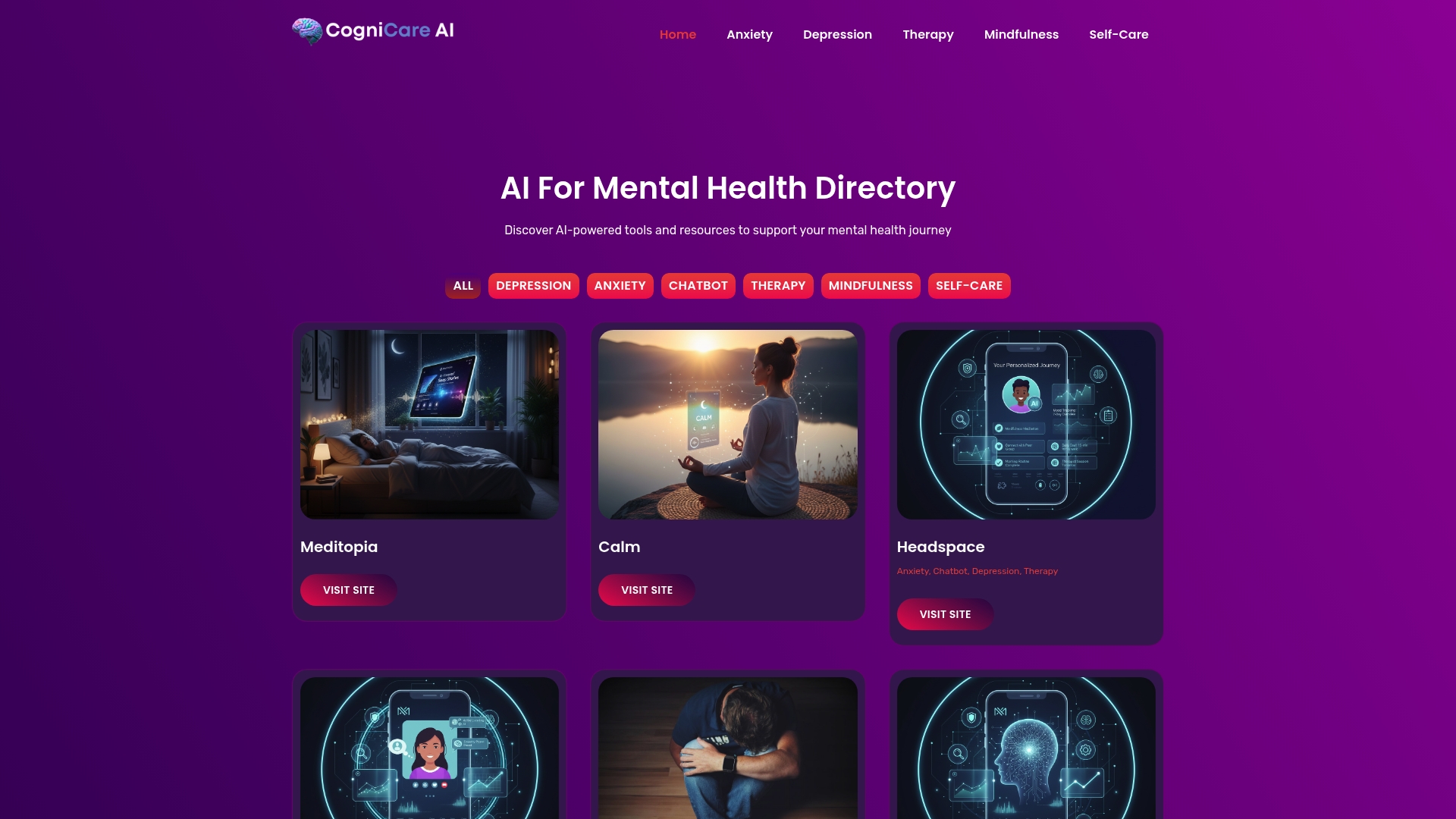
Cognicareai is a directory of AI-powered mental health tools designed to match you with resources that fit your specific needs, whether that means guided mindfulness sessions, cognitive reframing exercises, or real-time stress management support. The platform removes the friction of searching through dozens of apps by curating tools that are clinically grounded and personalized. If you are ready to put emotional regulation strategies into consistent practice, the AI mental health tools listed on Cognicareai give you a structured, accessible starting point. You can also explore top mindfulness apps enhanced by AI for daily emotional balance practice.
FAQ
What is emotional regulation in simple terms?
Emotional regulation is the ability to manage how you feel and how you respond to those feelings. It includes both automatic reactions and deliberate strategies you can learn and practice.
Can emotional regulation be learned as an adult?
Yes. Research confirms that emotional regulation can be developed at any age through consistent practice. Reframing emotional challenges as skill-building opportunities accelerates progress.
What is the most effective emotional regulation strategy?
Cognitive reappraisal is the most research-supported strategy. A 2021 meta-analysis found it produces strong outcomes without the physiological rebound effects associated with suppression.
How does poor emotional regulation affect mental health?
Difficulty regulating emotions is a transdiagnostic factor underlying anxiety, depression, borderline personality disorder, and substance use disorders. Improving regulation yields benefits across all of these conditions simultaneously.
How long does it take to build emotional regulation skills?
There is no fixed timeline, but researchers recommend 10–20 minutes of daily mindfulness for foundational capacity building. Consistent practice over weeks produces measurable improvements in emotional stability and response flexibility.