

On-demand mental health support is defined as real-time access to licensed clinicians via chat, phone, or video, with no appointment required. The industry term for this model is “telehealth,” though on-demand specifically refers to same-day or immediate access rather than scheduled virtual visits. Nearly one in four adults report an unmet need for mental health treatment each year. That gap is exactly what on-demand mental health services online are built to close. Platforms in this space connect you with a licensed professional in minutes, not weeks, and many now integrate AI tools to make that response even faster.
What is on-demand mental health support and what does it include?
On-demand mental health support covers a wider range of services than most people expect. It goes well beyond a quick chat with a counselor. The core offering is a live connection to a licensed therapist, psychiatrist, or counselor through chat, phone, or video. Some platforms answer members in as fast as 13 seconds and see patients within 30 minutes. That speed is not a marketing claim. It reflects a structural shift in how care is delivered.
The services available through these platforms typically include:
- Crisis intervention: Immediate access to a clinician during a mental health emergency, without calling a hotline and waiting on hold.
- Scheduled recurring therapy: Same-day urgent sessions plus the option to book follow-up appointments for ongoing care.
- Psychiatry and medication management: Access to psychiatrists who can evaluate, prescribe, and adjust medications via telehealth.
- AI-powered self-help tools: Guided meditation, audio-based cognitive behavioral therapy exercises, and mood tracking apps that work between sessions.
- Peer support communities: Moderated group spaces where people with shared experiences connect outside of clinical sessions.
On-demand platforms offer hybrid wraparound care, combining 24/7 crisis access with scheduled counseling and self-help resources. This hybrid model matters because a single crisis session rarely resolves a mental health challenge. The wraparound structure keeps you supported before, during, and after acute moments.
Pro Tip: If you are managing anxiety or depression, look for a platform that offers both immediate access and scheduled follow-ups. A one-time chat session is useful in a crisis, but consistent care produces better long-term results.

How much does on-demand mental health care cost?
Cost is the most common reason people delay mental health treatment. On-demand telehealth has changed the math significantly, but pricing still varies based on your insurance status and the platform you choose.
| Coverage type | Typical cost per session | Notes |
|---|---|---|
| Insured (PPO or employer plan) | $0–$15 copay | Most major insurers cover telehealth therapy |
| Uninsured or out-of-pocket | $134 or higher | Costs vary by provider and session length |
| Employer-provided EAP | Often $0 | Check your HR benefits for included sessions |
| Subscription-based platforms | Monthly fee varies | May reduce per-session cost significantly |
Insured members often pay copays as low as $0–$15, while uninsured sessions can start at $134 or more. That gap is significant. If you have employer-sponsored insurance or a PPO plan, verifying your telehealth benefits before your first session can save you a substantial amount.
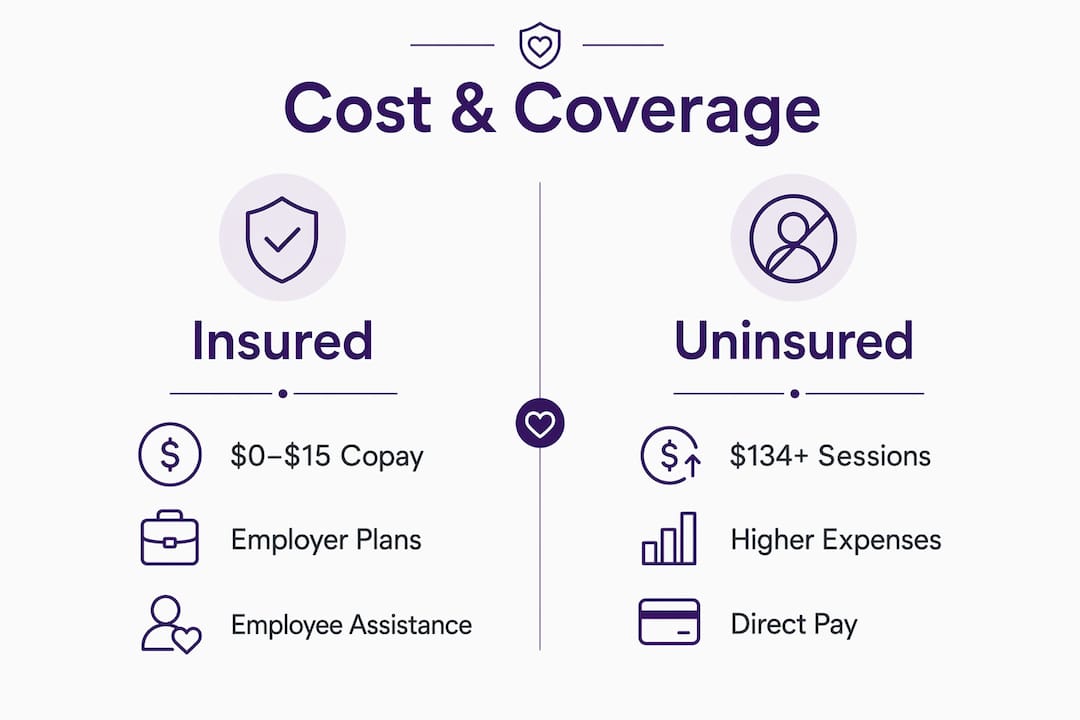
Employer-provided Employee Assistance Programs, known as EAPs, frequently include a set number of free counseling sessions. Many people never use this benefit simply because they do not know it exists. Check with your HR department or benefits portal before paying out of pocket.
Pro Tip: Call your insurance provider and ask specifically whether “telehealth behavioral health services” are covered. The phrase matters. Some plans cover telehealth but categorize mental health separately, which affects your copay.
What are the benefits and limitations of on-demand mental health support?
The clearest benefit of on-demand care is the removal of friction. Scheduling a traditional therapy appointment often means a wait of several weeks, a referral from a primary care doctor, and limited evening or weekend availability. On-demand virtual mental health help eliminates all three barriers.
Key benefits
- Speed: Clinicians are available in seconds to minutes, not weeks. This matters most during acute anxiety episodes or depressive crises when waiting is not a safe option.
- Continuity of care: Effective on-demand systems track patient progress with clinical measures, not just patient-reported feelings. Objective tracking improves treatment accuracy over time.
- AI-assisted efficiency: AI tools automate administrative tasks like note-taking, freeing clinicians to focus entirely on the person in front of them. This is why response times can reach 13 seconds on some platforms.
- Accessibility: You can access care from home, a parked car, or a private office. Geography and mobility are no longer barriers.
Real limitations to understand
Not every mental health need is appropriate for telehealth. Some conditions require in-person evaluation, physical examination, or medically supervised treatment. Specialized on-demand psychiatry services provide medically supervised at-home detox for addiction recovery, but even these require careful clinical screening before starting. Severe psychosis, active suicidal ideation requiring hospitalization, and conditions needing physical intervention fall outside what telehealth can safely manage alone.
“On-demand mental health care must integrate continuity of care by tracking clinical progress and maintaining coordination beyond initial contact.” — Televero Behavioral Health
The honest picture is this: on-demand care is excellent for mild to moderate anxiety, depression, stress, and relationship challenges. For complex or high-risk presentations, it works best as a bridge to or complement of in-person care, not a replacement.
How to access on-demand mental health services effectively
Getting started with on-demand therapy is simpler than most people expect. There is no referral required, no lengthy intake paperwork, and no waiting room. The typical process takes less than 10 minutes from sign-up to first contact.
Here is how to approach it effectively:
- Choose a platform that matches your needs. If you need medication management, confirm the platform employs licensed psychiatrists. If you need talk therapy only, a counselor-based platform works well. A physician-led care model is critical for complex cases involving medication or co-occurring conditions.
- Check for a free initial consult. Many platforms offer a short free consult, often 10 minutes, to help you assess whether the provider is a good fit before committing to a paid session. Use it.
- Prepare before your first session. Write down your main symptoms, how long you have experienced them, and your preferred communication style (chat, phone, or video). This helps the clinician move quickly to what matters.
- Verify privacy practices. Confirm the platform is HIPAA-compliant before sharing any personal health information. Reputable platforms display this clearly on their website.
- Ask about follow-up coordination. A single session is a starting point. Ask how the clinical team tracks your progress and what the process is for scheduling follow-up care.
Platforms that pair immediate access with AI-driven mental health tools for between-session support tend to produce better outcomes than those offering only one-off consultations. The combination of human clinical judgment and technology-assisted self-care is where the field is heading.
Pro Tip: Avoid platforms that do not clearly list their clinicians’ credentials. Transparency about provider qualifications is a reliable signal of overall quality.
Key takeaways
On-demand mental health support is the fastest, most accessible path to licensed clinical care, and it works best when combined with consistent follow-up and AI-assisted self-help tools.
| Point | Details |
|---|---|
| Speed of access | Some platforms connect you with a clinician in as fast as 13 seconds, far faster than traditional scheduling. |
| Cost range | Insured people often pay $0–$15 per session; uninsured costs can start at $134 or more. |
| Hybrid care model | The most effective platforms combine crisis access, scheduled therapy, and AI-powered self-help tools. |
| Clinical tracking matters | Platforms that measure progress with clinical tools produce more reliable outcomes than those relying on self-report alone. |
| Know the limits | Telehealth is not appropriate for all conditions; severe or high-risk cases may require in-person or specialized care. |
My take on where on-demand mental health care is actually headed
I have spent years watching the mental health tech space evolve, and the shift toward on-demand access is the most meaningful structural change I have seen. Not because the technology is impressive, but because it addresses the single biggest barrier to care: the gap between when someone needs help and when they can actually get it.
What surprises most people is that the technology itself is not the hard part. Getting a clinician on a screen in 13 seconds is an engineering problem, and it has largely been solved. The harder problem is what happens after that first contact. Too many platforms treat the initial session as the product. The real work is continuity, and that requires clinical tracking, coordinated follow-up, and self-care tools that keep people engaged between sessions. Platforms that personalize mental health care with AI are starting to close that gap in ways that purely human-staffed models cannot scale to match.
The limitation I worry about most is equity. On-demand care is most accessible to people with reliable internet, a private space to take a call, and insurance that covers telehealth. Those without these things still face the same barriers as before. The field needs to solve for that, not just optimize for the already-connected.
My honest advice: treat on-demand mental health services as a serious clinical option, not a convenience feature. Vet the platform, check the credentials, and commit to follow-up. The technology works when you use it with the same intention you would bring to an in-person appointment.
— dushyantha
AI-powered tools for immediate mental health support
Cognicareai brings together a curated directory of AI-powered mental health tools built for people who need support now, not after a three-week waitlist. The platform covers everything from AI mental health tools and therapy chatbots to mindfulness apps and self-care strategies tailored for anxiety and depression.
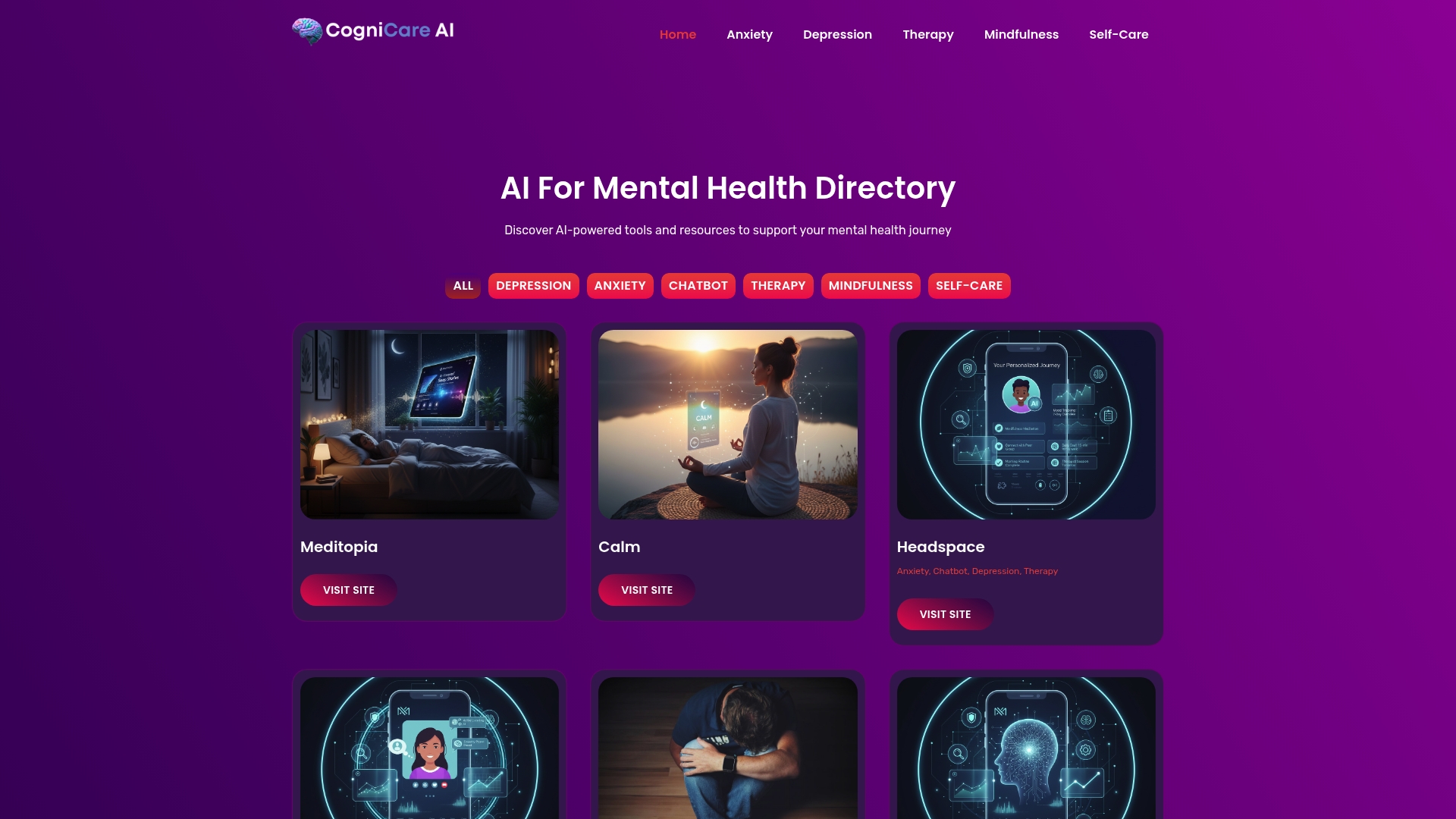
Whether you are looking for a guided meditation app, a therapy chatbot for between-session support, or a full AI mental health assessment to understand your needs, Cognicareai organizes these resources so you can find the right fit without sorting through hundreds of unvetted options. The directory is free to explore and updated regularly with tools that meet real clinical and user standards.
FAQ
What is on-demand mental health support?
On-demand mental health support is real-time access to licensed therapists, counselors, or psychiatrists via chat, phone, or video, with no appointment required. Some platforms connect you with a clinician in under 30 minutes.
Is on-demand therapy covered by insurance?
Most PPO and employer-sponsored insurance plans cover telehealth behavioral health services. Insured people often pay copays as low as $0–$15 per session.
What conditions are not suitable for on-demand telehealth?
Conditions requiring physical examination, medically supervised detox, or inpatient psychiatric care are generally not appropriate for telehealth alone. On-demand platforms work best for mild to moderate anxiety, depression, and stress.
How do I know if an on-demand mental health platform is trustworthy?
Look for HIPAA compliance, clearly listed clinician credentials, and a physician-led care model for complex cases. Platforms that track clinical progress over time, not just session counts, are a stronger indicator of quality care.
Can AI tools replace a licensed therapist in on-demand care?
AI tools do not replace licensed clinicians. They automate administrative tasks and provide between-session support, which frees clinicians to focus on direct patient care and reduces response times significantly.