
Anxiety is defined as a persistent state of worry or fear that activates the body’s stress response beyond what the situation warrants. Anxiety affects 40 million U.S. adults every year, making it the most common mental health condition in the country. Reducing anxiety without medication methods, clinically called non-pharmacological anxiety management, has proven efficacy comparable to medication for mild-to-moderate cases. The core approaches include regular aerobic exercise, Cognitive Behavioral Therapy (CBT), mindfulness meditation, and targeted supplementation with compounds like magnesium glycinate. This guide covers each method with specific, research-backed protocols you can start this week.
What foundational lifestyle changes help reduce anxiety naturally?
Lifestyle is the base layer of any non-medication anxiety plan. Without it, cognitive tools and supplements produce weaker, shorter-lived results.
Exercise as a nervous system reset
Regular aerobic exercise reshapes the brain’s stress response in ways that rival medication or CBT. The mechanism is direct: sustained physical activity lowers cortisol, raises GABA activity, and releases endorphins that counteract the fight-or-flight loop. The CDC recommends 2.5 hours of moderate-intensity activity per week, broken into 20–30 minute sessions. That translates to five 30-minute walks, jogs, or bike rides weekly. Consistency matters more than intensity.

Sleep hygiene as anxiety prevention
Poor sleep and anxiety feed each other in a cycle that is hard to break without deliberate intervention. Falling asleep within 30 minutes and maintaining 7–8 hours of uninterrupted sleep are the two most measurable targets for anxiety management. Practical steps include keeping a fixed wake time seven days a week, dropping the bedroom temperature to around 65–68°F, and cutting screen exposure 60 minutes before bed. Skipping this foundation makes every other method less effective.
Nutrition and stimulant reduction
What you eat and drink directly affects your nervous system’s baseline state. Caffeine and alcohol worsen anxiety and disrupt sleep architecture, even when consumed in moderate amounts. An anti-inflammatory diet rich in leafy greens, fatty fish, and whole grains supports lower baseline cortisol. Nicotine is equally problematic. Stimulants like caffeine and nicotine activate the fight-or-flight response and increase dependency, making anxiety harder to control over time.
- Aim for 2.5 hours of aerobic activity per week in 20–30 minute sessions
- Target 7–8 hours of sleep with a consistent wake time
- Cut caffeine after noon and limit alcohol to no more than one drink per day
- Replace processed foods with anti-inflammatory options like salmon, spinach, and berries
- Avoid nicotine entirely if anxiety is a recurring problem
Pro Tip: Start with one lifestyle change at a time. Adding exercise before fixing sleep is fine. Incremental changes stick far better than a full overhaul attempted in one week.
How do cognitive and mindfulness techniques reduce anxiety without drugs?
Cognitive and mindfulness techniques work by changing how the brain processes threat signals, not just masking them. These are the methods most studied as direct alternatives to medication.
Cognitive Behavioral Therapy (CBT)
CBT is the gold standard non-medication treatment for anxiety disorders. It works by identifying catastrophic thought patterns, testing them against evidence, and replacing them with realistic appraisals. A therapist guides this process, but structured self-directed CBT workbooks like those from the Anxiety and Depression Association of America (ADAA) produce measurable results too. The key skill is catching the thought before it spirals, then asking: “What is the actual probability this outcome occurs?”
Mindfulness meditation
Mindfulness meditation practiced for 30 minutes daily produces anxiety reduction comparable to mild pharmacological interventions for many people. The practice trains the brain to observe anxious thoughts without treating them as commands. Apps like Headspace and Insight Timer offer structured programs that guide beginners through this process. The critical distinction is that mindfulness is not relaxation. It is a disciplined practice of watching thoughts arise and pass without attaching to them.
Breathing techniques and grounding
Breathing techniques provide rapid relief within minutes by directly calming the sympathetic nervous system. Three methods stand out:
- Diaphragmatic breathing: Inhale slowly through the nose for 4 counts, expanding the belly rather than the chest. Exhale for 6–8 counts. Repeat for 5 minutes.
- Box breathing: Inhale for 4 counts, hold for 4, exhale for 4, hold for 4. Used by U.S. Navy SEALs and clinical psychologists alike for acute stress.
- 5-4-3-2-1 grounding: Name 5 things you see, 4 you can touch, 3 you hear, 2 you smell, and 1 you taste. This sensory scan interrupts the anxiety loop by forcing present-moment attention.
Pro Tip: Practice breathing techniques daily, not just during anxiety spikes. The nervous system learns the pattern faster when it is rehearsed in calm states.
What natural supplements and remedies support anxiety reduction?
Natural supplements occupy a specific role in anxiety management. They support nervous system regulation but do not replace lifestyle or cognitive work.
Magnesium glycinate
Magnesium deficiency affects 50–70% of adults in Western countries. Low magnesium directly impairs GABA function, the brain’s primary calming neurotransmitter. Supplementing with 200–400 mg of magnesium glycinate nightly is the most bioavailable form and the least likely to cause digestive side effects. Most people notice improved sleep quality within one to two weeks.
Ashwagandha, L-theanine, and chamomile
- Ashwagandha (300–600 mg daily): An adaptogen that lowers cortisol levels with consistent use. Multiple randomized controlled trials support its efficacy for stress and anxiety.
- L-theanine (100–200 mg): An amino acid found in green tea that promotes calm alertness without sedation. Pairs well with low-dose caffeine if you are not cutting it entirely.
- Chamomile extract (220–1,100 mg): Clinical trials show it reduces generalized anxiety disorder symptoms with long-term use. Chamomile tea provides a lower dose but still supports relaxation.
- CBD: Early evidence is promising for anxiety, but product quality varies widely. Choose third-party tested products and consult a healthcare provider before starting.
Physical nervous system interventions
Vagus nerve stimulation, progressive muscle relaxation, and cold exposure act as immediate anxiety reducers by calming the sympathetic nervous system. Splashing cold water on your face activates the diving reflex, which slows heart rate within seconds. Progressive muscle relaxation, where you tense and release each muscle group from feet to face, takes about 15 minutes and produces measurable reductions in physical tension.
Supplements require 2–8 weeks of consistent use to reach full therapeutic effect. Stopping after five days because you feel no change is the most common mistake people make.
Pro Tip: Always consult a healthcare provider before starting supplements, especially if you take prescription medications. Ashwagandha and CBD both interact with certain drugs.
How to build a personalized plan for lasting anxiety relief?
A personalized plan works better than any single technique because anxiety has multiple drivers. The sequence matters.
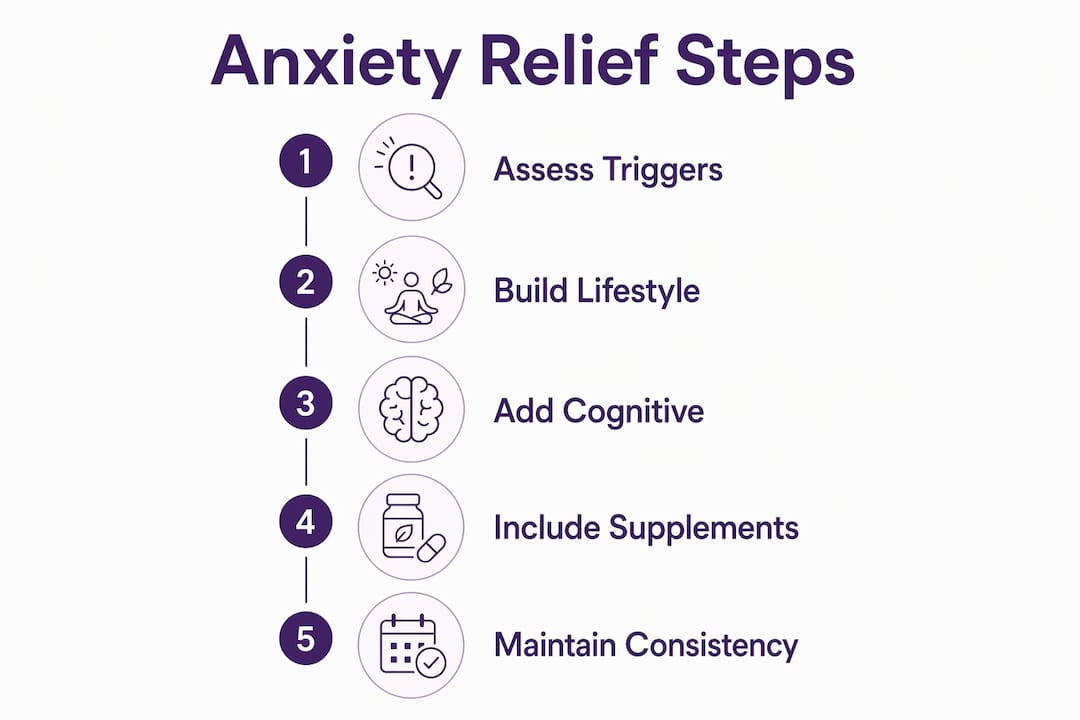
Step 1: Assess your triggers and baseline. Keep a simple anxiety log for one week. Note the time, situation, physical symptoms, and intensity on a 1–10 scale. Patterns emerge quickly. Social situations, work deadlines, and sleep deprivation are the three most common triggers.
Step 2: Build the lifestyle foundation first. Exercise, sleep, and nutrition changes produce the most durable results. They also make every other technique more effective by lowering baseline cortisol.
Step 3: Layer in cognitive and mindfulness tools. Once lifestyle habits are in place, add CBT journaling or a structured mindfulness program. Cognicareai’s AI-assisted anxiety techniques can help personalize this layer by adapting exercises to your specific triggers and progress.
Step 4: Add supplements if needed. Magnesium glycinate is the lowest-risk starting point. Add ashwagandha or L-theanine after four weeks if anxiety remains elevated.
| Method | Time to effect | Evidence strength | Best for |
|---|---|---|---|
| Aerobic exercise | 2–4 weeks | Very strong | Generalized anxiety, low mood |
| CBT | 6–12 weeks | Very strong | Catastrophic thinking, panic |
| Mindfulness meditation | 4–8 weeks | Strong | Rumination, chronic worry |
| Magnesium glycinate | 1–2 weeks | Moderate | Sleep-related anxiety |
| Ashwagandha | 4–8 weeks | Moderate | Stress-driven anxiety |
| Breathing techniques | Minutes | Strong | Acute anxiety spikes |
Common mistakes to avoid:
- Skipping exercise and sleep improvements while relying only on supplements
- Expecting supplements to work within days rather than weeks
- Using anxiety avoidance (canceling plans, staying home) as a coping strategy. Avoidance strengthens anxiety over time.
- Treating any single method as a complete solution rather than one layer of a system
Key takeaways
Non-medication anxiety management works best as a layered system: lifestyle changes form the foundation, cognitive and mindfulness tools retrain the brain, and targeted supplements support nervous system regulation.
| Point | Details |
|---|---|
| Exercise is the strongest single tool | Aerobic activity 2.5 hours per week reshapes the brain’s stress response comparably to medication. |
| Sleep hygiene breaks the anxiety cycle | Targeting 7–8 hours with a fixed schedule prevents anxiety from compounding overnight. |
| CBT and mindfulness retrain thought patterns | Practiced consistently, both methods produce results comparable to mild pharmacological treatment. |
| Supplements need weeks, not days | Magnesium glycinate, ashwagandha, and L-theanine require 2–8 weeks of daily use to show full effect. |
| Build in sequence, not all at once | Lifestyle first, then cognitive tools, then supplements produces the most sustainable outcomes. |
Anxiety as a nervous system problem, not a character flaw
I have worked with people managing anxiety for years, and the single biggest shift I have seen is when someone stops treating anxiety as a personal failure and starts treating it as a nervous system state that can be changed. That reframe changes everything.
Most people come in trying to escape anxiety. They want a supplement or a breathing trick that makes it disappear. What actually works is the opposite approach: you train your nervous system to tolerate and process stress more efficiently. Exercise, sleep, and CBT do not suppress anxiety. They build the capacity to move through it.
The other thing I have seen consistently is that technology, used well, closes the gap between knowing what to do and actually doing it. AI-powered mindfulness tools and anxiety coping strategies that adapt to your patterns are genuinely useful for people who struggle with consistency. They are not a replacement for the foundational work. They are a support structure that makes the foundational work more likely to happen.
Patience is not optional here. The nervous system changes slowly. Four weeks of consistent practice will produce results that feel impossible on day one.
— dushyantha
Cognicareai: AI-powered support for your mental health
Managing anxiety without medication requires consistency, and consistency is where most people struggle without the right support structure. Cognicareai offers a curated directory of AI-powered mental health tools that match you with mindfulness apps, CBT-based programs, and personalized self-care strategies based on your specific needs.
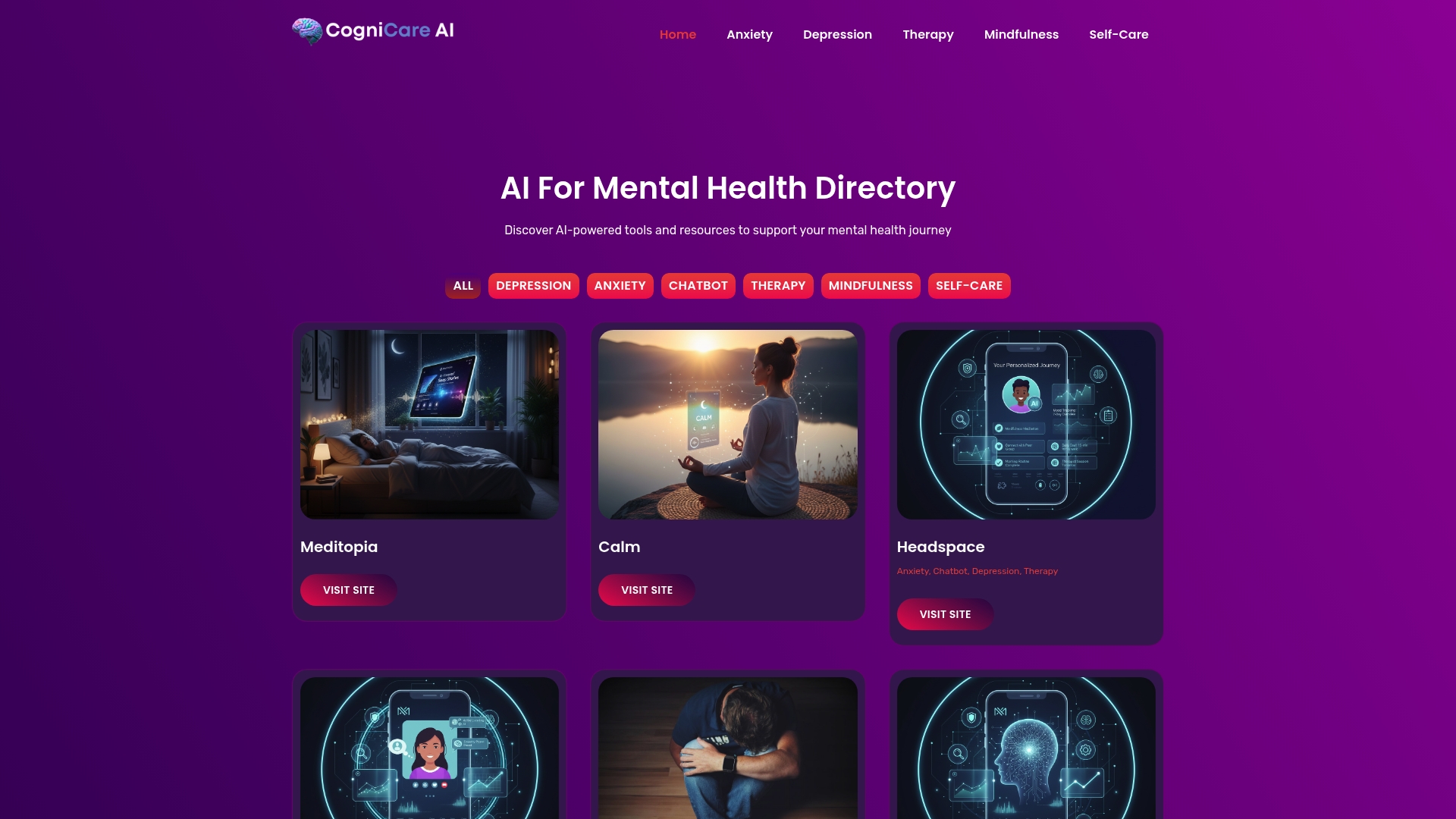
These tools adapt to your progress, making it easier to stay on track with the methods covered in this guide. Whether you are building a meditation habit, tracking anxiety triggers, or looking for guided breathing programs, Cognicareai connects you with resources that fit your situation. Explore the directory and find the tools that match where you are right now.
FAQ
Can anxiety be managed without medication?
Yes. Non-medication methods including CBT, aerobic exercise, and mindfulness meditation have proven efficacy for mild-to-moderate anxiety, comparable to pharmacological treatment in multiple clinical studies.
How long does it take for natural anxiety methods to work?
Breathing techniques work within minutes. Exercise and mindfulness show measurable results within 2–4 weeks. Supplements like ashwagandha and magnesium glycinate typically require 2–8 weeks of consistent daily use.
What is the most effective natural anxiety relief technique?
Aerobic exercise and CBT are the two most evidence-backed non-medication methods. Both produce results comparable to medication for generalized anxiety when practiced consistently over 6–12 weeks.
Does magnesium help with anxiety?
Magnesium glycinate at 200–400 mg nightly supports nervous system regulation, particularly for people with deficiency, which affects 50–70% of Western adults. Most people notice improved sleep quality within one to two weeks.
What should I avoid if I have anxiety?
Caffeine, alcohol, and nicotine all worsen anxiety by activating the sympathetic nervous system and disrupting sleep. Reducing or eliminating these substances is one of the fastest lifestyle changes you can make.