
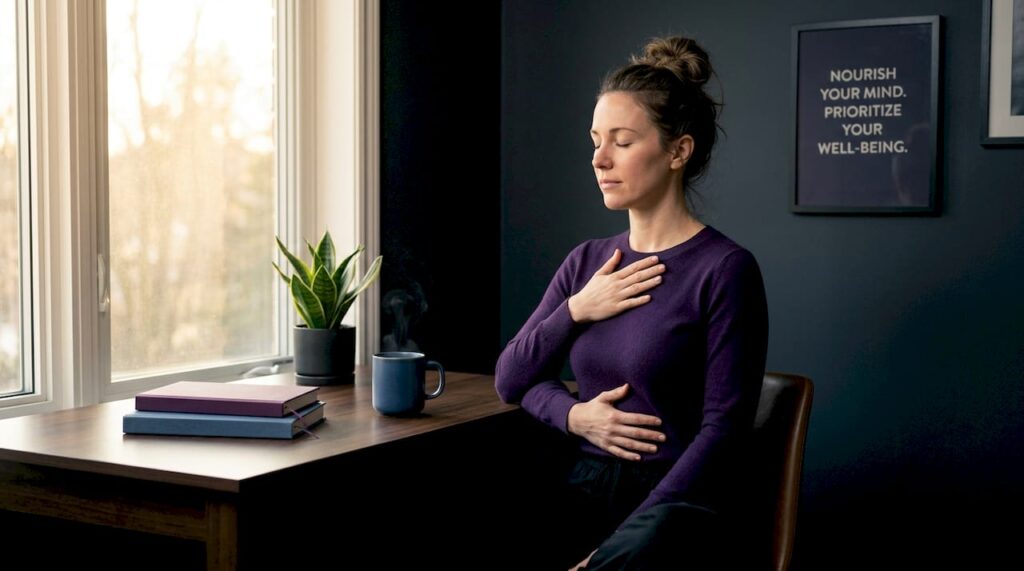
Anxiety self-help tools fall into three primary categories: body-based regulation skills, cognitive reframing methods, and behavioral exposure practices. Each category targets a different way anxiety shows up in your life, whether that is a racing heart, a spiral of worry thoughts, or the urge to avoid situations that feel threatening. Knowing which types of anxiety self-help tools match your symptoms is the difference between relief that lasts and relief that fades. Digital programs like DaylightRx and screeners like the GAD-7 have made it easier than ever to identify your pattern and act on it.
1. Types of anxiety self-help tools: the three core categories
Anxiety self-help, as a practice, means using structured techniques to reduce symptoms without requiring a therapist in the room. The recognized clinical framework organizes these techniques into three groups based on what they target: calming body sensations, reducing worry loops, and addressing behavioral avoidance. Spring Health’s coping skills framework confirms this three-category structure, and it maps directly onto how anxiety actually behaves in the body and mind. Understanding the categories first means you can pick tools with intention rather than guessing.
Body-based tools work fastest, often within minutes. Cognitive tools require consistent practice over days or weeks to reshape thought patterns. Behavioral tools take the longest but produce the most durable change by retraining how you respond to feared triggers. A well-built self-help plan draws from all three layers, matching the tool to the moment.
2. Body-based tools for calming physical anxiety symptoms
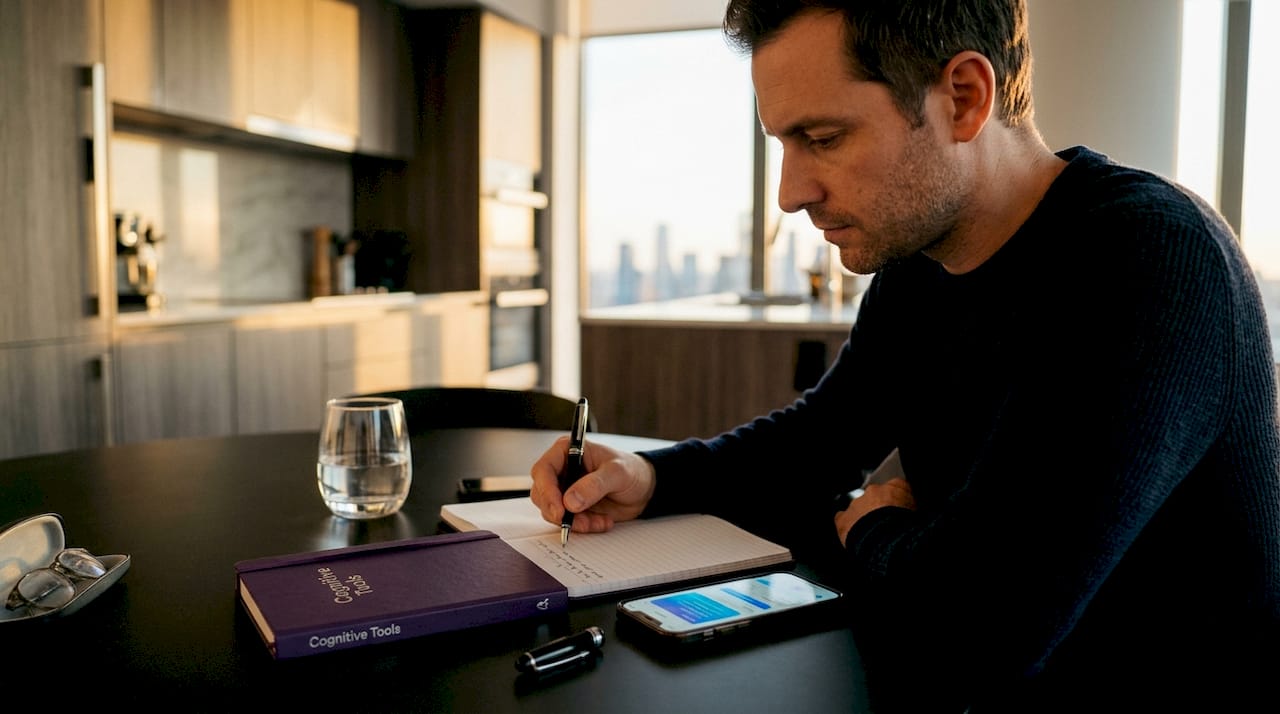
Physical anxiety symptoms, including a tight chest, shallow breathing, muscle tension, and a sense of dread, respond well to body-focused techniques. These tools work by activating the parasympathetic nervous system, which signals safety to a brain that has gone into threat mode. Breathing and grounding can reduce anxiety in minutes, making them the right first move during a spike.
The most widely used body-based tools include:
- Diaphragmatic breathing: Slow, belly-focused breathing lowers heart rate and cortisol within two to three minutes. Inhale for four counts, hold for two, exhale for six.
- Progressive muscle relaxation (PMR): Systematically tensing and releasing muscle groups from feet to face teaches your body to recognize and release held tension.
- The 5-4-3-2-1 grounding method: Name five things you see, four you can touch, three you hear, two you smell, and one you taste. This interrupts a panic spiral by anchoring attention to the present.
- Gentle movement: Yoga, tai chi, and slow walking activate body awareness and reduce the physical charge of anxiety without requiring intense exertion. Mind-body practices like these are covered in depth at qigongstar.com.
- Cold water exposure: Splashing cold water on your face triggers the dive reflex, which slows heart rate rapidly. It is a simple, underused tool for acute anxiety moments.
Pro Tip: Use diaphragmatic breathing as your default first response to any anxiety spike. It costs nothing, requires no equipment, and works in any setting. Practice it daily when you are calm so it becomes automatic when you are not.
3. Cognitive strategies for managing worry and repetitive thoughts
Cognitive self-help tools target the thought patterns that keep anxiety alive. Worry loops, catastrophic predictions, and “what if” spirals are not random. They follow predictable patterns that can be identified and interrupted with practice. Cognitive reframing, the process of examining a thought and testing whether it is accurate, is the foundation of cognitive behavioral therapy (CBT) and one of the most studied anxiety management techniques available.
Key cognitive tools include:
- Cognitive reframing: Write down an anxious thought, then ask: What is the evidence for and against this? What would I tell a friend who thought this? What is a more realistic interpretation?
- Worry postponement: Schedule a specific 15-minute “worry window” each day. When anxious thoughts arise outside that window, note them and defer them. This reduces the all-day rumination cycle.
- Journaling: Expressive writing about anxiety reduces its emotional charge. A structured prompt like “What am I afraid of, and what is the most likely outcome?” is more effective than open-ended venting.
- Mindfulness for anxiety: Mindfulness teaches you to observe thoughts without fusing with them. Apps like Headspace and Calm offer guided sessions specifically designed for anxious minds.
- Positive affirmations with evidence: Generic affirmations often backfire for anxious people. Grounding them in evidence works better. “I have handled hard situations before” beats “Everything will be fine.”
Digital CBT programs that combine these cognitive elements with interactive lessons show superior outcomes compared to psychoeducation alone. DaylightRx, a smartphone-based digital CBT program, demonstrated this in a randomized clinical trial over 10 and 24 weeks. That result matters because it confirms that structured, interactive delivery amplifies the benefit of cognitive tools beyond simply reading about them.
Pro Tip: Pair cognitive reframing with a brief body-based tool first. When your nervous system is still activated, the thinking brain struggles to engage. Two minutes of diaphragmatic breathing before a journaling session makes the cognitive work significantly more effective.
4. Behavioral tools for breaking avoidance cycles
Behavioral avoidance is the engine that keeps anxiety running. Every time you avoid a feared situation, your brain records it as confirmation that the situation was genuinely dangerous. The relief feels good in the short term, but the anxiety grows stronger over time. Behavioral self-help tools work by reversing this pattern through gradual, repeated exposure to feared situations.
Here is how to build and use a basic exposure hierarchy:
- List your avoided situations. Write down everything you avoid because of anxiety, from mildly uncomfortable to most feared.
- Rate each item from 0 to 10. Zero means no anxiety; ten means maximum distress. This creates your hierarchy.
- Start at the bottom. Choose an item rated 2 or 3 and expose yourself to it deliberately, staying in the situation until your anxiety drops by at least half.
- Repeat until it loses its charge. The same situation should feel less threatening after three to five exposures. This is called habituation.
- Move up the hierarchy. Once lower items feel manageable, move to the next level. Progress is rarely linear, and that is normal.
- Use digital guided exposure. Programs that incorporate avoidance reduction and exposure within a structured digital format produce higher remission rates than psychoeducation alone.
- Track your responses. Note your anxiety level before, during, and after each exposure. Seeing the numbers drop over time reinforces that the process is working.
Exposure therapy yields significant benefits that are sustained for years, and virtual reality exposure therapy is now emerging for specific anxiety types like social anxiety and phobias. The behavioral category is the hardest to start and the most rewarding to sustain. Explore more on anxiety management approaches to see how behavioral tools fit within a broader self-help plan.
5. How to choose the right tools based on your symptoms
Matching tools to symptoms is the most practical skill in anxiety self-help. Anxiety manifests differently across people. Some people feel it primarily in their body. Others experience it as relentless mental chatter. Others notice they have quietly reorganized their life around avoidance. Identifying your dominant pattern tells you where to start.
Use this framework to guide your selection:
| Symptom pattern | Best starting tool category | Example tools |
|---|---|---|
| Racing heart, tight chest, shallow breathing | Body-based | Diaphragmatic breathing, PMR, 5-4-3-2-1 grounding |
| Worry loops, catastrophic thinking, rumination | Cognitive | Cognitive reframing, worry postponement, mindfulness |
| Avoidance, shrinking life, procrastination | Behavioral | Exposure hierarchy, gradual confrontation, digital CBT |
| Mixed or generalized anxiety | All three in sequence | Start body-based, add cognitive, then behavioral |
Spring Health’s phased approach recommends starting with body-based tools during peak anxiety, then transitioning to cognitive and behavioral methods as your nervous system settles. This sequencing matters because cognitive tools require a calmer baseline to work effectively.
The GAD-7 screener is the most practical anxiety self-assessment tool for tracking your progress. GAD-7 scores range from 0 to 21, with scores of 10 or above indicating clinically significant anxiety that warrants a conversation with a professional. Running the GAD-7 every two weeks gives you an objective read on whether your self-help tools are moving the needle. You can explore how cognitive load connects to GAD scores at Cognicareai’s GAD resource.
Pro Tip: Do not try to use all three tool categories at once when you are starting out. Pick one body-based tool and one cognitive tool, practice them for two weeks, then add a behavioral component. Overloading yourself with techniques creates its own anxiety.
Key takeaways
The most effective approach to anxiety self-help combines body-based regulation for immediate relief, cognitive tools for reshaping thought patterns, and behavioral exposure for lasting change.
| Point | Details |
|---|---|
| Three core tool categories | Body-based, cognitive, and behavioral tools each target a different anxiety manifestation. |
| Start with body-based tools | During peak anxiety, calming the body first makes cognitive work more effective. |
| Use GAD-7 for tracking | Score yourself every two weeks to measure whether your tools are producing real change. |
| Digital CBT outperforms information alone | Programs like DaylightRx show higher remission rates than reading about anxiety management. |
| Match tools to your symptom pattern | Identifying whether your anxiety is physical, cognitive, or behavioral determines your starting point. |
Why your anxiety toolbox needs more than one layer
I have spent years reviewing mental health tools and talking with people who use them, and the pattern I see most often is this: someone finds one technique that helps, leans on it exclusively, and then wonders why their anxiety keeps returning. Diaphragmatic breathing is genuinely powerful, but it does not retrain your brain’s threat response. Exposure work is transformative, but it is nearly impossible to start when your nervous system is in overdrive.
The insight that changed how I think about this comes from the two-layer toolbox model: immediate regulation skills for in-the-moment use, and consistent practice tools for longer-term pattern change. Most people only build the first layer. They get good at calming down but never address why they keep getting activated in the first place.
What I find genuinely exciting about digital CBT programs is that they force the second layer. They are structured, sequential, and they do not let you skip the uncomfortable behavioral work. The DaylightRx trial results are not surprising to me. Interactive, guided delivery works better than passive reading because it holds you accountable to the process.
My honest recommendation: treat your self-help toolbox like a physical fitness routine. You need both the warm-up (body-based tools) and the training load (cognitive and behavioral practice). One without the other produces limited results. And if your GAD-7 score stays above 10 after six weeks of consistent practice, that is not a failure. It is a signal to bring in professional support.
— dushyantha
Explore AI-powered anxiety support with Cognicareai
Cognicareai brings together an AI-powered directory of mental health tools designed specifically for people managing anxiety. Rather than pointing you toward generic information, the platform matches you with interactive CBT-based programs, guided mindfulness tools, and self-assessment resources that adapt to your specific symptom pattern.
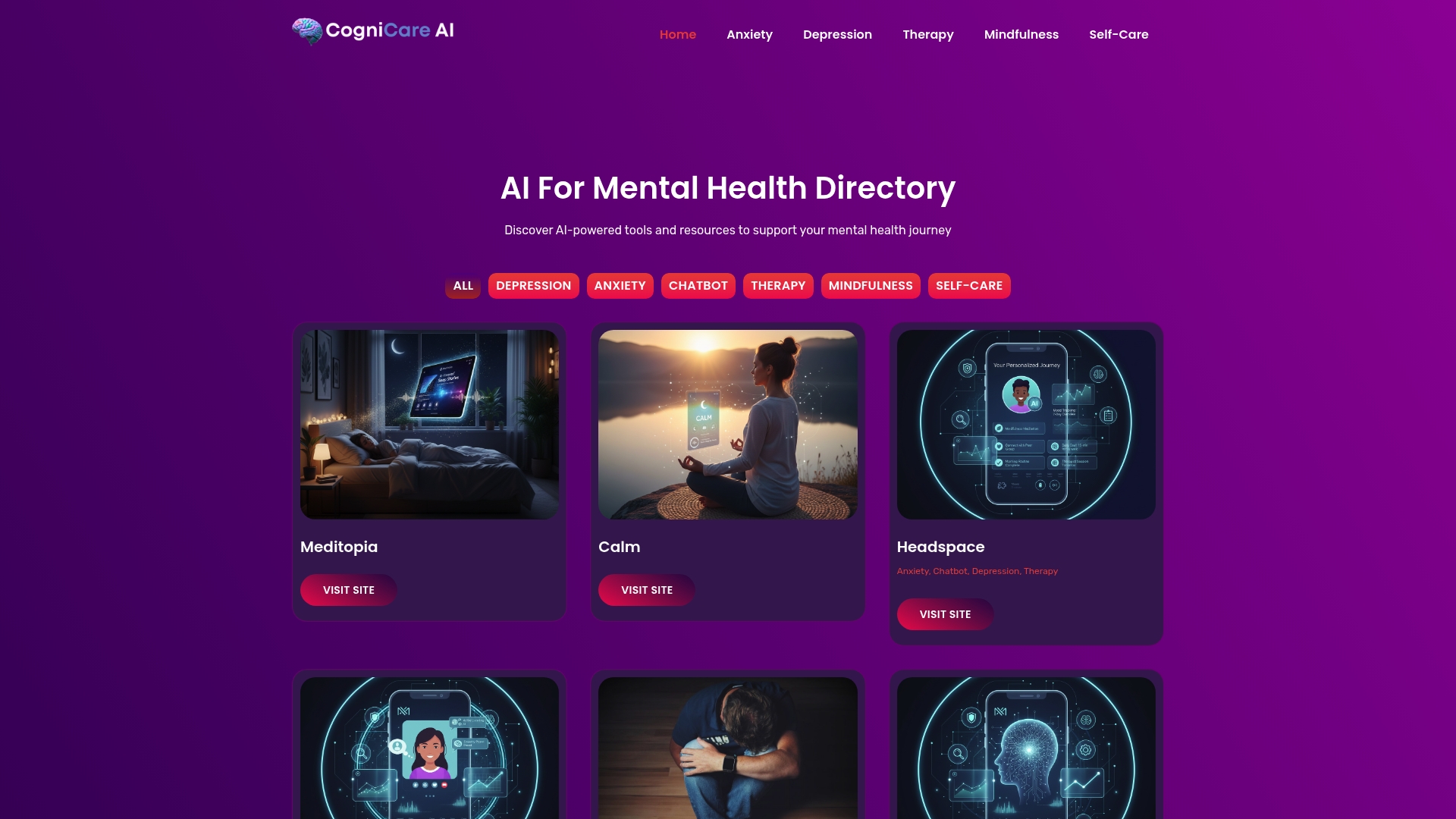
Whether you are working on calming physical symptoms, reshaping anxious thought patterns, or building an exposure practice, Cognicareai’s AI-powered mental health tools give you a structured, personalized starting point. The platform also features AI-enhanced mindfulness apps that integrate body-based and cognitive techniques in one place. If you are ready to move from knowing about anxiety tools to actually using them consistently, Cognicareai is built for exactly that step.
FAQ
What are the main types of anxiety self-help tools?
Anxiety self-help tools fall into three categories: body-based tools like diaphragmatic breathing and PMR, cognitive tools like reframing and journaling, and behavioral tools like exposure hierarchies. Each category targets a different way anxiety shows up in your daily life.
What is the GAD-7 and how does it help with self-assessment?
The GAD-7 is a validated screener that measures anxiety severity over two weeks on a scale of 0 to 21. Scores of 10 or above indicate clinically significant anxiety, and using it every two weeks helps you track whether your self-help tools are producing measurable improvement.
Are digital CBT programs effective for anxiety?
Yes. Clinical trial data on DaylightRx shows that digital CBT produces superior outcomes compared to psychoeducation alone at both 10 and 24 weeks. Programs that combine relaxation, cognitive work, and exposure are more effective than those offering information only.
When should self-help tools be replaced with professional therapy?
Self-help tools work well for mild to moderate anxiety, but persistent or complex anxiety benefits from professional therapy. If your GAD-7 score stays at 10 or above after six weeks of consistent self-help practice, consulting a licensed therapist is the appropriate next step.
How long does it take for anxiety self-help tools to work?
Body-based tools like breathing and grounding work within minutes. Cognitive tools like reframing and worry postponement typically require two to four weeks of consistent practice to shift thought patterns. Behavioral exposure work produces lasting change over weeks to months, depending on the complexity of the feared situations.