
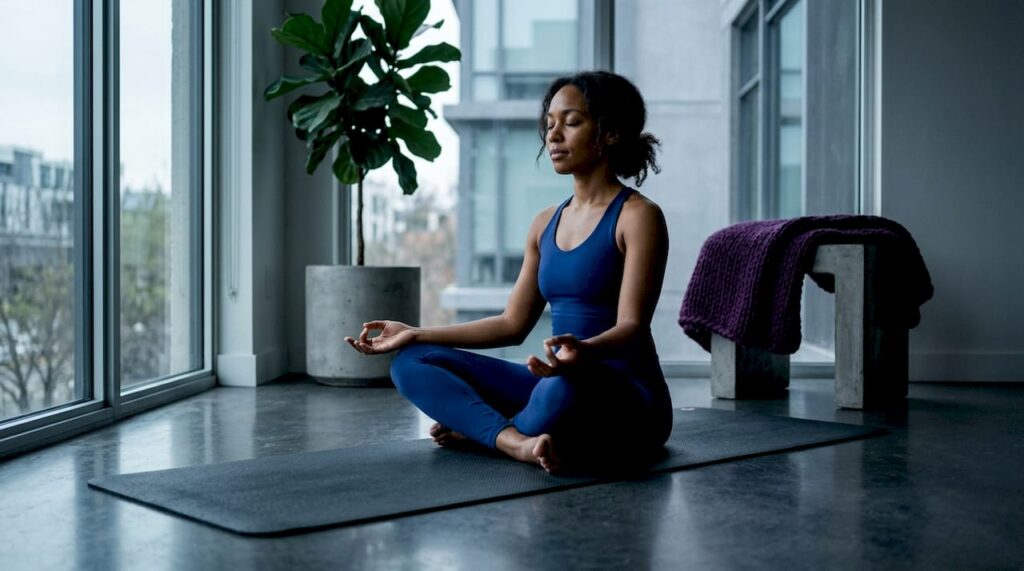
Consistent self-care is defined as a set of daily, predictable behaviors that support mental and physical health, and research confirms it directly reduces anxiety symptoms by stabilizing your nervous system and improving emotional regulation. The reason why consistent self-care reduces anxiety is not abstract. It operates through measurable biological and psychological mechanisms, including reduced cortisol output, lower heart rate, and stronger self-regulation capacity. A 2025 UCLA Health study found that people with regular sleep timing had a 33% lower risk of anxiety than irregular sleepers. A 2026 randomized controlled trial published in JMIR Formative Research showed that only 31% of participants remained clinically healthy when their routine self-care actions were restricted, compared to 94% in the control group. These numbers make one thing clear: consistency is not a wellness trend. It is a clinical variable.
Why consistent self-care reduces anxiety: the biology and psychology
The most direct explanation for how self-care helps with anxiety is that routine removes uncertainty. Your nervous system treats unpredictability as a threat. When your daily schedule is chaotic, your brain stays in a low-grade alert state, burning cognitive resources on decisions that a structured routine would handle automatically. UCLA Health identifies this as decision fatigue, a state where the mental cost of constant micro-decisions accumulates and weakens emotional resilience. Predictable daily rhythms reduce that load and free up mental bandwidth for genuine challenges.
The autonomic nervous system responds directly to self-care practices. Abdominal breathing, for example, activates the parasympathetic branch of the autonomic nervous system, which counteracts the fight-or-flight response that drives anxiety. A randomized controlled trial published in Frontiers in Psychology found that standardized abdominal breathing training produced a 5.9% decrease in anxiety scores, with sustained autonomic improvements still measurable four weeks after the intervention ended. That persistence matters. It means the nervous system is not just temporarily calmed. It is learning a new baseline.
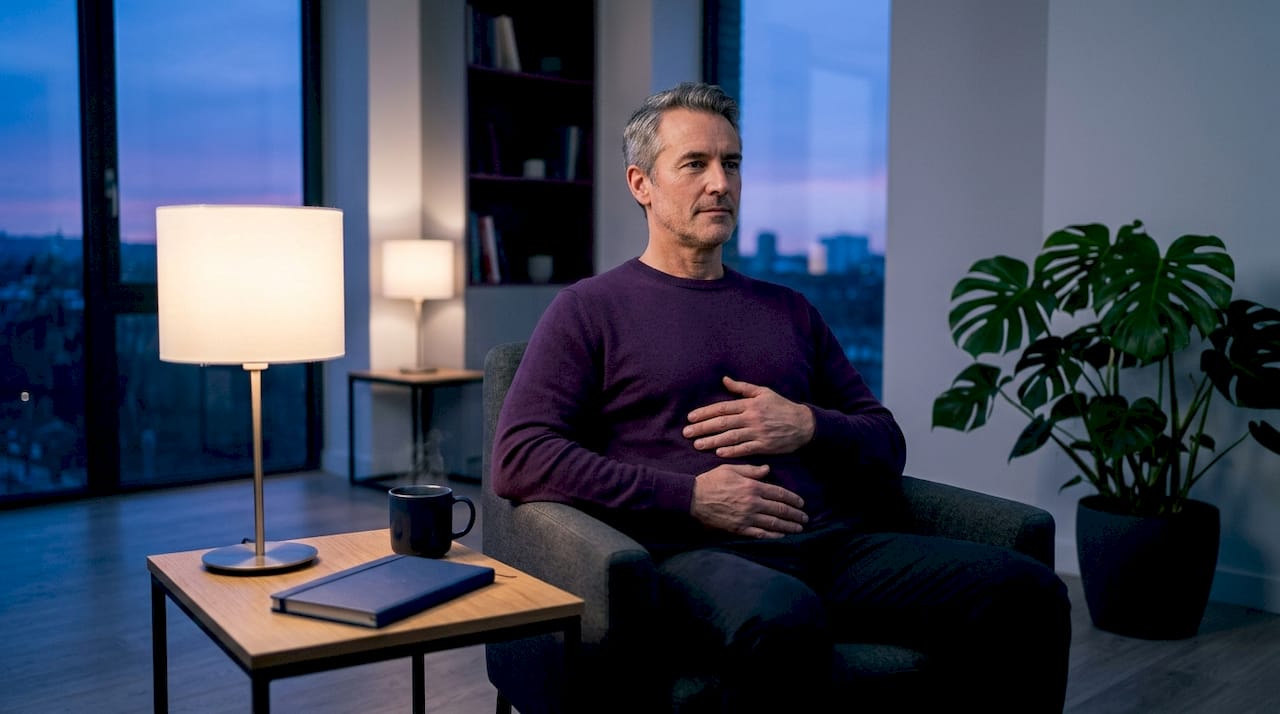
Psychological regulation follows the same logic. A review of 30 randomized controlled trials published in Current Psychology found that self-regulation interventions focused on relaxation, cognitive restructuring, and mindfulness consistently reduced anxiety and improved emotional self-efficacy. The “control phase” of these interventions, meaning repeated, structured practice, produced the strongest results. This confirms that frequency and repetition are what make self-care therapeutic, not intensity or novelty.
Key physiological markers that consistent self-care influences include:
- Heart rate: Lowered through regular breathing exercises and aerobic activity
- Blood pressure: Reduced by consistent sleep schedules and relaxation practices
- Respiratory rate: Regulated through abdominal breathing training
- Cortisol patterns: Stabilized by predictable meal timing, sleep, and exercise
Pro Tip: Set a single anchor habit, such as five minutes of abdominal breathing at the same time each morning, before building a larger routine. Anchoring new behaviors to a fixed time reduces the mental effort required to maintain them.
Which self-care practices are most effective for anxiety?
Not all self-care activities affect anxiety through the same pathway. Some work primarily on physiological regulation. Others target cognitive and emotional control. Understanding the difference helps you build a routine that covers both dimensions.
| Practice | Primary mechanism | Research support | Ease of starting |
|---|---|---|---|
| Abdominal breathing | Autonomic nervous system regulation | Strong (Frontiers in Psychology RCT) | High |
| Regular sleep schedule | Circadian rhythm stabilization | Strong (UCLA Health, 33% anxiety risk reduction) | Medium |
| Aerobic exercise | Cortisol reduction, mood regulation | Strong (multiple clinical guidelines) | Medium |
| Mindfulness meditation | Cognitive defusion, emotional regulation | Strong (Current Psychology review of 30 RCTs) | Medium |
| Consistent meal timing | Blood sugar stability, reduced irritability | Moderate (NHS Inform clinical guidance) | High |
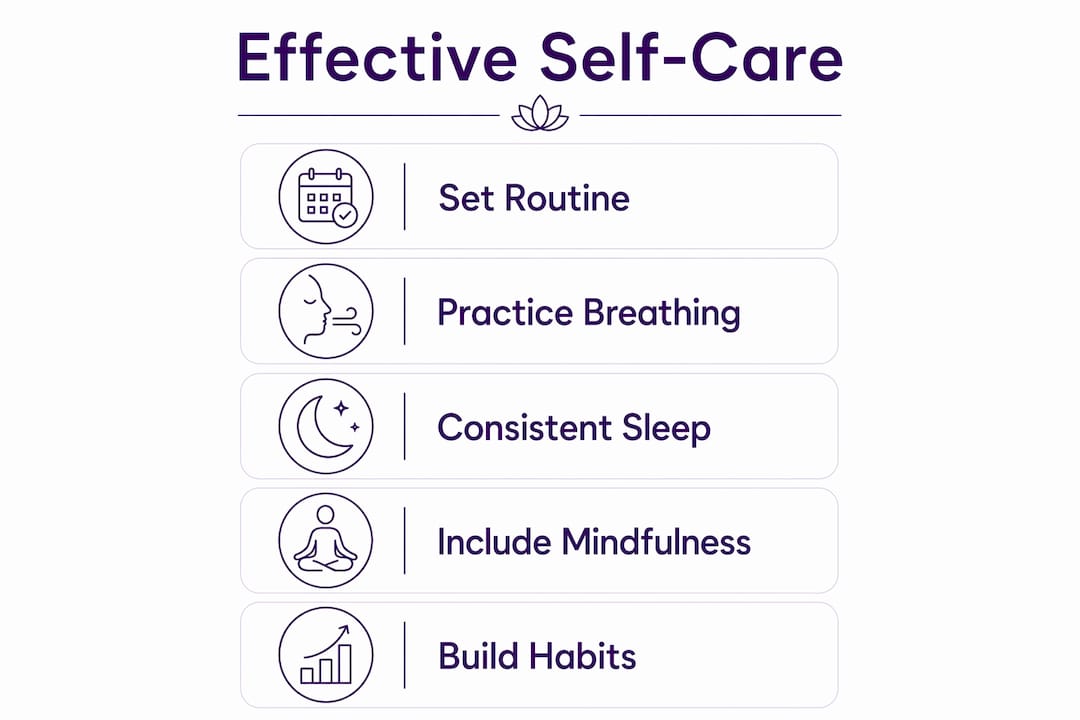
Sleep consistency stands out as a foundational practice. Circadian rhythm stabilization through a fixed sleep and wake schedule directly reduces anxiety risk, and the effect compounds over time. Missing one night disrupts the rhythm. Missing a week can reset anxiety levels upward.
Mindfulness deserves specific attention because it operates on a different layer than breathing or exercise. Rather than calming the body first, reducing anxiety through mindfulness works by changing your relationship to anxious thoughts. You observe them without fusing with them. This cognitive distance reduces the behavioral avoidance that keeps anxiety cycles running.
For people new to self-care routines for stress, the most practical starting combination is consistent sleep timing plus five to ten minutes of daily abdominal breathing. These two practices address both physiological and cognitive regulation without requiring equipment, significant time, or prior experience.
What happens when self-care routines break down?
The evidence on routine disruption is stark and worth taking seriously. The 2026 JMIR Formative Research trial mentioned earlier did not just track what happens when people feel stressed. It experimentally restricted participants’ routine self-care actions and measured the outcome. Anxiety and depression symptoms increased rapidly. When participants resumed their normal routines, symptoms returned to baseline. The implication is direct: self-care functions as a mental health feedback loop, and breaking it has measurable clinical consequences.
Anxiety itself accelerates this breakdown through avoidance. When you feel anxious, the instinct is to withdraw, cancel plans, skip exercise, and stay in bed. Each avoidance behavior provides short-term relief but reinforces the anxiety cycle long-term. NHS Inform explicitly advises against restricting activities, noting that gradual exposure to anxiety-provoking situations, maintained alongside regular routines, is what breaks the avoidance cycle. Avoidance feels protective. Physiologically, it is the opposite.
The importance of self-care becomes most visible at the point of disruption. People who have built consistent habits recover faster from anxiety spikes because their nervous system has a practiced baseline to return to. Those without established routines have no floor to fall back on.
Here is a practical sequence for rebuilding after a routine disruption:
- Restart one habit only. Trying to restore a full routine at once creates overwhelm. Pick sleep timing or a short breathing practice.
- Set a fixed time, not a flexible goal. “I will do this at 7:30 AM” outperforms “I will do this in the morning.”
- Expect a two-week adjustment period. The nervous system adaptation required for lasting anxiety reduction takes repeated sessions, not a single restart.
- Track completion, not quality. A five-minute walk counts. A distracted breathing session counts. Consistency matters more than perfection.
- Gradually reintroduce avoided activities. NHS Inform recommends small, achievable goals that build toward full engagement with anxiety triggers.
Pro Tip: If anxiety has disrupted your routine for more than two weeks, treat the restart as a new habit, not a recovery. Use the same gradual approach you would use to build a habit from scratch.
How to build a self-care routine that actually sticks
The benefits of self-care for anxiety only materialize when the routine is sustainable. Most people design routines that are too ambitious for their current stress level, then abandon them when life gets difficult. The research points to a different approach: start smaller than feels necessary, and add complexity only after the baseline is stable.
Effective routine-building for anxiety reduction relies on several principles drawn from the self-regulation research:
- Specificity over intention. “I will walk for 20 minutes at 6 PM on weekdays” produces better adherence than “I will exercise more.” Specific implementation intentions reduce the decision load at the moment of action.
- Schedule sleep as a non-negotiable anchor. Consistent sleep timing is the single highest-leverage habit for anxiety reduction because it regulates every downstream biological system.
- Build in screen-free transitions. Anxiety is amplified by constant information input. A 30-minute screen-free period before bed and after waking protects the nervous system’s natural regulation windows.
- Use digital reminders strategically. Apps like Calm, Headspace, and Insight Timer include scheduled reminders that reduce the friction of starting a mindfulness or breathing session. The reminder does the decision-making for you.
- Reflect weekly, not daily. Daily self-assessment of anxiety levels creates rumination. A weekly check-in, reviewing what worked and what disrupted your routine, builds self-awareness without feeding the anxiety cycle.
The self-regulation research from Current Psychology identifies self-awareness as a distinct phase in effective anxiety management. Knowing which practices work for your specific anxiety pattern, whether it is physiological tension, cognitive worry, or behavioral avoidance, allows you to prioritize the right tools rather than following a generic template.
For people managing anxiety alongside busy schedules, micro self-care routines offer a practical entry point. Even two-minute breathing resets between tasks produce measurable autonomic benefits when practiced consistently across the day.
Key takeaways
Consistent self-care reduces anxiety because it trains the nervous system, removes decision fatigue, and breaks the avoidance cycles that sustain anxiety over time.
| Point | Details |
|---|---|
| Routine removes decision fatigue | Predictable daily schedules reduce cognitive overload, lowering baseline anxiety. |
| Breathing practice changes your baseline | Abdominal breathing produces lasting autonomic improvements after repeated practice, not just temporary calm. |
| Disruption has clinical consequences | Restricting self-care actions rapidly increases anxiety symptoms; resuming them reverses the effect. |
| Sleep timing is the highest-leverage habit | A consistent sleep schedule reduces anxiety risk by 33% and stabilizes every downstream biological system. |
| Start smaller than feels necessary | Sustainable routines built gradually outperform ambitious plans that collapse under stress. |
Why I think consistency gets undersold in self-care advice
Most self-care content focuses on what to do. Take a bath. Try meditation. Go for a walk. The implicit message is that the activity itself is the intervention. After spending years reviewing mental health research and working with people managing anxiety, I have come to believe that framing is exactly backward.
The activity is almost secondary. What actually reduces anxiety is the repetition, the predictability, and the signal your nervous system receives when you show up for yourself at the same time, in the same way, day after day. A five-minute breathing practice done daily for three months will outperform an hour-long wellness retreat done once. The nervous system learns through pattern recognition, not intensity.
What I find most striking in the 2026 JMIR research is how quickly symptoms returned when routines were disrupted, and how quickly they resolved when routines resumed. That is not a placebo effect. That is a biological system responding to the presence or absence of a learned safety signal. Your routine is the signal.
The practical implication is uncomfortable for people who want a quick fix. There is no single self-care practice that resolves anxiety. There is only the slow accumulation of consistent days. Start with one habit. Protect it. Add another only when the first feels automatic. That is not a limitation of self-care. It is exactly how it works.
— dushyantha
How Cognicareai supports your self-care routine
Building a consistent self-care routine is straightforward in theory and genuinely hard in practice, especially when anxiety is already disrupting your motivation and focus. Cognicareai offers a directory of AI-powered mental health tools designed to make that consistency easier to maintain. From habit-tracking apps and guided breathing programs to personalized mindfulness tools that adapt to your specific anxiety patterns, the platform connects you with resources that fit your routine rather than demanding you build a new one from scratch. Explore AI tools for anxiety that support the daily practices covered in this article, including relaxation training, sleep scheduling, and cognitive self-regulation techniques.
FAQ
Why does consistency matter more than intensity in self-care?
Consistency matters more because the nervous system learns through repeated exposure, not single high-effort sessions. A daily five-minute breathing practice produces lasting autonomic improvements that a single long session cannot replicate.
What is the fastest self-care habit to start for anxiety relief?
Abdominal breathing is the fastest to implement and has direct clinical support. A randomized controlled trial found it produced measurable anxiety reduction and sustained physiological benefits within weeks of consistent practice.
How quickly does breaking a routine affect anxiety?
The effect is rapid. The 2026 JMIR Formative Research trial showed anxiety and depression symptoms increased significantly within the restriction period, with only 31% of participants remaining clinically healthy compared to 94% in the control group.
Can self-care replace therapy or medication for anxiety?
Self-care is not a clinical replacement for therapy or medication in moderate to severe anxiety. It functions as a foundational support layer that enhances the effectiveness of other anxiety treatments and reduces symptom frequency between clinical interventions.
How many self-care habits should I start with?
Start with one. The self-regulation research from Current Psychology confirms that repeated practice of a single technique builds self-efficacy and emotional regulation capacity more reliably than attempting multiple new habits simultaneously.