

AI mental health tools are digital applications that use artificial intelligence to deliver emotional support, therapeutic interventions, and mental health management assistance through conversational and structured interactions. These tools range from general-purpose chatbots like ChatGPT, Gemini, and Claude to specialized platforms built around clinically validated frameworks like cognitive behavioral therapy (CBT). With mental health care access remaining a persistent challenge, these digital mental health solutions have moved from novelty to a genuine part of how millions of people manage anxiety, depression, and daily stress. This guide breaks down how they work, what the research actually shows, and how to use them without putting yourself at risk.
How do AI mental health tools work?
AI mental health tools operate on two distinct layers: the underlying language technology and the therapeutic framework built on top of it. Understanding both helps you choose the right tool and use it more effectively.
The language layer relies on Large Language Models (LLMs), which are trained on vast text datasets to generate human-like conversational responses. General tools like ChatGPT and Gemini use this layer without a clinical structure. Specialized platforms go further by wrapping LLMs in structured therapy protocols. A PLOS ONE study on a CBT-based AI platform found that GPT-4o outperformed Llama 3.1-8B on conversational quality, though at higher operational cost. This matters because the model powering a tool directly affects the quality of support you receive.

The therapeutic layer is where AI mental health tools diverge most sharply from simple chatbots. AI-delivered CBT follows structured moves: identifying distorted thoughts, testing evidence for and against them, running behavioral experiments, and debriefing outcomes. This stepwise approach translates well to AI coaching for mild to moderate symptoms, though it has real limits for complex clinical cases.
Well-designed platforms also include symptom tracking, validated assessments like the PHQ-9 for depression and GAD-7 for anxiety, and emergency alert systems that trigger human handoff when crisis signals appear. Session memory is another variable. Some tools retain context across sessions to personalize responses, while others reset after each conversation for privacy reasons.
Pro Tip: Before committing to any AI mental health platform, check whether it uses validated clinical assessments like the PHQ-9 or GAD-7. Tools built around these measures give you trackable data, not just conversation.
What types of AI mental health tools are available?
The category of AI therapy applications is broader than most people realize. Here is how the major types break down:
- General-purpose AI chatbots (ChatGPT, Gemini, Claude): These provide emotional support, information, and coping suggestions. They are accessible and flexible but carry no clinical structure or safety protocols by default.
- Specialized therapeutic platforms: Built around CBT, dialectical behavior therapy (DBT), or acceptance and commitment therapy (ACT), these tools include structured modules, progress tracking, and sometimes licensed clinician oversight.
- Mindfulness and relaxation apps with AI features: Apps that use AI to personalize meditation sequences, breathing exercises, or sleep support based on user behavior patterns.
- AI-assisted assessment tools: Platforms that use validated questionnaires and AI analysis to help users understand their symptom patterns and track changes over time.
The differences between these categories matter significantly for how you use them. You can explore a curated breakdown of top chatbot apps to compare options by use case.
| Tool type | Core benefit | Key limitation |
|---|---|---|
| General AI chatbots | Immediate, flexible emotional support | No clinical structure or crisis protocols |
| Specialized CBT platforms | Structured therapy modules with progress tracking | Less conversational, requires consistent engagement |
| Mindfulness AI apps | Personalized relaxation and habit support | Limited scope, not suited for clinical symptoms |
| AI assessment tools | Validated symptom tracking over time | Diagnostic only, no therapeutic intervention |
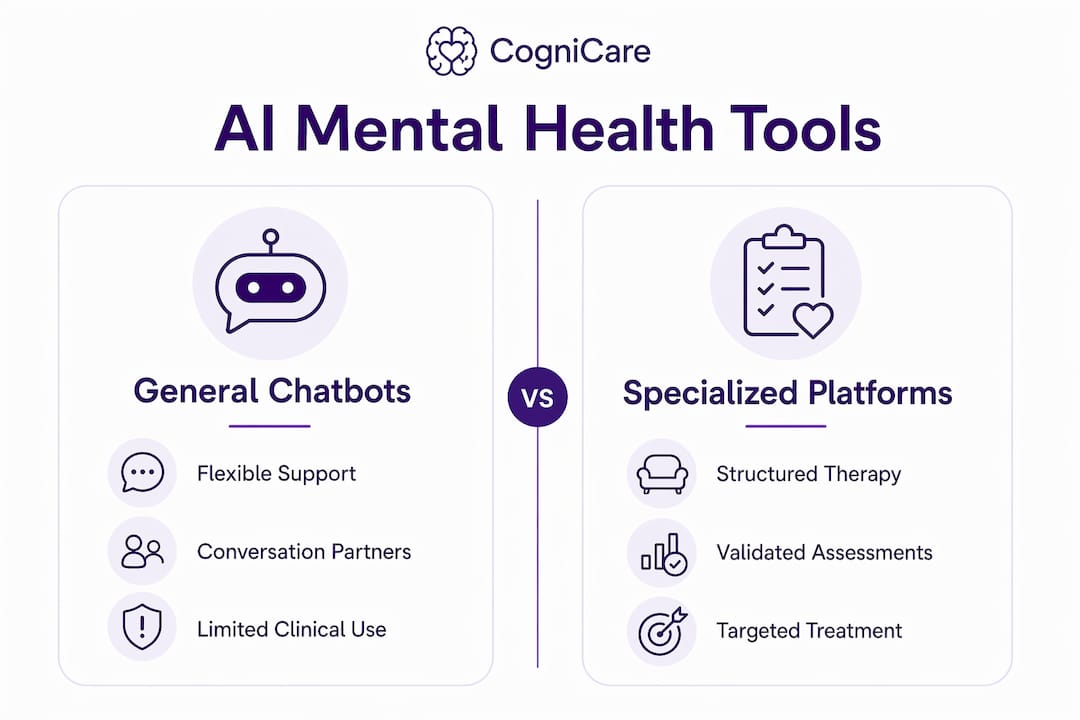
The honest distinction is this: general chatbots are conversation partners, while specialized platforms are closer to digital therapy adjuncts. Neither replaces a licensed clinician, but the gap between them in terms of safety and clinical utility is significant.
What does research say about effectiveness and limitations?
The evidence on AI mental health tools is genuinely promising in a narrow band and genuinely concerning outside of it.
A randomized trial in JAMA Network Open found that conversational AI interventions produced modest reductions in anxiety and depression symptoms among university students, with the quality of the digital therapeutic alliance being a key predictor of improvement. This mirrors findings from human therapy research, where the relationship quality between client and therapist drives outcomes. The implication is that how an AI tool engages you matters as much as the content it delivers.
However, Drexel University researchers identified what they call the “bond paradox”: users who formed strong emotional bonds with AI tools without task-focused goals showed worse outcomes over time. Companionship-oriented use led to dependence and symptom worsening, while task-focused interaction produced better results. This is one of the most counterintuitive findings in the field. Feeling connected to an AI tool is not the same as benefiting from it.
“AI chatbots can help users start difficult conversations, but emotional mirroring without clinical structure can create pseudo-relationships that harm vulnerable users, particularly adolescents.” — NAM panel on AI chatbots
The risks extend beyond dependence. Misinformation, lack of clinical validation, and tools that claim therapeutic authority without licensure are documented concerns. The NAM panel’s responsible use guidance explicitly prohibits AI tools from claiming licensure and mandates crisis intervention triggers as a baseline safety requirement.
Pro Tip: If an AI tool ever discourages you from seeking human professional help or positions itself as a replacement for therapy, stop using it. That is a design failure, not a feature.
How to use AI mental health tools responsibly
Responsible use of AI mental health tools starts with what researchers call “AI literacy”: understanding what the tool is designed to do, who built it, how it handles your data, and where its limits are. Most users skip this step entirely, which is where problems begin.
Practical guidelines for safe use include:
- Set session time limits. Extended, open-ended conversations with AI tools increase the risk of emotional dependence. Thirty minutes per session is a reasonable ceiling for most users.
- Reset memory periodically. If a tool retains session history, clearing it regularly prevents the AI from reinforcing patterns that may not serve your mental health goals.
- Use it as an adjunct, not a substitute. AI tools work best alongside human care, not instead of it. If you are already working with a therapist, an AI tool can help you practice skills between sessions.
- Know the crisis signals. If you experience thoughts of self-harm, suicidal ideation, or acute distress during an AI interaction, close the app and contact a human crisis line immediately. The 988 Suicide and Crisis Lifeline is available 24 hours a day.
- Check data privacy policies. Mental health data is sensitive. Confirm that any platform you use does not sell or share your conversation data with third parties.
The UNESCO 2021 Recommendation on the Ethics of AI calls for transparency, fairness, and human oversight in AI deployment. These are not abstract principles. They translate directly into questions you should ask before trusting any mental health tool with your personal data and emotional state. For a practical overview of starting mental health treatment online, including how to integrate digital tools with professional care, Journey Mental Health offers a grounded guide.
Understanding the benefits of AI for emotional wellness is valuable, but only when paired with an equally clear understanding of the risks.
What does the future of AI mental health tools look like?
The next generation of AI mental health tools is moving in several directions simultaneously, and the pace of change is faster than most clinical institutions can track.
- Clinically validated AI therapeutics: Developers are pursuing FDA-regulated digital therapeutics status for AI-based CBT platforms, which would require the same evidence standards as pharmaceutical trials. This is a significant shift from the current largely unregulated market.
- Multimodal inputs: Future tools will integrate text, voice tone analysis, and behavioral data (sleep patterns, activity levels) to build richer, more accurate pictures of a user’s mental state. This goes well beyond what current text-only chatbots can assess.
- Privacy-enhancing technologies: On-device processing and federated learning models are being developed to allow personalization without transmitting sensitive data to external servers.
- Clinician-AI collaboration models: Rather than replacing therapists, the most promising platforms are being designed as tools therapists assign and monitor, keeping human oversight central to the process.
- Regulatory evolution: The UNESCO ethical AI framework and emerging national regulations are pushing developers toward mandatory impact assessments before deployment in mental health contexts.
The trade-off between conversational quality and cost will also shape which tools reach scale. High-performing models like GPT-4o deliver better clinical conversations but cost more to run, which affects accessibility for lower-income users. Solving that equation is one of the field’s defining challenges for the next five years.
Key takeaways
AI mental health tools are most effective when built around structured therapeutic tasks, validated assessments, and clear human handoff protocols rather than open-ended emotional conversation.
| Point | Details |
|---|---|
| Structured tools outperform chatbots | CBT-based platforms with validated assessments produce better outcomes than general conversation AI. |
| The bond paradox is real | Emotional connection without task focus leads to dependence and worsening symptoms, not improvement. |
| AI literacy is non-negotiable | Understanding a tool’s design, data practices, and limits is the foundation of safe use. |
| Human care remains the anchor | AI tools work best as adjuncts to professional therapy, not as standalone replacements. |
| Regulation is catching up | Clinically validated AI therapeutics and ethical oversight frameworks are reshaping the market now. |
Why I think we’re asking the wrong question about AI mental health tools
Most conversations about AI mental health tools get stuck on a binary: are they good or bad? That framing misses the point entirely. The real question is whether a specific tool, used in a specific way, by a specific person, produces a net benefit. And the answer to that is almost always “it depends on the design.”
What I find genuinely striking in the research is the bond paradox finding from Drexel. We have spent years worrying that AI tools would feel too cold and mechanical to help anyone. The actual risk turns out to be the opposite. Tools that are too warm, too validating, and too available without any therapeutic structure can make things worse. That is a design problem, not a technology problem. And it is solvable.
The tools I trust most are the ones that are honest about what they cannot do. A platform that routes you to a crisis line when it detects distress signals, that uses PHQ-9 scores to track your progress, and that explicitly tells you it is not a therapist is doing something right. A platform that encourages daily emotional check-ins with no goal structure and no human handoff is doing something dangerous, regardless of how good the conversation feels.
My practical advice: treat AI mental health tools the way you would treat a fitness app. Useful for building habits, tracking progress, and staying consistent between professional appointments. Not a substitute for a doctor when something is seriously wrong. That framing keeps the benefits real and the risks manageable.
For anyone navigating mental health treatment options, understanding where AI tools fit in the broader care picture is worth the time investment before you start using them.
— dushyantha
Discover AI mental health tools that are built to support you
Cognicareai is a directory of AI-powered mental health tools designed specifically for people managing anxiety, depression, and emotional stress. Unlike general app stores, Cognicareai organizes tools by therapeutic approach, use case, and safety features, so you can find what actually fits your situation rather than guessing.
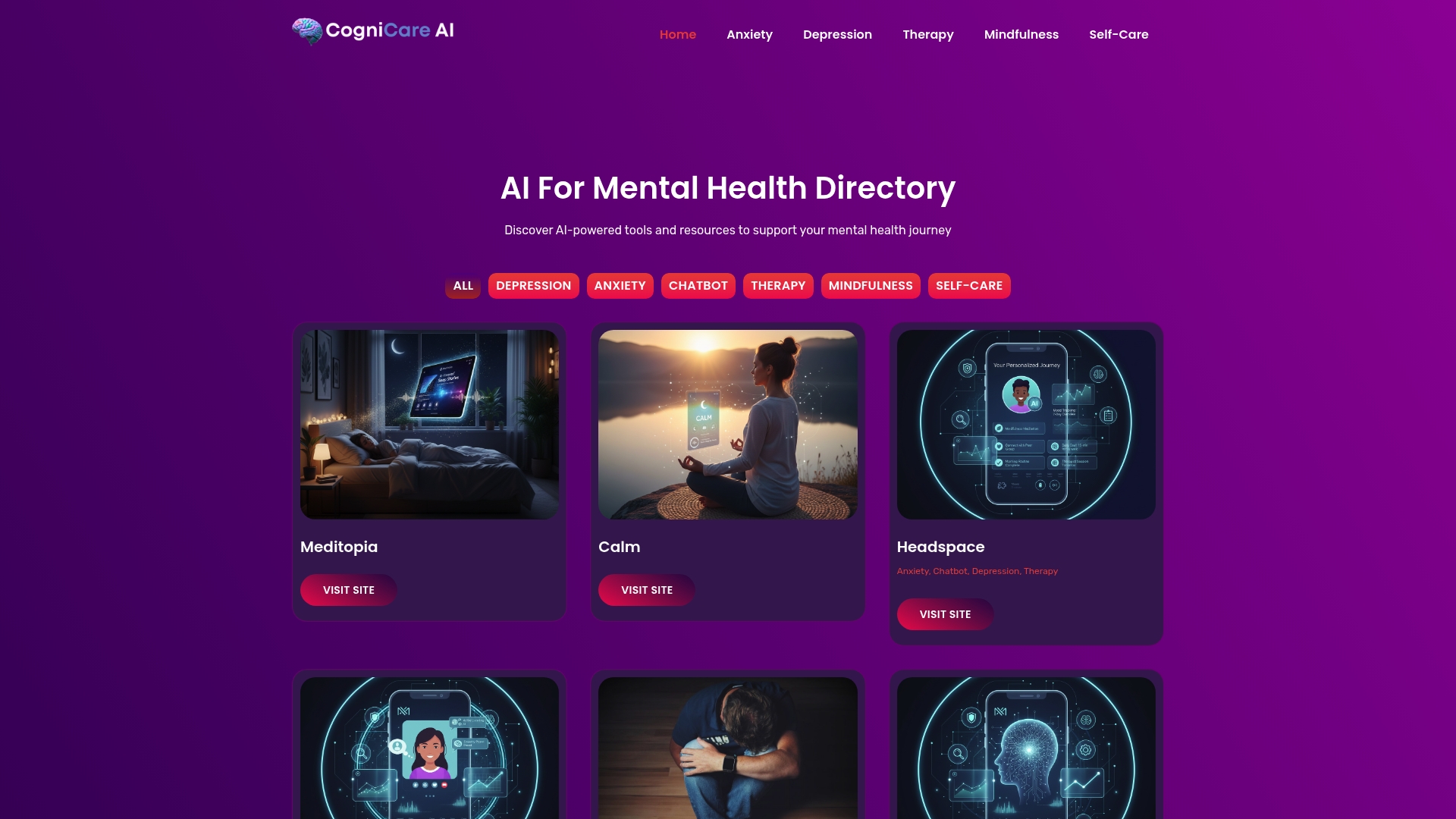
Whether you are looking for a CBT-based platform, a mindfulness app with AI personalization, or a therapy chatbot that integrates with your existing care routine, Cognicareai gives you the context to choose with confidence. Explore the full directory and find tools built around your mental health goals, not just your screen time.
FAQ
What are AI mental health tools?
AI mental health tools are digital applications that use artificial intelligence to provide emotional support, therapeutic exercises, and mental health management assistance. They range from general chatbots like ChatGPT to specialized CBT-based platforms with validated clinical assessments.
Are AI mental health tools clinically effective?
Research shows modest reductions in anxiety and depression symptoms, particularly when tools use structured therapeutic frameworks and build a strong digital therapeutic alliance. They are most effective as adjuncts to professional care, not standalone treatments.
What is the biggest risk of using AI for mental health support?
The bond paradox is the most documented risk: forming a strong emotional connection with an AI tool without task-focused goals can lead to dependence and worsening symptoms, as identified in Drexel University’s 2026 research.
How do I know if an AI mental health tool is safe to use?
Look for tools that use validated assessments like the PHQ-9 or GAD-7, include crisis intervention protocols, are transparent about data privacy, and explicitly state they are not a replacement for licensed therapy.
Can AI mental health tools replace a therapist?
No. Current AI tools lack the clinical judgment, licensure, and relational depth of a human therapist. The NAM panel’s responsible use guidelines explicitly prohibit AI tools from claiming licensure, and the strongest evidence supports their use as supplements to human care.