

Two thirds of employees identify work as a significant stress source, yet most professionals never receive a practical mental health boundaries at work guide that actually addresses their daily reality. The cost of that gap is real: burnout, resentment, and a slow erosion of the focus that makes you good at your job. This guide cuts through the theory and gives you a concrete framework for defining, communicating, and protecting boundaries that serve both your mental wellness in the workplace and your professional reputation.
Table of Contents
- Key Takeaways
- What mental health boundaries at work actually are
- Assessing your current work environment and needs
- Practical strategies for setting and communicating boundaries
- Handling violations and maintaining wellness long-term
- Tools and resources that support your boundaries
- My honest take on boundaries and career fear
- How Cognicareai can support your mental wellness at work
- FAQ
Key Takeaways
| Point | Details |
|---|---|
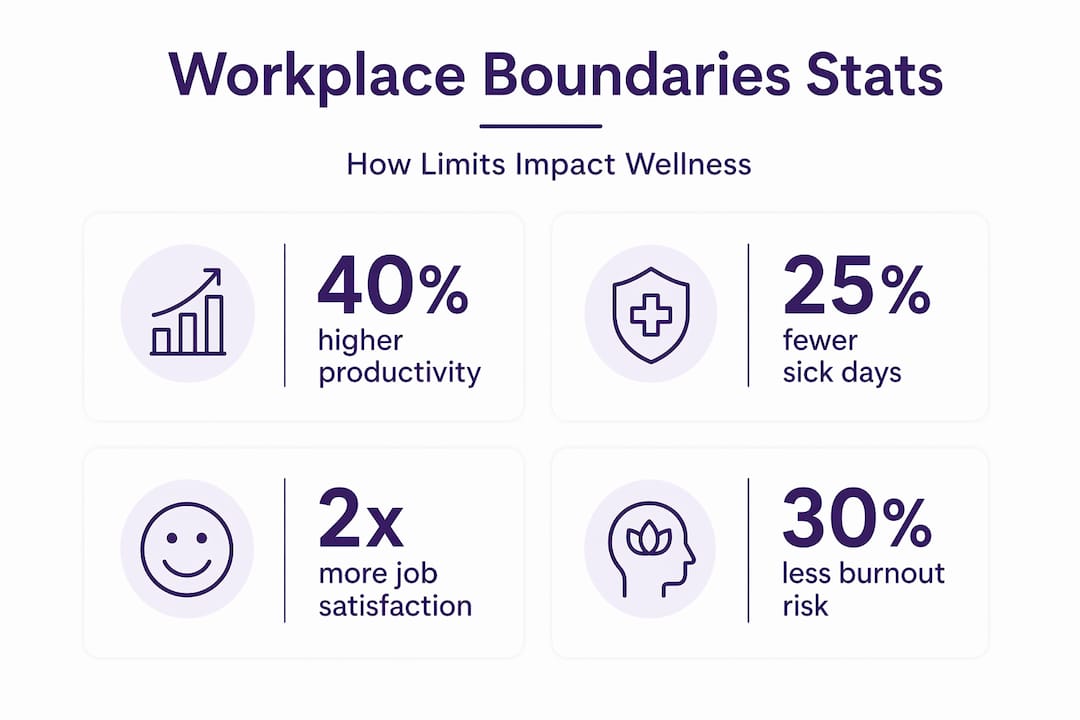
| Boundaries protect productivity | Employees with clear boundaries report 40% higher job satisfaction and measurably lower burnout rates. |
| Assess before you act | Identifying your specific boundary violations and stressors is the necessary first step before communicating any limits. |
| Frame limits as trade-offs | Reframing boundary-setting as workload prioritization reduces professional risk and invites collaboration instead of conflict. |
| Technology supports consistency | Apps, calendar tools, and AI-powered resources help automate the habits that keep boundaries intact over time. |
| Consistency builds trust | Colleagues who know what to expect from you develop stronger professional trust, which improves teamwork and communication. |
What mental health boundaries at work actually are
Before you can set a boundary, you need to know what you are actually setting. A mental health boundary at work is an invisible line that separates what you will engage with from what you will not, in order to protect your psychological well-being. It is not avoidance. It is not a refusal to be a team player. It is a deliberate decision about what you can sustain without damaging your health or your output.
The most common misconception professionals carry is that setting limits signals weakness or lack of commitment. That fear keeps people answering emails at midnight and accepting every project that lands in their inbox. But employees with clear professional boundaries actually report 40% higher job satisfaction and significantly lower rates of burnout. The data points in the opposite direction of the fear.
There is also a meaningful difference between a healthy boundary and avoidance. Avoidance is reactive. It looks like ignoring difficult conversations, declining responsibilities without explanation, or quietly withdrawing. A healthy boundary is proactive and communicated. It sounds like: “I stop responding to messages after 6 p.m. so I can be fully present the next morning.”
“Boundaries are not walls. They are the terms under which you do your best work.”
Mental health stigma still shapes how professionals talk about limits at work. Choosing language that focuses on capacity and priorities rather than personal complaints shifts the conversation from emotional to professional, which makes boundaries far easier for colleagues and managers to respect.
Assessing your current work environment and needs
You cannot build effective boundaries without first knowing where the pressure is actually coming from. Most professionals skip this step and jump straight to tactics, which is why the tactics rarely stick.
Start with a realistic assessment of your workplace’s psychological safety. Ask yourself whether you can raise concerns without fear of retaliation, whether workload conversations happen openly, and whether your manager responds to feedback with curiosity or defensiveness. In psychologically unsafe environments, indirect boundary strategies work better than direct confrontation. Requiring written instructions for verbal requests, for example, creates a paper trail and slows down impulsive demands without triggering conflict.
Next, document your actual workload for one week. Write down every task, meeting, and interruption. Most professionals are genuinely surprised by the volume when they see it on paper. This documentation also becomes useful evidence when you need to have a capacity conversation with a manager.
- List every recurring commitment and estimate the time each one requires.
- Identify the three situations that most consistently drain your energy or spike your anxiety.
- Note which boundary violations happen most often: after-hours messages, last-minute requests, unclear expectations, or being pulled into other people’s conflicts.
- Write down one self-care practice you have stopped doing because work expanded into that time.
That last item is usually the most honest signal of where your boundaries have collapsed.
Pro Tip: Set a recurring 15-minute Friday review to check whether your documented limits held that week. Patterns become visible fast, and you will know exactly which boundary to address next.
Practical strategies for setting and communicating boundaries
This is where most guides get vague. They tell you to “communicate clearly” without explaining what that actually sounds like. Here is a specific, step-by-step approach.
- Set visible working hours. Block your calendar with a “Focus Time” or “Offline” event from the moment your workday ends. When your availability is visible, colleagues stop assuming you are always reachable. This single change reduces after-hours interruptions for most professionals within two weeks.
- Turn off notifications outside work hours. Use your phone’s focus mode or scheduled delivery settings to silence work apps. The key is consistency. If you respond to one Saturday message, you reset the expectation that you are available on Saturdays.
- Say no with a trade-off, not a refusal. Instead of “I can’t take that on,” try “I can take that on if we move the deadline on Project X by one week. Which is the higher priority?” Framing boundary-setting as trade-offs makes workload decisions visible as management priorities rather than personal refusals. This approach dramatically reduces the professional risk most people fear.
- Create a transition ritual. A five-minute walk, a specific playlist, or even changing your clothes signals to your brain that work is done. Physical and mental separation rituals are underused and surprisingly effective.
- Frame your limits as productivity tools. When you tell a colleague “I keep my afternoons clear for deep work so I can deliver faster,” you are not complaining. You are describing how you operate at your best.
| Situation | Weak response | Boundary-forward response |
|---|---|---|
| Late Friday request | “I’ll try to get to it.” | “I can have this ready by Tuesday morning. Does that work?” |
| After-hours message | Immediate reply | Reply the next morning at your normal start time |
| Unclear scope | Start working anyway | “Can you send me the written brief so I can plan this accurately?” |
| Meeting overload | Accept everything | “I have a conflict. Can I get the notes instead?” |
Clear communication about availability builds professional trust because colleagues learn what to expect from you. Unpredictability, not limits, is what damages working relationships.

Pro Tip: When you first communicate a new boundary, say it once, clearly, and without over-explaining. Lengthy justifications invite negotiation. A calm, brief statement is harder to argue with.
Handling violations and maintaining wellness long-term
Boundaries get tested. That is not a sign that they are failing. It is a sign that they are working and that some people are noticing the change.
When a boundary is crossed, the most effective response is a calm, specific restatement. “I mentioned I stop responding after 6 p.m. I’ll pick this up first thing tomorrow” is enough. You do not need to explain your reasoning again. Repetition without escalation is usually sufficient for most colleagues.
- Distinguish between accidental and repeated violations. A colleague who forgets once needs a gentle reminder. A manager who consistently ignores your stated limits after multiple conversations is a different situation entirely.
- Document repeated violations. Keep a brief log with dates and context. This protects you if escalation becomes necessary and helps you see patterns you might otherwise rationalize away.
- Escalate strategically. HR’s primary role is to protect the organization, not the individual. Escalate formal complaints only when you have documentation and have considered the full range of outcomes, including the possibility that the situation does not improve.
- Manage guilt actively. Guilt after setting a boundary is normal. It does not mean you did something wrong. It means you changed a pattern that others had come to rely on. The guilt typically fades within a few weeks as the new norm settles in.
“Consistency is not rigidity. It is the signal that tells others your boundaries are real.”
Employees who take regular breaks are 25% more productive than those who push through without recovery time. Building recovery into your schedule is not a luxury. It is maintenance for your most important professional asset: your ability to think clearly.
You can find practical self-care habits that support long-term boundary maintenance without requiring dramatic lifestyle changes.
Tools and resources that support your boundaries
Setting limits is easier when technology and workplace programs work with you instead of against you.
| Tool type | Example use | Mental health benefit |
|---|---|---|
| Calendar blocking | Google Calendar focus time, Outlook “Do Not Disturb” | Reduces interruptions and signals availability clearly |
| Notification management | iOS Focus Mode, Android Digital Wellbeing | Prevents after-hours anxiety from work pings |
| AI mental wellness apps | Mindfulness and mood-tracking apps | Builds self-awareness and supports daily recovery |
| Employee Assistance Programs | Free counseling sessions through employer | Provides professional support for stress and boundary challenges |
| No-meeting day policies | Company-wide “Focus Fridays” | Protects deep work time without individual negotiation |
Managers trained in Mental Health First Aid are better equipped to recognize distress and connect employees to resources before problems escalate. If your workplace offers this training, advocate for it. If it does not, that advocacy is itself a form of boundary-setting at the organizational level.
Flexible work policies combined with accessible mental health care reduce lost wages from mental health challenges by 30%. That number makes the business case for you when you need to bring these conversations to leadership.
AI-powered tools have become genuinely useful for professionals who want to build mental wellness habits without adding complexity to their day. Cognicareai’s directory of AI-powered mental health tools connects you to apps that adapt to your specific patterns, from anxiety management to focus support.
Pro Tip: Before downloading another app, check whether your employer’s EAP already includes free access to mental wellness tools. Most employees never use EAP benefits simply because they do not know what is included.
My honest take on boundaries and career fear
I’ve spent years watching talented professionals burn out not because they lacked skills, but because they believed that saying yes to everything was the price of being taken seriously. I used to believe that too.
What I’ve learned is that the fear of damaging your reputation by setting limits is almost always bigger than the actual risk. In my experience, the colleagues who earn the most respect are the ones who are clear about how they work, deliver consistently within those parameters, and push back on scope creep without drama. That combination reads as professionalism, not selfishness.
The harder truth I’ve had to sit with is that some workplaces genuinely punish boundary-setting. Not every environment is fixable from the inside. When I’ve seen professionals try every tactic in this guide and still face consistent retaliation, the boundary that ultimately protected their mental health was the one they set with their employer relationship itself.
But for the vast majority of workplaces, the problem is not a hostile culture. It is an absence of norms. Nobody has said out loud what healthy work looks like. When you start communicating your limits clearly and consistently, you often become the person who makes it easier for everyone else to do the same. That is not a small thing. That is how workplace cultures shift.
— dushyantha
How Cognicareai can support your mental wellness at work
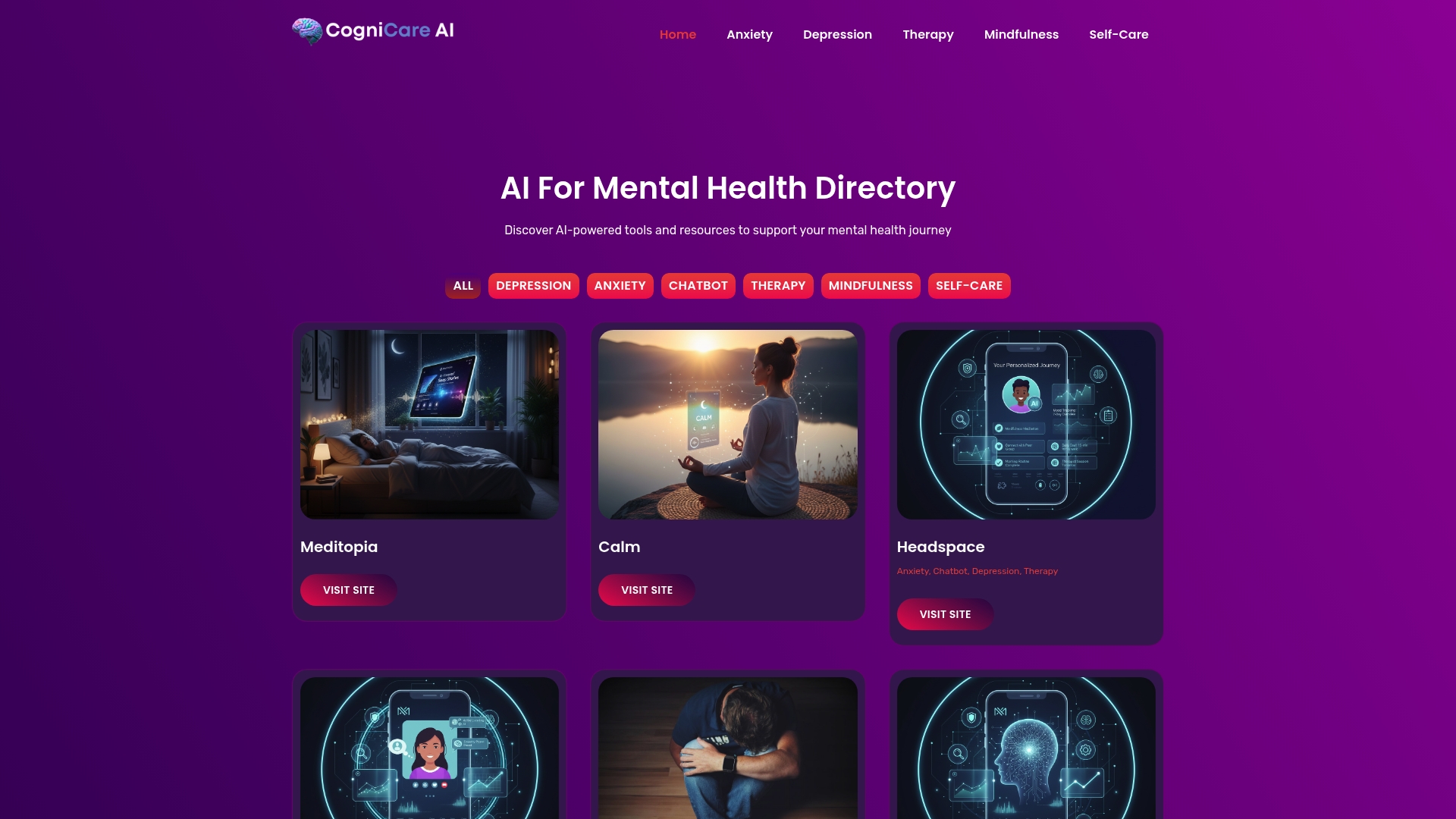
Setting mental health boundaries is an ongoing practice, not a one-time decision. Cognicareai makes it easier to sustain that practice by connecting you with AI-powered tools tailored to your specific mental health needs. Whether you are managing work-related anxiety, building a more consistent self-care routine, or looking for mindfulness support that fits into a busy schedule, the platform’s directory removes the guesswork from finding what actually works for you. Explore AI-powered mental wellness tools that adapt to your journey, or discover how AI-driven therapy can provide personalized support beyond what any single app offers.
FAQ
What are mental health boundaries at work?
Mental health boundaries at work are deliberate limits you set around your time, availability, and emotional energy to protect your psychological well-being. They differ from avoidance because they are communicated proactively and tied to specific behaviors, not general withdrawal.
How do you set work boundaries without damaging your career?
Frame limits as workload trade-offs rather than refusals. Research shows that reframing boundary-setting as project management priorities reduces personal risk and invites collaboration instead of conflict.
What should you do when a manager ignores your boundaries?
Restate your boundary calmly and specifically, document repeated violations with dates, and consider whether formal escalation is warranted. In environments with low psychological safety, indirect strategies like requiring written requests can protect you with less confrontation.
How long does it take for work boundaries to be respected?
Most professionals see a shift within two to four weeks of consistent, calm communication. The key is repeating the boundary without over-explaining and responding to violations the same way each time, which signals that the limit is real and permanent.
Can technology help with maintaining work-life balance?
Yes. Calendar blocking, notification management tools, and AI-powered mental wellness apps all reduce the friction of maintaining boundaries. Flexible work policies paired with mental health resources have been shown to reduce the financial and human cost of workplace stress by 30%.